

It’s prime time for planting peppers! We’ve got more varieties of peppers this spring than we’ve ever had at Gill’s – from classic jalapeños to native chile pequin to rare varieties and super hot reapers! Peppers are generally considered easy to grow, but there are a few key things to know if you really want to have a BIG harvest. Check out our simple tricks + video guide now!
Sun & Soil

First off – peppers love warm weather and lots of sun. The sunniest spot in your garden is where you should plant your peppers. At a minimum, peppers need 6 hours of sun per day for good growth and production. If you’re growing in the ground in heavy clay or sandy soil, use our beloved Nature’s Blend compost to add nutrients and better structure to your native soil. About 1 bag of compost per 12 square feet of bed space, or the rough equivalent if you’re making your own compost. If you’re growing peppers in containers or raised beds, we highly recommend Gardener’s Magic from Landscaper’s Pride. It’s a nice, loose mix specially formulated for raised beds and it doesn’t need any amendment. Just pour and plant.
Choose Your Varieties – Are You More Mild or More Wild??
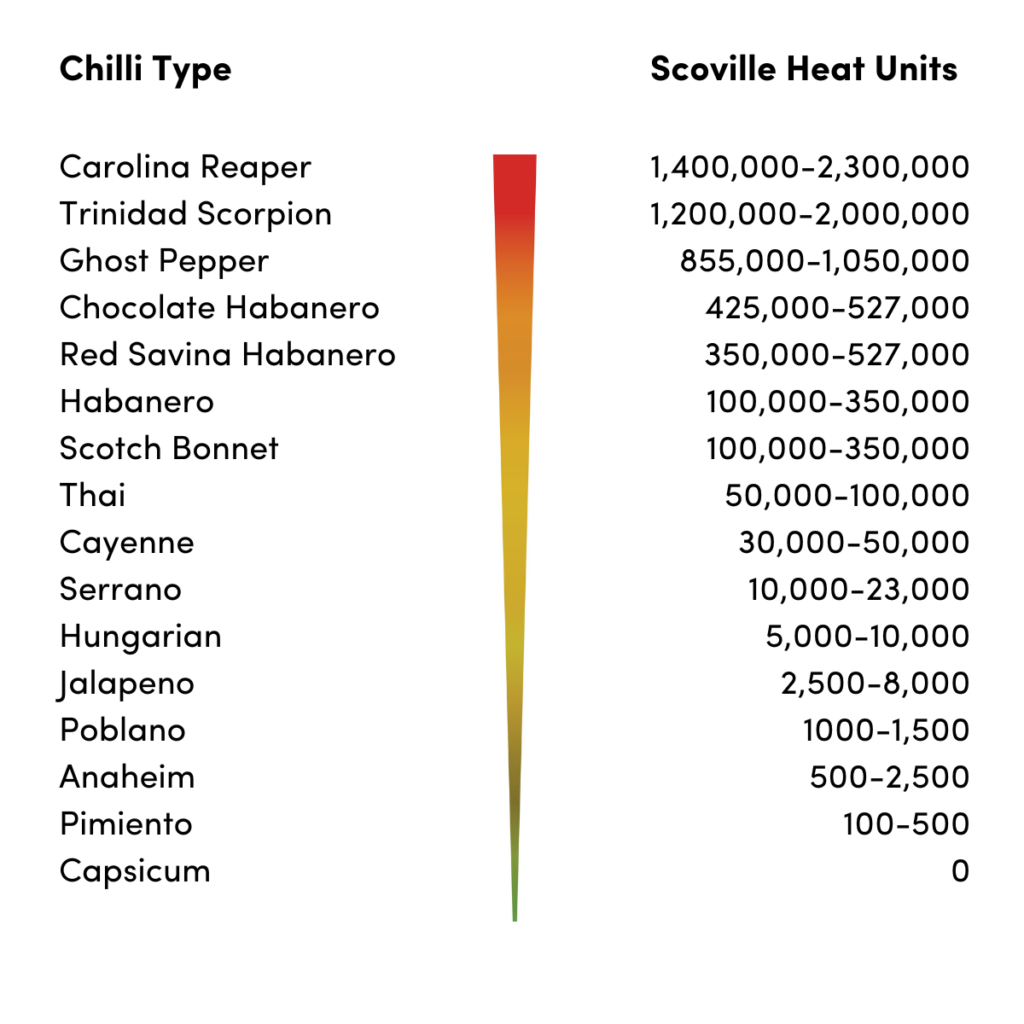
We currently have almost every pepper on this list available here at Gill’s! From the mild capsicum (bell pepper) all the way up to the scorpion and reaper. We’ve even got some rare varieties in big 1gal sizes like Yellow Reaper and Chocolate Ghost. Did you know that the horticulturalists who developed super hot peppers in recent years didn’t just do it because they like wildly hot flavor? Their main clientele are hot sauce makers who can make a lot more hot sauce with far fewer peppers. Here’s a fascinating podcast episode about it.
Stake Em Up
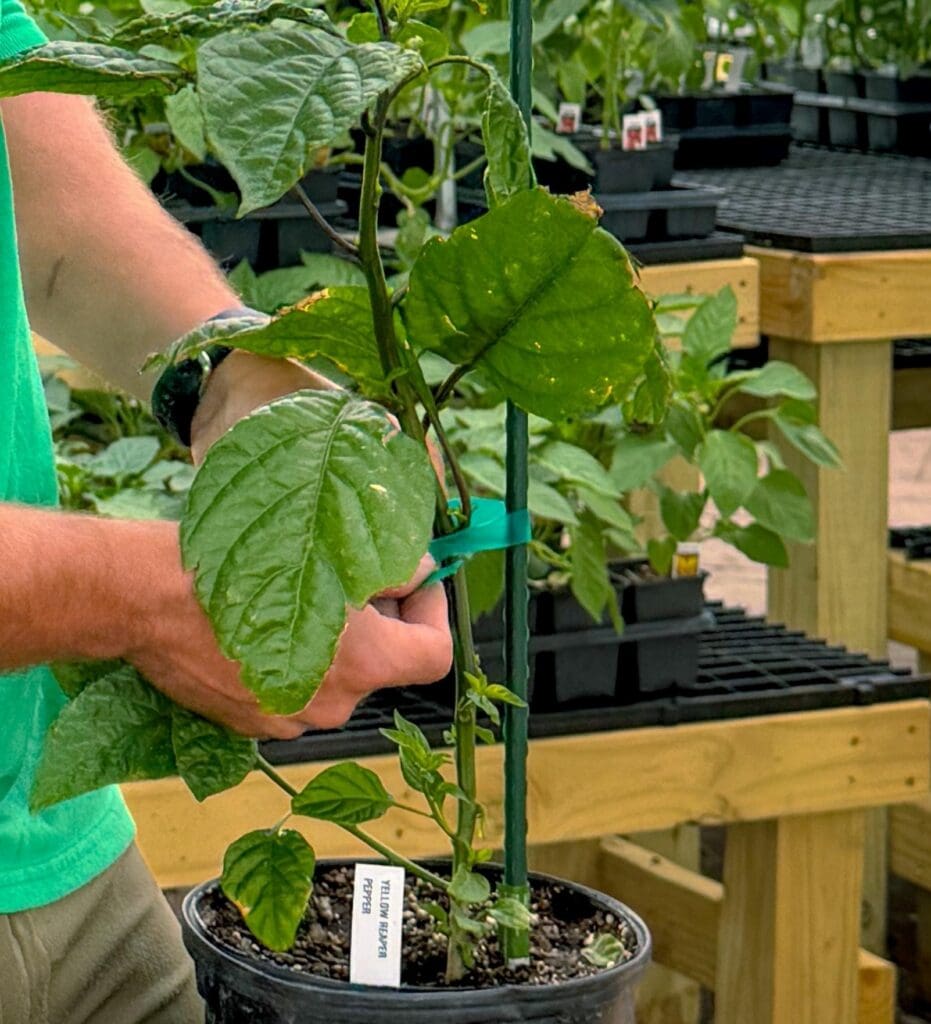
Pepper plants are somewhat fragile, and to keep them from getting knocked over by water or wind and breaking, we recommend staking them up. We like to use a single 2-3′ tall bamboo or takiron stake. Loosely tie the main stem of the pepper plants to the stake using pliable green garden tie tape and you’re good to go.
Pick Early Blooms

Pepper plants will start blooming almost immediately after planting, but the plants are still too small to produce fruit. So, pick off the early blooms to redirect energy into growing more foliage. Once the plant is bigger and more robust, then let it bloom and start producing.
Not Too Much Water!
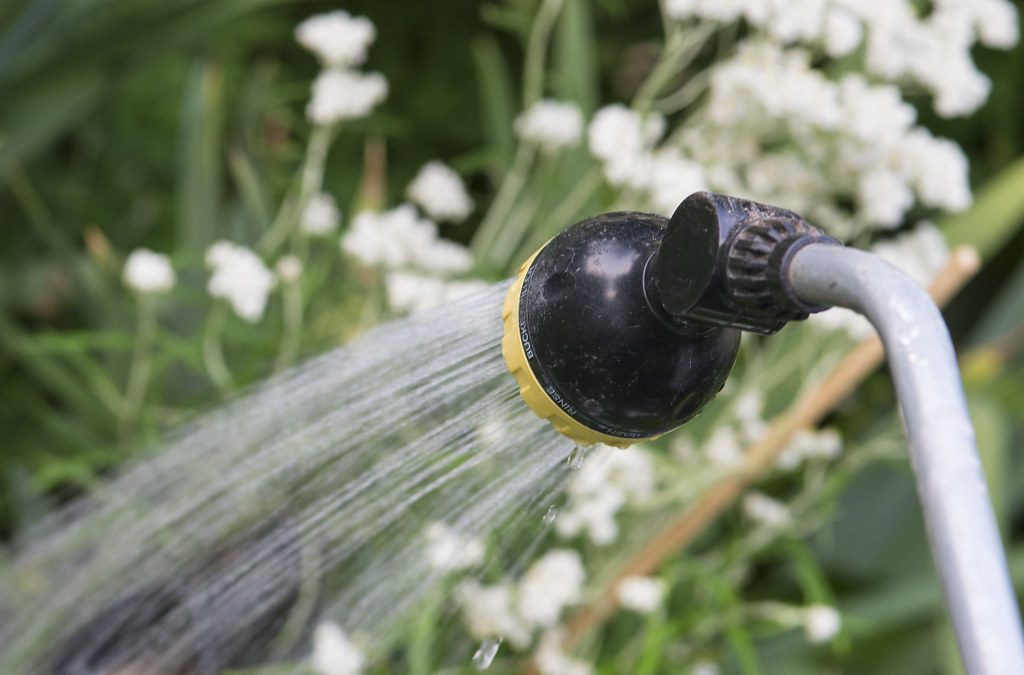
Water your peppers every day for the first week or 2 to get them established, then reduce your watering frequency. Once established, let them dry out between waterings then give them nice deep drinks. Watering too often invites some potential for root rot, decreases your production, and decreases heat and flavor. You want your pepper plants to tough it out – not too much water.
Feed, Feed, Feed!
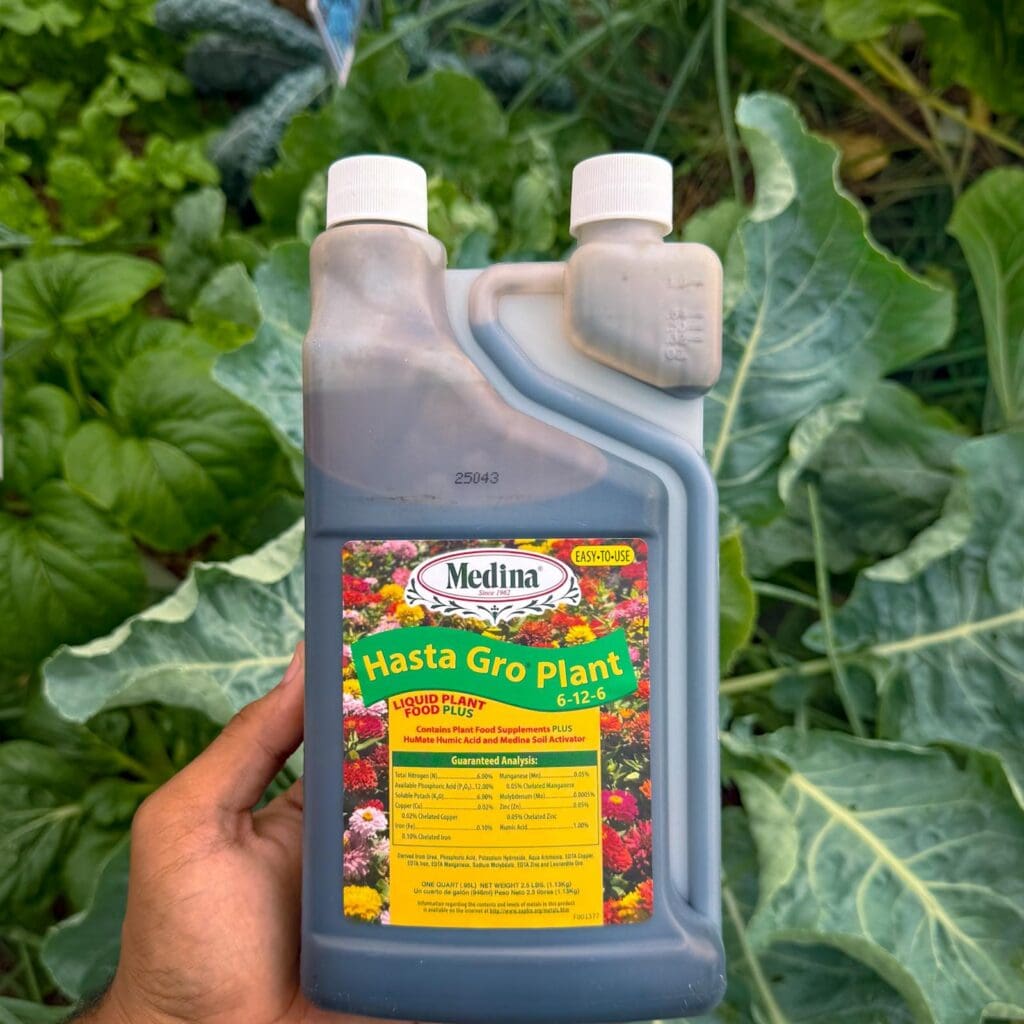
Like all veggies, peppers are very heavy feeders. If you don’t fertilize regularly, you will not get a good harvest. Use our tried and true method: Medina Growin Green on the 1st of the month, then liquid Hasta Gro on the 15th. Set these reminders/alarms in your phone and you’ll be making fresh salsa all summer.
Watch Wyatt’s Pepper Planting Video Guide!


Reader Interactions