

Woohoo for rain here in town and in the watershed!! Makes for a lot of happy plants and people. But with rain comes a major increase in bug activity, some of which can cause major problems. Here are the main offenders to watch out for and how to get rid of them.
Dreaded Aphids
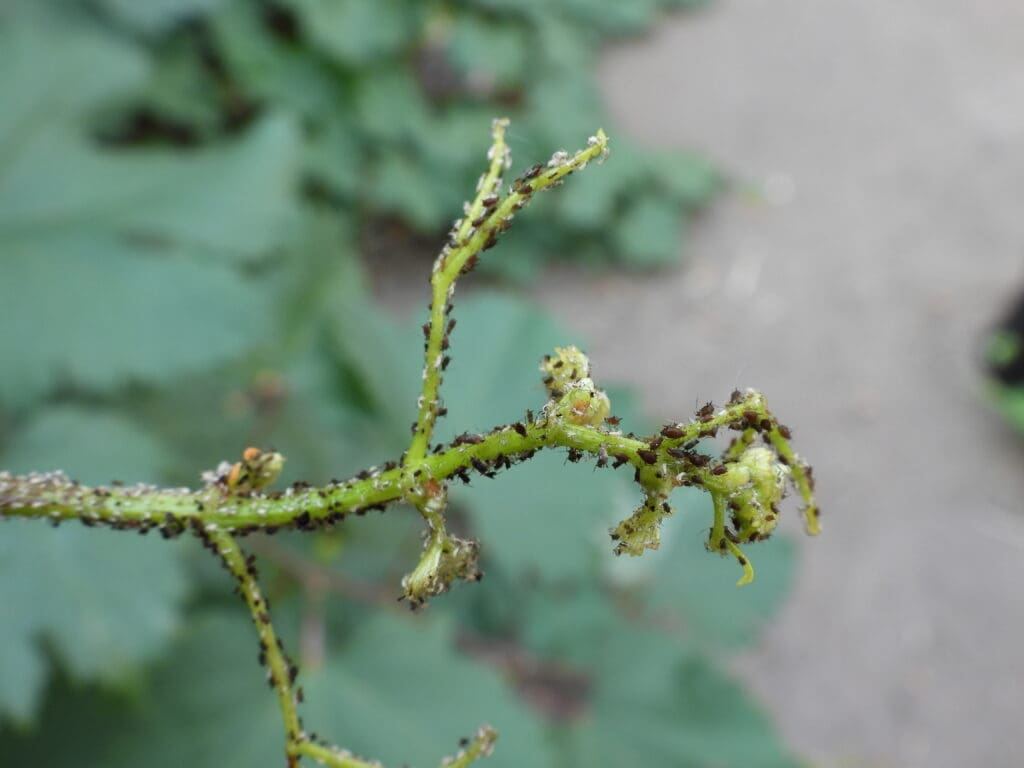
You’re bound to encounter aphids sooner or later. They’re commonly found in the veggie garden and attacking new growth of landscape plants like hibiscus, Indian Hawthorn, and even Texas Sage. If it’s just a few, you can blast them off with a steady stream of water. Or use organic Spinosad Soap or systemic Cyonara if the outbreak is bad and causing a lot of damage. Ladybugs are also a great natural control – they love eating aphids.
Disgusting Spider Mites
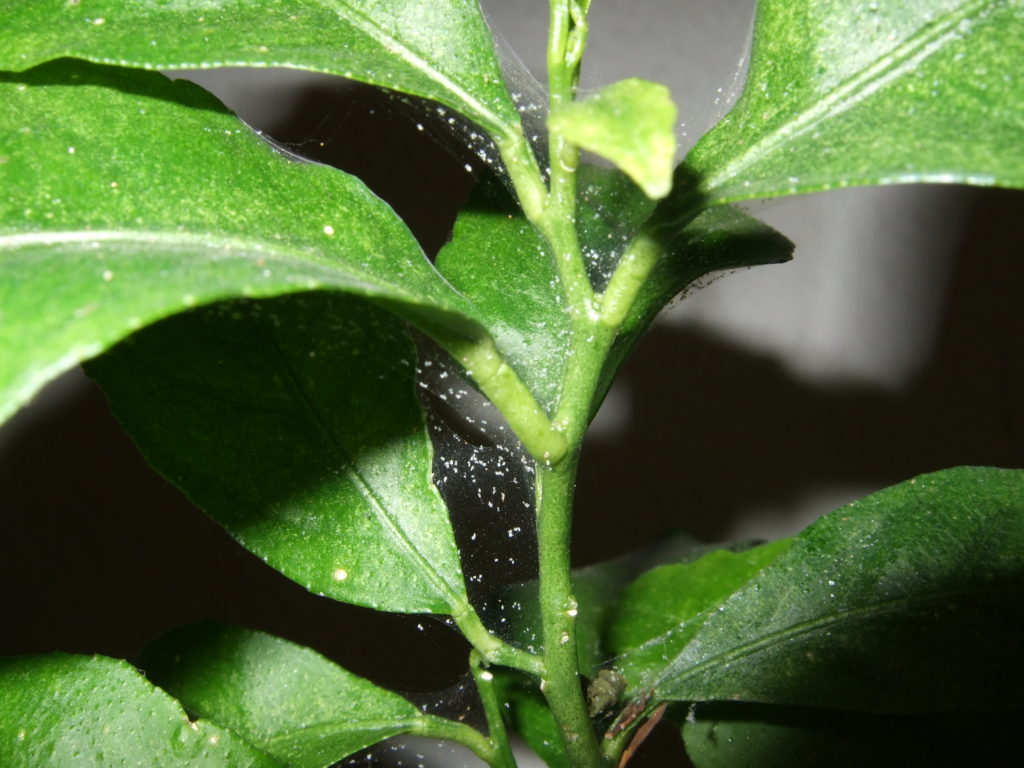
Look for these little white specks and fine webbing…spider mites! They’re also common in the veggie garden and they like plumeria, junipers, and all kinds of houseplants. Spinosad soap is a good control.
Menacing Mealy Bugs
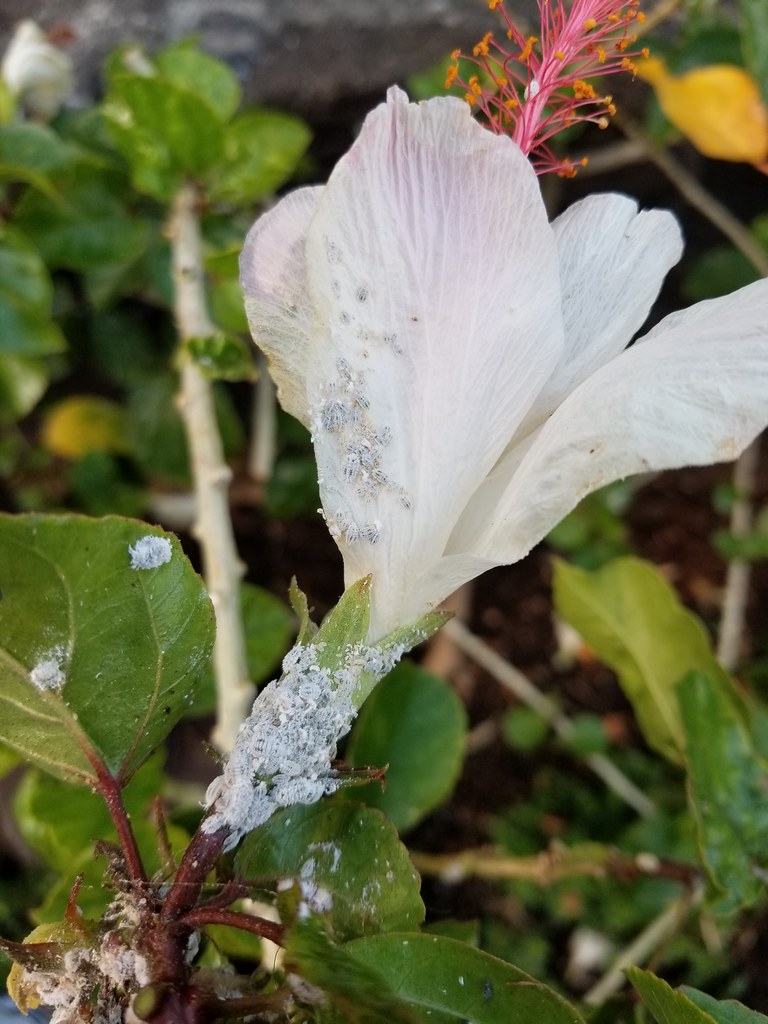
Look on the tips, stems, and undersides of the leaves for these white insects clustered together. If they go unnoticed for a short period of time , they will produce a protective cottony barrier over their bodies to protect themselves. Many times we hear “I have a white fungus on my plants”, but it’s usually mealybugs. Spinosad Soap and Cyonara can be used to kill these pests. Multiple applications may be needed. Thorough coverage is a must, and we recommend spraying once a week for 2-3 weeks to make sure you have killed them all. If you only have a few clusters of them at the tips of your plants you could smash them with your fingers and rinse, or cut off the affected tips and throw away the bugs in a sealed bag.
Hungry Caterpillars

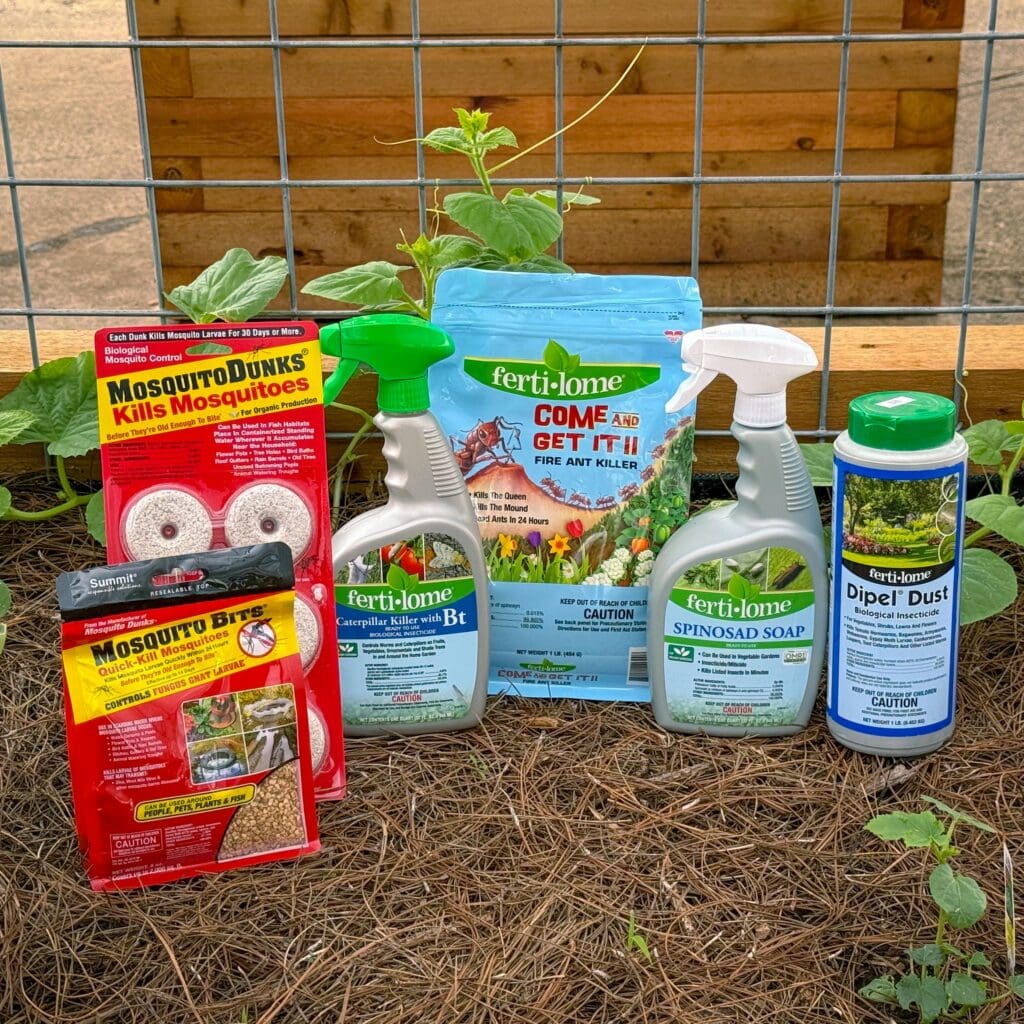
Look for 2 main signs and you’ll know its caterpillars: big holes chewed through leaves and black speckles of frass (poop). If you inspect your garden every day and it’s just a few chewed leaves here and there, you can usually find the caterpillar and relocate it. If they’re causing more damage than you’re comfortable with, you can treat with organic Bt. The active ingredient, Bacillus thuringiensis targets caterpillars only. It’s harmless to birds, bees, pets, and people. We carry Bt in a hose-end sprayer, a hand spray bottle, and in powdered form called Dipel Dust. The nice thing about the dust is that its super easy to sprinkle and you can easily see where you’ve applied it.
Annoying Ants
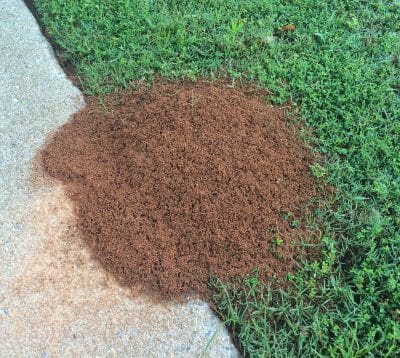
If fire ants are present underground, you’ll see their mounds pop up after a rain. We’ve had good success using organic Come & Get It Bait to take care of them. Sprinkle on the mound, and they’ll take the bait down into the colony and die. You can also drench the mound with Spinsosad soap or Orange oil.
Nasty Squash Borers
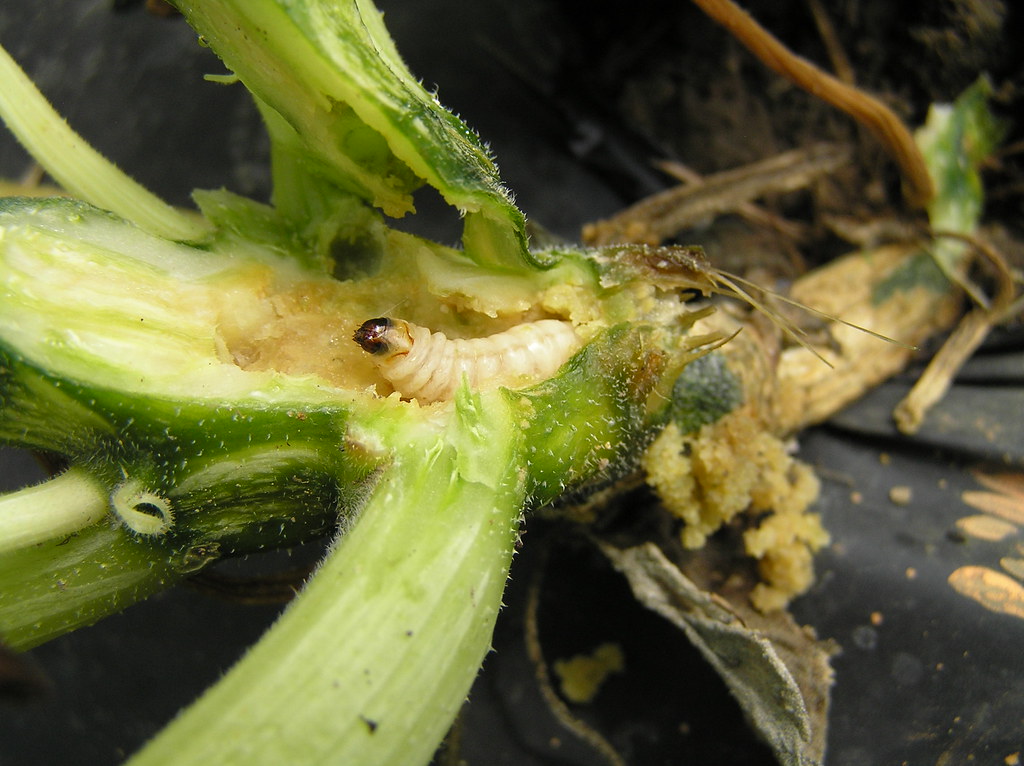
Your squashes are in danger! Squash borers love to bore into the mases of the stem of your squash plants and eat them from the inside. To prevent them from getting in, spray the stems of your squashes with Spinosad Soap. You can also inject your squashes with a simple solution of Bt to kill them if they’re already inside. Just mix Bt with water as the label recommends, then fill a syringe and inject the base of the stem.
Gross Scale Insects

The photo above is a leaf from a Cast Iron plant that a customer brought in. This one happens to be infested with 2 different types of scale insects. Notice the white specks and the brown gunky spots. There are many different types of scale that go after our common landscape plants like Cast Iron plant, Flax Lily, Hibiscus, Indian Hawthorn, and more. Have no fear! All-Seasons Horticultural & Dormant Oil Spray is here! Horticultural oil is a mineral oil solution that works by coating the insects and suffocating them. It’s safe and harmless for humans, pets, birds, and other wildlife, but very effective against scale insects and other plant pests. Just don’t use it when temperatures get above 90 degrees or you’ll risk burning your plants. If temps warm up, use Neem Oil sprayed in the evening.
Artistic Leaf Miners
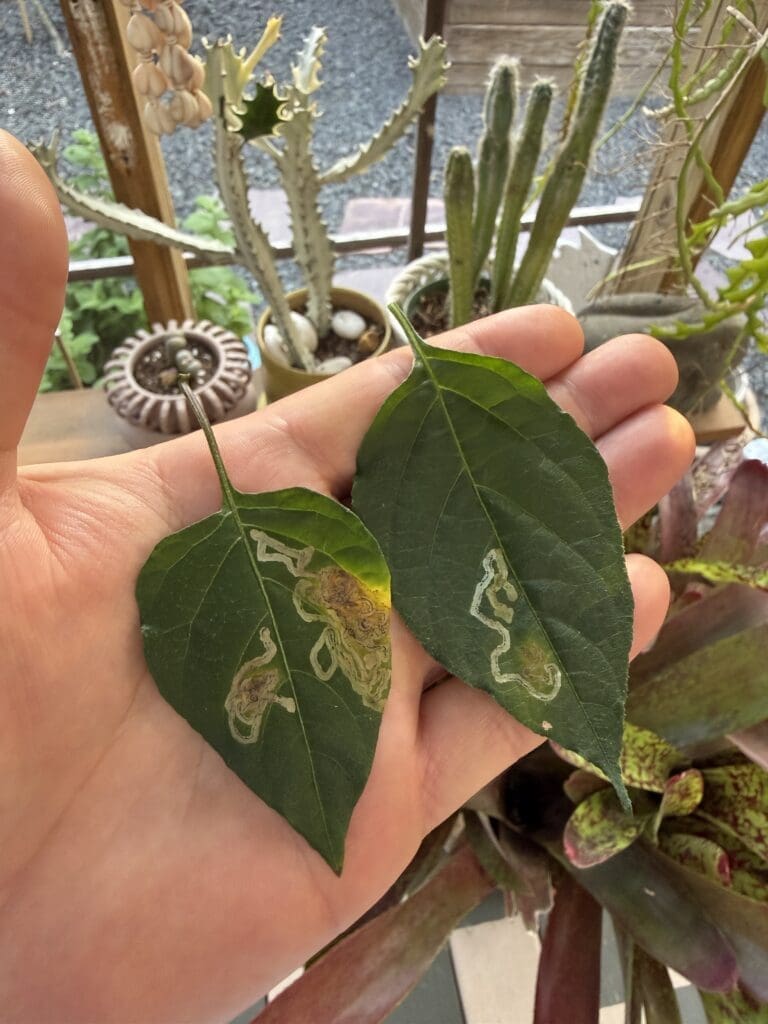
Have you seen these abstract paintings on the leaves of your pepper plants? Leaf miners! Aside from their obvious scrawlings, they typically don’t affect plant health much. If it’s just a few leaves here and there, just remove those leaves and carry on. If it’s a lot of damage, remove the affected leaves and spray the remaining leaves with spinosad soap or neem oil, which will signal to the flying leaf miners that this is not a good place to land and lay eggs.
Flying Flea Beetles
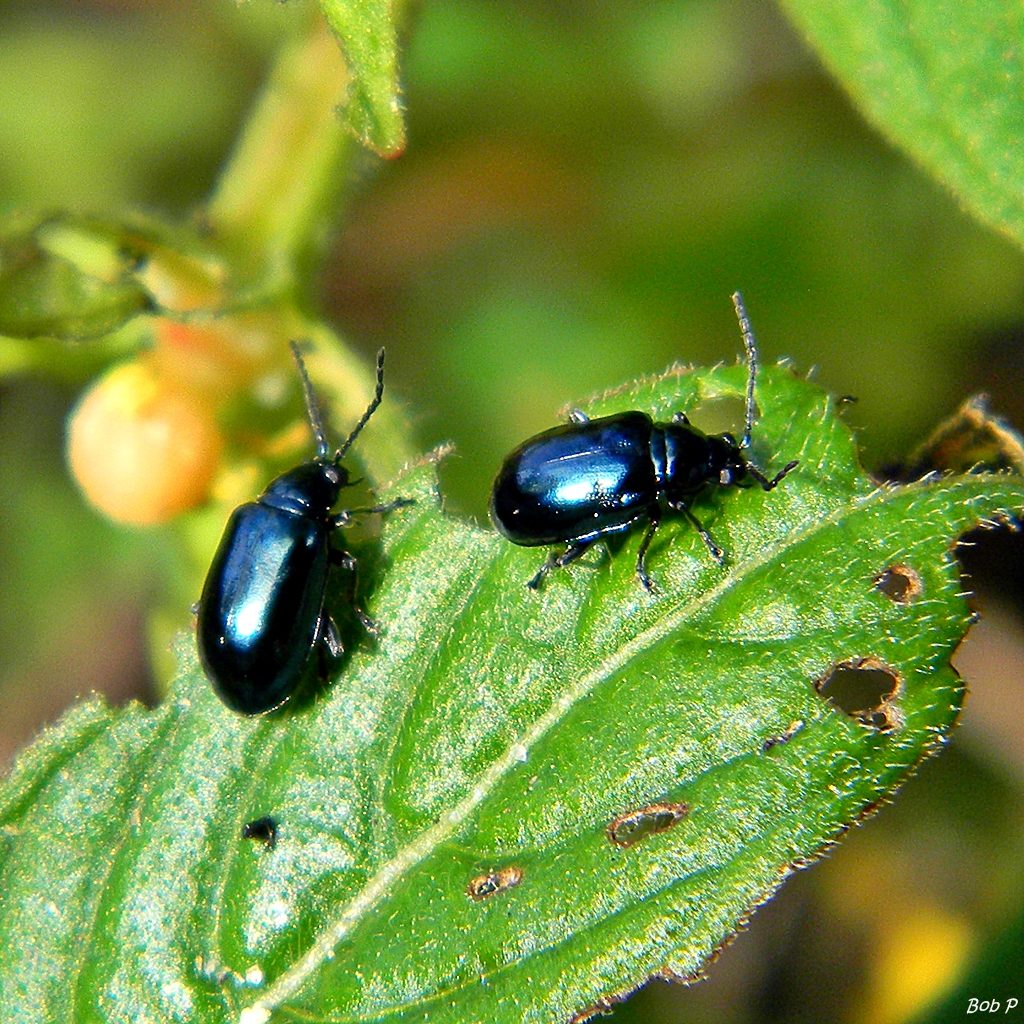
Flea beetles are tiny – about ¼” or smaller. They leave their signature pin size chew holes in newly planted herbs & veggies. They’re also fond of flower buds just before they open. Spinsosad soap will take care of them. Plan to spray late in the day or early evening when bees are not foraging. It is safe for bees once the spray dries.
Grubby Grub Worms

We’ve been seeing June bugs, which means grub worms will follow soon, typically early to mid May. If you want to prevent them from doing damage to your lawn, use Bonide Insect and Grub Killer granules. In this case, ‘season long’ means about 3 months. So, you may need another application in mid July.
Abundant Pill Bugs

Pill bugs aka rolly-polies are everywhere right now. They’re actually crustaceans, not insects. They usually don’t cause much damage to plants, but if they’re out of hand, you can treat with organic Sluggo Plus. Or, you can get them drunk… Fill a cat food or tuna can half way with beer, and the pill bugs will crawl in, get drunk, and drown.
Vampiric Mosquitos
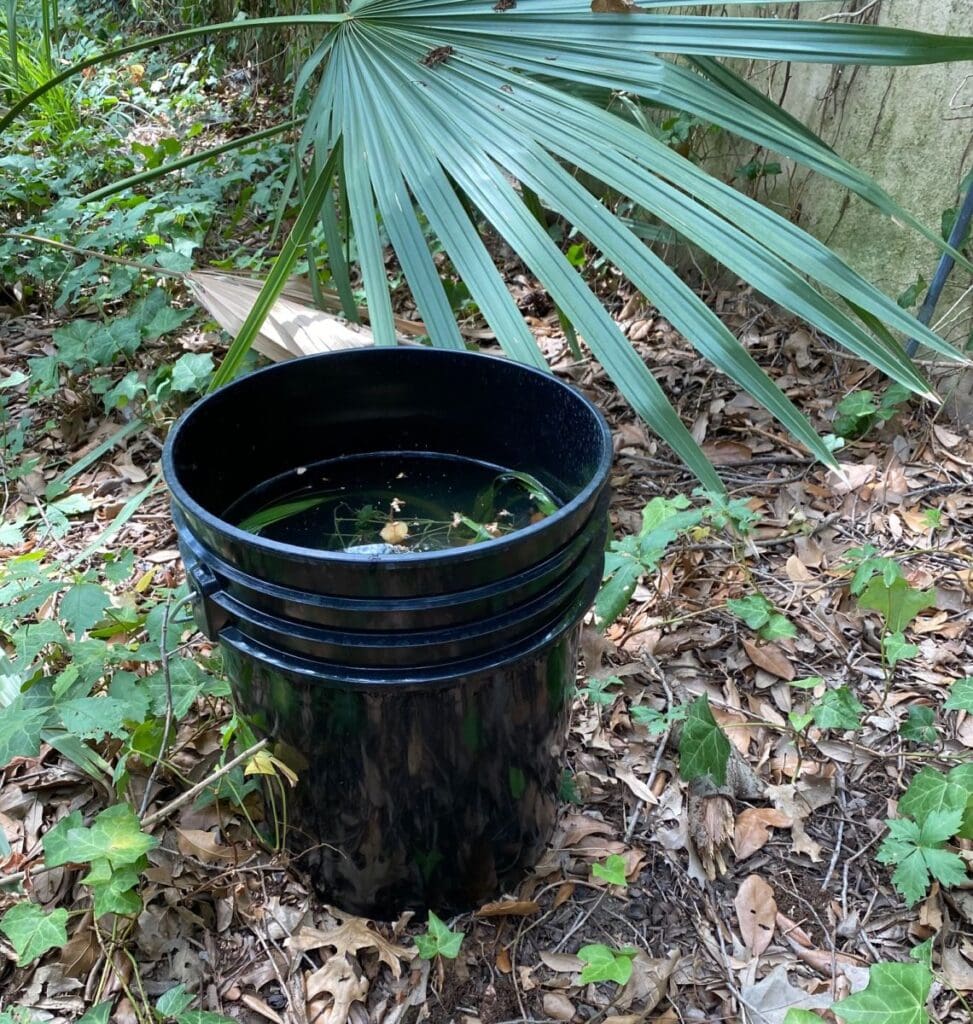
They’re sure to be hatching as we speak… To prevent mosquitos, use organic Mosquito Dunks or Bits in your rain barrels, bird baths, and anywhere you have standing water. They’re harmless to birds, pets, and other bugs, but they prevent mosquito larvae from hatching. These can also be used to create very effective mosquito traps. Just fill a bucket with water and some leaf/grass clippings, and add a dunk or granular bits.
Other Bug Questions?
If you’re unsure of what might be causing damage, you can send us pictures to info@gillnursery.com or via Instagram or Facebook. Better yet, bring us a sample (sealed in a bag please!) and we’ll identify the culprit and send you home with a good solution.

-Jesse


Reader Interactions