
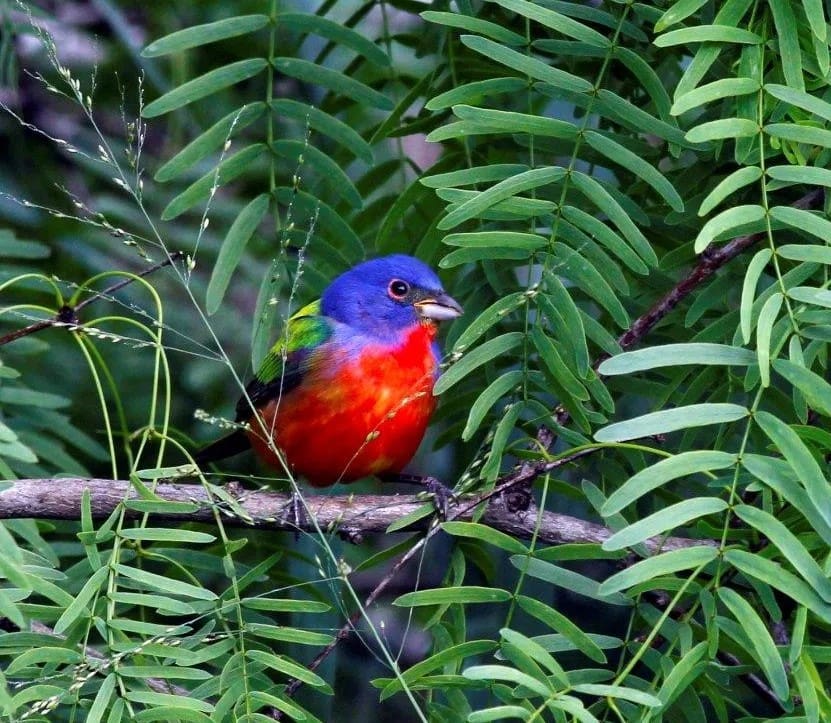
Did you know that most birds who migrate through North America travel at night? And did you know that lights left on at night can cause migrating birds to become disoriented, collide with structures, or simply lose precious energy they need to keep going? That’s where Lights Out Texas comes in. This is a cooperative campaign (led by Audubon Texas and other partners) to reduce light pollution along bird migration corridors in Texas by encouraging homeowners, businesses, and municipalities to turn off or dim nonessential lights during migration seasons. Here’s how you can participate.
Lights out Texas!

When: Fall migration window: August 15 to November 30 (peak September 5 – October 29) and Spring migration window: March 1 to June 15 (peak April 22 – May 12)
What to Do: Turn off all nonessential outdoor and indoor lighting (especially upward‐facing or bright façade lights) between 11 p.m. and 6 a.m.
Why It Matters: Your garden sits right in the middle of a major bird migration corridor. Over 80% of the long-distance migrants moving through North America cross the Texas Coastal Bend in some way. That’s why Corpus Christi is called the Birdiest City in North America!
Impact: As many as 1 billion birds die annually in collisions with buildings and structures in the U.S. Light pollution exacerbates that toll. Each light you switch off is a gift to a bird on the move.
Bird-Friendlier Lighting
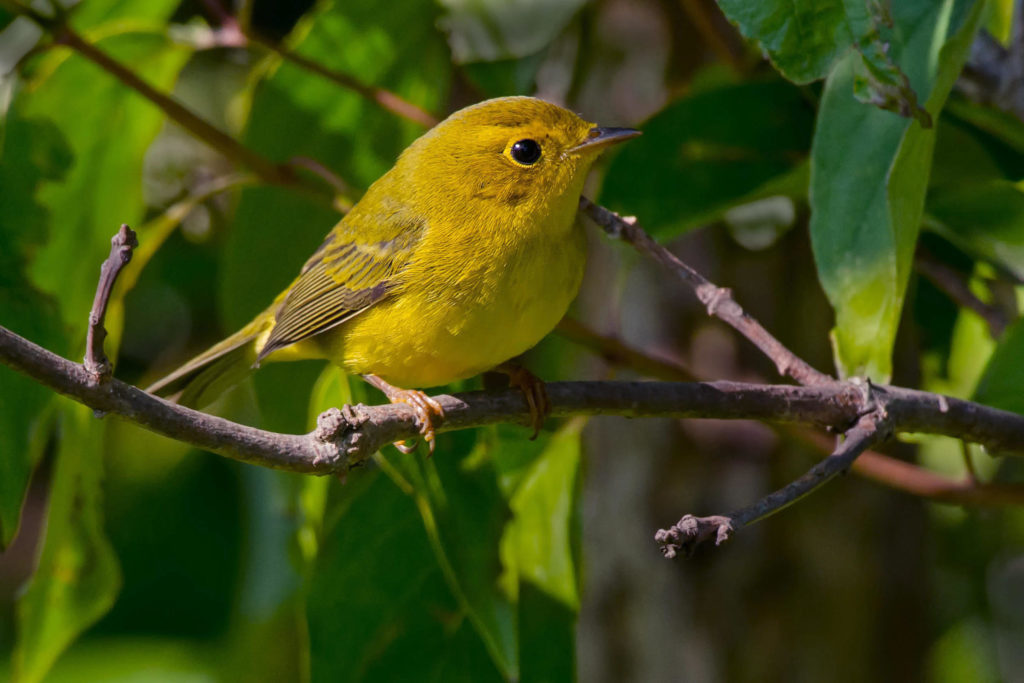
Although turning off all lights is best, here’s what you can do if you need to keep some lights on at night:
-
Use warm, low-intensity lights (e.g. low Kelvin temperature, yellow/red hues) are better than bright white or blueish lights, which are more disruptive. (Blue/UV light is more visible to birds and draws them more).
-
Use shielded and downward-directed fixtures that minimize skyglow and don’t shine upward or horizontally.
-
Install motion sensors or timers so lights are on only when needed.
-
Close curtains, blinds, or shades: block interior lights at night so they don’t emit outward.
-
Consider bird-safe glass or window treatments (e.g. fritted glass, window films, decals) to reduce collisions. Birds often don’t perceive glass and are attracted by reflections.
Don’t Forget Plants + Water!

Your yard can become a critical recharging station for migrating birds. Here’s how to choose plants that feed, shelter, and sustain them:
-
Focus on native plants: they support more insects, caterpillars, and overall food for bird young.
-
Provide a diverse mix: host plants for caterpillars (larval food), nectar, seeds, berries, and shelter (like Muhly grass for example).
-
Offer multi-story structure: trees, shrubs, understory, vines, and groundcover.
-
Ensure seasonal food continuity: spring blossoms, summer fruit, fall berries and seeds.
-
Don’t over-prune too early in migration season; let foliage, dead stems, seedheads remain as long as feasible to provide resources. A good rule of thumb for fall pruning is to not prune more than 1/3 of the plant.
- Also, maintain water sources (birdbaths, shallow ponds) and leave leaf litter or ground cover patches for insects and seed for ground-feeding birds.


Reader Interactions