
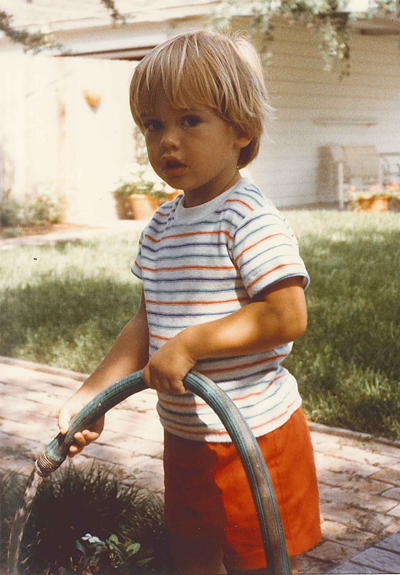
 Some of you remember Stuart as an infant in his baby carrier, plopped on the sales counter at our Airline store while I ran the cash register. Some of you remember his working in your garden or helping you select your Christmas tree or coming to your home with James on a house call. We laugh out loud when we recall Stuart, around 10 at the time, diagnosing chinch bugs in a customer’s yard. He clearly was paying attention to his dad. And then there was the time, at about the same age, when he suggested that we start staying open 24 hours a day, allowing inventory to be stocked while customers were asleep! We haven’t implemented his system, but we recognize it has merit. As a young boy, Stuart travelled with us on tours of plant growers around Texas. James, Stuart and I would jump in the grower’s vehicle and drive the fields, trying to find the best plants for our garden center. James and I devised a system for grading plants, A+ being the best to F being the worst, all recorded on paper, but never revealed to our salesperson. On one of these trips, Stuart announced to the group that he thought the dwarf pittosporum was a C grade. We covered up his comment as best we could, but laughed later. Bottom line, Stuart lived Gill Landscape Nursery from a very early age.
Stuart has always been adventurous. I’m embarrassed to say friends would report seeing him on his bike, all over Corpus Christi. He loved exploring. He loved seeing other neighborhoods. He loved seeing the way others lived. His earliest out-of-town adventures included fishing with his brother Trevor at his uncle Lanny’s “Baja Laguna”, kayaking on Texas rivers, exploring around my parents’ cabin in Colorado, camping with his dad, brother and grandmother on Matagorda Island, exploring South Texas brush in Ingleside, and many, many trips to the beach with his dad. As he got older, he worked to travel, often alone. Between school and jobs he travelled to countries in Europe, Central and South America. On one of his surf trips with his dad to Ecuador, he met two women from Seattle. After getting to know Stuart, they recommended he move to Seattle. They thought he would like it. He had finished his degree at the University of Texas and was working in Napa, California.
 Stuart packed his bags and moved to Seattle. He started working in the landscape industry, and then moved into carpentry. Stuart has always had a great appreciation for fine craftsmanship. He found good people to work with, he started from the bottom learning the trade, and eventually began purchasing his own tools, the best he could find. He now works with Ambrose Construction, managing beautiful residential remodels and additions.
Stuart met Anne in February of 2013. She hadn’t been in Seattle long. They found they had a lot in common. They both love good food and literature; they both love the outdoors and adventure. Plus she’s very pretty with beautiful blue eyes. Anne also has travelled to many foreign destinations with her parents and lived in Indonesia. Anne works in a public relations firm, representing independent restaurants in Seattle. She is a skier, runner & yoga instructor. She is kind, gentle and smart, she loves Stuart, and she’s about to become our daughter-in-law!
So…that’s an update on our son, Stuart. You know, the day he was born, James’ and my lives changed forever. He has truly been a joy for us, someone who is always on our minds, someone with whom we look forward to spending time with. Even though Stuart doesn’t live in Corpus Christi anymore, he is still a part of Gill’s. He knows and loves our Gill family. He continues to help us think through work challenges. He is always there to celebrate our successes.
 One more thing… Anne and Stuart are doing a bike tour of Indonesia for their honeymoon. Happy, Happy!
-Sally
 So look around your yard; see what’s happening. If you’re not sure whether you have a beneficial or a problem insect, just put a sample in a ziplock bag and bring it to us. We will help identify the bug and tell you if you need a control solution.
  easier, and can save you a lot of sweat.
 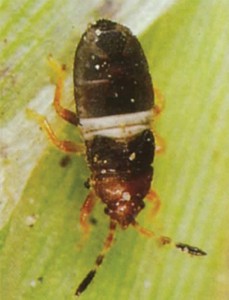 Seems a little early with all the rain, but the temperatures are right on up there where they should be for May. I am seeing lots of damage to the lawns and finding chinch bugs. Areas of the lawn will look dry, especially near the sidewalk or driveway where it is the hottest. If you dig up a shovel width piece of lawn and shake it over white paper, you will see small black bugs with a white stripe across their back. The old method was to cut the bottom out of a coffee can and push it into the soil of the dry area, fill it with water and the chinch bugs would float. Try finding a metal coffee can these days! You can spray the areas with Cyonara,
  Triazicide, even Mosquito Beater Hose-end will kill chinch bugs. You do not have to spray the whole lawn, just the areas affected. The grass will quickly recover. For an organic control, use Spinosad or Diatomaceous Earth.