
“What smells so good in the kitchen?” my family asks. “Just sautéing the onions.” I reply. Funny how the pungent tear evoking root awakens our noses and our stomachs that something incredibly good is bound to come from of it. Its onion planting time and the first ones are here and ready to plant…just in time for the holidays! Onions need lots of sun, good drainage, fertilizer, and time if you want larger bulb onions. Harvesting green onions is just a month or so of growing, plucking and eating. Because onions are a root vegetable, they can rot in our hard clay soil but planting them in raised gardens or large pots to help soil moisture makes it easy and more successful. We grow short day onion varieties in South Texas and our favorites are Bermuda White, Southern Belle Red, and the famous 1015Y Texas Super Sweet . See our Garden Guide on growing onions in South Texas. You’ll soon be hearing…” What smells so good in the kitchen?”
 -Debbie
 -DeAnna
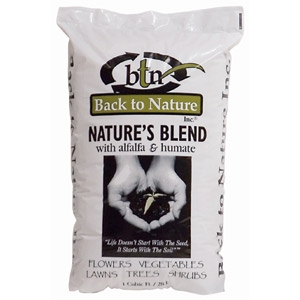 This time of year your lawn might not be looking so great. It might be patchy, or pale yellow, or just unhappy. Since St. Augustine grass goes dormant in the winter, fertilizer might not be the best choice. Instead try using Nature’s Blend compost. It’s an alfalfa humate blend that helps your lawn against fungus and feeds the roots. One bag covers 50 square feet of a healthy lawn, or if it’s struggling use one bag per 25sqft. Make sure you spread it to 1/2” or less! Nature’s Blend provides protection against temperature and moisture extremes too, so your lawn has the best chance of surviving the winter and emerging in spring.
 -Marta
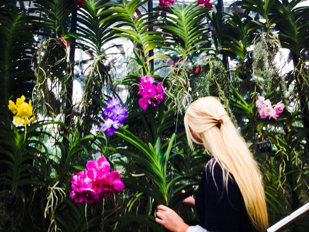 Emily, a Landscape Design Assistant here at Gill’s, loves orchids. Before joining us, she worked at the Naples Botanical Gardens in Naples, Florida, growing orchids. Emily, pictured here, shares her knowledge – enjoy!
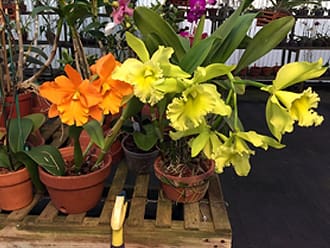
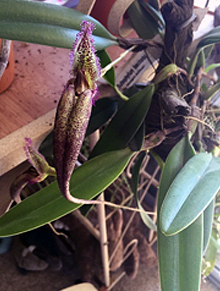
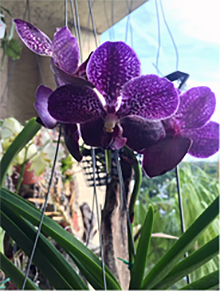
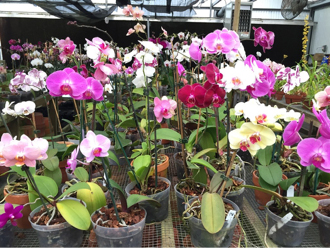 Orchids are a very diverse plant species as they occur naturally on every continent except Antarctica. They can grow as epiphytes which attach to trees, lithophytes which attach to rocks, or terrestrial which grow in the ground like most plants. They are known for being the tropical, bright-colored beauties in the rainforests and they are also known for being the state flower of Minnesota – the Showy Lady’s slipper. Orchids also occur in every color except for true black or true blue – if you see these colors it is likely that they are either dyed or you are seeing a very vibrant spectrum of purple.
 Perhaps the most beneficial orchid is Vanilla planifolia – the vanilla plant. This is a vining species whose roots start in the ground and began to attach to a tree and vine to the top. When this orchid flower is pollinated and creates a seed pod, the seeds are the little black specs that you see in your vanilla bean ice cream! This is the only orchid that is being farmed for industrial purposed in the food and cosmetic industry.
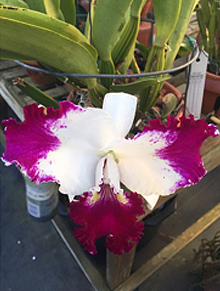 The one thing that almost every orchid species has in common is their floral arrangement: The outer three flower parts are sepals and the inner three flower parts are beautifully colored petals. A fun fact is that a study has been done to prove that humans have such a fascination with orchids because the orchid flower has bilateral symmetry – like a human face – which makes humans have an affinity to caring for them. It has been said that “When someone looks at an orchid, it looks back at you.”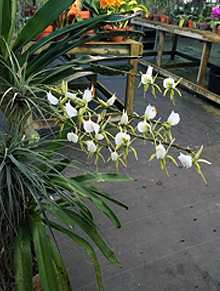
 –Emily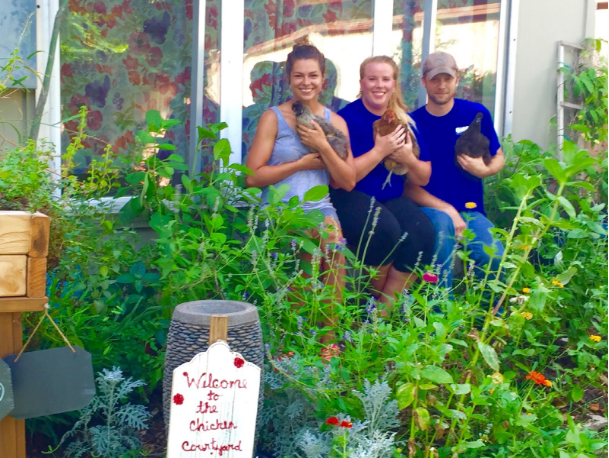


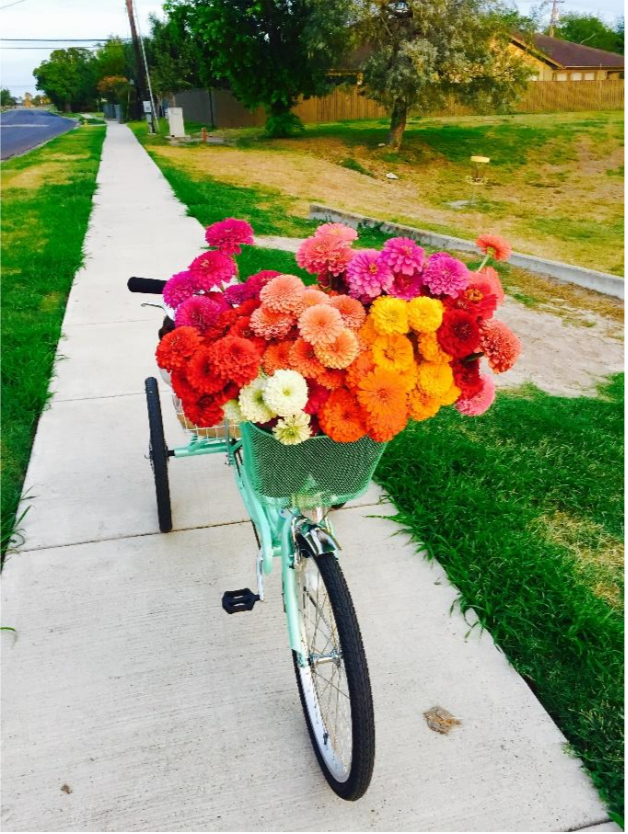
 -Emily Capule, Flower Farmer and Gill’s Landscape Design Assistant