
Why does Mark Scott, community leader and eight-term city councilman, grow zinnias? So he can keep fresh flowers on his wife Carol’s bathroom counter for a big portion of the year!
They were college sweethearts and have been married for 38 years. I think there’s a lesson for us all!
Mark and Carol welcomed me into their home a few weeks back. I wanted to see his zinnia garden in person. I’d seen it on social media and could tell from the photos he was serious about growing them. Come to find out, he purchases exotic zinnia seeds from all over the world; this year they came from Washington, California, Maine, England, Latvia, and Japan.

Zinnias grow native primarily in Mexico, as far south as Guatemala, and as far north as Colorado.
They are members of the Aster family and are closely related to the daisy. Zinnias were available by seed as early as the late 1700s, but it wasn’t until the mid-1800s when the French developed the double form of the plant that they became wildly popular in the United States.
Zinnias are one of the most giving summer bloomers in South Texas and they come in a wonderful range of colors from pinks, corals, and whites to yellows, purples, and oranges. You can buy one package of mixed California Giant Zinnias, plant them in your garden with full sun and regular watering and be sure to have flowers on your dining room table all summer long. My mother grew zinnias when I was a young girl because she loved the bright colors. And because they were easy!
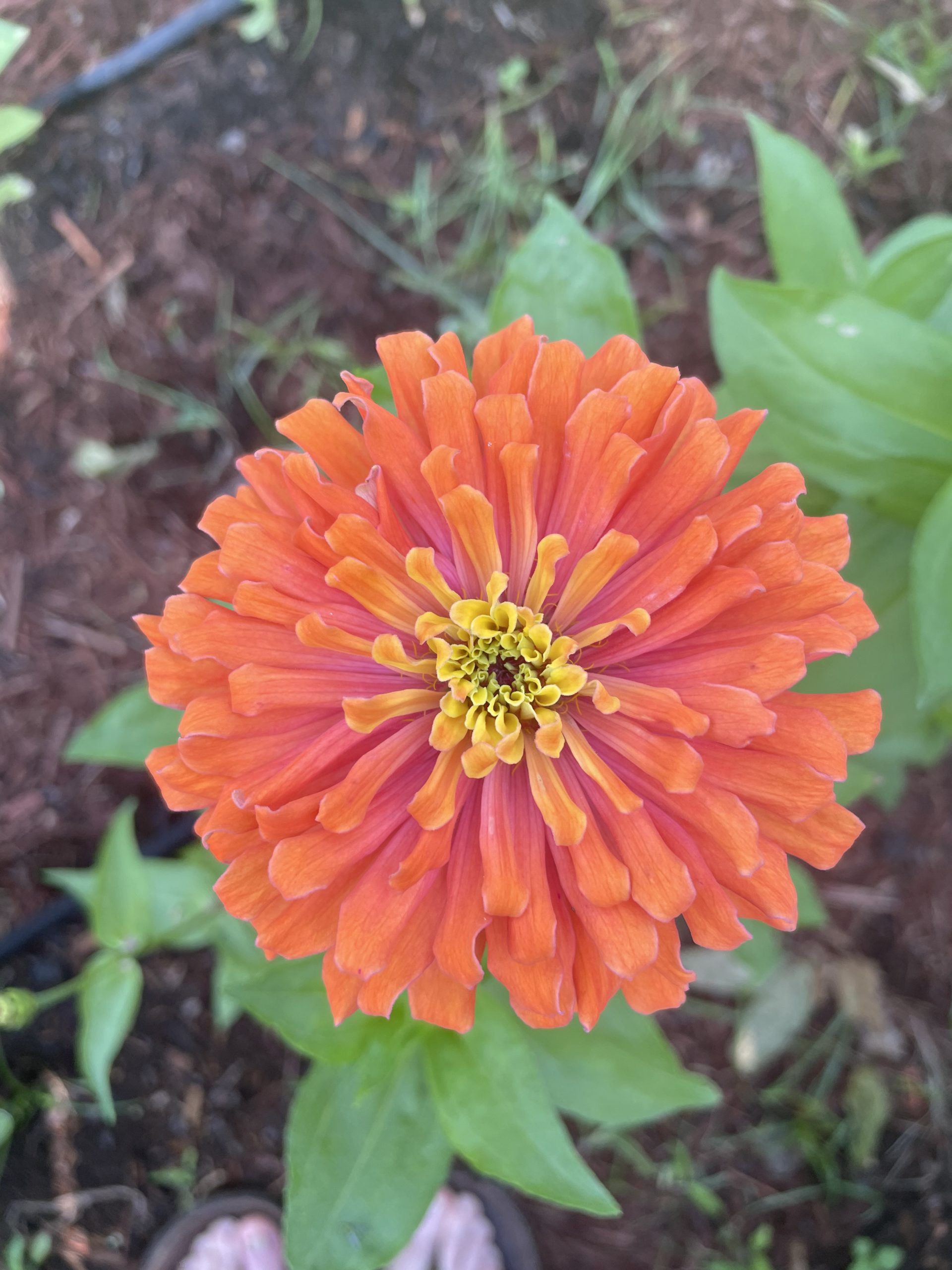
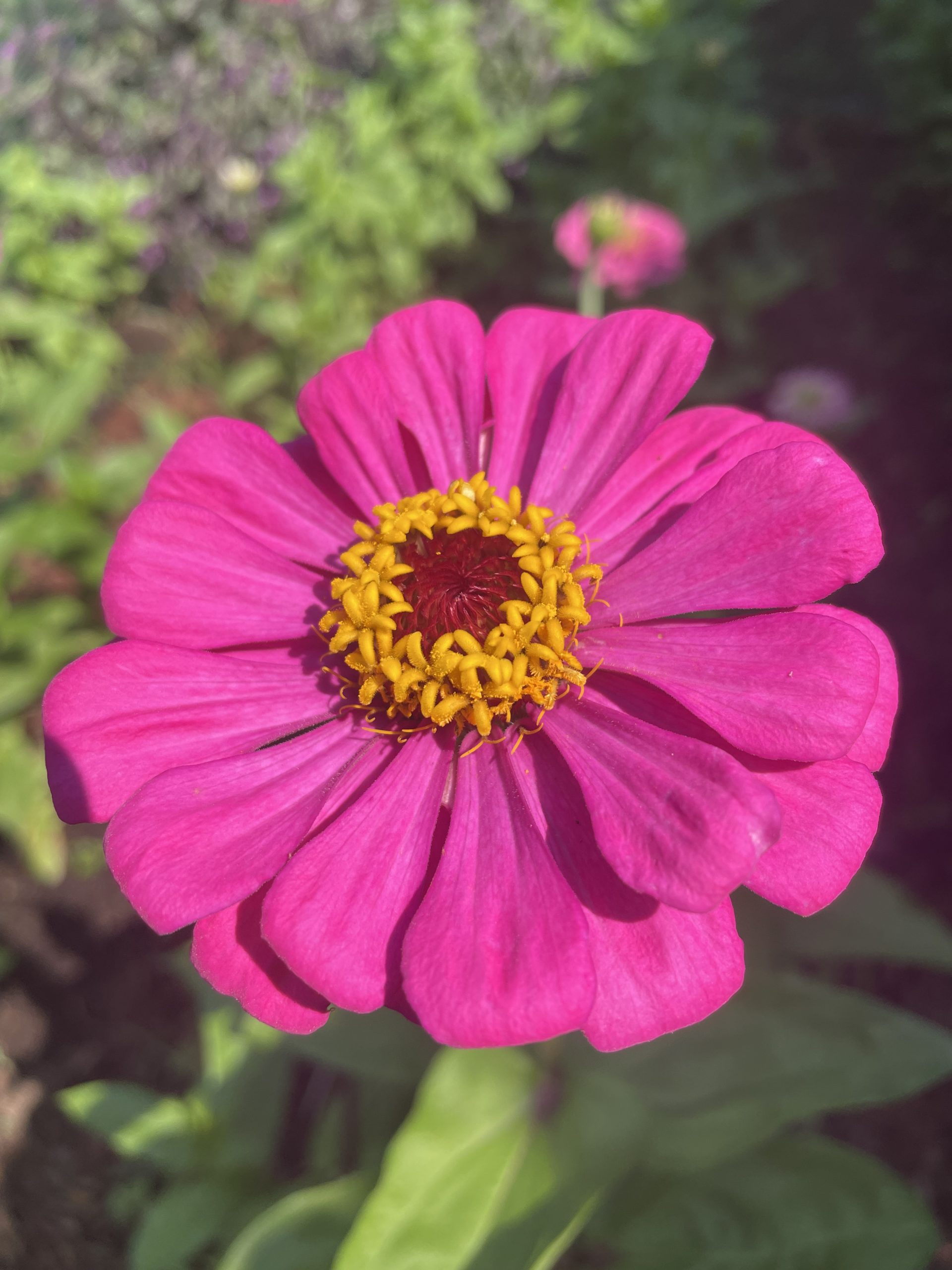
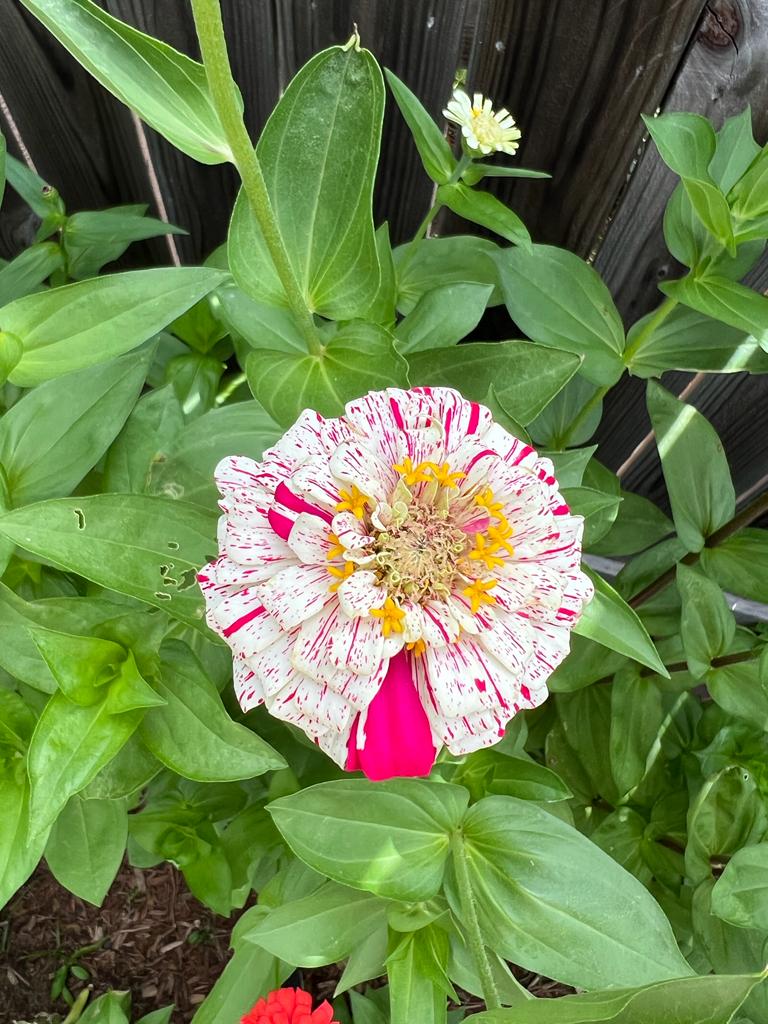
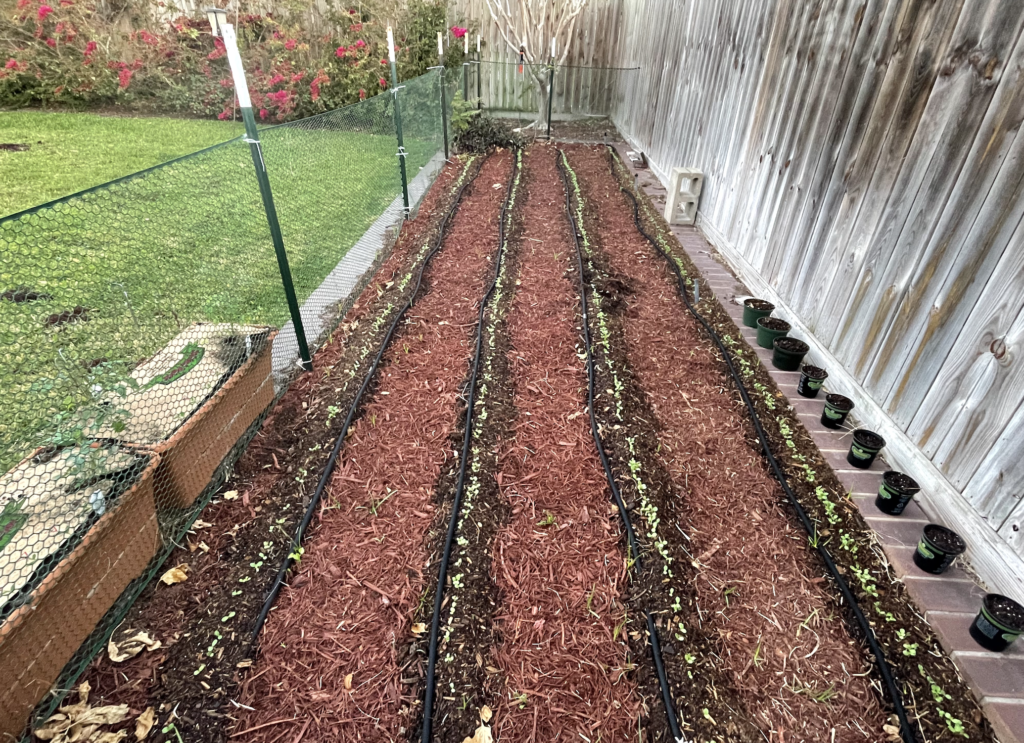
Mark dedicates about 10’ x 40’ of a sunny portion of his backyard to his zinnias. He works his soil each year in February with compost to enrich it and builds raised beds for planting his seed. He plants rows 24” apart with weed mat between each row. In March, Mark digs a small trench, drops seed in, and once seedlings are 2” tall (within about a week) he pulls excess seedlings to give plants room to grow. Zinnias are prone to getting a bit of fungus on leaves if they stay wet so Mark uses soaker hoses to water from below. That keeps the soil moist and leaves dry!
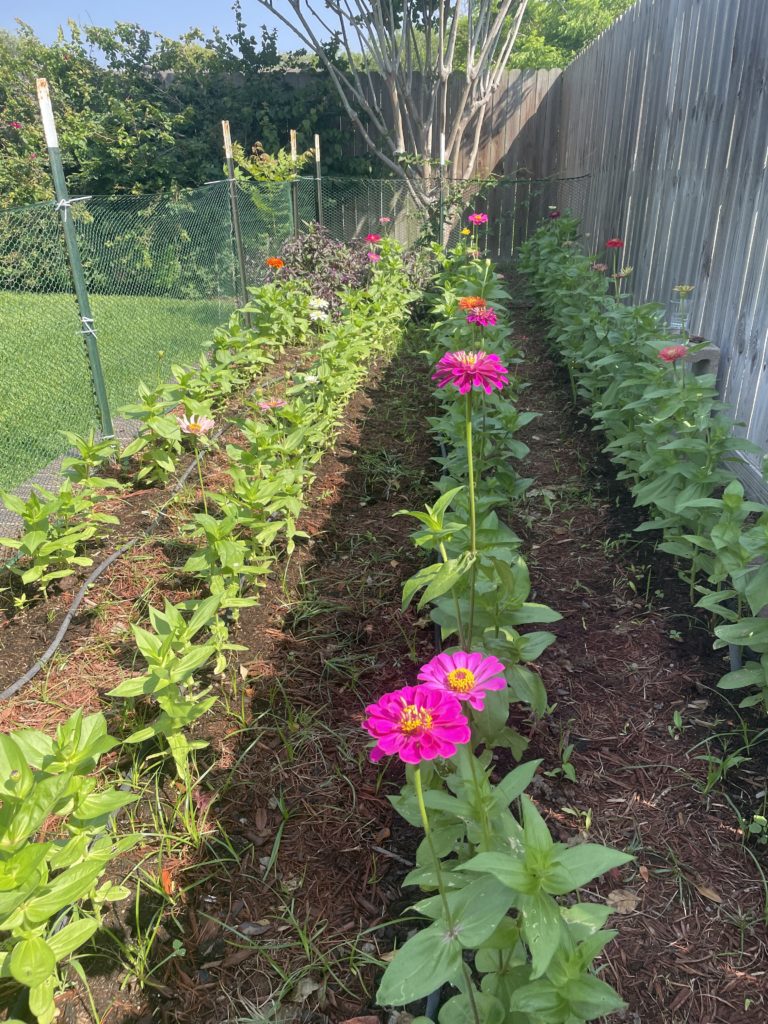
Mark loves sharing his zinnias. Beyond gifting his flowers to Carol – especially the purple blossoms – her favorite, Mark delivers them to his friends and family. People know when they open their front door and see a mason jar with zinnias on the front porch, Mark has been there. What a great way to make a person’s day better!!
Mark begins every morning outside. After a bike ride, he sits in his beautiful courtyard, shaded by pecans and oak, and plays fetch with his dogs. Carol and Mark spend time most evenings in their courtyard, drinking a bit of wine, picking and pruning on their plants, and reflecting on the day. Their love of nature and family and friends is beautifully reflected in their garden; thank you for sharing your gift with us, Mark and Carol!

– Sally Gill

 Be on the look-out for oak tree caterpillars in your oak trees. They cluster together in large groups feeding on the leaves of your trees or you may notice poop under your tree (on your patio or walk.) They can be killed with Thuricide sprayed onto the leaves or with Fertilome Borer, Bagworm, Tent Caterpillar Spray containing Spinosad. If your trees are too large to spray or you just don’t want to, they will not kill your trees. The tree will leaf back out in the spring. I have had customers say that early in the mornings they could hear them chewing the hard oak leaves. Crunch, Crunch, Crunch!
 Pansies love the cool days of fall and winter. Plant them in full sun. Use Hi-Yield Blood Meal at the time of planting for larger and more profuse blooms. Once they become established use Maestro Rose Glo to keep them blooming throughout the season. You can also plant their dwarf counterpart violas. They have smaller leaves and blooms, but tolerate heat and moisture better.
 With the cooler temperatures, shorter days and heavy rains in the past few weeks, powdery mildew fungus has attacked mesquite trees. Since the trees are getting ready to drop their leaves for the winter, it is not necessary to spray them. They will leaf out and be fine next Spring.
 Plumeria are suffering from rust fungus caused by the same weather conditions. The undersides of the leaves have yellow- orange or reddish brown pustules. Since you should be withholding water from the plumeria so they can go dormant for the winter, be sure to gather up the leaves as they drop and discard in the trash. It is not necessary to spray unless the condition re-occurs in the spring.
 With all the recent rains, cool nights and shorter days, lawns are prone to get fungus. Circular brown patches appear with some green blades in center of the patch, and a thin band of subtle rusty red at the outer edge. If you tug on the rusty red blades at the edge and they pull off the runner easily and look like rotting old celery at the base, then you have fungus. We carry Fertilome Liquid Systemic Fungicide hose-end, Bayer Lawn Fungus Granules, or Fertilome F-Stop Granules. For an organic treatment, use Serenade, or Nature’s Blend compost. You will need to re-treat if the weather conditions and symptoms persist. Be aware these problem areas can grow quickly, so prompt treatment is needed to maintain an attractive lawn.