
|
THERE’S FUNGUS AMONG US.With all this rain, our plants are happy to be well watered. But lurking around the corner are the fungal problems bound to happen, especially with roses, squash, and gerbera daisies. Use Fertilome Systemic Fungicide for control of powdery mildew, black spot, etc. It also works best as a preventative measure to stop the problem before it happens. If you’re an organic gardener, try using Serenade Fungicide instead. -Marta We have a fresh shipment of Ladybugs and Beneficial Nematodes!
Fun facts about Ladybugs- Ladybugs aren’t really bugs at all, they’re beetles. There are almost 400 different kinds of ladybugs in North America. Female ladybugs can eat as many as 75 aphids in one day. They also like to eat scale, mealybugs and spider mites. Ladybugs smell with their feet and antennae. A ladybug’s jaws chew from side to side instead of up and down like our jaws. The color of a ladybug’s spots begin to fade as it gets older. Ladybugs are most active when their body temperature is 75 degrees or warmer. A ladybug’s bright color warns birds that it does not taste good. When a ladybug flies, its wings beat 85 times every second. Female ladybugs are larger than male ladybugs. Aphids are the first pest to hit in the spring. They love the new growth on plants. Buy your ladybugs now and keep them dormant in the refrigerator till your first outbreak of aphids, then release a few hundred at a time.
Beneficial Nematodes are microscopic creatures that live in soil where they feed on the eggs and larvae of soil borne-pests. They’re voracious predators of fire ants, fleas and white grub worms (the grubs that eat plant roots). Beneficial Nematodes are the ideal organic pest control because they’re a naturallyoccurring predator of pests but they don’t harm plants, animals or people. They’re completely non-toxic and they’re easy to use. You mix the nematodes with water, and then put the solution into a watering can or sprayer. A hose-end type sprayer is fine, as city water is fine to mix with the nematodes. Speaking of water, beneficial nematodes do need rain or supplemental watering in order to live and reproduce in your soil, so they’re not appropriate for dry land farms or completely xeric landscapes. Spray them out now to establish a colony to feed on ants, fleas and
 grubs. grubs.–DeAnna
|


Fresh Sprouts
Love fresh sprouts, but can’t eat them fast enough before they get old? That was my problem before I got my Botanical Interests Seed Sprouter (sold at our stores). Now I grow my own fresh and healthy sprouts from USDA Certified Organic seed, when I need them and only as much as I need. So easy, in just 7″x7″ on my kitchen counter.
– James
|

 Companion Plants For Your Veggie Garden

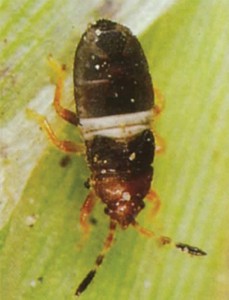 Seems a little early with all the rain, but the temperatures are right on up there where they should be for May. I am seeing lots of damage to the lawns and finding chinch bugs. Areas of the lawn will look dry, especially near the sidewalk or driveway where it is the hottest. If you dig up a shovel width piece of lawn and shake it over white paper, you will see small black bugs with a white stripe across their back. The old method was to cut the bottom out of a coffee can and push it into the soil of the dry area, fill it with water and the chinch bugs would float. Try finding a metal coffee can these days! You can spray the areas with Cyonara,
  Triazicide, even Mosquito Beater Hose-end will kill chinch bugs. You do not have to spray the whole lawn, just the areas affected. The grass will quickly recover. For an organic control, use Spinosad or Diatomaceous Earth.
 stay away from them until the days get longer and drier. With rain and heavy moisture in the air, they suffer from Phytophthora, an airborne fungus, and die within days. We promise we will get them in as soon as conditions permit!!
 bed, thoroughly dig up the entire area adding plenty of organic matter such as Cotton Burr Compost.Treat the area with Actinovate, a biological fungicide to help prevent the disease. Space the plants 8-10 inches apart and mulch heavily with Hardwood Mulch to prevent water from splattering off the soil. Also never water over the top of the plant. Always water slow and thorough on the ground below the plant. It looks like we’re going to