
Webbing on tree bark, white stuff on plants, & what’s cutting circles in my leaves?
Bark Lice: Good

We get lots of calls about webbing on tree trunks this time of year. These are good bugs called bark lice. They create a protective webbing around their colony and go to work cleaning the bark of your trees. Do Not Spray. These beneficial insects help maintain your trees’ health…absolutely free!
Image c/o Texas A&M Agrilife
Mealy Bugs: Bad
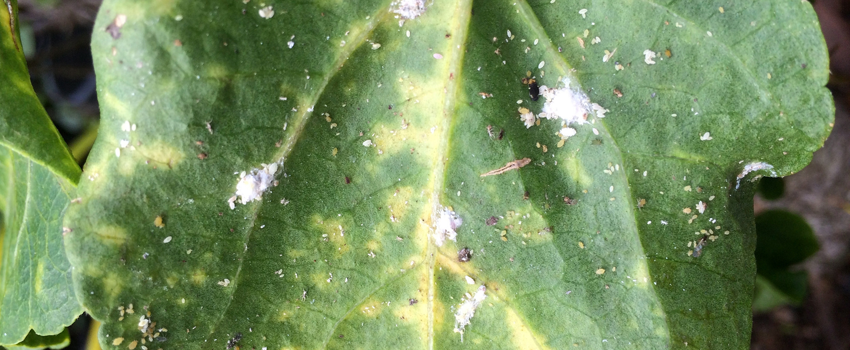
White cottony clumps on tips, stems, and undersides of leaves in summer are most likely mealy bugs! They are bad bugs. People often think these are a fungus because of their appearance but one squish with your fingers will tell you they’re insects feeding on your plants. They especially love Hibiscus, Jatropha and some Salvias. Treat naturally with Safer Insect Killing Soap or Neem Oil during cooler evening hours. You can also spray Broad Spectrum Insecticide which controls mealy bugs and other nuisance insects. Always follow label directions.
Leafcutter Bees: Good
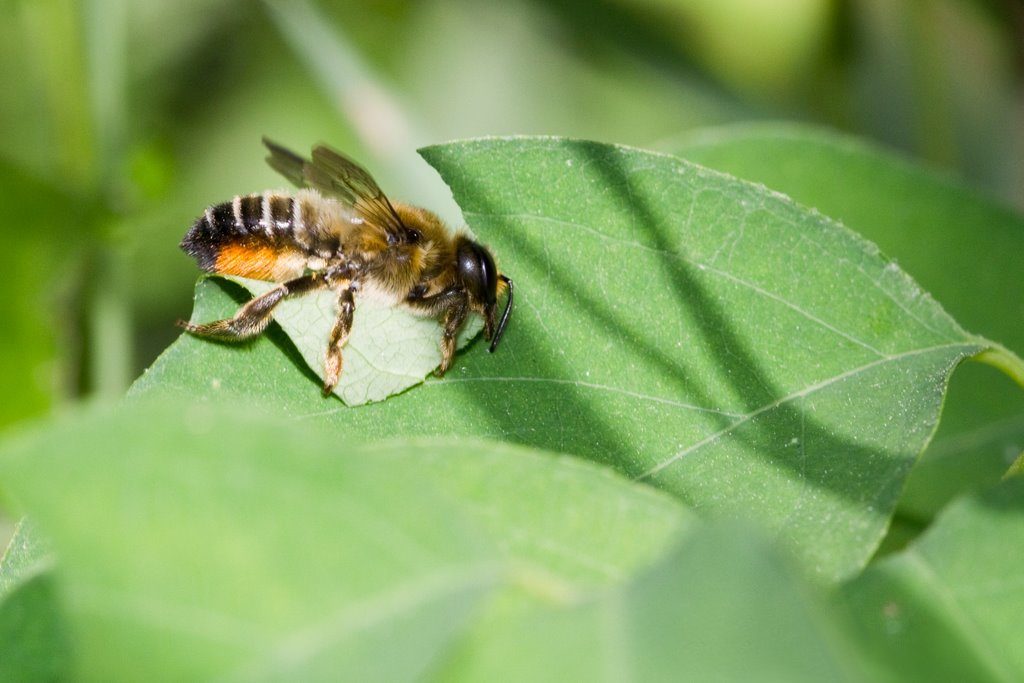
Surprise! Your plant has bees, not worms, cutting circles in their leaves. Leafcutter bees are all the buzz in area gardens as they build their nests. These are good bees! No need to spray or treat. The female will cut leaves in perfect circular patterns from thin leaves like Roses, Crape Myrtles, and Plumbago to block their nest openings. This only lasts a couple of weeks and your plants will be just fine. Like many bees, they are passive, but they can sting if harassed or aggravated.

–Debbie
 -DeAnna
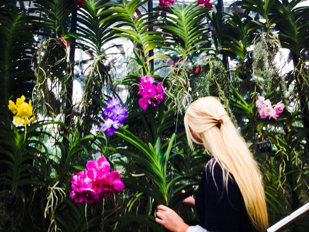 Emily, a Landscape Design Assistant here at Gill’s, loves orchids. Before joining us, she worked at the Naples Botanical Gardens in Naples, Florida, growing orchids. Emily, pictured here, shares her knowledge – enjoy!
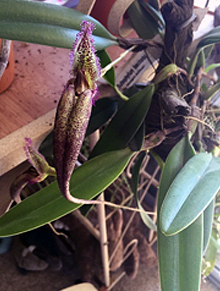
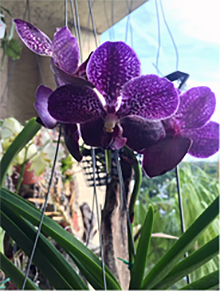
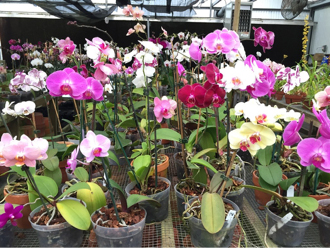 Orchids are a very diverse plant species as they occur naturally on every continent except Antarctica. They can grow as epiphytes which attach to trees, lithophytes which attach to rocks, or terrestrial which grow in the ground like most plants. They are known for being the tropical, bright-colored beauties in the rainforests and they are also known for being the state flower of Minnesota – the Showy Lady’s slipper. Orchids also occur in every color except for true black or true blue – if you see these colors it is likely that they are either dyed or you are seeing a very vibrant spectrum of purple.
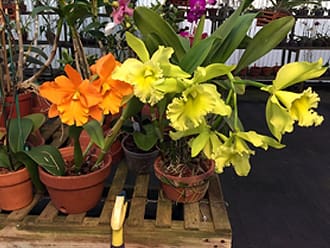 Perhaps the most beneficial orchid is Vanilla planifolia – the vanilla plant. This is a vining species whose roots start in the ground and began to attach to a tree and vine to the top. When this orchid flower is pollinated and creates a seed pod, the seeds are the little black specs that you see in your vanilla bean ice cream! This is the only orchid that is being farmed for industrial purposed in the food and cosmetic industry.
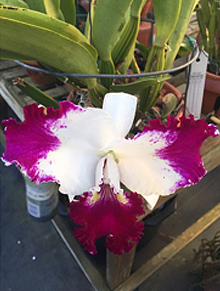 The one thing that almost every orchid species has in common is their floral arrangement: The outer three flower parts are sepals and the inner three flower parts are beautifully colored petals. A fun fact is that a study has been done to prove that humans have such a fascination with orchids because the orchid flower has bilateral symmetry – like a human face – which makes humans have an affinity to caring for them. It has been said that “When someone looks at an orchid, it looks back at you.”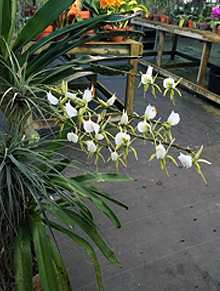
 –Emily