With cooler months finally upon us, now is the time for planting some of my favorite winter annuals, one being the ever vibrant, versatile and easy to grow Nasturtium. Here are some things you may or may not know about this lovely little flower:
- Nasturtiums are edible, flowers and leaves. The flowers make a beautiful addition to the top of any salad and add a peppery flavor. During the mid-twentieth century people used nasturtium seed pods as a replacement for pepper by drying out the seeds and grinding them. The bloom can be dusted with sugar and used to decorate a holiday cake.

Nasturtium Salad c/o Sunset Magazine
- They’re not picky and grow well in any type of soil. They love sunshine and don’t like to stay wet.
- They make a great companion plant. They help deter aphids, white fly, squash bugs and other pests. Plant alongside veggies like tomatoes, cabbage & broccoli.
Gill Garden Guide: Fall & Winter Annuals
 -Whitney


 -Emily Capule, Flower Farmer and Gill’s Landscape Design Assistant


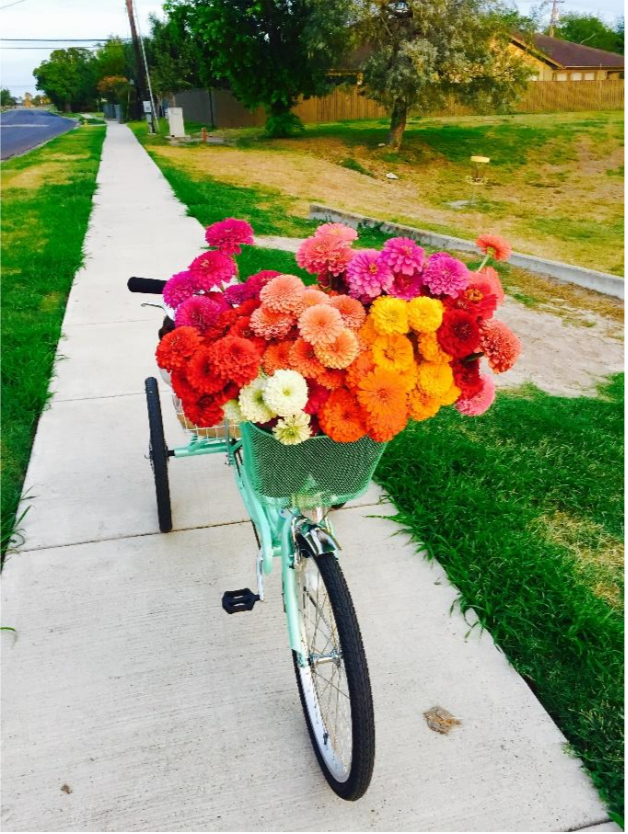
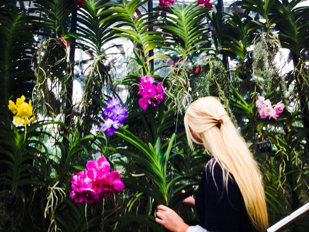 Emily, a Landscape Design Assistant here at Gill’s, loves orchids. Before joining us, she worked at the Naples Botanical Gardens in Naples, Florida, growing orchids. Emily, pictured here, shares her knowledge – enjoy!
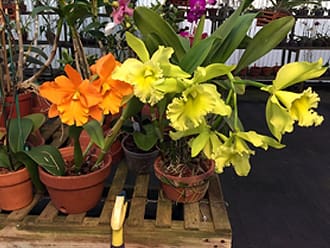
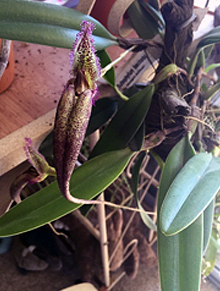
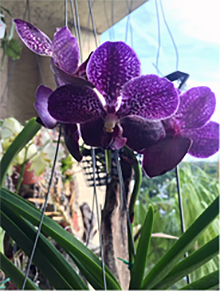
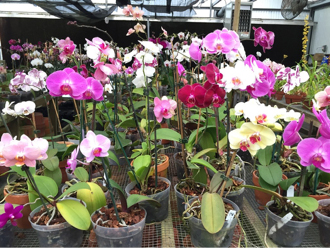 Orchids are a very diverse plant species as they occur naturally on every continent except Antarctica. They can grow as epiphytes which attach to trees, lithophytes which attach to rocks, or terrestrial which grow in the ground like most plants. They are known for being the tropical, bright-colored beauties in the rainforests and they are also known for being the state flower of Minnesota – the Showy Lady’s slipper. Orchids also occur in every color except for true black or true blue – if you see these colors it is likely that they are either dyed or you are seeing a very vibrant spectrum of purple.
 Perhaps the most beneficial orchid is Vanilla planifolia – the vanilla plant. This is a vining species whose roots start in the ground and began to attach to a tree and vine to the top. When this orchid flower is pollinated and creates a seed pod, the seeds are the little black specs that you see in your vanilla bean ice cream! This is the only orchid that is being farmed for industrial purposed in the food and cosmetic industry.
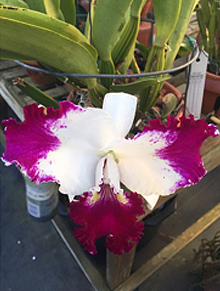 The one thing that almost every orchid species has in common is their floral arrangement: The outer three flower parts are sepals and the inner three flower parts are beautifully colored petals. A fun fact is that a study has been done to prove that humans have such a fascination with orchids because the orchid flower has bilateral symmetry – like a human face – which makes humans have an affinity to caring for them. It has been said that “When someone looks at an orchid, it looks back at you.”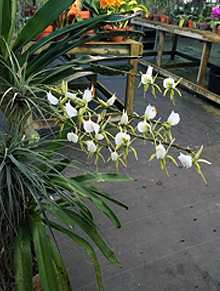

 -Debbie