Don’t Worry About Leafcutter Bees!
Leaf cutters always cut extremely neat semi-circles and ovals, unlike caterpillars which leave irregular holes in leaves. They prefer soft tissue plants such as roses, plumbago, hibiscus and crape myrtles. There is no chemical control since they do not eat the leaves they cut. Nesting season is very short, so after a week or two, they go away… thank goodness!
Feed Your Veggies
Vegetables are heavy feeders. Use Espoma Plant Tone once a month to keep your vegetables producing through the season.
Watch Out For Cabbage Loopers
It’s time for tiny green looper worms to be eating the leaves of your broccoli, cabbage and cauliflower. Use
Hi-Yield Thuricude or Fertilome Dipel Dust to control these pesky worms. It is completely organic and safe up to the day of harvest. Just rinse and eat!
New For Your Garden: Watercolor Rose
It’s a color extravaganza! The flowers may be simple in style, but they’re captivating to watch as they change colors completely with each day. Hues of yellow, pink, cerise & ruby are carried atop loads of clean deep green leaves on a very bushy full plant. Dark red new shoots add to the show. This beauty is delicate to look at and tough as nails when it comes to garden performance. Complimented with a moderate apple fragrance; we think you’ll enjoy this one in your rose garden!
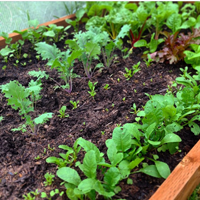 Now’s the time to prepare the soil with fresh compost and plan your garden layout. Sow seeds of root crops, ex. beets, carrots, radish and turnips. Don’t forget your leafy vegetables such as chard, collards, kale, lettuce, mustard and spinach. Transplants of broccoli, cabbage and cauliflower can also be planted now. If you are limited on space, you may want to take this time to let the garden rest. In just a few weeks it will be time to think about tomatoes, beans, corn, cucumbers, squash and more of the warm season veggies. We will begin bringing in tomatoes the middle of the month, but suggest you transplant them into 1 gal pots so you can take them in on the cold nights. If you prefer to wait till after fear of frost, we will have 1 gallon plants already established for you to plant at a later date. The longer you wait, the bigger you need to buy.
 Planning For Spring Flowers


 inch wide. They are browninsh-gray to black with distinctive red markings. Boxelder babies have dull red bodies with black legs. You will find them by the hundreds, if not thousands gathered on the fence, in the bark of trees or hiding in your mulch. Adults deposit their eggs in cracks and crevices of tree bark in the spring, about the time buds begin to open. There are two or more generations per year in Texas. Boxelder Bugs are not considered to be damaging to host plants. Although they feed by sucking plant juices, they seldom cause harm to plants. They are considered more of a nuisance pest. You can choose to ignore them, or if need, they can be sprayed with any insecticide i.e. Cyonara or Triazicide. An organic alternative is Spinosad. –DeAnna


 Companion Plants For Your Veggie Garden

 Time to fertilize your lawn, trees & shrubs! Hopefully by the time you get this, the sunshine will have warmed and dried the soil enough to fertilize. Use Gill Lawn and Garden for all your trees, shrubs, vines and groun
 For weed control in your lawn, use Weed B Gon for St. Augustine. We have a new formulation that is safe to use on Floratam St. Augustine Grass. Treats up to 2500 sq. ft. and comes in a ready to spray hose-end bottle. Image will kill some broadleaf weeds (dollarweed) as well as a few grassy weeds (grassburrs) without hurting your St. Augustine. Another new product we have is Topshot. It also kills all broadleaf weeds in the lawn and comes in a package with 2 ampules which cover 5000 sq. ft. Simply add 1 ampule with water in either a pump sprayer or Dial n Spray to cover 2500 sq. ft.. For best results apply weed killers when weather is warm (not hot) and sunny for 3-4 days. Do not use in flowerbeds for weed control (except Image), only as a lawn application.