
Brown, dry looking lawn? Check for Chinch bugs.
We are likely to get some rain starting Thursday from this tropical wave. It might be a little, or it might be a lot. If you have any concerns about water coming into the house or garage, you have a little time to act preventatively.
Make sure there are no impediments to flow! I have seen back yards and side yards filled with old ice chests, firewood, unused bricks or stepping stones, bags of mulch, trash bags full of yard waste, and yard waste fallen from the trees and never picked up, all slowing the flow of storm water and causing it to back up so high it is going over the foundation and into the garage or house. If leaves have collected, use the blower to clear the area.
Also, mowing or using the weedeater to lower grass or weeds is beneficial, tall grass slows water flow. Make sure you have several inches of clearance under fences or gates, as debris afloat on storm water will move until it catches on a low fence and then will form a dam.
If a mulched bed or soil or lawn area is too high to allow water to flow out, start digging. Remember, a ditch does no good when dug only in the low areas, any high area overlooked will prevent the water from running out. So spot that high area and start working there. I’ve often found after a flood where people in desperation have dug a ditch across the back of the house and down the side yard, and then stop at the fence! If you don’t reach a low area, with no impediments in between, you did not finish the job.
Our landscape department has the tools, experience, and manpower to handle drainage problems, so if the result of this rain has you concerned about your drainage, and its more than you can handle yourself, give us a call.
 -James
We are excited about a new tomato variety arriving at our store this week….check it out!
“This new grape tomato variety is blazing a new trail in the tomato world! It works well in a container, shines in the field, and the sweetly, acidic fruit resists cracking. Unlike other determinate grape varieties, Ruby Crush offer strong compact plants and provide good leaf coverage to prevent sun damage. They can be grown with minimal support, a 2foot high fence or trellis is sufficient. The fruits are solid, oval and grow in clusters resembling grapes. They mature quickly in about 60-70 days and are resistant to many tomato diseases.” – Sakata Seed
Learn about all of our tomato varieties with this our tomato Garden Guide!
This guide describes the tomatoes we carry, number of days to harvest (yum!), whether they produce all at once or over a period of time and what disease resistances they have. Hopefully this will help you select the best tomato variety for you!
(click to expand/download!)

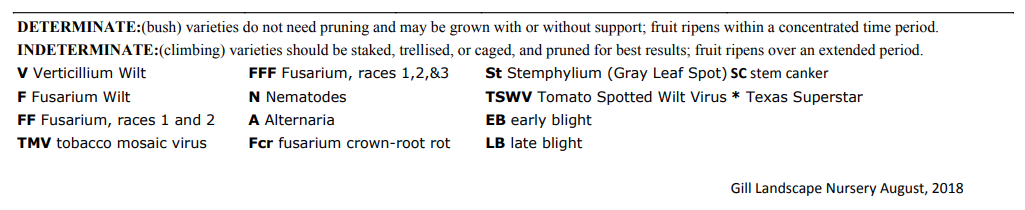
 -Debbie
Plants have thrived through hurricanes and worse for around 500 million years. Most of your plants will come back fine, and for those you lose, something new will grow, with a little help from you.
Don’t worry too much about wind-damaged foliage, it will be replaced by pretty and efficient new leaves. Some plants that have lost the shade from a damaged or destroyed tree or large shrub will suffer from sunburn. Some varieties will grow new and more sun-tolerant leaves, but some plants will never be happy in full sun. These will need to be dug up and transplanted to a shady spot or given away or tossed. If you need help determining which plants will tolerate the new sun and which won’t, bring a sample or photo by the nursery and we will advise you.
Some tipped over plants can be raised and staked, but some will be too top-heavy and will need cutting back before raising and staking. We have run across some bottlebrush, for example, that required this. Some soft herbaceous plants were really trounced, such as coleus and basil, but if damaged portions are pruned out, they will bounce back for fall. In fact, many perennials benefit from a light pruning in September for a better fall showing. Younger trees with broken branches, or tipped over sideways, should be staked or pruned, and will recover just fine. Larger and older trees are more iffy. Was the tree healthy and vigorous before the storm, or already declining? Is it the right tree for that spot? If not, maybe it’s a good time to change.
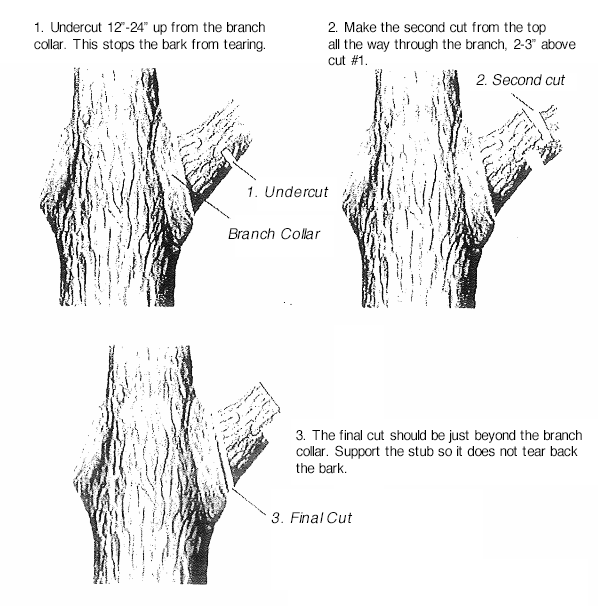
If you determine the tree should stay but needs damage pruned away, remove large damaged branches with the 3 cut method to avoid stripping bark off the side of the tree. Undercut the branch first, 18″ out from the trunk, followed by cutting down from the top, 20″ out from the trunk, until the branch falls. Then remove the remaining stub to within an inch or two of the trunk. If the tree is leaning, small trees can be pulled upright and secured with 6′ steel t-posts, with the tree tied to the post with a soft material, or wire cushioned with hose, being sure the loop around the tree is large enough not to constrict the growth of the trunk. Larger trees will need 2″x4″ stakes driven into the ground, or maybe even steel earth anchors, like used to tie down sheds or mobile homes. Before lifting the tree up straight, soak the ground around the roots so the roots can slip through the soil back to an upright position instead of being held back and maybe broken off by hard dry soil. Until you get to the process of raising the tree or shrub, don’t keep the roots flooded, but do keep the roots moist, and if small roots are exposed, maybe even cover them with some shade, like burlap.
Be safe, serious injuries occur when ladders and chainsaws are involved. Also be cautious of men knocking on your door and saying they have just trimmed your neighbors trees and if you pay them a down payment, they will go get gas and be right back to trim your trees.
Please come into the store with pictures if you have additional questions. We are there to help.
-James
Impatiens have been a favorite fall, winter, early spring blooming plant, but the Impatiens walleriana variety we have most commonly sold has developed a problem. Downy mildew has affected walleriana in other areas of the country for a few years now, and last year showed up in Texas gardens. At this time, no treatments are effective to prevent downy mildew in wallerianas.
A different species, Impatiens hawker, also known as New Guinnea impatiens, does not get powdery mildew. So we will be stocking New Guinea impatiens this fall and spring, and will no longer carry walleriana. New Guinneas will be available in 4.5″ pots and hanging baskets, and come in a range of bright colors, plus white. New Guinneas get a little larger, so they are planted a little farther apart, 12-14″. They do best in mild temperatures, so cover to protect if temperatures go below 40 degrees, and expect them to poop out when temperatures start going above 85 degrees.
As temperatures start down this fall, think of New Guinneas, as well as Dragon Wing and Whopper begonias, dianthus, violas, and torenia for your part-sun areas, and a host of other color for full sun areas.
-James
In the wake of Hurricane Harvey, a local gardener shared these words regarding the hummingbird migration that is beginning now. We are passing them along to you.
Good advice….thank you Trisha!
“Howdy y’all!
Just wanted to ask y’all to remind your gardeners that the hummingbirds are already arriving down here (we gained several the morning of the storm and more since then in old San Patricio). And with hundreds of miles of Tx coastline either flattened or underwater, the natural nectar sources (& feeders that people usually have out) will be sorely lacking in the area before the little guys head south for the winter. Please ask your readers to put out extra hummingbird feeders in their yards (quickly!) along with the usual flowering attractions for them. Recipe is 1 part sugar to 4 parts water, boil water to dissolve sugar, cool before adding to feeders, no red food coloring needed.
Thank you!!
Trisha”