Y’all asked and we listened… Join us for our first ever plant trivia night at Gill’s! We’ll be the moderators and we’ll have all kinds of gardening and nature questions. We know that you know your stuff, so expect this to be challenging! $10 entry fee. Plant, gift card, and cash prizes! Limited to 40 participants. Watch Wyatt’s invite video for details and get tickets here!
Have you heard of moonlight gardening? It’s a simple concept that can drastically change how you enjoy your garden at night: just plant white-blooming plants and plants with silvery foliage that show up and stand out in the moonlight! Here are a bunch of our favorites to get your design ideas going.
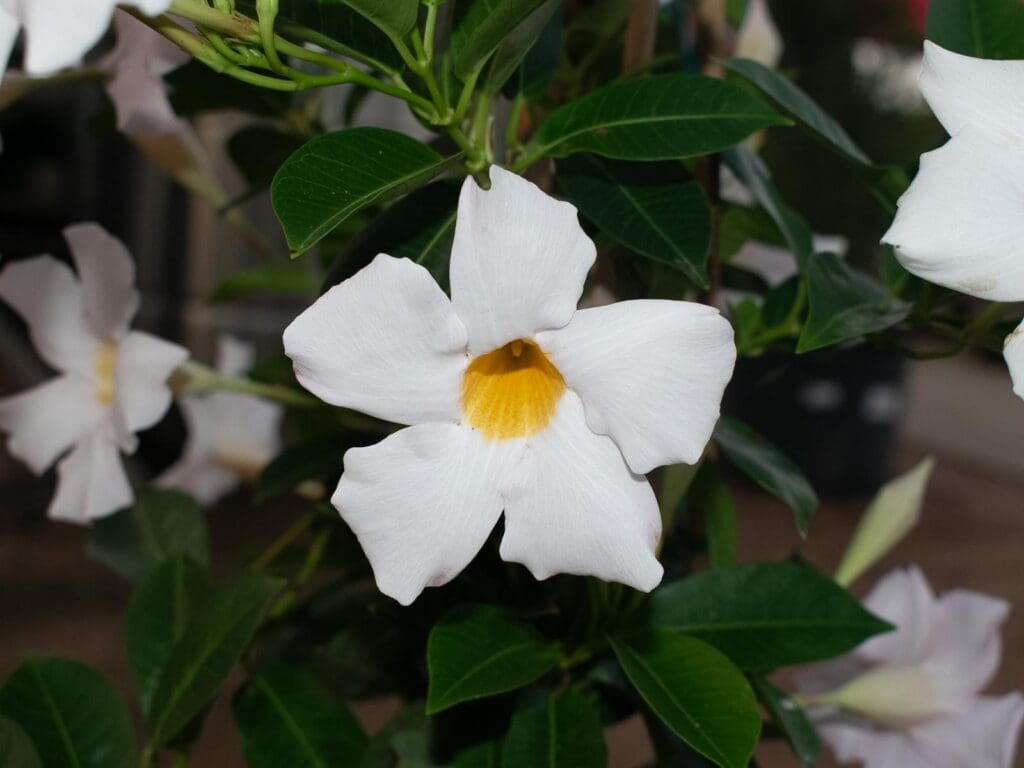
1. White Mandevilla (Mandevilla sanderi)
If you want a tropical feel for your patio, you can’t go wrong with a mandevilla. Give it something to climb on and choose the white variety if you want it to really put on a show in the evening.
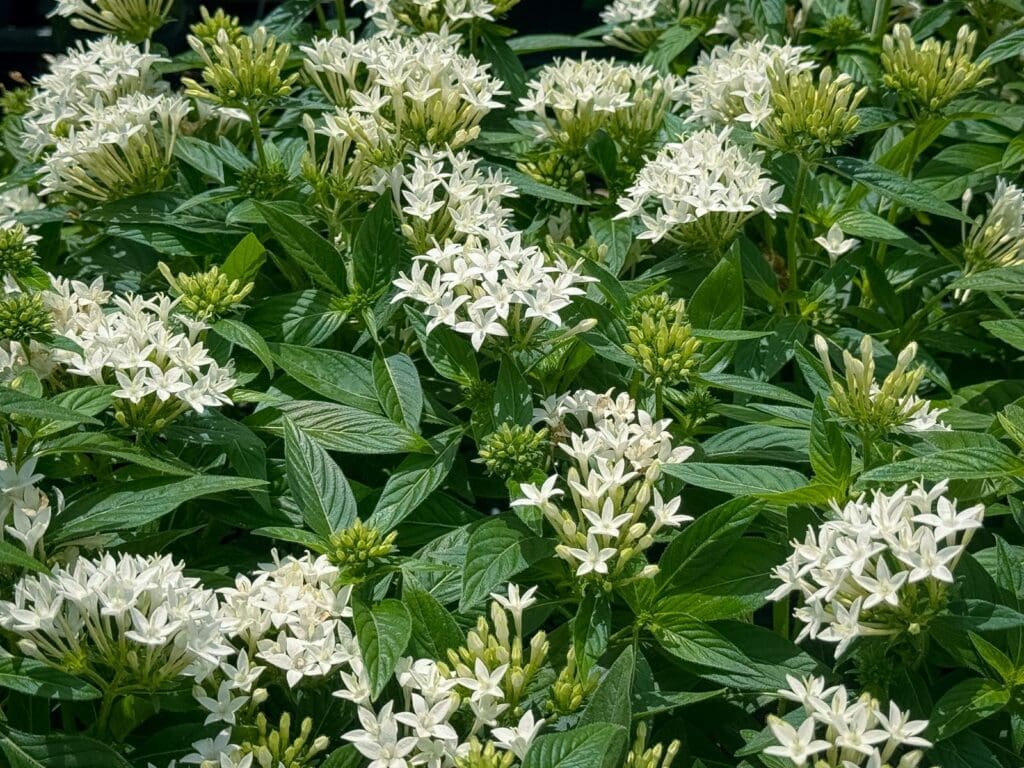
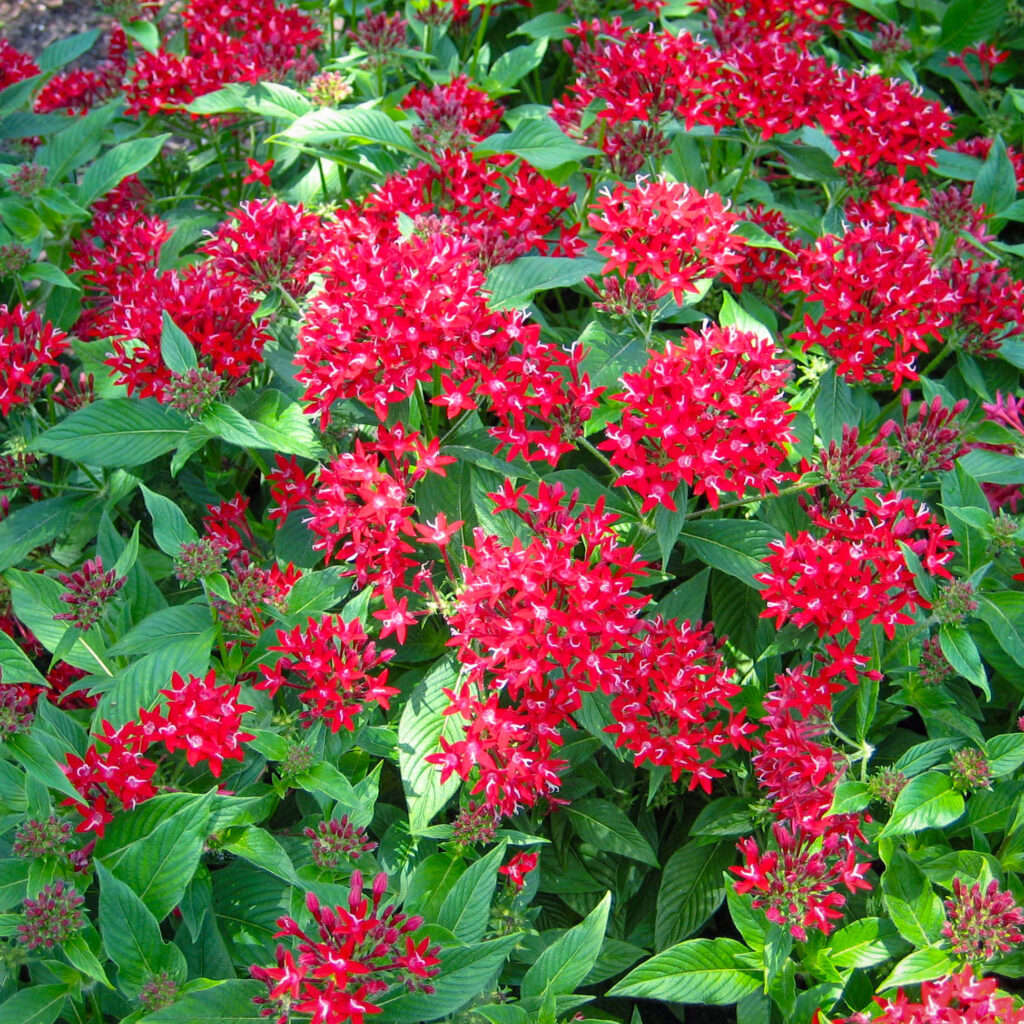
2. White Pentas (Pentas lanceolata)
Pentas come in an array of different colors, including this stunning white variety. Great for full sun to partial shade areas and excellent for attracting pollinators.
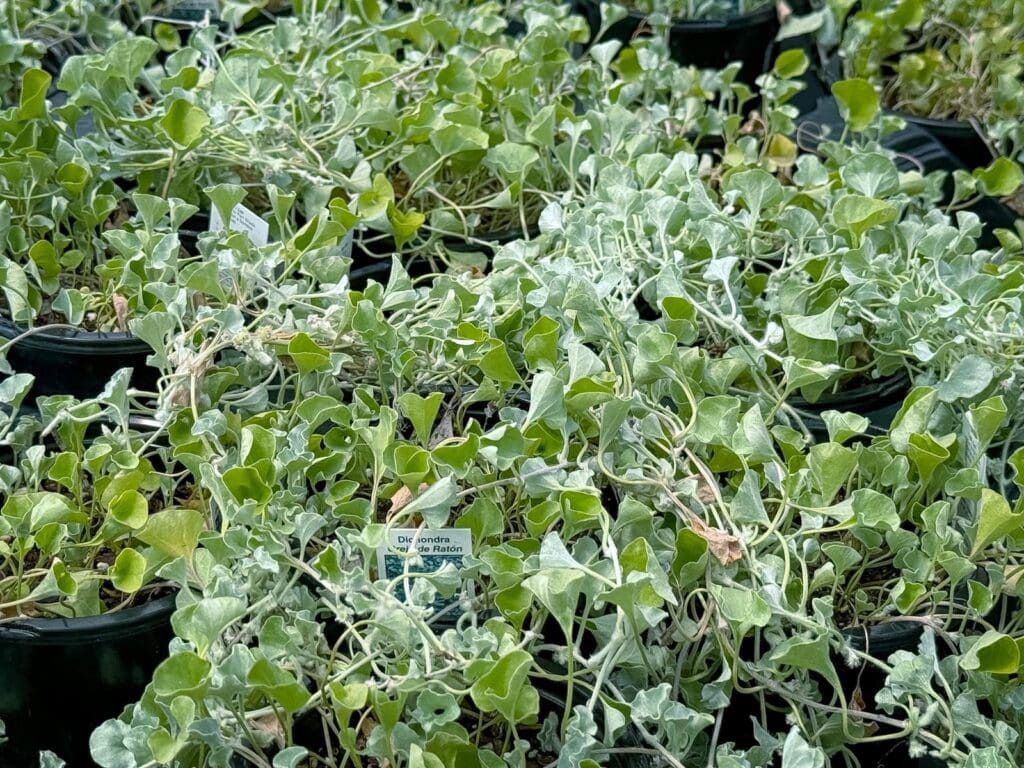
3. Silver Falls Dichondra (Dichondra argentea)
Our native dichondra aka ponyfoot is very versatile in the landscape. Great for hanging baskets, spilling out of raised beds, and even as a low-water groundcover. Plus, the bright silvery foliage really shines at night.
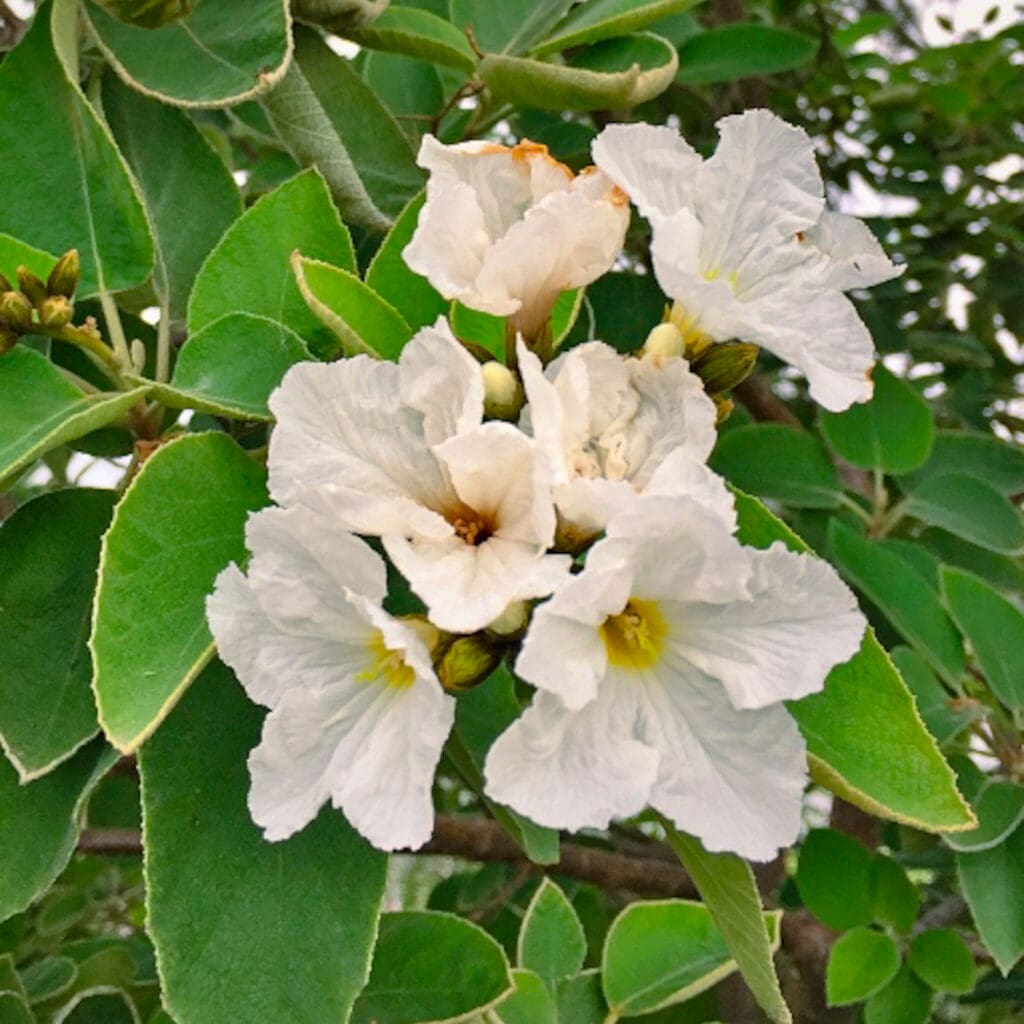
4. Native Wild Olive (Cordia boissieri)
You can’t miss a wild olive tree at night – they’re covered up in gorgeous white blooms. Some consider it a “messy” tree because of the blooms when they start to drop, but even those scattered spent blooms are beautiful on the ground at night.
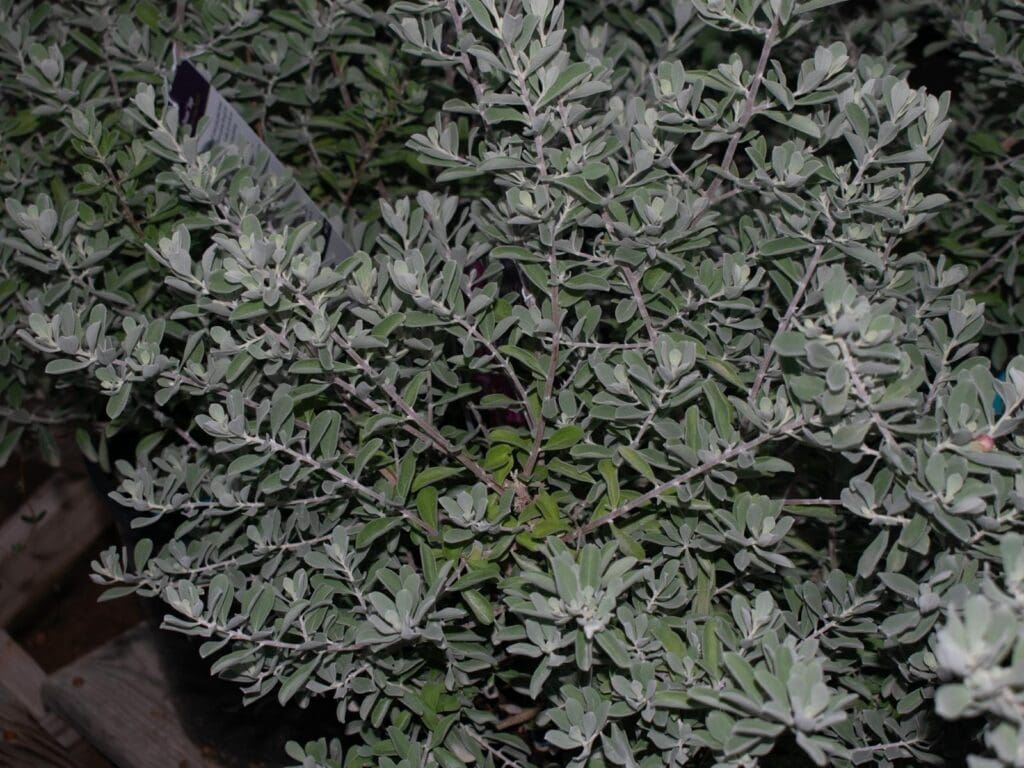
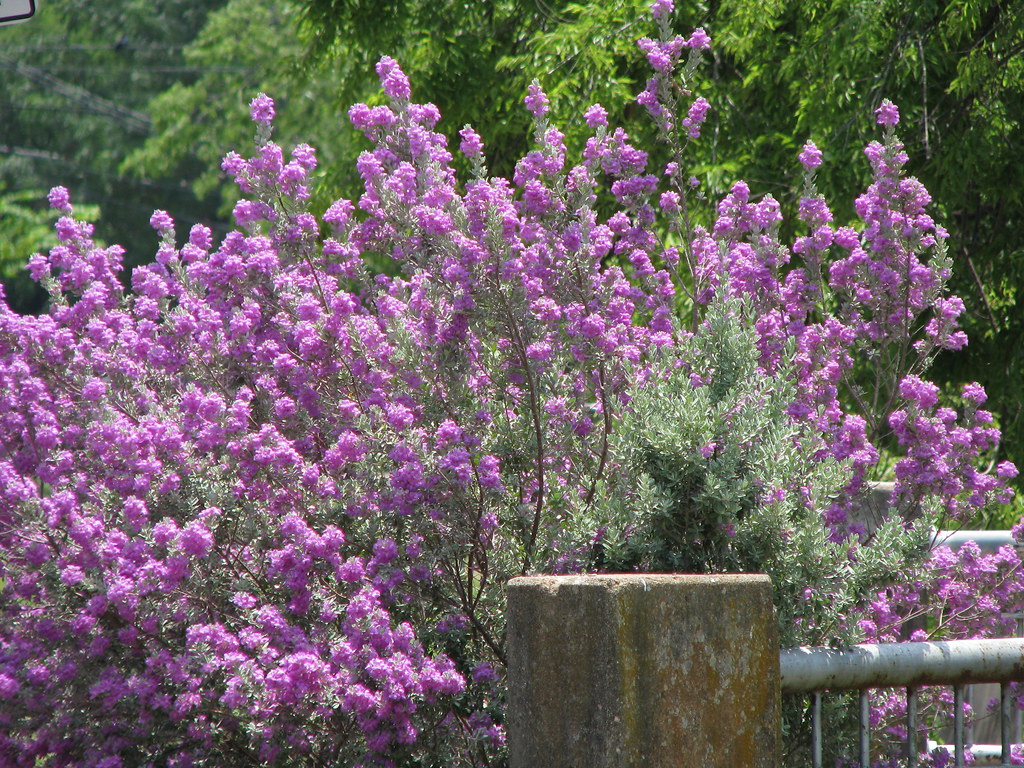
As you probably know, there are a ton of different cultivars of our native Texas sage – dwarf varieties, better bloomers, and lots of variations in foliage color. One of the most silvery varieties that would be best suited for moonlight gardening is Silver Dream. This is a nice full-size sage bred from the Desperado variety to produce more blooms.
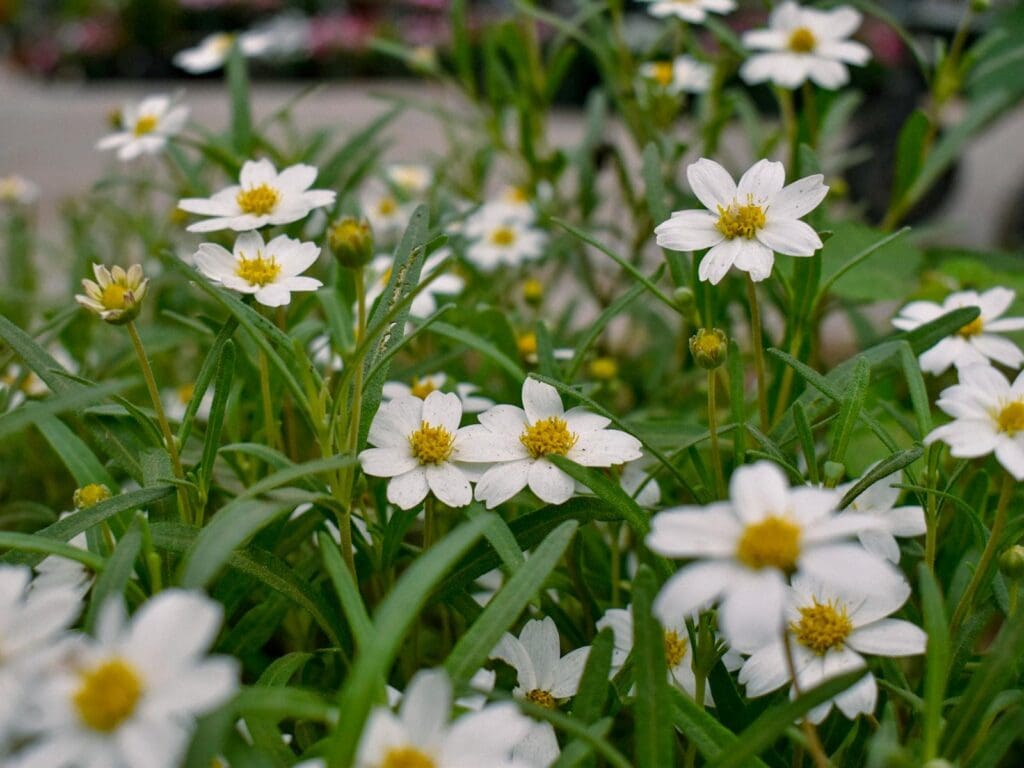
Blackfoot Daisy has really caught on in the past couple years for great reasons, mainly that it’s extremely drought tolerant and the blooms just make you happy! Plant them in a spot that gets full sun and enjoy the prolific white blooms at night too!
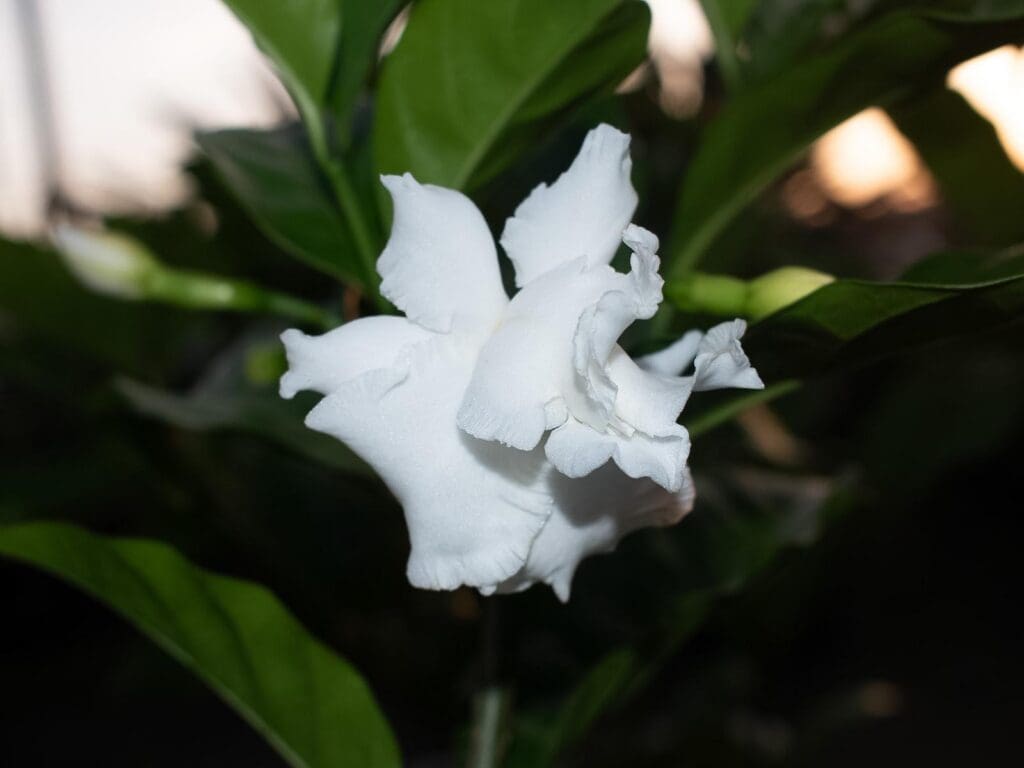
7. Indian Carnation (Tabernaemontana divaricata)
Indian carnation is one of the most elegant plants for shade in our area. They’re well-adapted for our climate and soil, they’re easy to prune and shape, and they produce lots of beautiful white blooms that are lovely during the day and at night.
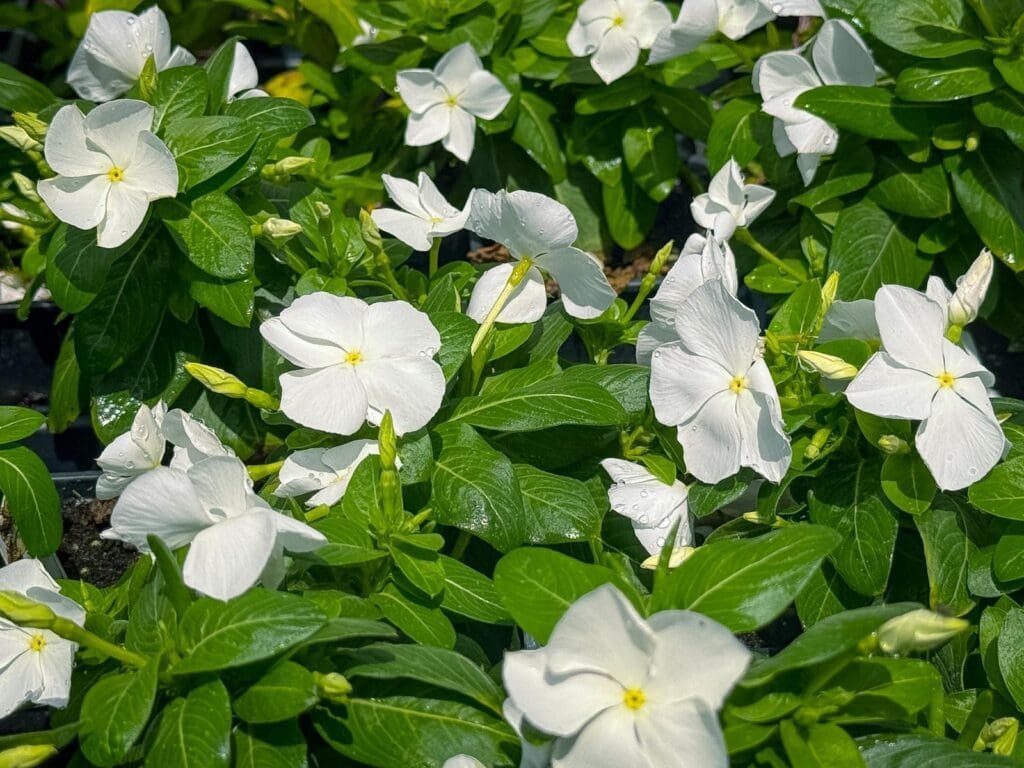
8. White Periwinkles (Catharanthus roseus)
Despite their delicate appearance, periwinkles aka vinca are tough! Do a mass planting of white periwinkles and you’ll have a lush blanket of white blooms all summer with very little care. Just remember to fertilize regularly to keep those blooms coming.
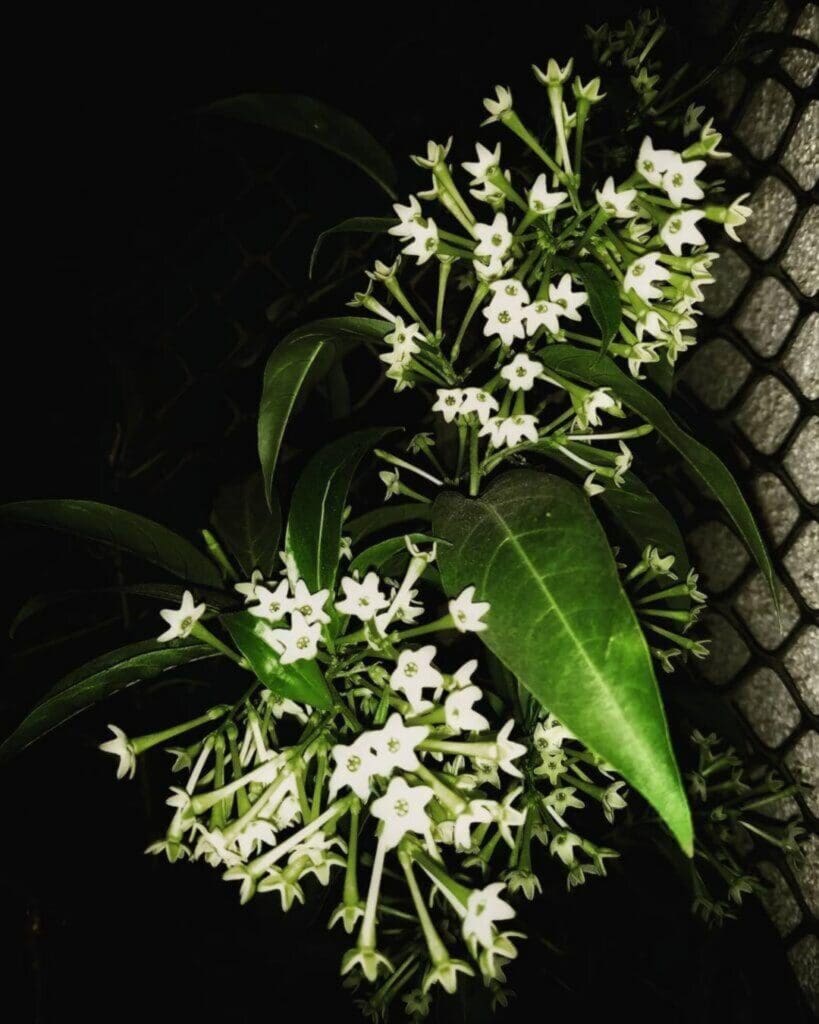
9. Night Blooming Jasmine (Cestrum nocturnum)
This is the only plant on our list that actually waits to bloom at night. So, not only do you get gorgeous white blooms that show up best at night, you get a special show that only happens at night. Fun fact: Director David Lynch’s headstone features the words “Night Blooming Jasmine”. He viewed the sweet scent of the flower on a warm night as a symbol of Old Hollywood.
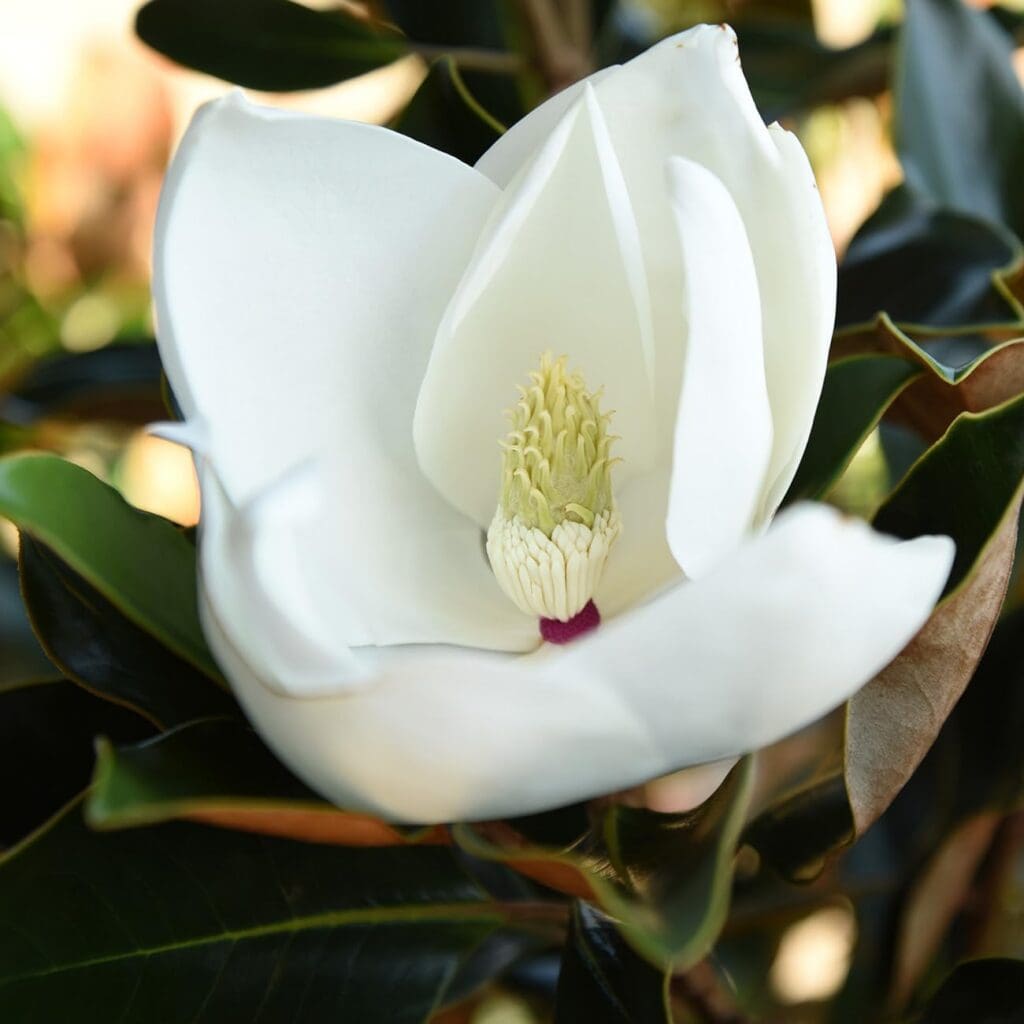
10. Little Gem Magnolia (Magnolia grandiflora ‘Little Gem’)
If you want to plant Magnolia trees in our area, we always recommend the Little Gem variety. They don’t get as giant as a Southern Magnolia, but they still reach around 20′ tall, they perform much better in our soil, and they produce the same incredible blooms that we know and love.
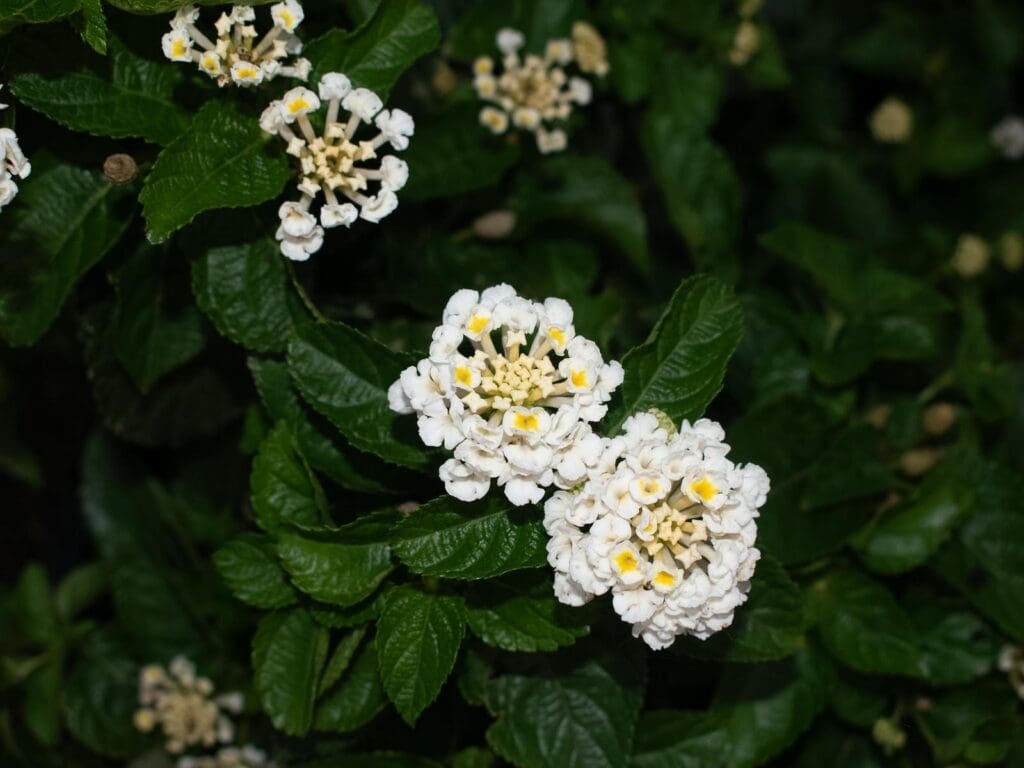
11. White Trailing Lantana (Lantana montevidensis ‘Alba’)
Out of the mannny different lantana varieties, the classic white trailing variety is one of the top performers. Excellent for spilling out of containers and raised beds or creating a sprawling ground cover filled with white blooms.
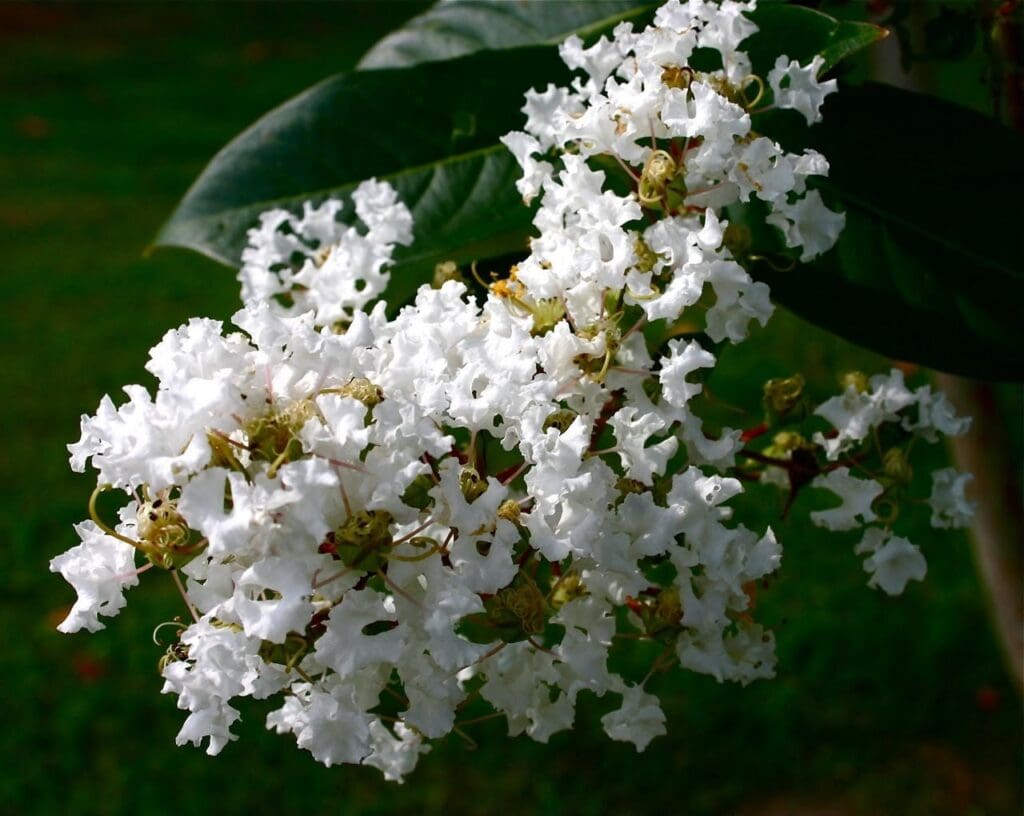
12. Natchez Crape Myrtle (Lagerstroemia indica x fauriei)
It doesn’t get much more classic than the white-blooming Natchez crape myrtle. This is a full size crape myrtle that reaches 20-30′ tall – lots of room for lots of blooms!
Join us the day before Father’s Day, this Saturday, 6/20, to celebrate all the gardening and landscaping dads! Free local beer from our friends at Nueces Brewing and free brat dogs from Boarri while supplies last! We’ll have the grill set up with all the fixins. Stop by with Dad any time from 11-3! Plus, we’re having 2 specials sales in honor of Father’s Day: 20% off all tools and buy any tree (15gal and up) and get free bag of compost and mulch! Gonna be lots of fun – see y’all Saturday 🙂
Happy National Pollinator Week! Gardeners know that planting to support and protect pollinators like hummingbirds, bees, butterflies, and good bugs creates a healthy local ecosystem. And pollinators return the favor by making our gardens and landscapes so much more beautiful with healthier plants and tons more blooms. Here are our top 11 summer-tough plants to create a pollinator-friendly habitat in your yard – in stock at Gill’s and ready to plant right now!
Why We Love It: Pentas are often thought of as just being a gorgeous and easy bedding plant, but they actually attract a ton of pollinators!
Planting Tip: Plant in full sun to partial shade. Excellent in beds or containers. Mulch with pine straw to add a bit of acidity to the soil.
Firebush (Hamelia patens)
Pollinators: Hummingbirds, butterflies, and bees
Why We Love It: Bright orange-red blooms all summer long!
Planting Tip: Loves full sun. Foliage dies back in winter. Cut back hard in early spring and it grows back very fast.
Purslane
Pollinators: Native bees and small butterflies
Why We Love It: A low-growing, drought-tolerant succulent with vivid blooms in lots of different colors. And Purslane is edible! High in omega-3s and minerals.
Planting Tip: Tuck it into hanging baskets, borders, or between rocks—just give it sunshine and dry feet.
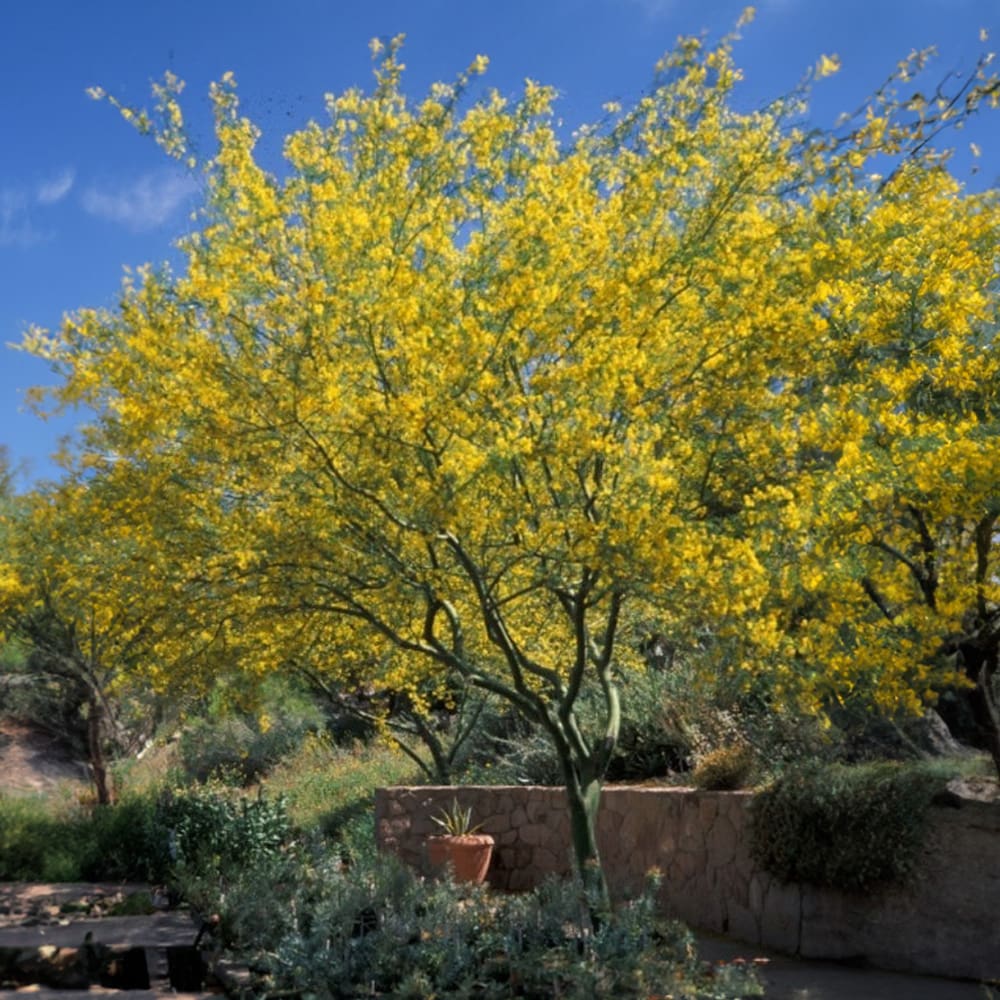
Why We Love It: Cultivar of our South Texas native retama, but without the thorns and a longer blooms cycle. Blooms all the way into the fall!
Planting Tip: Plant high for better drainage, especially in clay soil. Berm or mound up so water runs off and away from the tree. Loves hot and dry. Grows to about 20′ tall and wide.
Esperanza – all varieties
Pollinators: Bees, butterflies, and hummingbirds
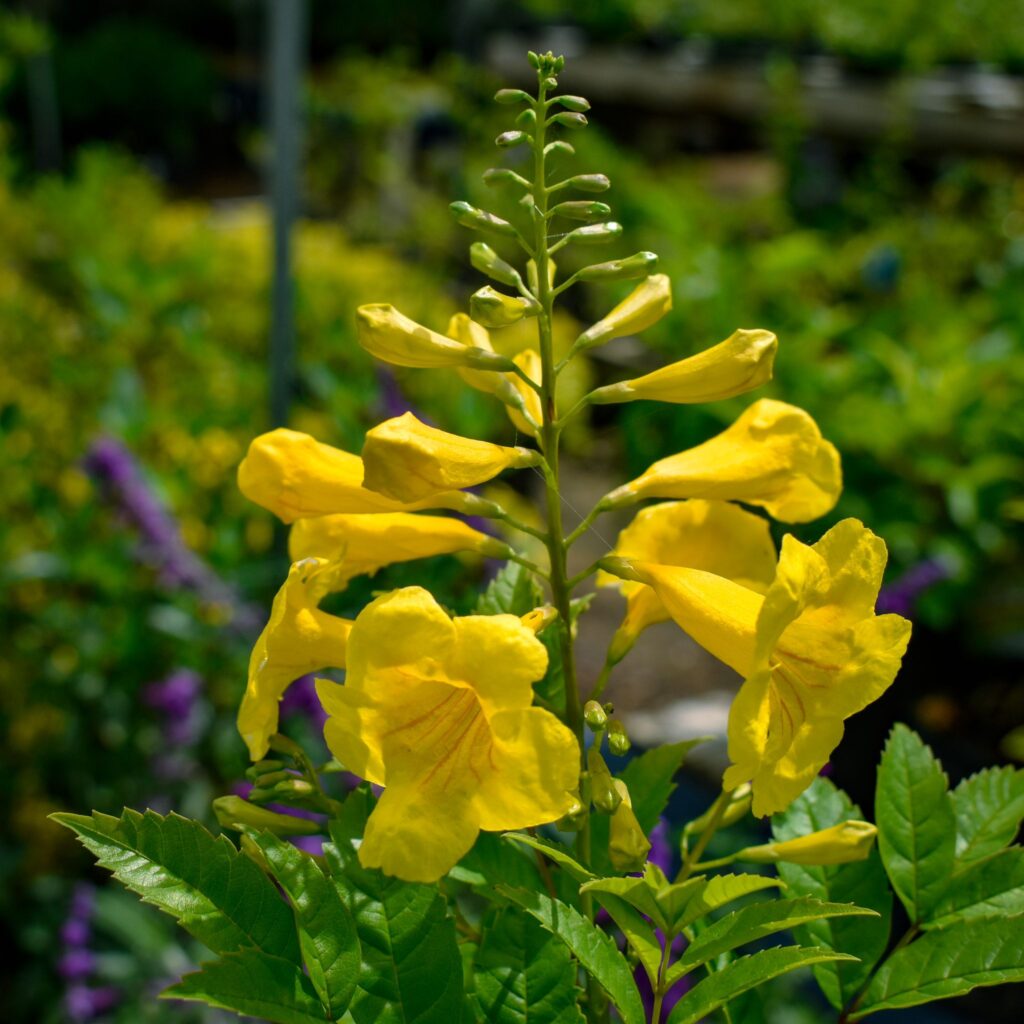
Why We Love It: Comes in several different varieties from the tidy, dwarf ‘Sparklette’ with orange blooms to the large ‘Yellow Bells’ with bright yellow blooms.
Planting Tip: Full sun and low water needs. Plant in your sunniest spots.
Texas Native Blackfoot Daisy
Pollinators: Bees, Butterflies, Sphynx Moths
Why We Love It: Delightful and plentiful white blooms, extremely tough, very low water
Planting Tip: Full sun + good drainage. Excellent for rocky beds or containers.
Texas Native Milkweed (Asclepias tuberosa)
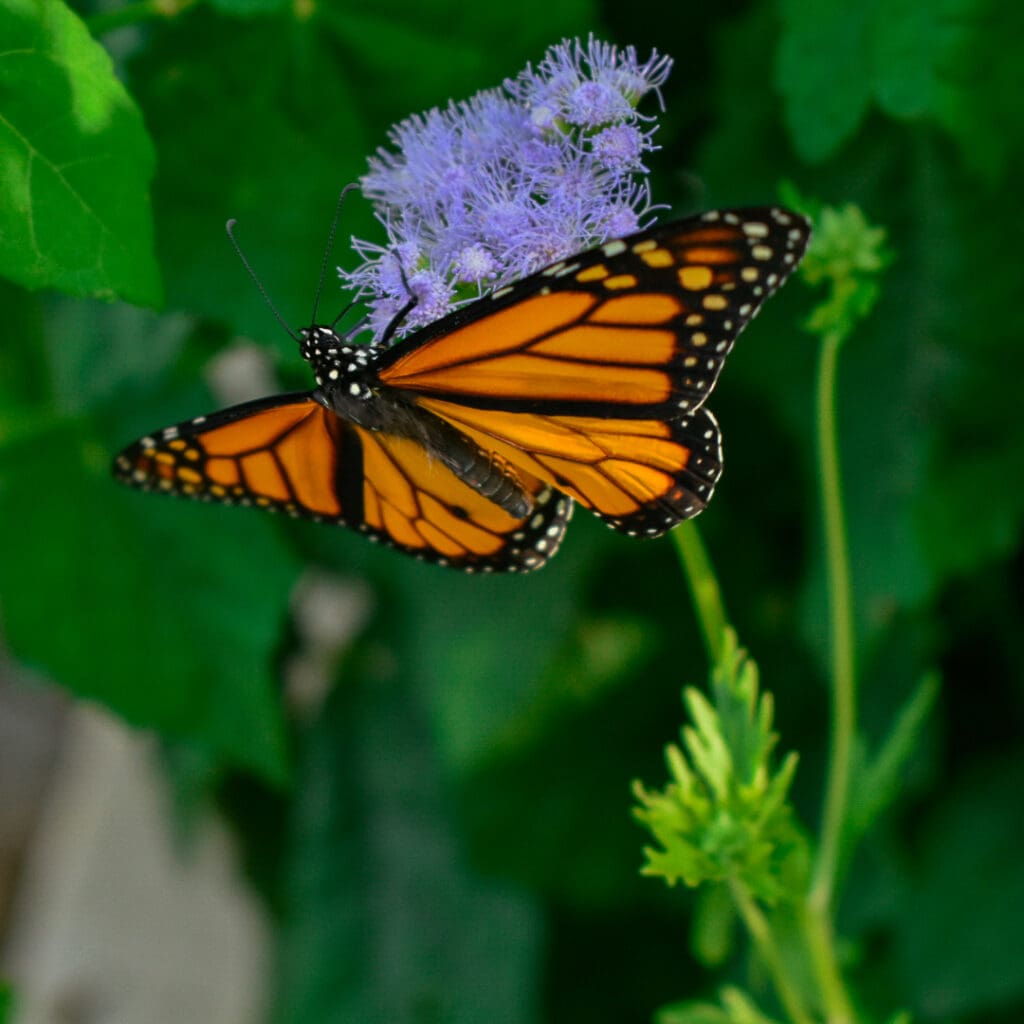
Pollinators: Monarchs (host plant!), bees, and other butterflies
Why We Love It: Orange or yellow blooming varieties + life support for monarch caterpillars = must-have native!
Planting Tip: Full sun, well-drained soil, and very little water once established.
Why We Love It: Soft lavender puffs that butterflies go wild for.
Planting Tip: Likes part sun to full sun and moderate moisture. Plant about 3 feet apart and it will spread and fill in beautifully.
Texas Sage (all varieties)
Pollinators: Bees and butterflies
Why We Love It: Lavender blooms that pop before and after rain, and it’s practically unkillable.
Planting Tip: Plant in your hottest, sunniest spots and avoid overwatering. Choose the right variety for the right space – some stay 3-4′, while some grow 8-10′.
Firecracker Plant (Russelia)
Pollinators: Hummingbirds and butterflies
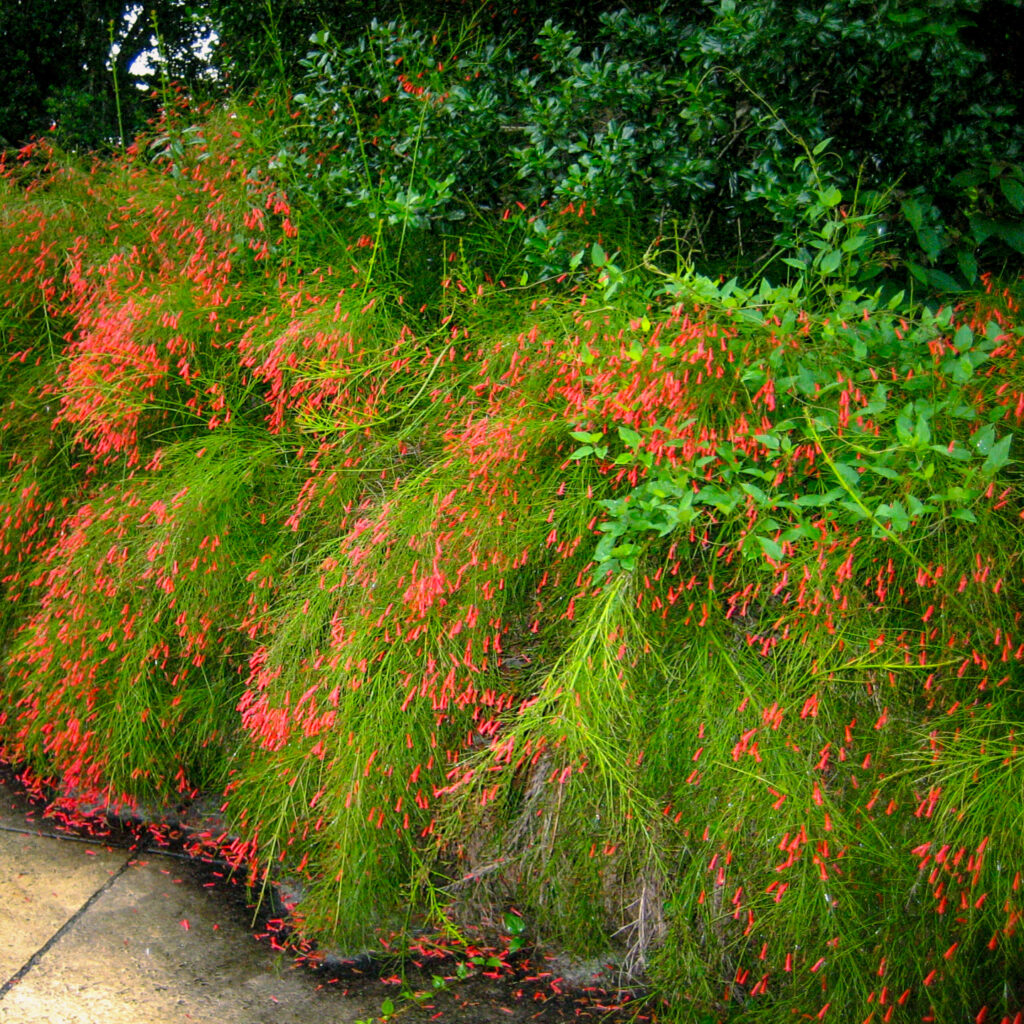
Why We Love It: Cascading coral-red blooms that hummingbirds can’t resist.
Planting Tip: Likes moist, well-drained soil and full sun. Looks stunning in containers or hanging over walls.
Yaupon Holly
Pollinators: Nectar source for bees in the spring and food source for birds (especially mockingbirds) in the fall/winter
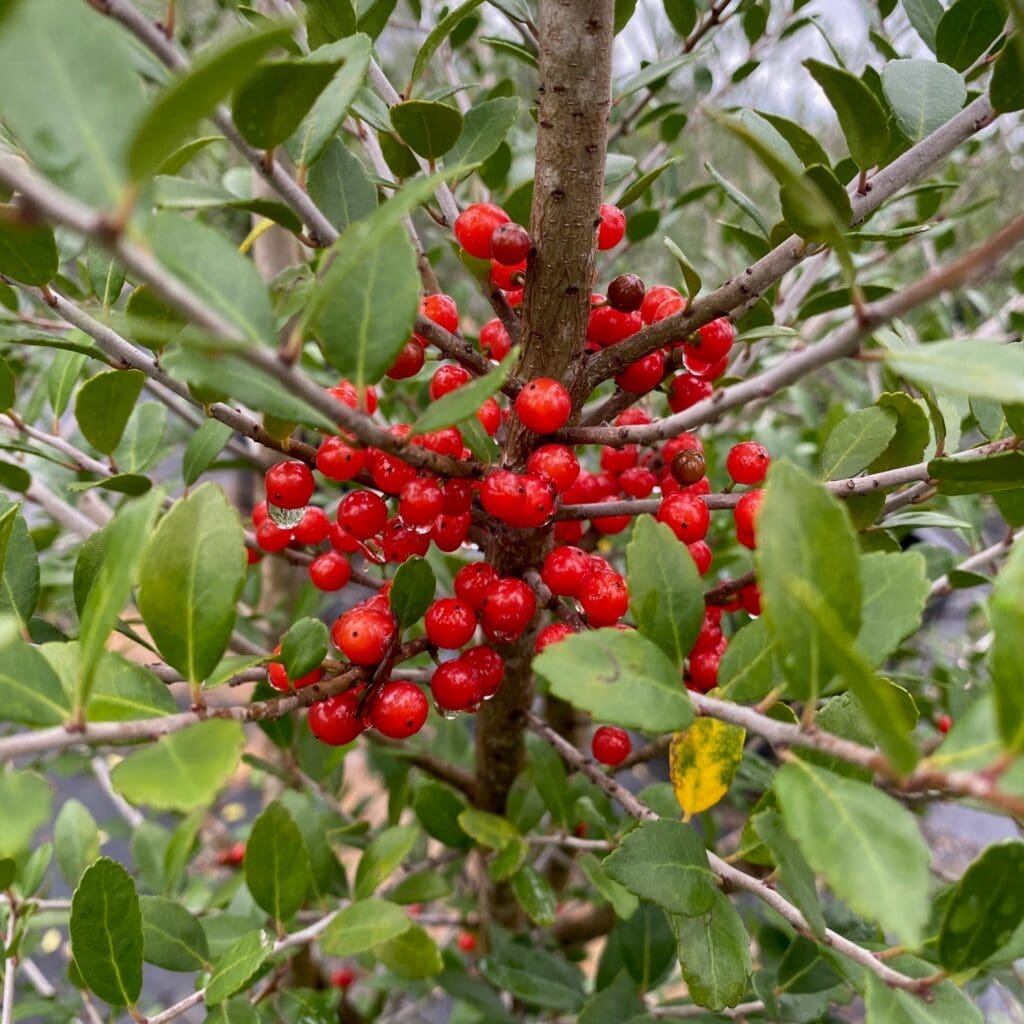
Why We Love It: Grows wild all over our area. Versatile and sculptural in landscapes. The only plant native to North America that contains natural caffeine! The leaves can be used for tea.
Planting Tip: Thrives in clay or sandy soil. Full sun to partial shade. Keep bushy or trim up to create a tree form.
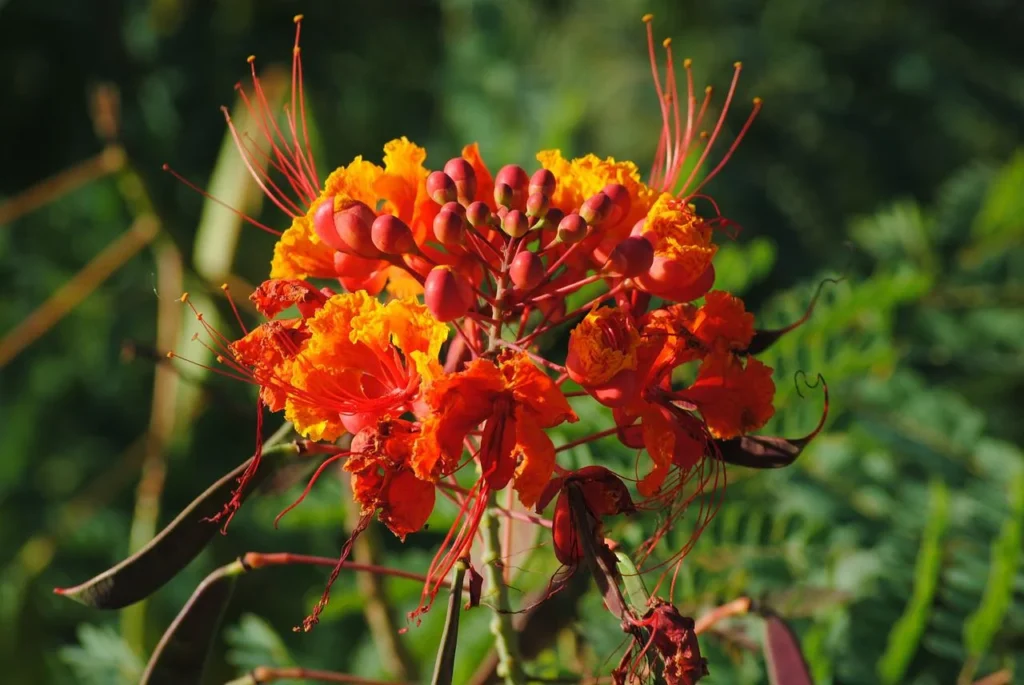
Pride of Barbados aka Dwarf Poinciana
Pollinators: Bees, butterflies, and hummingbirds
Why We Love It: Tropical drama with vivid red-orange blooms and feathery foliage.
Planting Tip: Needs full sun, good drainage, and a little patience in spring—it doesn’t start to perform until temps reach 90!
Texas Native Flame Acanthus
Pollinators: Hummingbirds and bees
Why We Love It: Red tubular flowers that keep hummingbirds zipping around all summer.
Planting Tip: Drought-tolerant and easy-going—cut back in winter and it bounces back fast.
Salvia Mystic Spires
Pollinators: Bees, butterflies, and hummingbirds
Why We Love It: Spiky deep blue blooms and non-stop action from all pollinators. Our best-performing blue salvia for South TX.
Planting Tip: Plant in full sun and deadhead for more blooms.
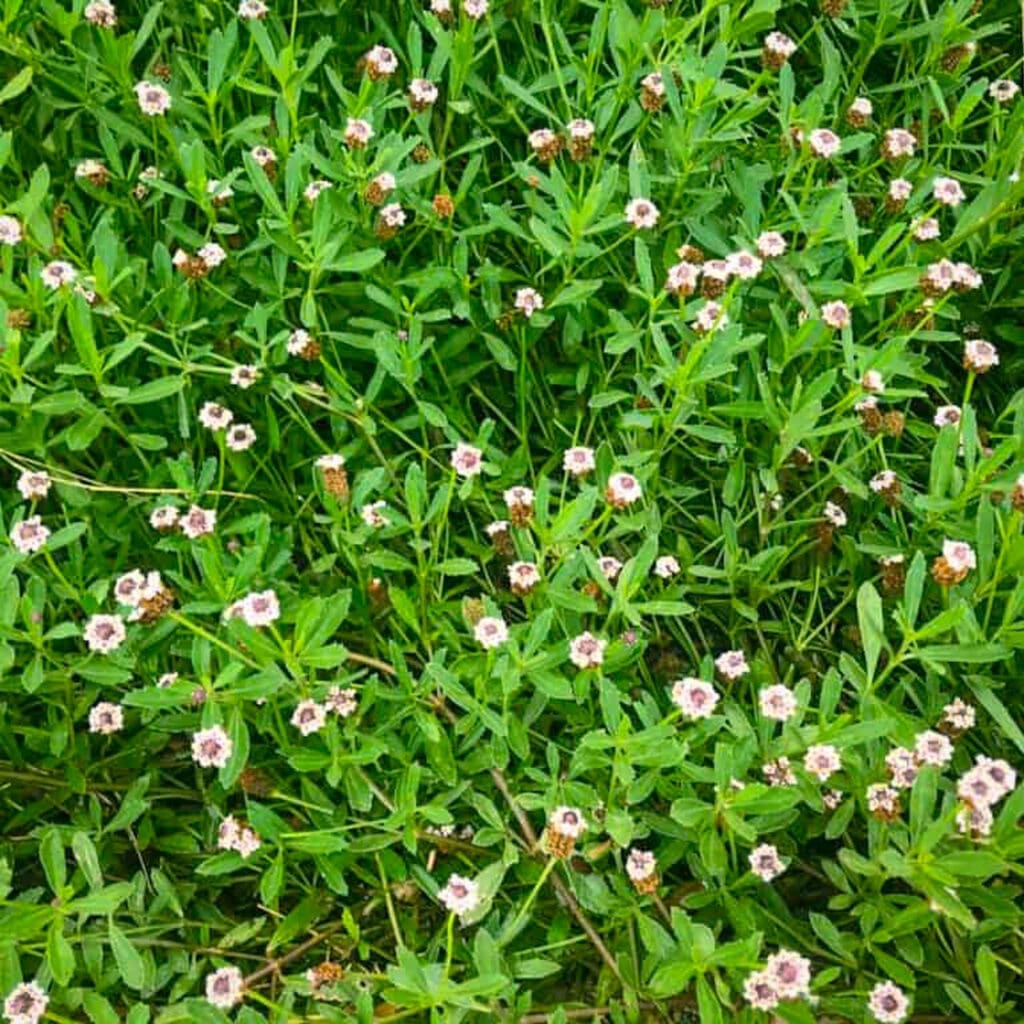
Texas Native Frogfruit
Pollinators: Butterflies (especially Phaon Crescent), bees, and skippers
Why We Love It: A native groundcover with charming flowers and big ecological value.
Planting Tip: Use as a ground cover in beds, lawn alternative, or spilling out of raised beds and containers. Thrives almost anywhere – sun or shade and spreads quickly.
We’ve passed the halfway point for 2026…that was fast! We hope you’re having lots of fun this summer – holidays, BBQs, weekend trips, and garden projects! Here are our top must-do’s to keep your plants healthy and happy in July, including tips for planting, watering, and summer pests to watch out for.
1. Yes, You Can Plant in the Summer!
Myth: I’ve heard that you can’t plant in the summer because its too hot… FACT: Of course you can!! You can plant just about anything in our summers, including trees, as long as you have a good plan for watering. In fact, summer is a great time to plant crape myrtles because they’re blooming and you get to choose the color IRL! While we’re past the season for spring veggies like tomatoes, there are still plenty of summer veggies like okra, peppers, eggplant, and melons to plant now. If you want your own fresh pumpkins for Halloween, start ’em in July. Plus, now’s a great time to set table for the fall hummingbird migration with their fav blooming perennials like Firebush, Firecracker plant (pictured), native flame Acanthus, and Dicliptera aka Hummingbird Bush. Don’t let any myths discourage your summer gardening!
2. Watering: Think Depth, Not Frequency
Proper hydration happens when you get water down to the roots of the plant. This means watering deeply, not more frequently. Plants need long, slow, deep drinks! Encourage those roots to dive deeper for water. Even with recent summer rains (yay!!), continue to watch your watering and maintain that depth moisture. If you notice this summer that you’re having to water your potted plants a lot more often, it could be time to re-pot. As the pot fills up with roots, you end up with less soil and therefore less moisture retention.
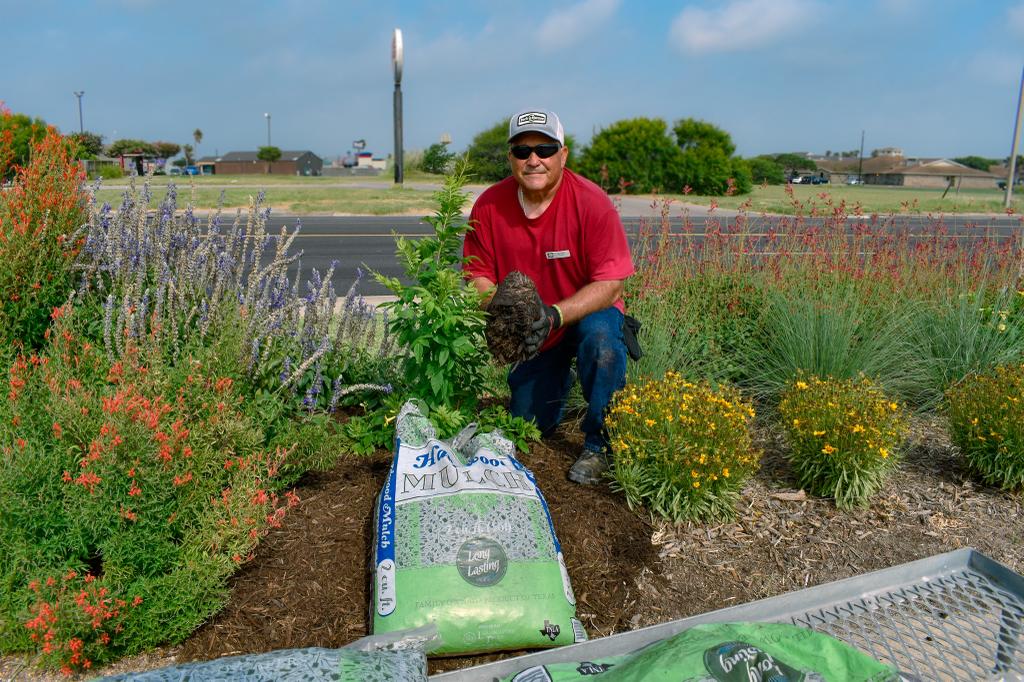
3. Mulch to Keep Roots Cool
Another way to save water is to keep landscape beds and gardens mulched through the summer. Studies show that a good 3″ layer of mulch will keep your plant roots more than 20 degrees cooler! Not only that, a good mulch layer also helps retain moisture AND keeps weeds at bay. Healthy plants, less watering, and fewer weeds – that’s a win/win/win! It’s important to use natural wood or pine straw mulch that breaks down over time, NOT the red dyed stuff! As natural mulch breaks down, it adds nutrients and makes your soil more workable. Keep in mind, mulch is also a great placeholder. If you have areas that you plan to plant later, keep them mulched to keep weeds out and keep your soil healthy and ready to plant when you are.
4. Watch for More Bugs in Summer
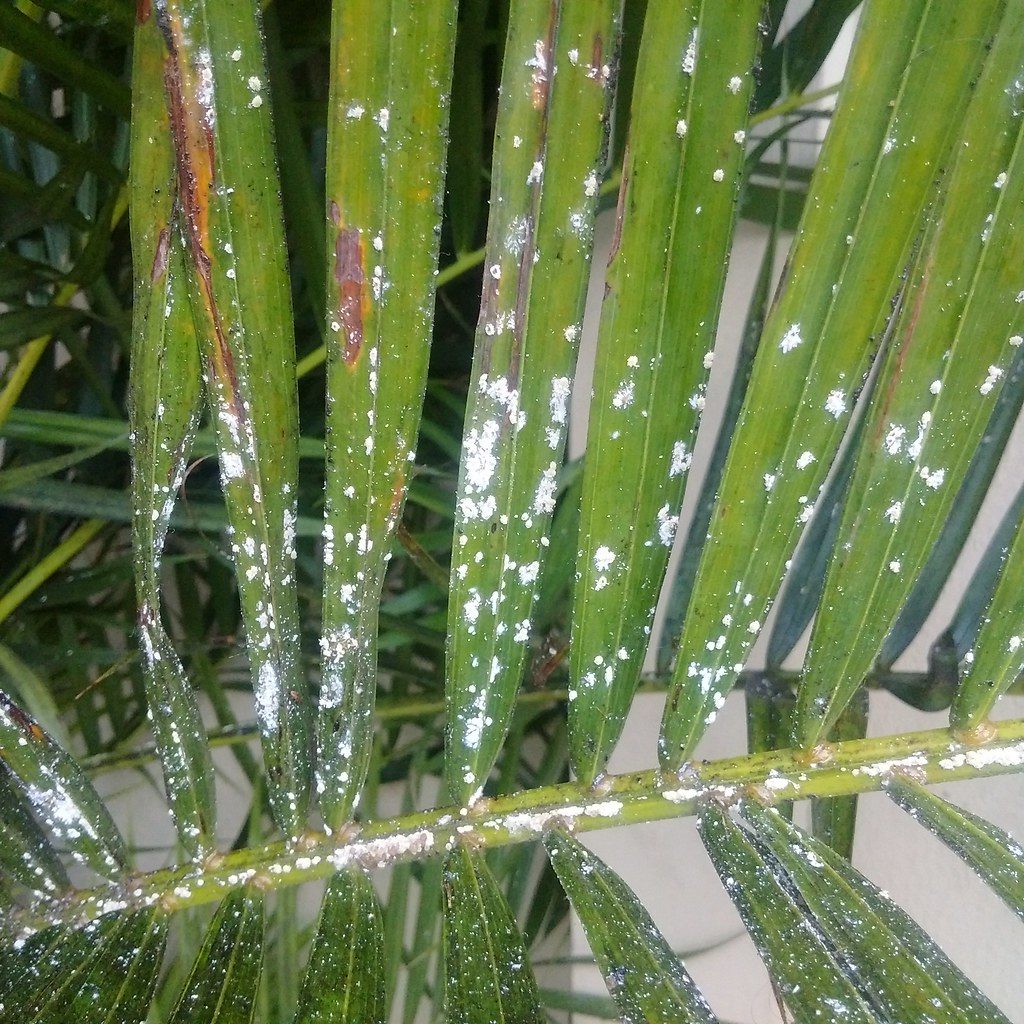
This is what a mealybug infestation looks like!
Not all bugs are bad, so it’s important to know your bugs before you spray anything, even organics. A few bugs here and there is most likely not cause for alarm. If you do get an infestation, cut the plant back first, give it some fertilizer, then treat for bugs. By pruning first, you won’t have to treat every leaf on the whole plant. We see plants come back better than ever using this method. If you’re not sure about bugs or pruning, we’re here to help. During summer, watch out for mealybugs on plants like Hibiscus and Turk’s Cap, lacebugs on Lantana, and chinch bugs in the lawn – especially near sidewalks and driveways! We’ve got solutions for all of the above.
5. Yes, You Should Fertilize in the Summer!
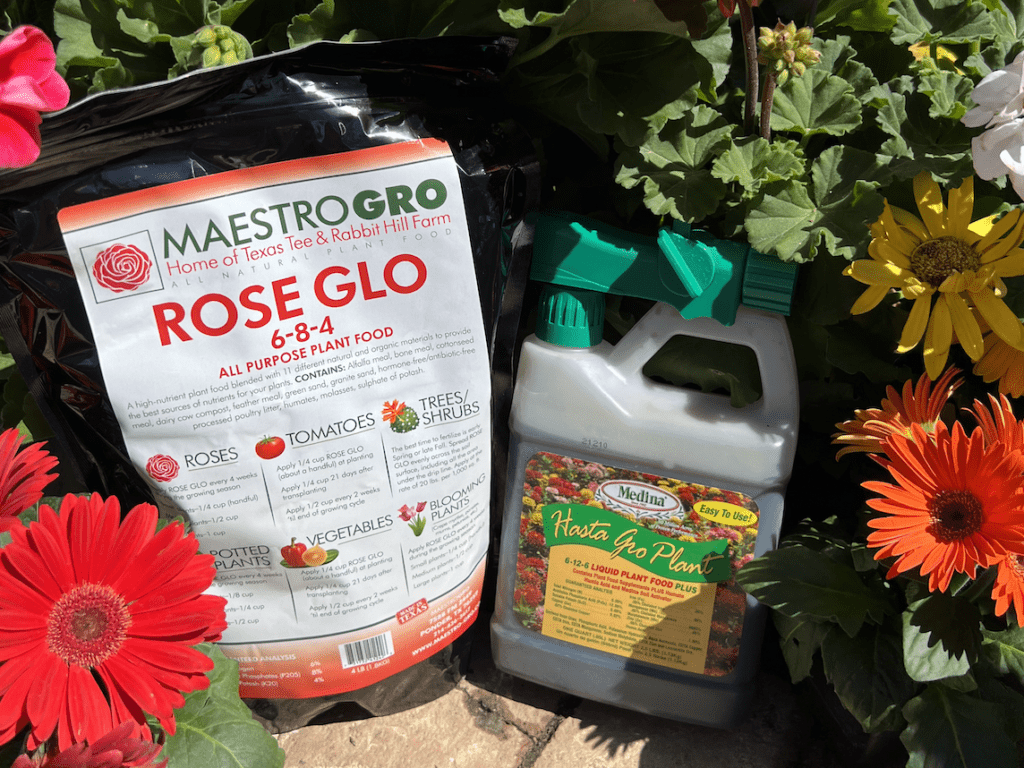
Continue to feed plants, especially heavy bloomers and veggies through the summer. Keep in mind that strong, healthy plants are less susceptible to pests and disease. Speaking of strong, try a good liquid foliar food like Medina Hasta Gro about every other week in addition to your granular feedings about once a month. The foliar food sprayed directly on the leaves really makes those leaves stronger and more robust. Lots of gardeners like to use liquid seaweed in the summer for a similar purpose, to help fortify and summer-proof your plants. What about lawns? If you haven’t fed your lawn yet, you can still do that too. If you have, you don’t need to feed it again until the fall.
Bring the kids to Gill’s this Saturday, July 11th to celebrate our favorite summer flowers – zinnias! We’ll have stations set up for the kiddos to make their own mud cookies, sprinkle some zinnia seeds into the mud mixture, and cut out cute cookies in the shapes of butterflies! Once you get them home, these zinnia seed cookies can be planted in pots or beds – just water them in, and in a couple weeks, your zinnias will start to sprout and grow!
Free event for kids 12 and under! See y’all this Saturday!
What To Plant
All hardy trees, shrubs, vines, fruit trees, and roses can be planted now. Even citrus trees can be planted now, but they're best in large pots in case we get a freeze.
Give your indoor plants a checkup. Look over the foliage, remove any old or dead leaves to freshen their look and keep them healthy.
Be sure to set your plants in the proper light indoors but watch that the heater and/or AC vents do not blow directly on them. Windows provide good natural light - open blinds and curtains during the day.
We almost always see fungus on roses this time of year, but it can be knocked out with Fungonil multi-purpose fungicide or BioAdvance 3 in 1.
Lawn Fungus
This can be a major problem after long periods of wet, cool weather. There are 2 major lawn fungus – Take All Patch and Brown Patch.
Treat Take All Patch organically with Natures’ Blend Organic Compost or peat moss; or use conventional Fertilome Systemic Lawn Fungicide or Scotts Disease Ex.
Treat Brown Patch organically with horticultural corn meal or Nature’s Blend compost, or conventionally with F-Stop Fungus Granules.
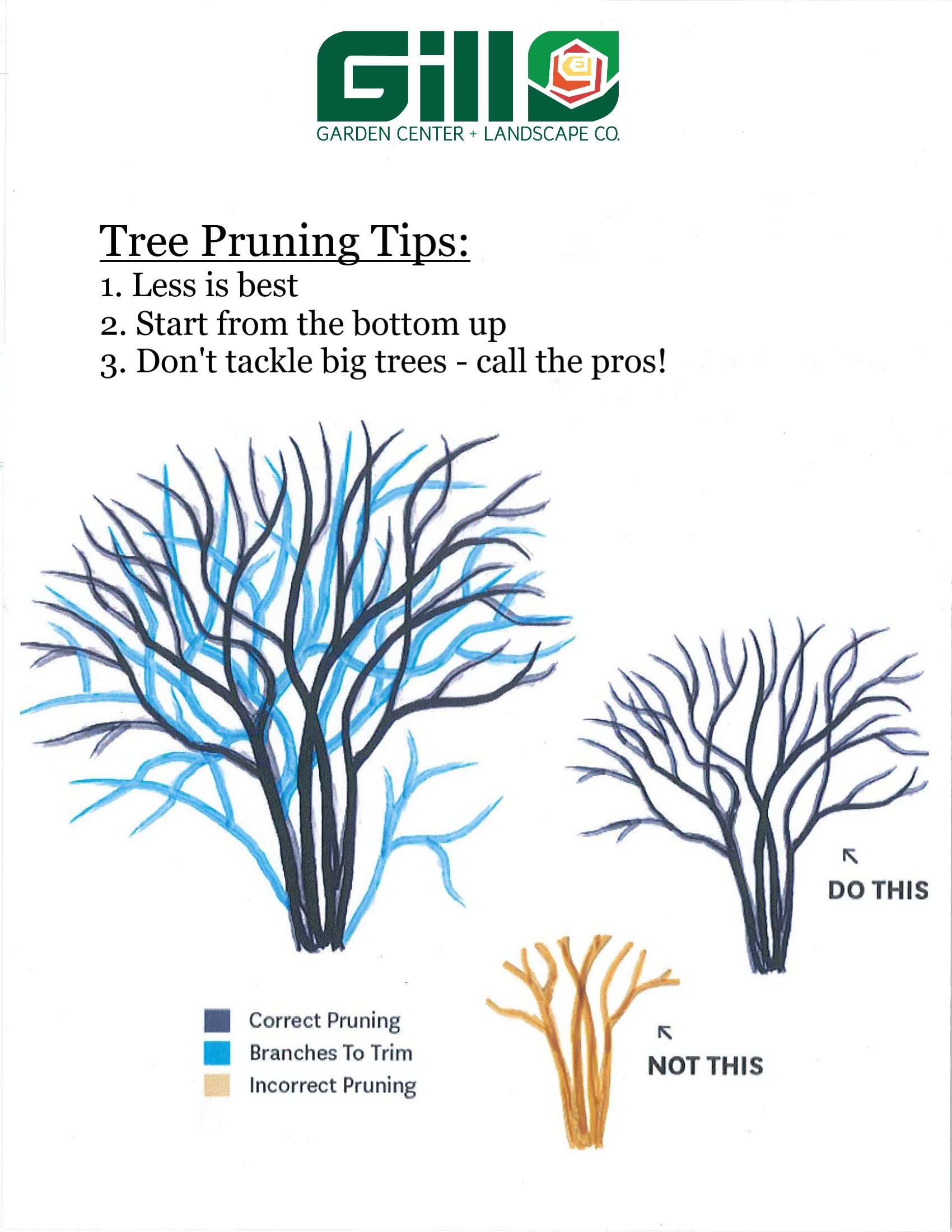
We may be tempted to prune wintery-looking perennials, but we should wait! Pruning signals to the plant that it's time to start putting on new growth, which we don't want just yet. Also, more foliage = more freeze protection.
Fruit Trees
You can prune peaches, plums, and figs lightly to shape. Do not prune citrus.
Hardy Dormant Trees
You can prune oak, mesquite, cedar elm, & crape myrtle. Do not top trees! Prune from the bottom up.
When or if temperatures dip below freezing:
Move tropical potted plants inside or group them together in a protected area so they may be easily covered.
Mulch and water newly planted trees and shrubs well; water tropicals and potted plants.
Cover tropicals and tender plants with frost blankets (which we sell), sheets, household blankets or plastic (Note plastic can burn the outer foliage it is touching).
Bring fabric all the way to the ground allowing heat from the soil to be trapped around the plant.
Uncover all plants as temperatures rise to prevent the foliage from scorching.
Spot treat existing weeds growing now with natural horticultural vinegar or Captain Jack's Deadweed Brew. Both will burn any foliage so take care to not spray your plants or lawn.
Prevent weeds with Hi Yield Weed & Grass Stopper or Weed Beater Complete
Bare Spots & Brown Lawns
You can overseed your lawn now with winter rye grass seed (or fill bare spots with this seed) at the rate of 1 lb. per 100 sq.ft. We have it in 10 to 50 lb. bags.
Do not think about fertilizing until your lawn begins actively growing. Generally this is around early March.
Note: You cannot apply both winter rye and pre-emergent weed control in the same lawn. The seed will not sprout.
Early spring bloomers such as azaleas, Carolina jessamine, Indian hawthorn, Mountain laurel or Redbud. Prune these after they bloom.
Do Prune:
Fruit trees – peaches, apples, plum, pear lightly to shape (do not prune citrus) Hardy dormant trees – oak, mesquite, cedar elm, and crape myrtle – Do not top trees! Perennials that have finished their bloom. Pick spent flowers from annuals to prolong their bloom season.
Prune established garden roses early to mid-February. Remove dead or small twiggy growth, leaving strong healthy canes to a plant height of about 18”. Try to prune back to an outward facing bud to maintain spreading, open growth. Don’t prune climbers until after the heavy spring bloom, then removing only the oldest canes and cutting back healthy, vigorous canes no more than 1/3. Cut the flowers throughout the year. This will encourage new buds to form to cut and enjoy again.
Houseplants
Give your indoor plants an inspection for insects. Most common are mealybugs, spider mites (not a spider), and scale.
White cottony stuff on the backs and crevices of the foliage: mealy bugs.
Spotted leaves with a sandpaper feel & tiny red specs: spider mites.
Black mold on foliage with waxy bumps on leaves: scale
All of these can be controlled naturally with Neem Oil or Spinosad Soap. It’s a good idea to spray/treat your plants outdoors then bring them back in once they’re dry.
Fertilize your indoor plants with organic Hasta Gro liquid and add nutrients with Worm Castings.
Give plants a gentle wash either outdoors or in the tub or sink to remove dust
Repot anytime with good potting mix.
Invest in a moisture meter to help with watering decisions.
Fertilize
Annuals & Perennials
Fertilize organically with Medina Growin Green,Hasta Gro, Maestro Rose Glo, or Plant Tone.
Established Roses
Fertilize organically with Maestro Rose Glo or Plant Tone.
Established Citrus Trees
(3 years or older) Fertilize organically with Citrus Tone,Medina Growin Green, Hasta Gro, or Plant Tone, or conventionally with ammonium sulfate 21-0-0 available in 4 to 20 Lb. bags.
Cool Weather Vegetables
Fertilize organically with Medina Growin Green, Hasta Gro, Maestro Rose Glo, or Plant Tone, or conventionally with ammonium sulfate.
All granular fertilizer should be watered in well. Do not fertilize tropicals - they need to rest.
Water
Only as needed – but dry cold fronts, high winds, and low humidity can dry plants quickly. Established lawns only need water every couple of weeks, provided we don’t get rain.
To Treat: Treat Take All Patch organically with Nature’s Blend Compost or Peat Moss, conventionally with Scotts Disease EX Lawn Fungicide or Fertilome Systemic Lawn Fungicide.
Treat Brown Patch Fungus with Fertilome Systemic Lawn Fungicide, or Fertilome F-Stop Granules.
To Treat: Spray with Neem Oil Spray or All Season Oil
Leaf Chewing Worms & Insects
To Treat: Thuricide, Spinosad or Dipel Dust
When or if temperatures dip below freezing:
Move tropical potted plants inside or group them together in a protected area so they may be easily covered.
Mulch and water newly planted trees and shrubs well; water tropicals and potted plants.
Cover tropicals and tender plants with sheets, blankets or plastic. (Note plastic can burn the outer foliage it is touching)
Bring fabric all the way to the ground allowing heat from the soil to be trapped around the plant.
Uncover all plants as temperatures rise to prevent the foliage from scorching.
We carry frost blankets!
Lawn Care
You can still apply pre-emergent weed control to your lawn to prevent more weeds from sprouting. We recommend Hi Yield Weed & Grass Stopper with Dimension
You can overseed your lawn now with winter rye grass seed (or fill bare spots with this seed) at the rate of 1 lb. per 100 sq. ft. We have it in 5 to 10 lb. bags. Just remember you cannot use a pre-emergent when planting seed.
Fertilize your lawn when it begins actively growing. This is usually late February to mid March. We recommend organic Medina Growin Green. All fertilizers require water to work, so plan on watering after you apply.
Eliminate broadleaf weeds with Image, Ortho Weed-B-Gon for Southern Lawns.
Control growing weeds naturally with Horticultural Vinegar or Captain Jack's Deadweed Brew treating only the weeds. It will burn all plant foliage.









 This is what a mealybug infestation looks like!