Happy National Pollinator Week! Gardeners know that planting to support and protect pollinators like hummingbirds, bees, butterflies, and good bugs creates a healthy local ecosystem. And pollinators return the favor by making our gardens and landscapes so much more beautiful with healthier plants and tons more blooms. Here are our top 11 summer-tough plants to create a pollinator-friendly habitat in your yard – in stock at Gill’s and ready to plant right now!
Pentas
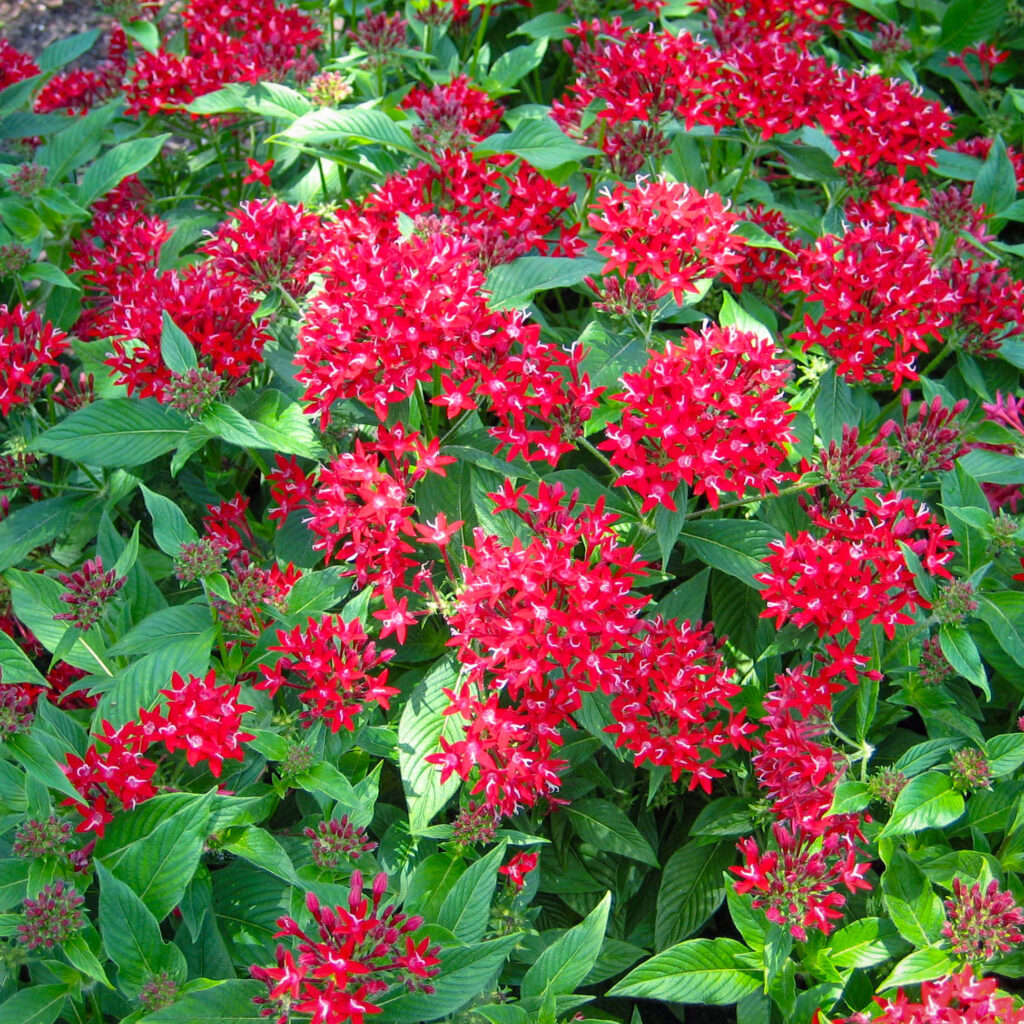
- Pollinators: Butterflies, native bees, hummingbirds
-
Why We Love It: Pentas are often thought of as just being a gorgeous and easy bedding plant, but they actually attract a ton of pollinators!
-
Planting Tip: Plant in full sun to partial shade. Excellent in beds or containers. Mulch with pine straw to add a bit of acidity to the soil.
Firebush (Hamelia patens)

-
Pollinators: Hummingbirds, butterflies, and bees
-
Why We Love It: Bright orange-red blooms all summer long!
-
Planting Tip: Loves full sun. Foliage dies back in winter. Cut back hard in early spring and it grows back very fast.
Purslane

-
Pollinators: Native bees and small butterflies
-
Why We Love It: A low-growing, drought-tolerant succulent with vivid blooms in lots of different colors. And Purslane is edible! High in omega-3s and minerals.
-
Planting Tip: Tuck it into hanging baskets, borders, or between rocks—just give it sunshine and dry feet.
Palo Verde ‘Desert Museum’
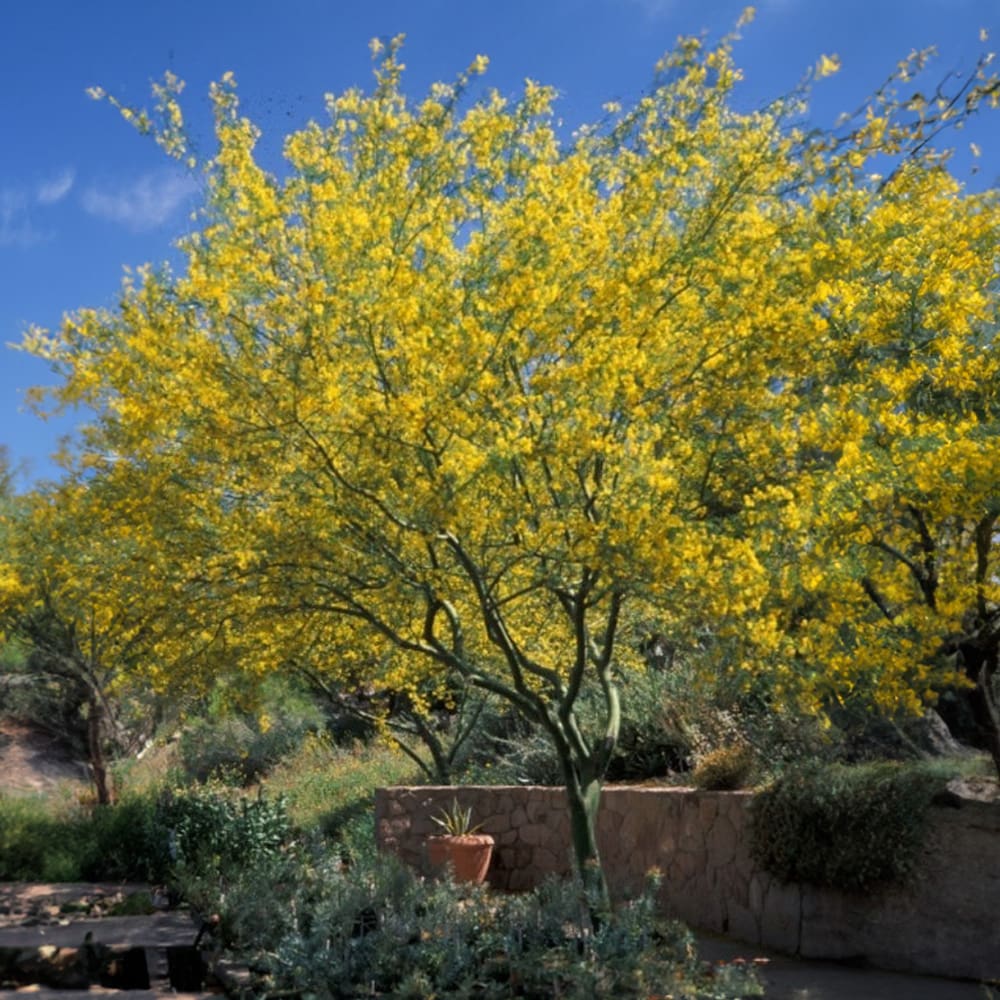
Pollinators: Butterflies, hummingbirds, carpenter bees
-
Why We Love It: Cultivar of our South Texas native retama, but without the thorns and a longer blooms cycle. Blooms all the way into the fall!
-
Planting Tip: Plant high for better drainage, especially in clay soil. Berm or mound up so water runs off and away from the tree. Loves hot and dry. Grows to about 20′ tall and wide.
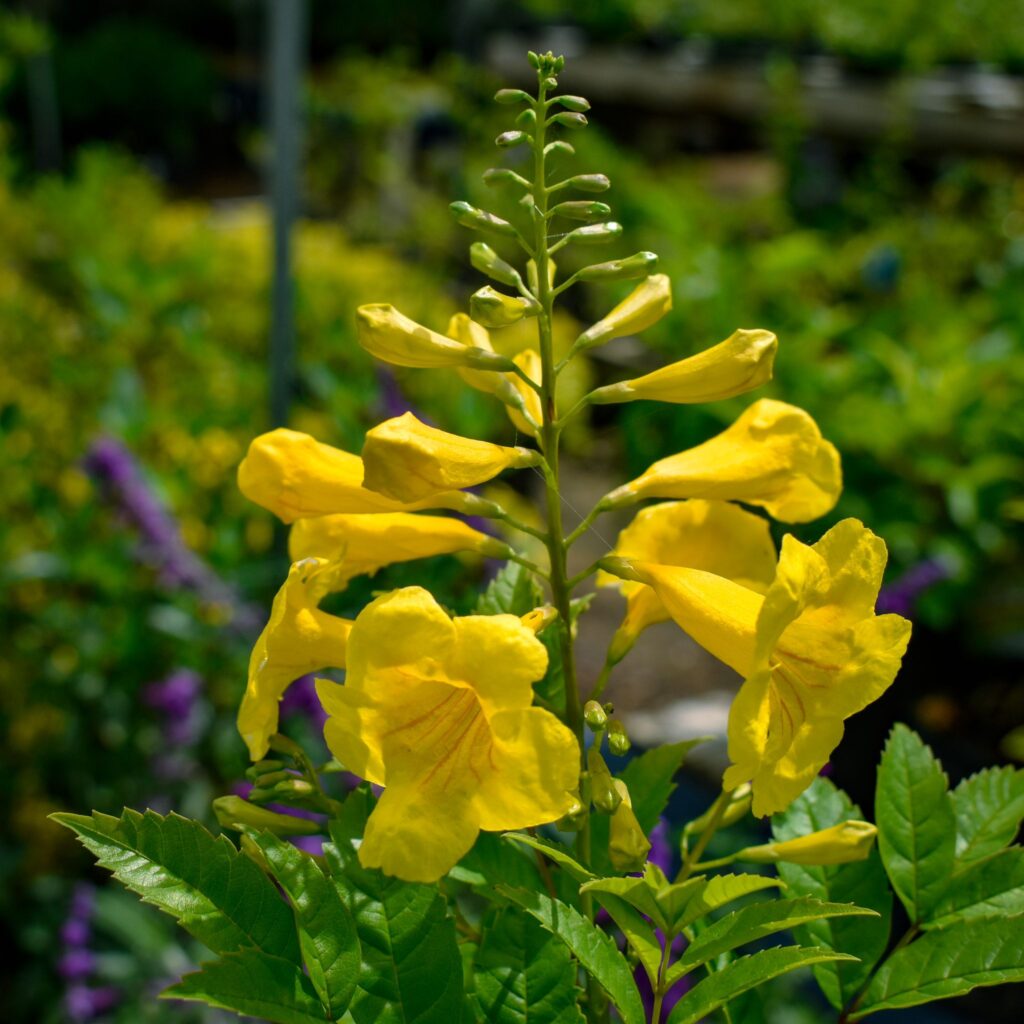
Esperanza – all varieties
-
Pollinators: Bees, butterflies, and hummingbirds
-
Why We Love It: Comes in several different varieties from the tidy, dwarf ‘Sparklette’ with orange blooms to the large ‘Yellow Bells’ with bright yellow blooms.
-
Planting Tip: Full sun and low water needs. Plant in your sunniest spots.
Texas Native Blackfoot Daisy

-
Pollinators: Bees, Butterflies, Sphynx Moths
-
Why We Love It: Delightful and plentiful white blooms, extremely tough, very low water
-
Planting Tip: Full sun + good drainage. Excellent for rocky beds or containers.
Texas Native Milkweed (Asclepias tuberosa)

-
Pollinators: Monarchs (host plant!), bees, and other butterflies
-
Why We Love It: Orange or yellow blooming varieties + life support for monarch caterpillars = must-have native!
-
Planting Tip: Full sun, well-drained soil, and very little water once established.
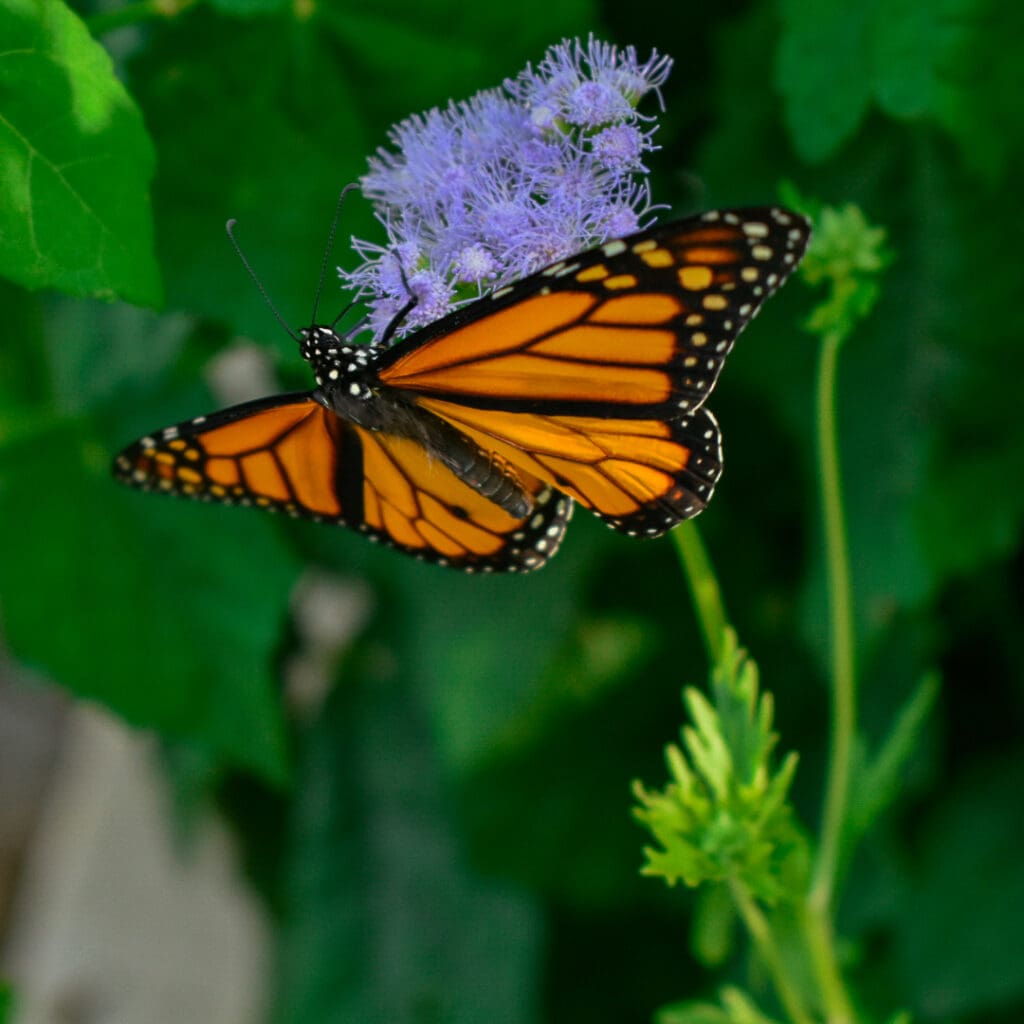
Gregg’s Mistflower
-
Pollinators: Queen butterflies, monarchs, skippers, bees
-
Why We Love It: Soft lavender puffs that butterflies go wild for.
-
Planting Tip: Likes part sun to full sun and moderate moisture. Plant about 3 feet apart and it will spread and fill in beautifully.
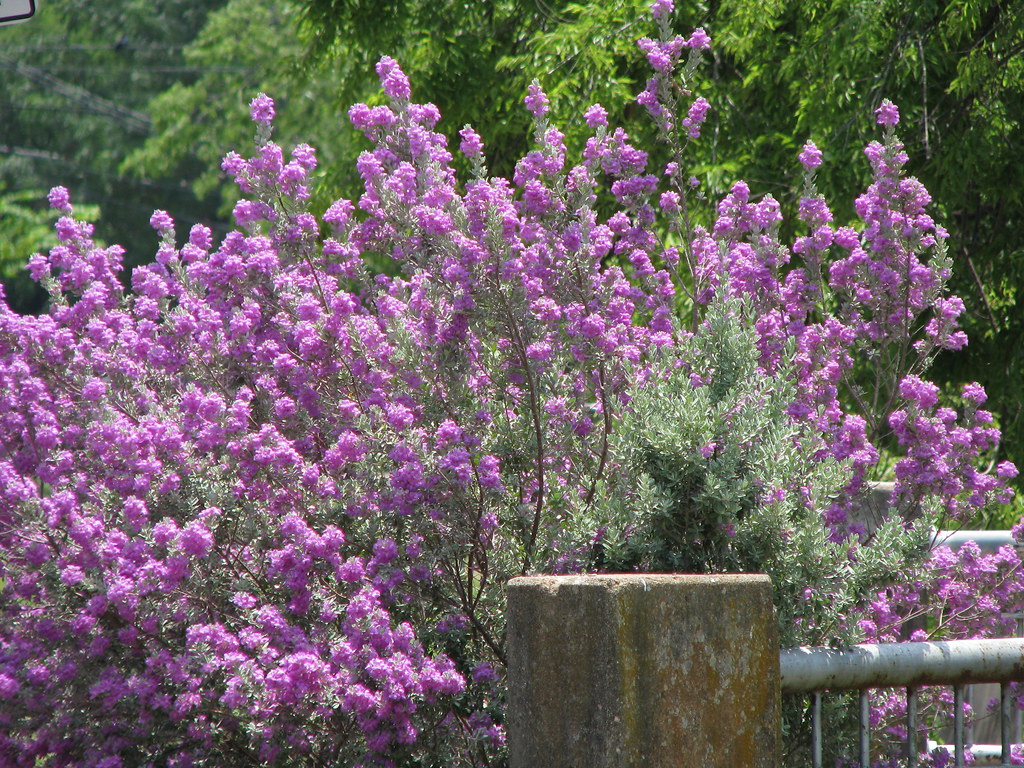
Texas Sage (all varieties)
-
Pollinators: Bees and butterflies
-
Why We Love It: Lavender blooms that pop before and after rain, and it’s practically unkillable.
-
Planting Tip: Plant in your hottest, sunniest spots and avoid overwatering. Choose the right variety for the right space – some stay 3-4′, while some grow 8-10′.
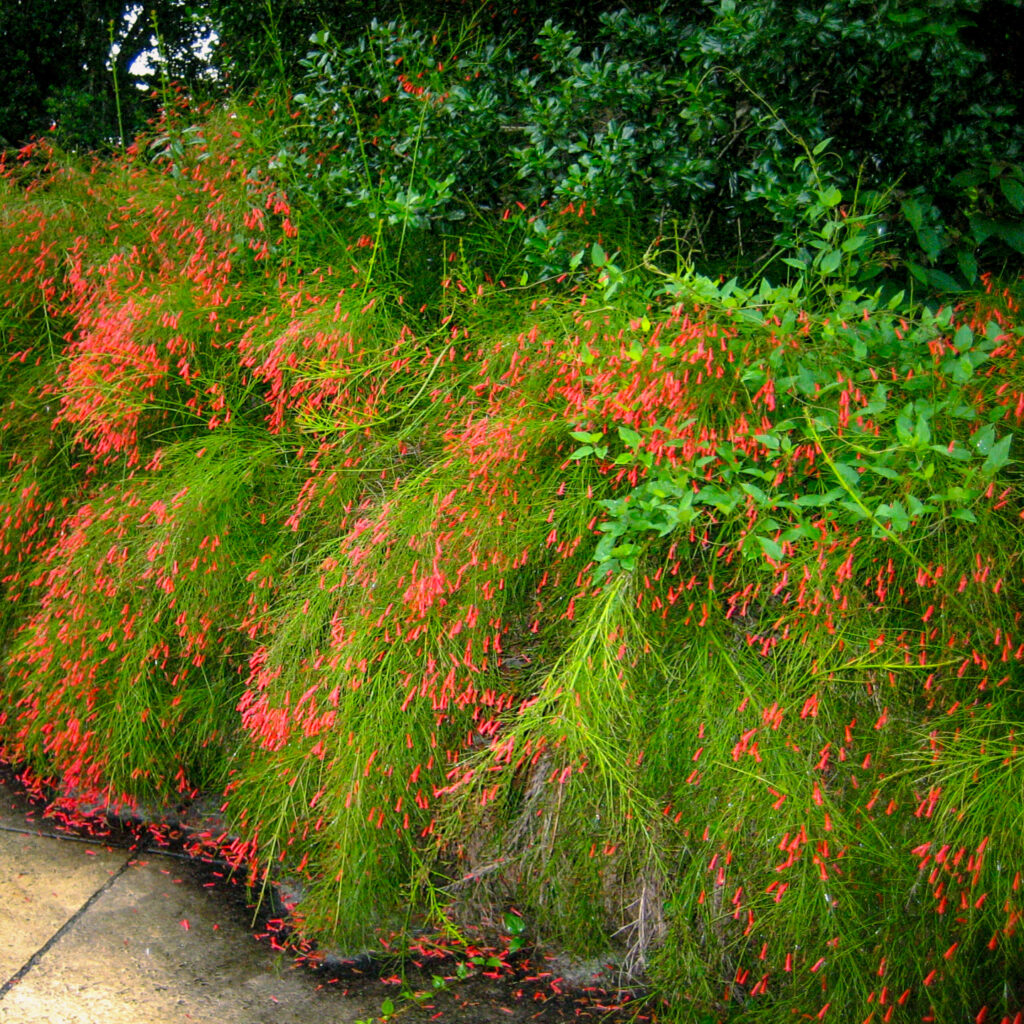
Firecracker Plant (Russelia)
-
Pollinators: Hummingbirds and butterflies
-
Why We Love It: Cascading coral-red blooms that hummingbirds can’t resist.
-
Planting Tip: Likes moist, well-drained soil and full sun. Looks stunning in containers or hanging over walls.
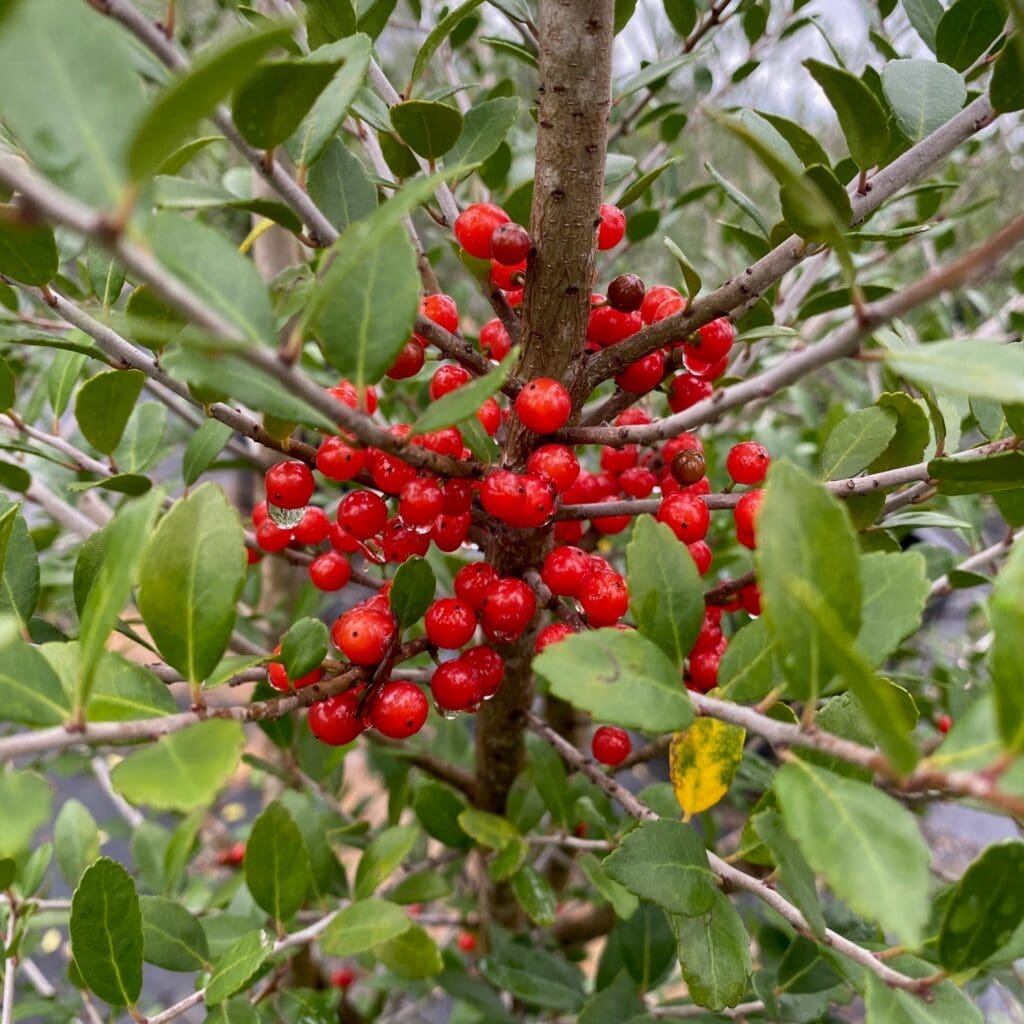
Yaupon Holly
-
Pollinators: Nectar source for bees in the spring and food source for birds (especially mockingbirds) in the fall/winter
-
Why We Love It: Grows wild all over our area. Versatile and sculptural in landscapes. The only plant native to North America that contains natural caffeine! The leaves can be used for tea.
-
Planting Tip: Thrives in clay or sandy soil. Full sun to partial shade. Keep bushy or trim up to create a tree form.
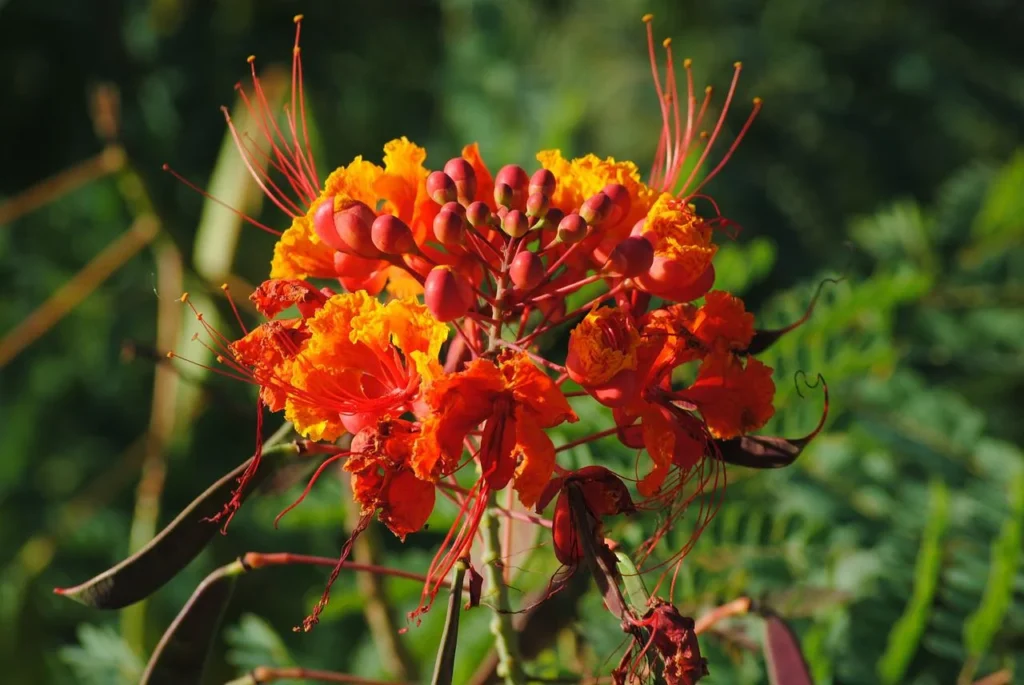
Pride of Barbados aka Dwarf Poinciana
-
Pollinators: Bees, butterflies, and hummingbirds
-
Why We Love It: Tropical drama with vivid red-orange blooms and feathery foliage.
-
Planting Tip: Needs full sun, good drainage, and a little patience in spring—it doesn’t start to perform until temps reach 90!
Texas Native Flame Acanthus

-
Pollinators: Hummingbirds and bees
-
Why We Love It: Red tubular flowers that keep hummingbirds zipping around all summer.
-
Planting Tip: Drought-tolerant and easy-going—cut back in winter and it bounces back fast.
Salvia Mystic Spires

-
Pollinators: Bees, butterflies, and hummingbirds
-
Why We Love It: Spiky deep blue blooms and non-stop action from all pollinators. Our best-performing blue salvia for South TX.
-
Planting Tip: Plant in full sun and deadhead for more blooms.
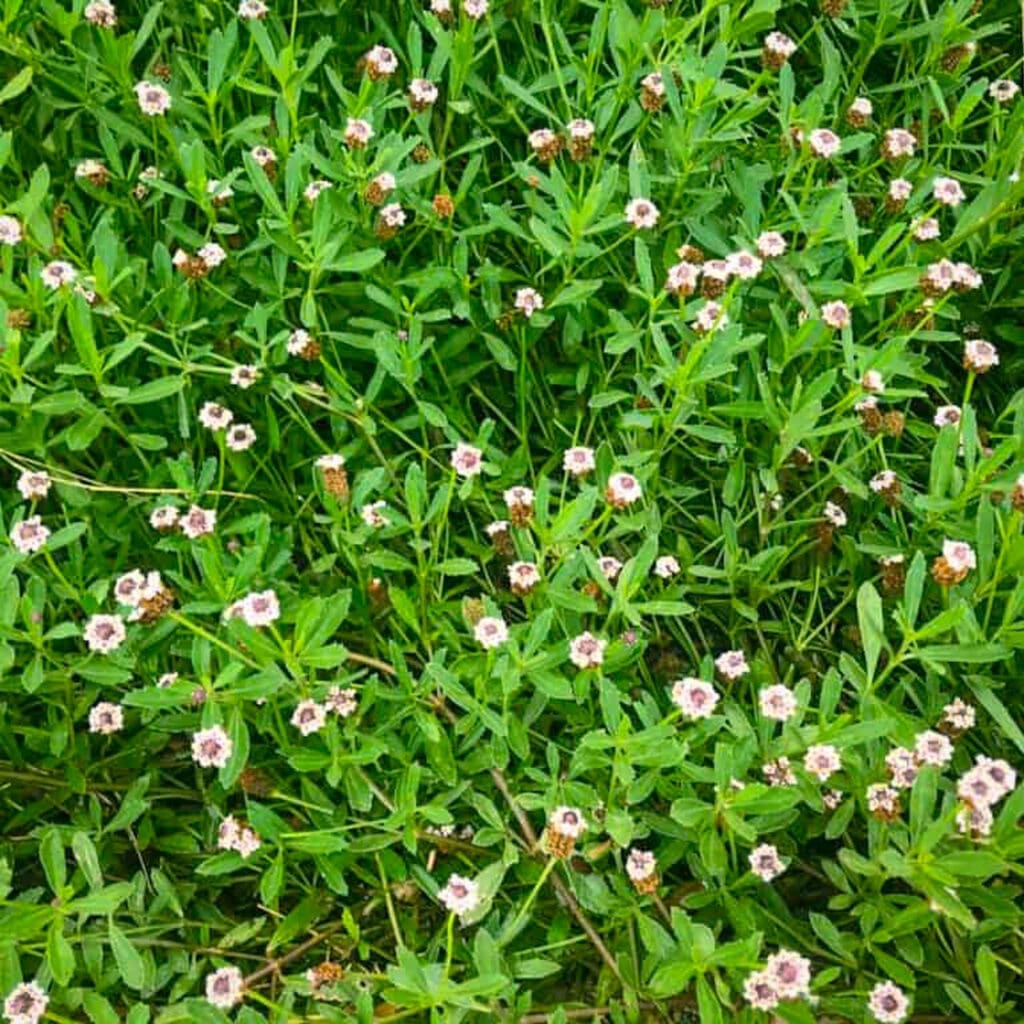
Texas Native Frogfruit
-
Pollinators: Butterflies (especially Phaon Crescent), bees, and skippers
-
Why We Love It: A native groundcover with charming flowers and big ecological value.
-
Planting Tip: Use as a ground cover in beds, lawn alternative, or spilling out of raised beds and containers. Thrives almost anywhere – sun or shade and spreads quickly.


Mal says
Thank you so much for continually highlighting plants that help us make small changes that have a big impact on ecology.
If we all abandoned expansive lawns in favor of planting these beauties, it would make a difference.