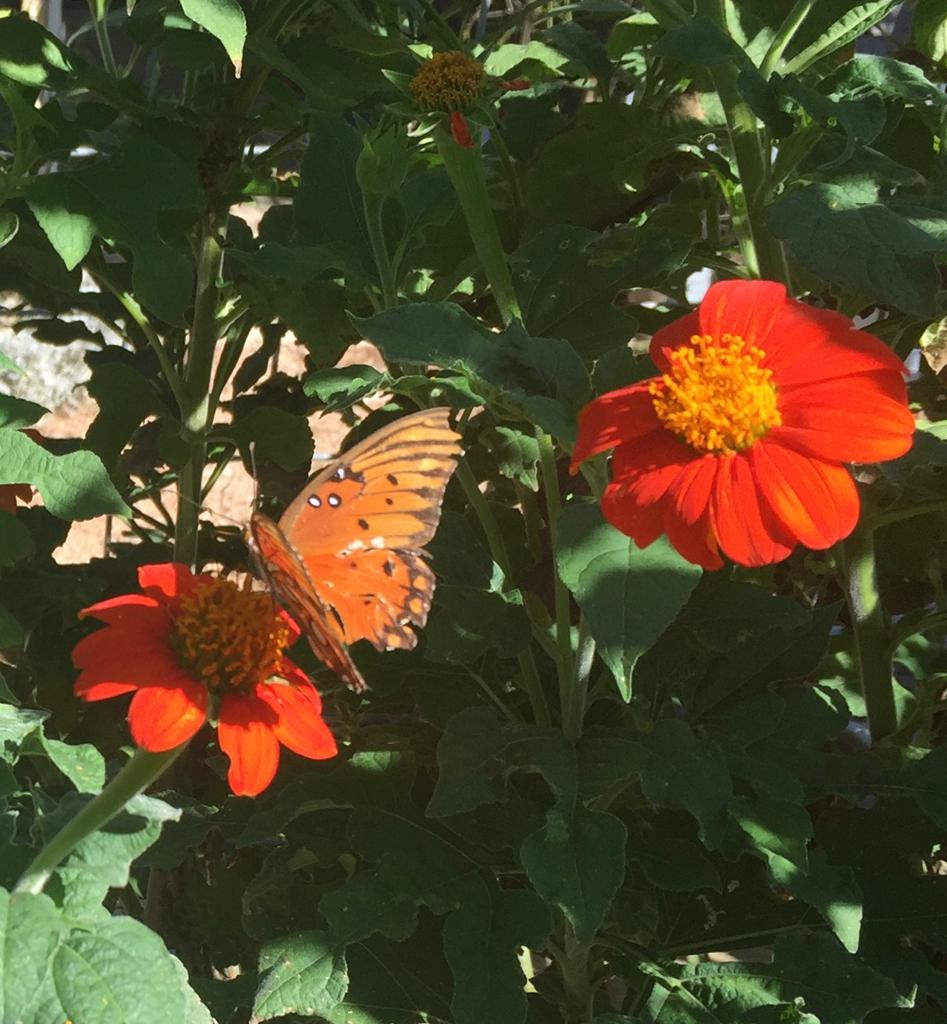
![]() Aphids on Milkweed: If you plant tropical milkweed to help the monarch butterflies (and for the beautiful flowers) sooner or later you will get aphids. You can hose down the infested milkweed tips with a sharp stream of water, knocking most of the aphids off (away from your other plants please). But if you see a substantial number of aphids looking brown and bloated instead of just fat and sassy, you may choose to
leave them alone. The brown, bloated ones have been parasitized by a tiny braconid wasp, whose larvae will eat the insides of the aphid, metamorphose into a wasp, and hunt down scores of aphids to lay eggs on, continuing to destroy aphids with no supervision from you. -James
Too much rain on roots? My walking buddy sent me a photo of her unhappy Jatropha and wanted to know what the problem was. We believe the constant moisture over the last few months caused the roots to rot which caused the plant to drop foliage (a plant is programmed by mother nature to drop foliage if roots are suffering).
Now that the sun is out and soils are drying, we recommended she cut the plant back one half and be stingy with watering. Most likely it will flush with new spring foliage and be good to go.
-Sally
Caterpillar alert: I have had several customers bringing me Tussock Moth Caterpillar from their oak trees. The creamy white hairs on the caterpillar are long and bristle-like and spread out in tufts down the sides. Two long, sharp black pencil like hairs protrude near the front and rear and these hairs are connected to poison glands, which excrete venom on contact. Contact with the venom may result in itchy irritation. You can spray your tree with Hi Yield Thuricide Concentrate or Natural Guard Spinosad Hose-end. We also carry Spinosad in a concentrate Fertilome Borer, Bagworm, Tent Caterpillar and Leafminer Spray. Both of these products are organic and safe to use on all plants. Thuricide
reacts with the cells of the stomach lining of the target pest causing them to not be able to feed within hours of ingesting. They eventually die from starvation. Spinosad is a contact kill, but still safe and organic for all plants.-DeAnna |
Butterflies
Oak Leaves Will Fall
If you haven’t noticed before, this is the time that live oak leaves turn and fall. They are fine when used as a mulch in shrub beds, but should not be allowed to sit on the lawn, as they can inhibit soil warming and healthy new growth of grass.

Companion Plants For Your Veggie Garden
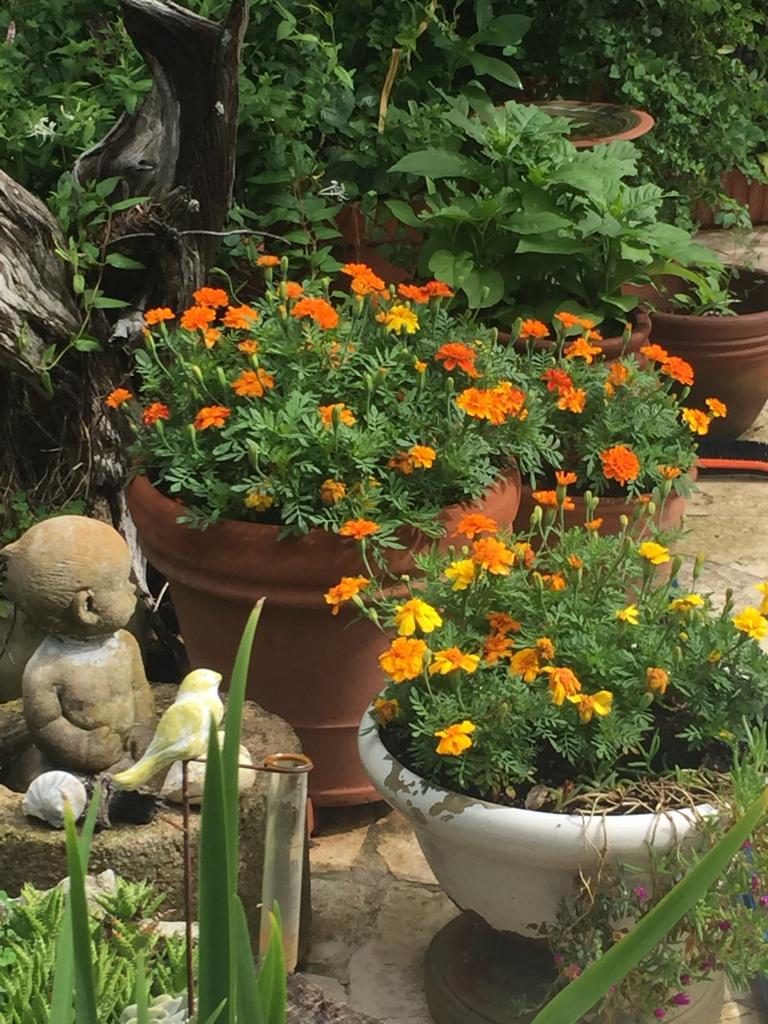
Planting certain kinds of flowers in your veggie garden can not only attract pollinators like bees and butterflies, but can also help you get rid of pesky insects in your garden. Borage has bright blue flowers, and repels tomato hornworms. Marigolds have a certain compound in their root system that repels harmful nematodes. Catnip is said to keep flea beetles away, so is great to plant near Eggplant and Okra. And last but not least, radishes keep squash borers away. We carry most of these plants in seed form, so be sure to sprinkle them in the garden now!

10 Reasons To Mulch Gardens & Landscapes
1. Provides an excellent source of organic compost that offers nutrients for your plantings.
2. Insulates the soil around new plants from fluctuating spring temperatures.
3. Prevents soil erosion from water runoff during heavy downpours.
4. Retains moisture during the dry heat of the summer, which means less watering.
5. Suppresses weed seed germination and weed growth which can rob water and nutrients from landscape plants. Be sure to mulch 3-4 inches deep.
6. Beautifies the landscape, giving beds a manicured look.
7. Encourages earthworms to move in for improved soil structure and nutrient recycling.
8. Protects trees and shrubs from being damaged by lawnmowers and weedeaters.
9. Prevents soil borne fungus from splattering onto the leaves of plants.
10. Bark mulch can decompose over time, thus adding valuable nutrients back into the soil. In essence, mulching is time-released composting.

-DeAnna
August is almost here! It’s time to start making the transition into an exciting new Fall planting season. Here are our top must-do’s for this coming month.
Check out our August Garden Guide for more tips and remember that trees, shrubs, and perennials can be planted 12 months out of the year! The only difference is the amount of water they need depending on temperatures and wind!
1. Choose Plants that Provide for Wildlife

Important fact: birds, bats, bees, butterflies, beetles, and small mammals that pollinate plants are responsible for bringing us one out of every three bites of food. Plants attract and provide food for them to keep the cycle going. For example – plant Zinnia and sunflower seeds now, and they’ll be ready to feed migrating birds this Fall. Take it a step further and plant Texas natives! They provide for pollinators and require less water once established.
2. Pick Out Your Seeds

Watching your plants grow from a tiny seed is exciting and rewarding! Our Fall Vegetable Planting Guide provides the specific seed-planting dates to help plan your Fall garden. Most new seeds are already here! Look out for some of the rare and heirloom seeds we’re bringing in over the next couple weeks! We’ve been researching how to use liquid seaweed to improve seed germination. Worth a try! Another tip: use peat pots or seed starting trays to start seeds indoors, then move to a covered patio once they sprout. This will protect the seedlings and slowly acclimate them to the outdoor heat.
3. Prepare Your Garden Beds

August is the time to start preparing for Fall vegetables. Clean out beds and pull weeds. To get your soil ready, we recommend mixing Nature’s Blend Compost or Cotton Burr Compost into your soil to replenish nutrients and loosen the soil before planting. About 1 bag per 12 sq. ft. is good. Once prepped, add a thick layer of pine straw mulch, which will help retain moisture, keep weeds from sprouting, and keep the soil cooler until you’re ready to plant. As you plan your space, think crop rotation – don’t plant the same veggies in the exact same place you planted them last season, or you encourage pests and diseases.
4. Water Sufficiently AND Efficiently

With our temps and lack of rain, it’s vital to water your plants and lawn sufficiently AND efficiently. The goal with summer watering (with or without watering restrictions) should be to create depth moisture. For lawns and established plants and trees, this means watering less frequently, but watering deeply when you water. New plantings will require water every day to get the roots established. Use a water wand with a cut-off valve to make it easy on you and conserve water. Pro tip: Conserve water by watering at ground level, not spraying from above. This way, water soaks down to the roots rather than evaporating off the leaves.
5. Mulch for Moisture Retention

We know fresh mulch is the quickest way to refresh the look of your landscape. Proper mulching has other big benefits, especially during dry and hot weather. A good 2-3” deep layer of mulch will keep your plants and the soil moist and cool for longer after you water. Give the main trunks or stems of your plants a little space – mulch 2-3” deep throughout the bed, but no more than 1” deep against the main trunks/stems of plants.
6. Beware of Bad Bugs

White cottony clumps on tips, stems, and undersides of leaves in summer are most likely mealy bugs! People often think these are a fungus because of their appearance but one squish with your fingers will tell you they’re insects feeding on your plants. They especially love Hibiscus, Jatropha and some Salvias. We’ve been seeing a lot of spider mites too. You’ll notice a fine webbing and small sandy speckles (see photo). The mites themselves are usually on the underside of leaves. Both can be treated organically with Spinosad soap, Bee Safe 3-in-1 spray, or Neem Oil during cooler evening hours.

Attention parents and kids: join us here at Gill’s this Saturday for a talk and tree planting demo.
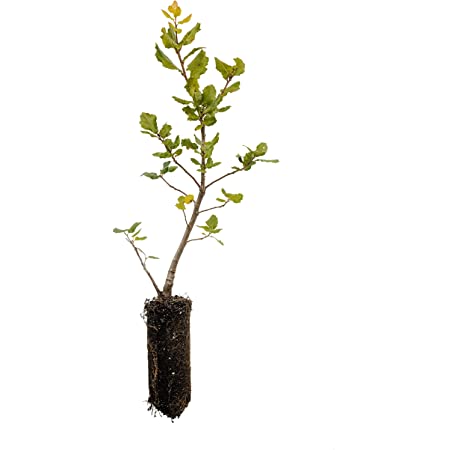
All kids will receive a free native Live Oak tree seedling and soil blend for planting! We thought it would be fun to teach kids how to plant trees and give them their own tiny tree to care for and watch it grow. Here’s a preview of what we’ll discuss – see you Saturday!
Fall is the Best Time to Plant Trees

Planting trees in the fall, as temps start to cool down, helps their root systems get a head start. They spend all fall and winter focusing energy on growing deeper and stronger roots so that next Spring they can explode with growth of new leaves and branches. Also, those strong and deep roots help prepare them to withstand hot summer temps next year.

Planting Small Trees is Easy!
Digging a big hole and planting a big tree gives you a big impact, but planting a small tree is a lot easier. It takes a lot less water too. Yes, it takes a long time to get a huge mature oak tree, but that’s a great reason to plant one as a kid! You get to nurture the tree and watch it grow, which is so rewarding.
Planting Trees Makes a Big Environmental Impact
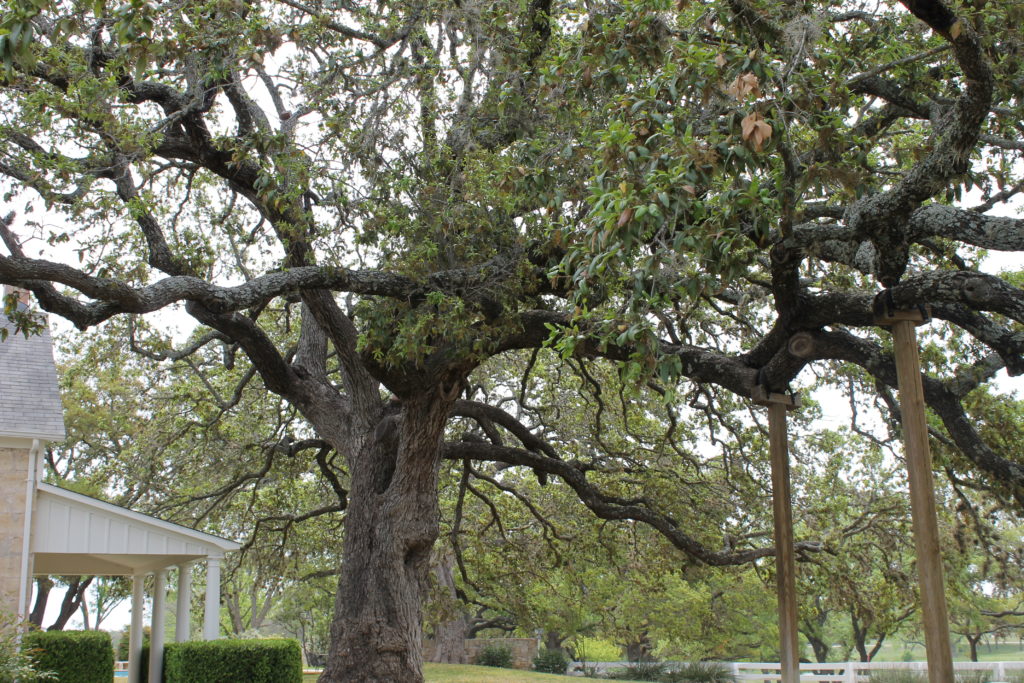
Native trees, like Live Oaks, provide the biggest benefit to our local ecosystem. They host a large number of caterpillars that turn into pollinators (butterflies and moths). And, they help provide a food source and habitat for native and migrating birds. Not to mention, they trap carbon and create clean oxygen!
Two of our favorite people, Marie (James’ sister) and Lanny (our brother-in-law) bought a home on the outskirts of Wimberley, Texas about seven years ago. It sits on an acre of land, with a covered veranda across the back of the house, looking out onto a small garden area and swimming pool with a grove of oaks along the back of the pool, and steps dropping down to a lower level of native trees and grasses.


Upon moving in, they both were drawn to the deer that wandered the neighborhood and the local and migrating birds and butterflies. So began the plan for their landscape. Their intention was for everything in the garden to be focused on birds, pollinators, and other critters.


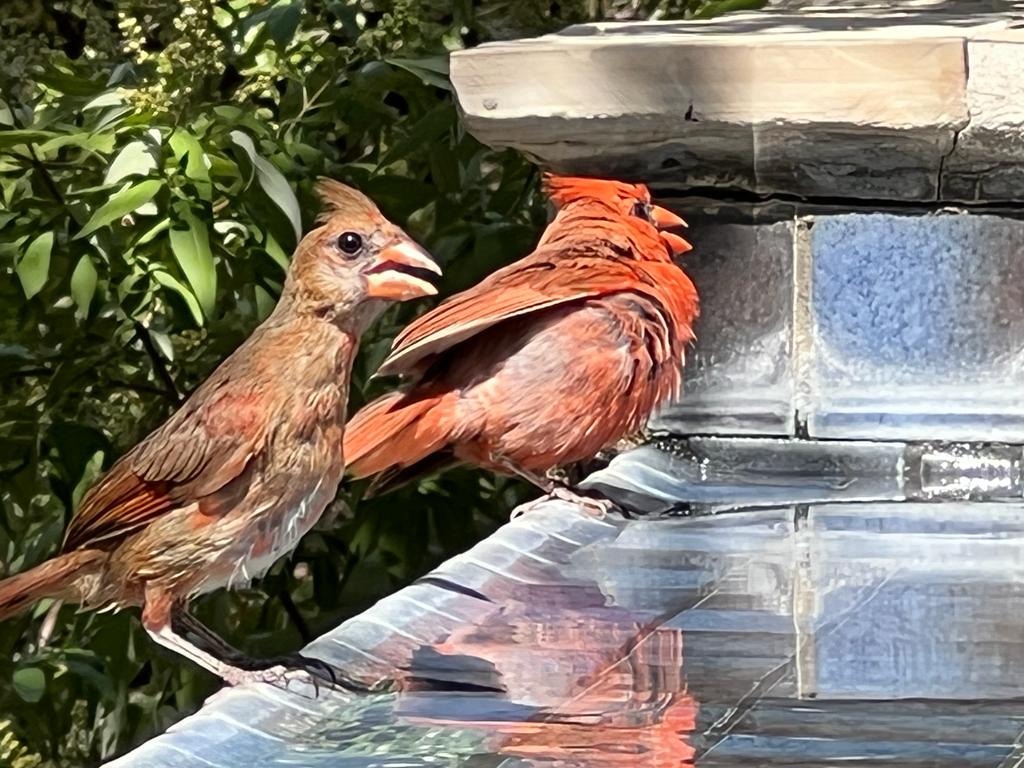
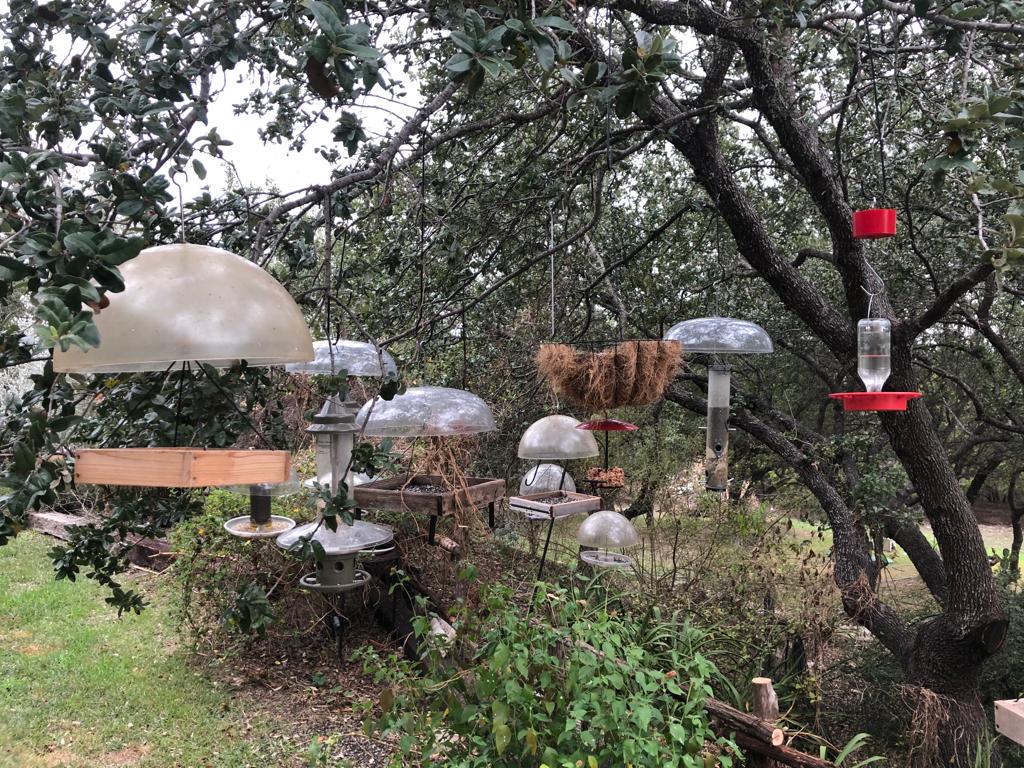
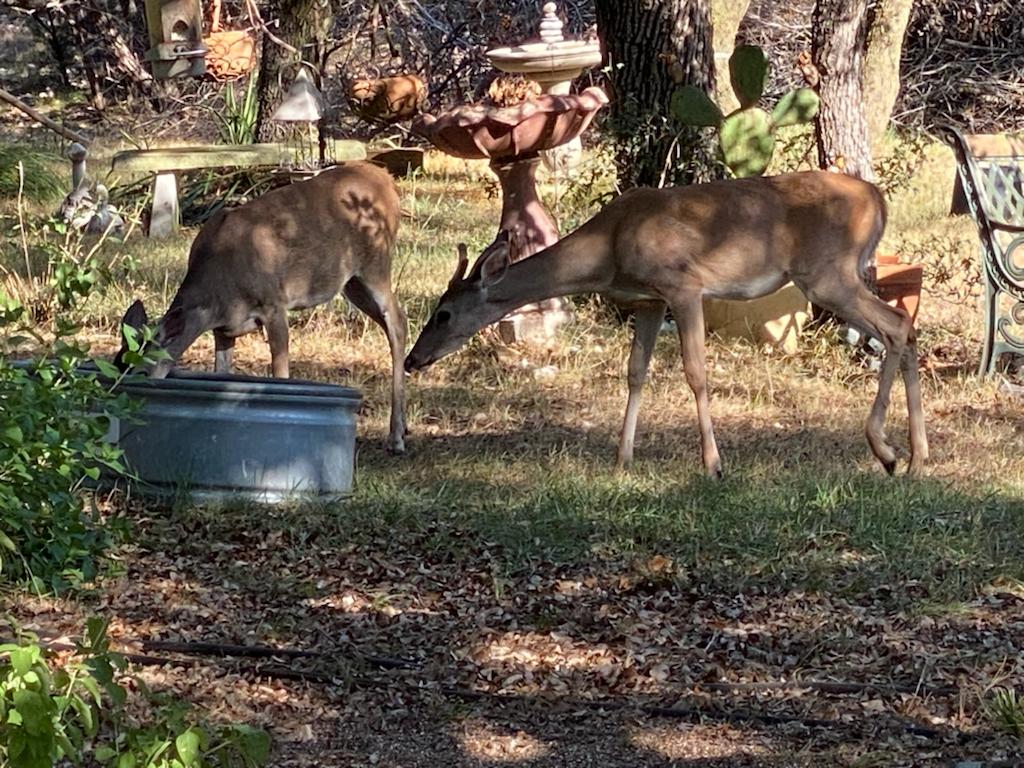
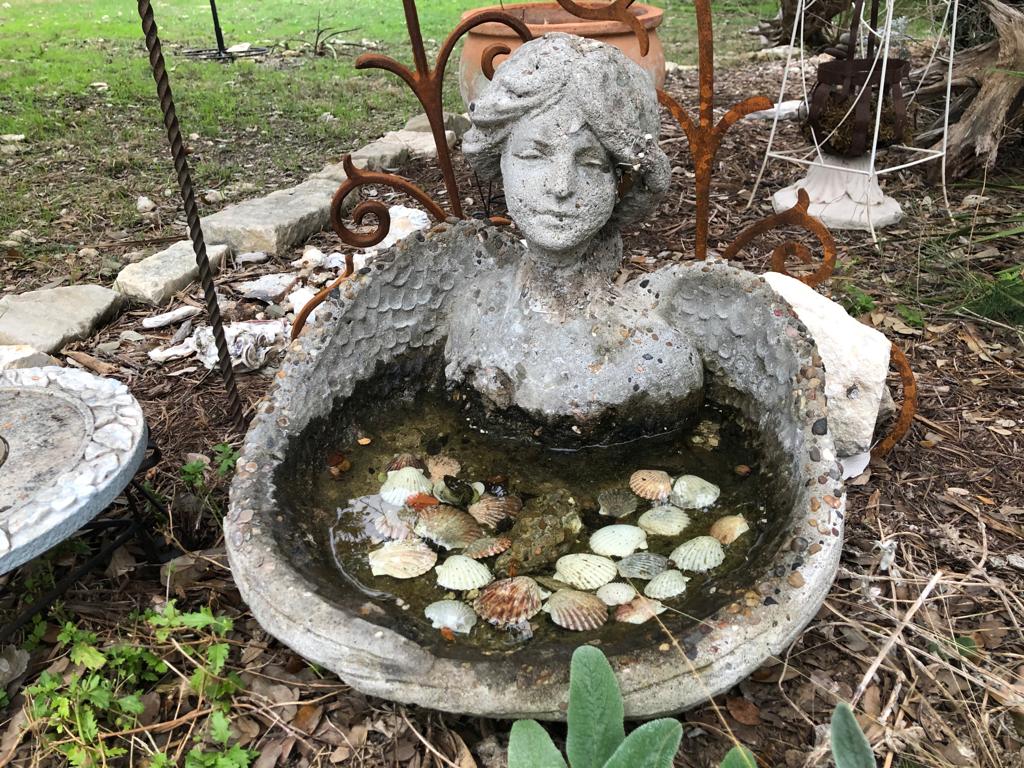
Today, when James and I visit Marie and Lanny, we feel like we’re in paradise. Marie starts her day by filling the bird baths and bird feeders. Her monthly budget includes several hundred pounds of bird seed, peeled and shelled sunflower seed for the finches, a sunflower seed mix for cardinals, doves, titmice, woodpeckers, chickadees, and gold finch, a sunflower seed mix with peanuts and other goodies for the jays. And of course hummingbird feeders and plants for the hummingbirds. “Girlie”, a deer they befriended (and named) in the neighborhood, peers in their front window in the morning – a cue she and her fawn are ready for Marie’s protein formula deer food.


They have a trough of water they keep filled for the deer and smaller animals, including a local fox that comes around when the coast is clear. Marie keeps blooming flowers for the hummingbirds including salvias and Turks cap, and zinnias, tithonia and mist flower for the butterflies and bees.


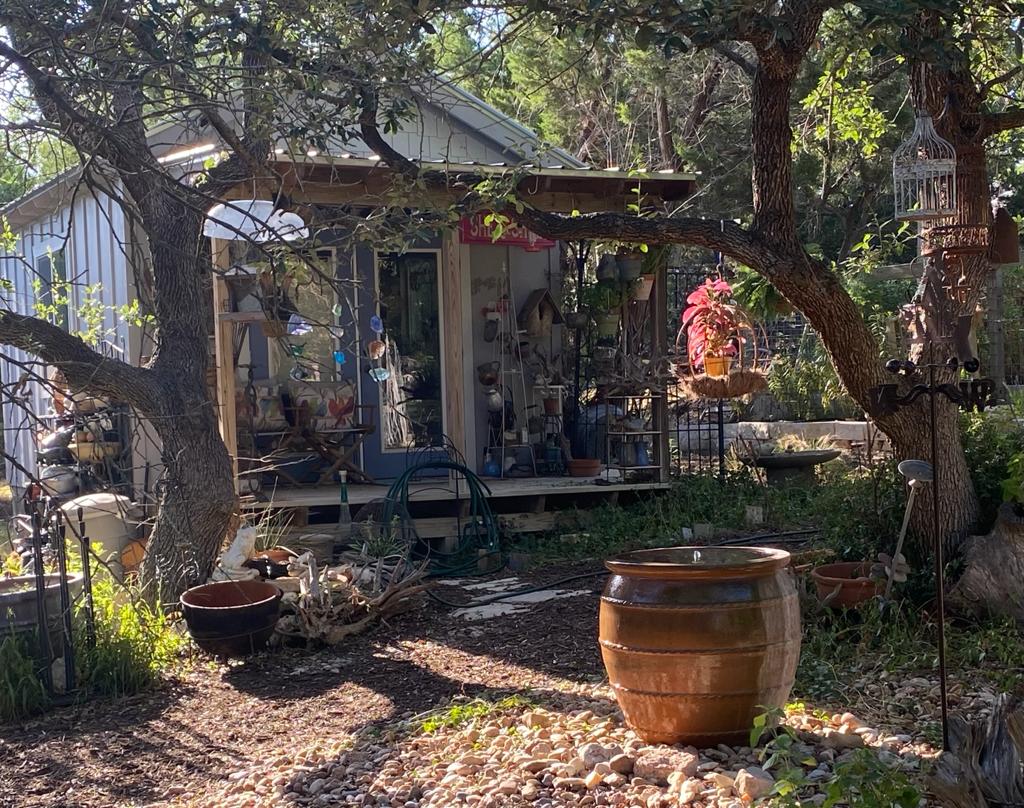
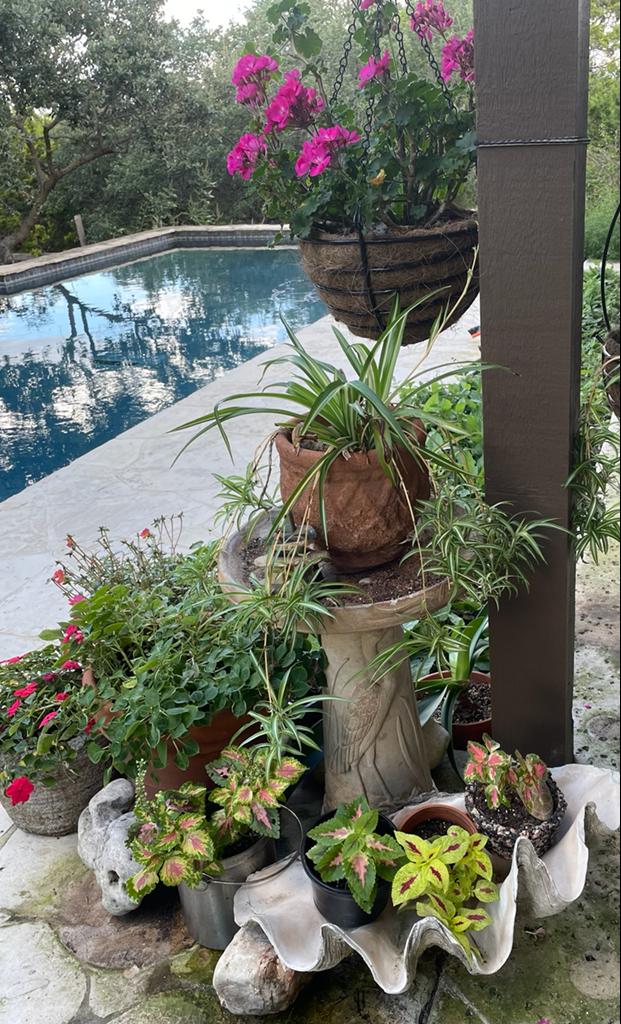
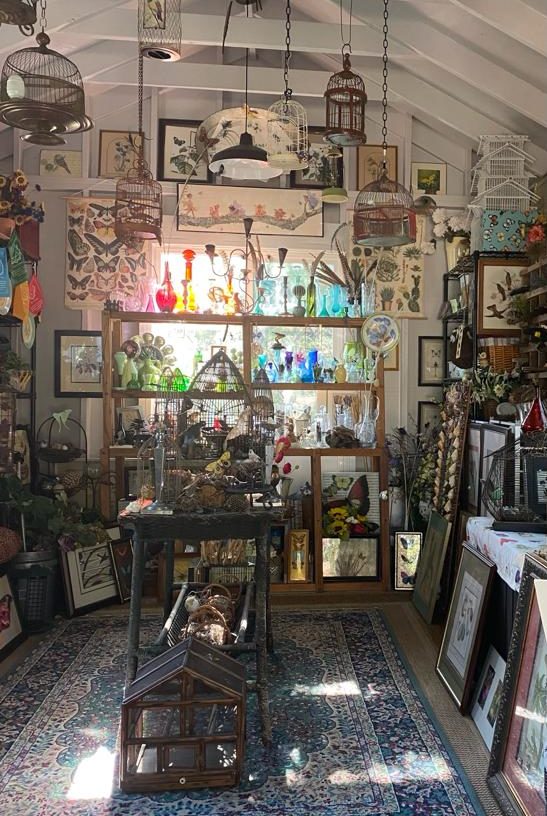
Down below, on the undeveloped piece of their property, Lanny built a “She Shed” for Marie, where she displays many of her botanical prints, an amazing collection of her family’s antique colored glass flower vases, twiggy bird nests with colored eggs, snake skins, garden tools, garden fabrics and textiles, bird cages and bird houses. It’s heaven on earth for me!! Leading up to the “She Shed” are recirculating water fountains, birdbaths, ferns and hanging baskets with flowers spilling over. And of course on the covered porch are chairs for relaxing.


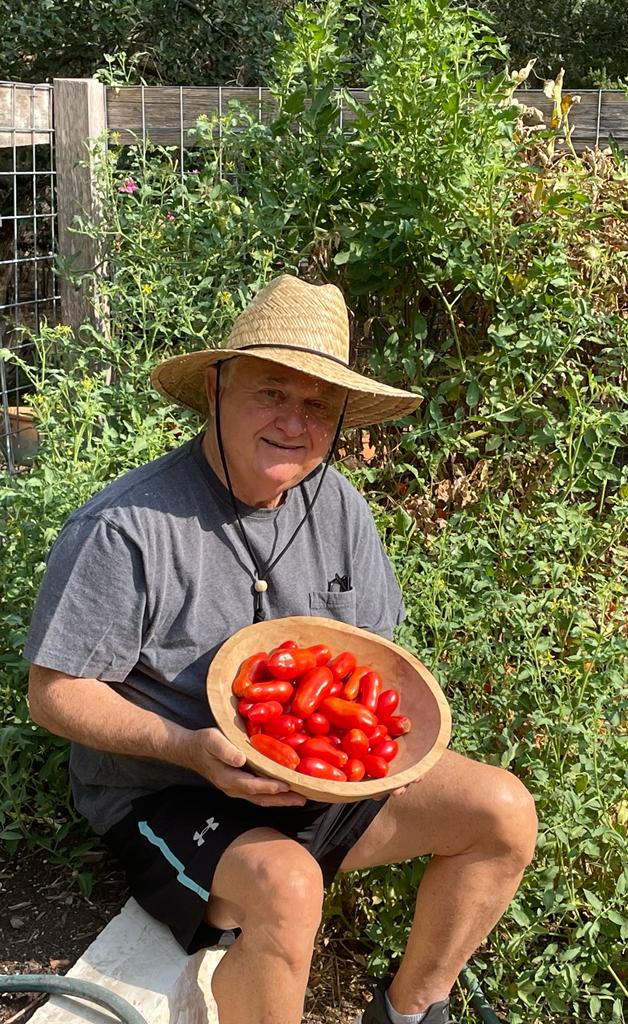
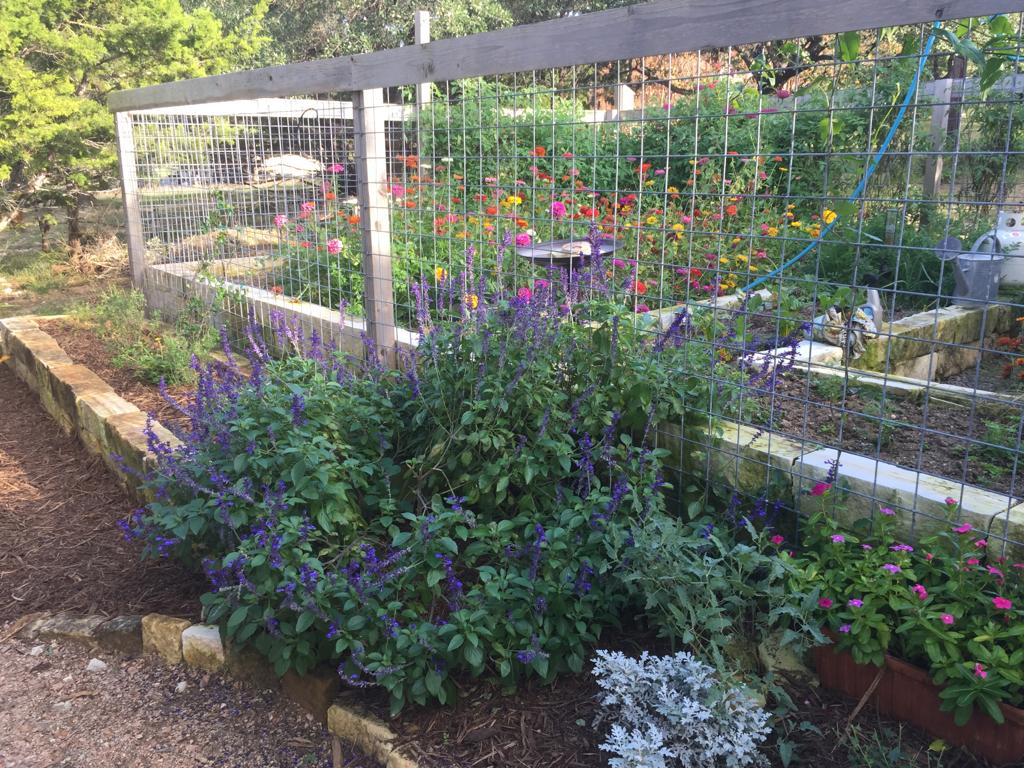
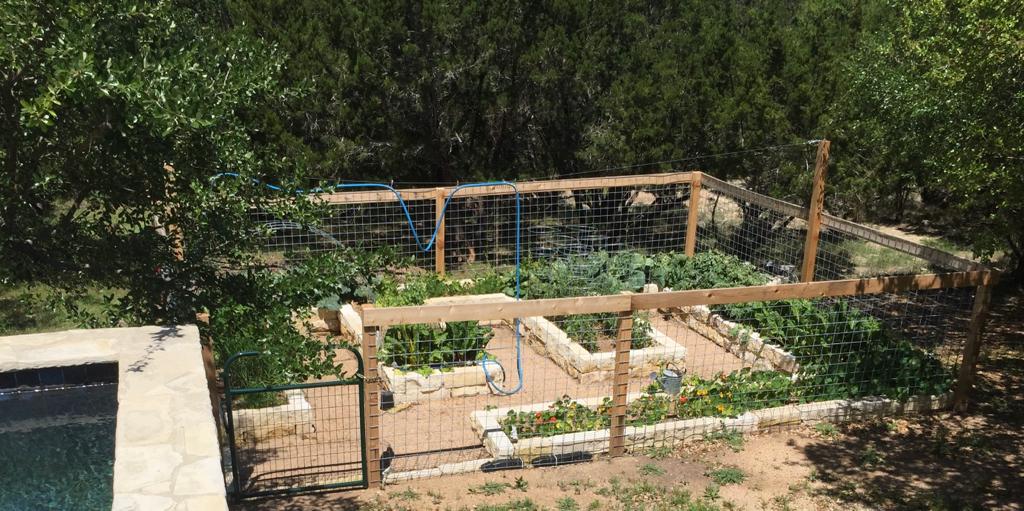
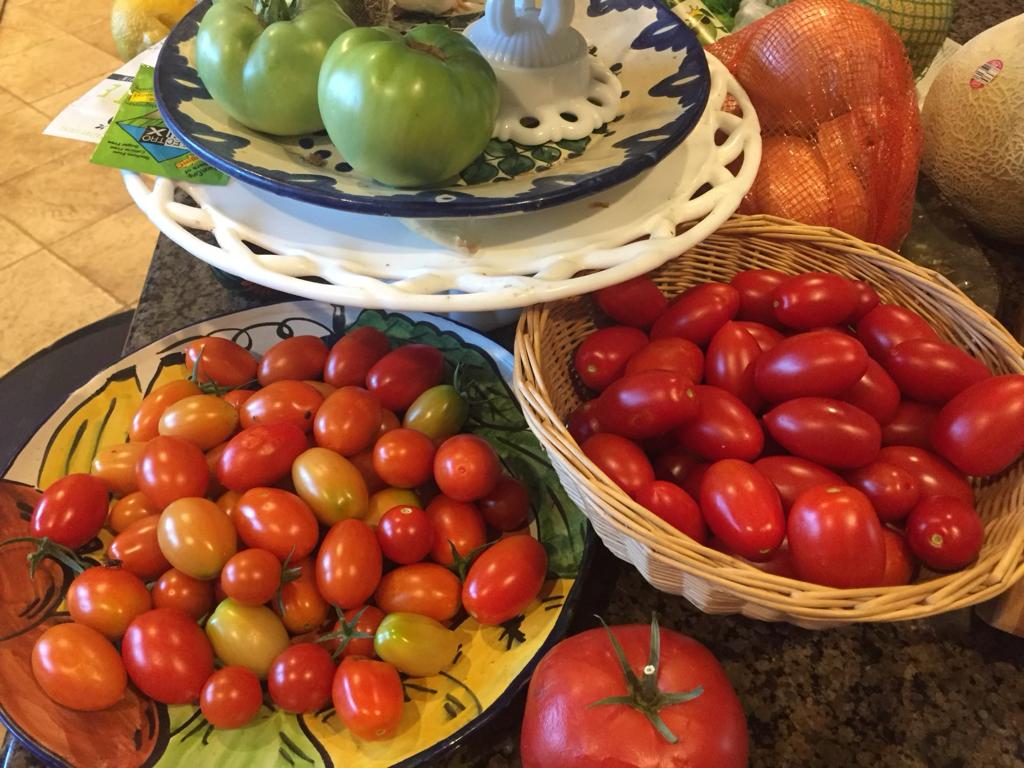
Ever since I’ve known Lanny, he’s always had a vegetable garden. In Wimberley, he built his biggest one yet. He edged his garden with limestone “cut rock”, created paths with crushed granite and fenced his 25’x20’ garden with wood posts and cattle panels, allowing sun to reach his garden on all sides. On the outside of the fenced area are more raised beds and the compost bins. Lanny says the secret to his garden success is soil regeneration and soaker hoses. He believes in the “no till” method, that is do not disturb the soil; leave the micro-organisms underground and healthy. Marie and Lanny save all their fruit and vegetable scraps for composting. He adds manure, cotton seed compost (high in nitrogen), and garden compost to his beds every spring and fall to ensure the best soil and healthy vegetables. Lanny likes to grow greens because they are compact and keep giving, like spinaches, Swiss chard, collard greens and mustard greens and he always has a great crop of tomatoes, spring and fall.


Marie and Lanny, surrounded by nature, are blessed with their three dogs – Uno, Izzie and Loki – their family. Their days are filled with all the surprises nature can bring – from a fawn just born nestled under the deck to bumblebees buzzing around blooming Mystic Spires salvia, hummingbirds sipping nectar and woodpeckers knocking on wood. James and I are so happy they’ve made a heaven on earth for themselves and their critters!

-Sally Gill
South Texas Summer is here, officially! Stay cool and garden on! Some plants need more love during the Summer, but lots of others don’t even start thriving and looking their best until temps stay above 90. Here are a few standouts to plant right now.
Firebush (Hamelia patens)
Blooms all summer, top hummingbird plant, easily pruned/shaped, and grows 6-8’ tall – perfect for a fence line. Loves heat and can handle cold too.

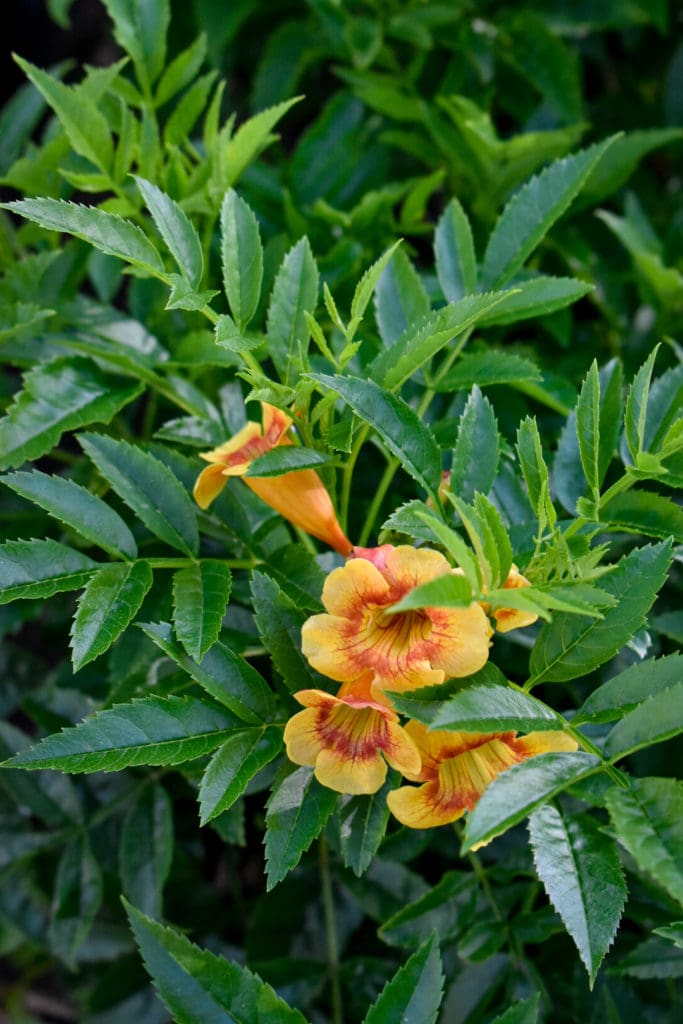
Esperanza (Tecoma stans) – all varieties
Loves summer temps and blazing sun. Classic yellow-blooming varieties that grow 6-8’ tall, or the pictured Sparklette variety that stays 3-4’ tall with golden-yellow trumpet flowers with red throats. Blooms all Summer and into the Fall, and the lightly fragrant blooms attract hummingbirds, butterflies, and bees.

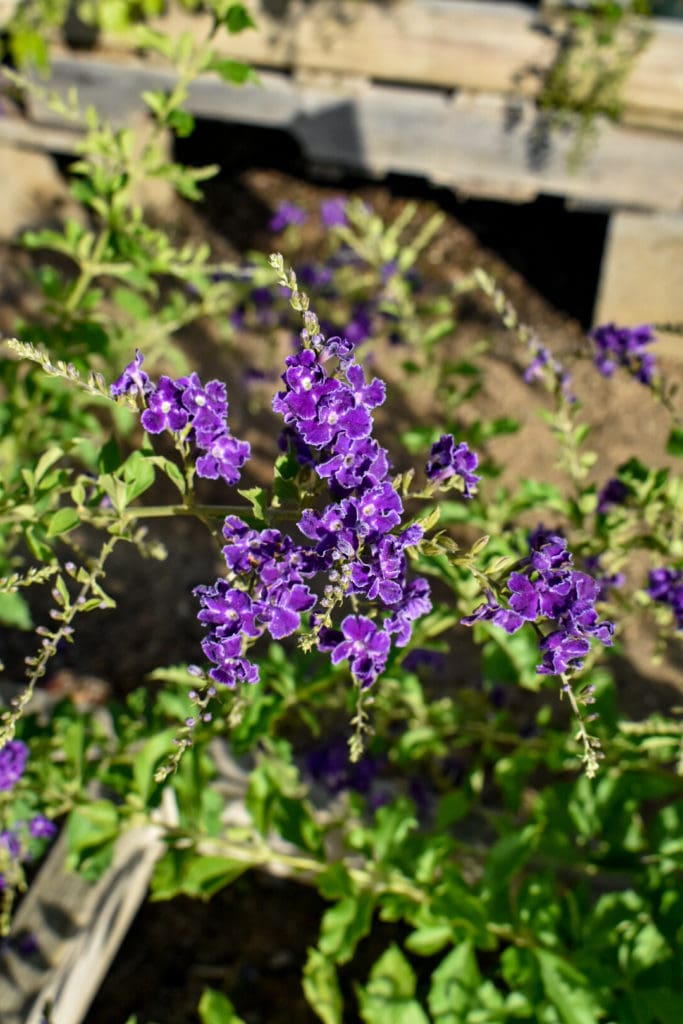
Duranta (Duranta erecta)
Starting to bloom all over town with consistent summer temps. Can be treated as a shrub or pruned up into a beautiful small tree. Hummingbirds and bees love it.

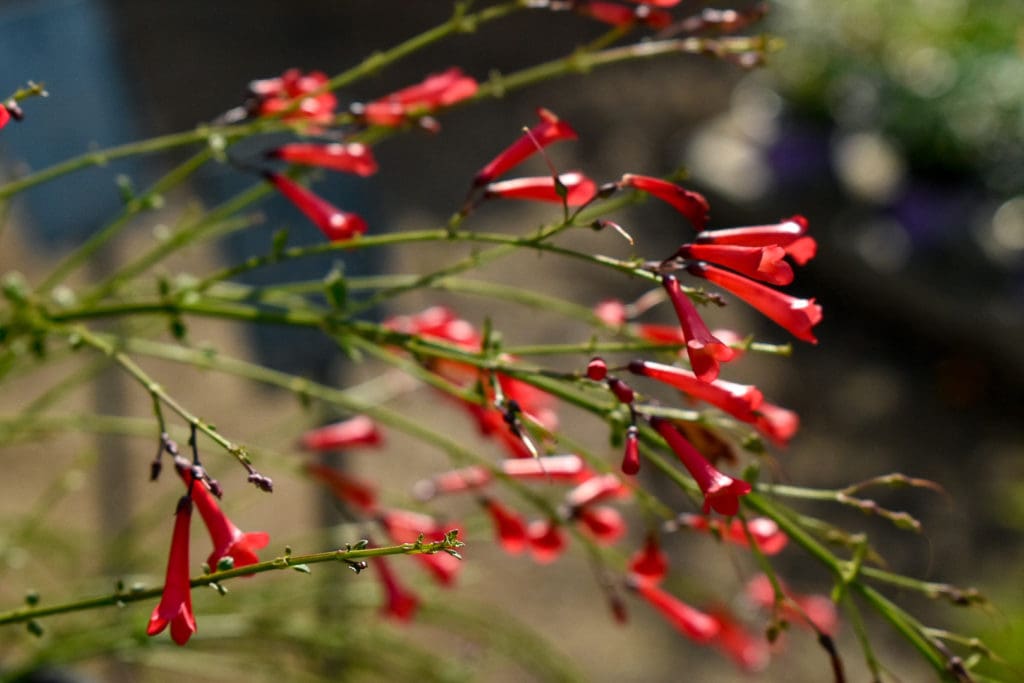
Firecracker plant (Russelia equisetiformis)
Lives up to its name with big sprays of bright red blooms. Prefers high temps and works well in rock beds or spilling over raised planters.

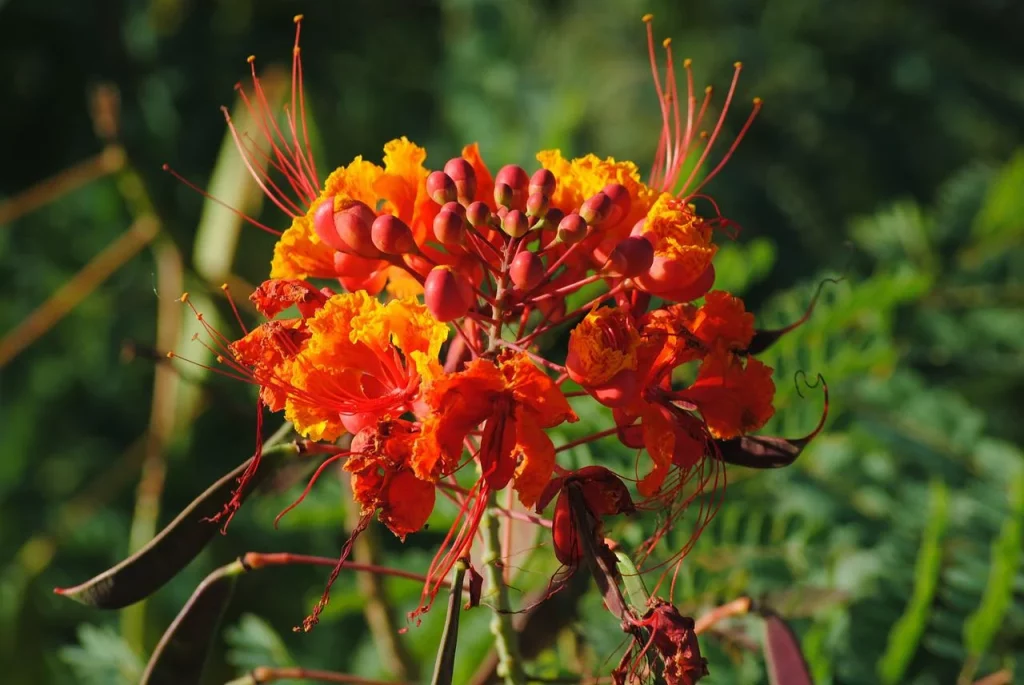
Pride of Barbados (Caesalpinia pulcherrima) aka Dwarf Poinciana
Thrives in the hottest parts of summer, requires little water, feeds pollinators, and pairs well in the landscape with other tropicals and desert plants too. People in the Caribbean and South America have used the leaves of the plant to treat kidney stones, Malaria, and bronchitis.

We’re getting lots of calls and questions about caterpillars. They’re everywhere – ’tis the season! They may do some damage, or they may not. Here are 2 Earth-friendly approaches to consider.
1. Just a Few, Let Them Chew!
A few caterpillars here and there are no cause for alarm. You might choose to do nothing at all or pick them up and move them. Yes, they might munch a few leaves or a tomato or 2, but then they turn into beautiful butterflies and moths that will help pollinate your flowers and veggies. Good trade!

2. See a Lot, Organic Shot!
If you have a mass of caterpillars doing major damage, you can use organic Bt spray. Bacillus thuringiensis (Bt) is a naturally occurring, soil-borne bacteria that has been used since the 1950s for caterpillar control. Bt is not a contact spray, so it needs to be applied to the foliage that the caterpillars will eat to be effective. Plants and animals are not harmed by Bt, nor are birds or lizards that eat affected caterpillars. Late afternoon as the sun goes down is the time to apply.

Side note: We received the photos below of what a customer suspected to be caterpillar damage. Since the holes in the leaves are small, and since the customer didn’t find any caterpillars or frass (caterpillar poop), this is more likely caused by snails/slugs. Try placing a shallow dish of beer nearby. The slugs will be attracted to the yeast in beer. If you don’t want to share your beer, you can make your own yeast solution with yeast, sugar, and water.


Growing food organically promotes life – you get delicious and rewarding veggies by keeping it simple and working with nature, including the beneficial organisms in the soil. Join Wyatt Page this Saturday, March 5th at 10am at Gill’s for his talk on organic veggie gardening tips. Here’s a preview from Wyatt!
- Amend the soil. Great gardens start with great soil. Our Corpus Christi Clay (and Padre Island Sand) need a little help. The key is to incorporate beneficial microbes, enzymes, and fungi that create a perfect environment for plant roots to grow.
- Nature’s Blend Compost. Till in 1 bag per 12 sf of garden. Helps break up clay soil and adds a bunch of beneficial organic material. Excellent for veggie gardens and all other plantings.
- BioTone Starter fertilizer. Add a small handful of BioTone when you plant each plant. A key ingredient in BioTone are mycorrhizal fungi which attach to plant roots and help them grow.
- Worm castings and Dried Molasses help encourage soil life too.

- No chemicals! Chemical pesticides, fungicides, and weed killers damage beneficial life in your garden. Here are some organic solutions that work:
- Bad Bugs and common pests: Treat bad bugs like aphids, mealy bugs, or leaf miner with organic Spinosad Soap or Neem Oil as needed. Even better than that – let nature do the work and let lady bugs, spiders, and lizards eat them!
- Fungal issues: Fungal problems like powdery mildew and rust can be treated with Neem Oil or Bee Safe Garden Spray. You can use horticultural cornmeal when planting to prevent fungal problems like blight.
- Weeds: Proper mulching (2-3” thick) is the best way to prevent weeds! Make sure you stay on top of hand pulling as weeds pop up. Spray horticultural vinegar to kill new weeds on contact.

- Get help from pollinators: Attracting pollinators like bees and butterflies will help increase vegetable production. In my garden I like to plant Salvias, Turk’s cap, and wildflowers mixed in with all the veggies to attract more pollinators.

- Start small: Veggie gardening is lots of fun, but it does take time! If you are new to veggie gardening, I would encourage you to start small and build your garden little by little each season. A simple 4×8’ area, raised bed, or a few large pots/containers can produce quite a bit of food!

See you this Saturday!

-Wyatt