With quite a bit of rain in the forecast, what should we do? Let’s start with getting excess water off the roof and out of the yard. The short recent drought was enough to get some trees to drop quite a few leaves, so check your gutters and downspouts and clear them if needed.
Check downspout exits to see that the ends have not been crimped closed by wayward mower wheels, and that there are not bags of mulch or pots or bricks obstructing their flow. Same goes for drainage pathways away from rainfall off the roof, removing any boxes, bags, etc. that would slow the flow of excess rainfall trying to exit the yard.
A common problem is where the bottom of the fence has inadequate clearance above the ground, and so grass, leaves, and branches get caught at the base of the fence and create a dam that allows water to get high enough to flow into the house. Mow grass or use a weed trimmer along flow pathways, as water will move much faster over short grass.
If you have an automatic irrigation system, turn it off now! Assuming you get 1″ or more of rainfall, wait a week, then check soil to see if the lawn is ready for water again. Turn the system back on when it is hard to push a screwdriver into the soil because it is dry.
Mosquitos will be a problem on the other side of these rains. Be sure to turn wheelbarrows and other potential vessels over to prevent accumulation of water that would hatch mosquitos. Mosquito Dunks or Mosquito Bits (for saucers or birdbaths) will prevent mosquitos from hatching in standing water, without harming any other organisms. We will also have Mosquito Beater sprays and granules to help control adult mosquitos.
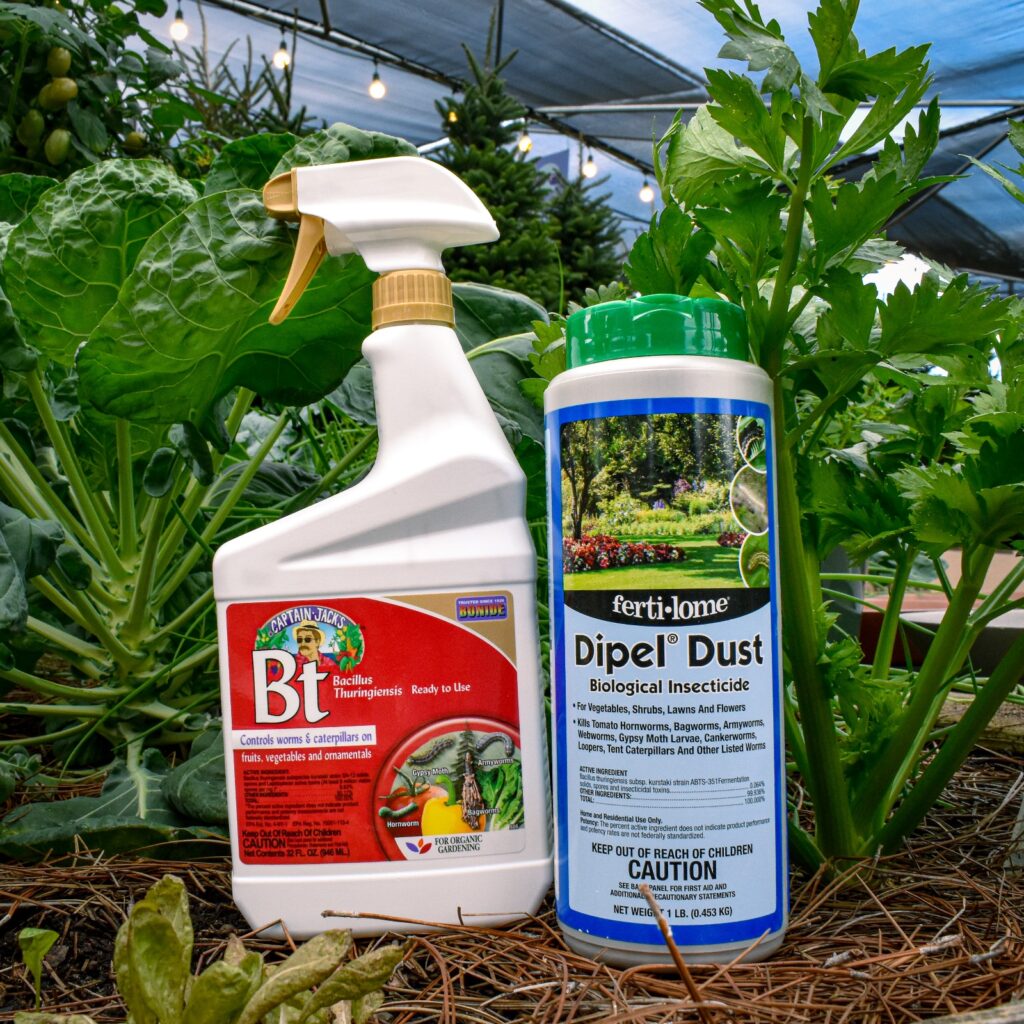
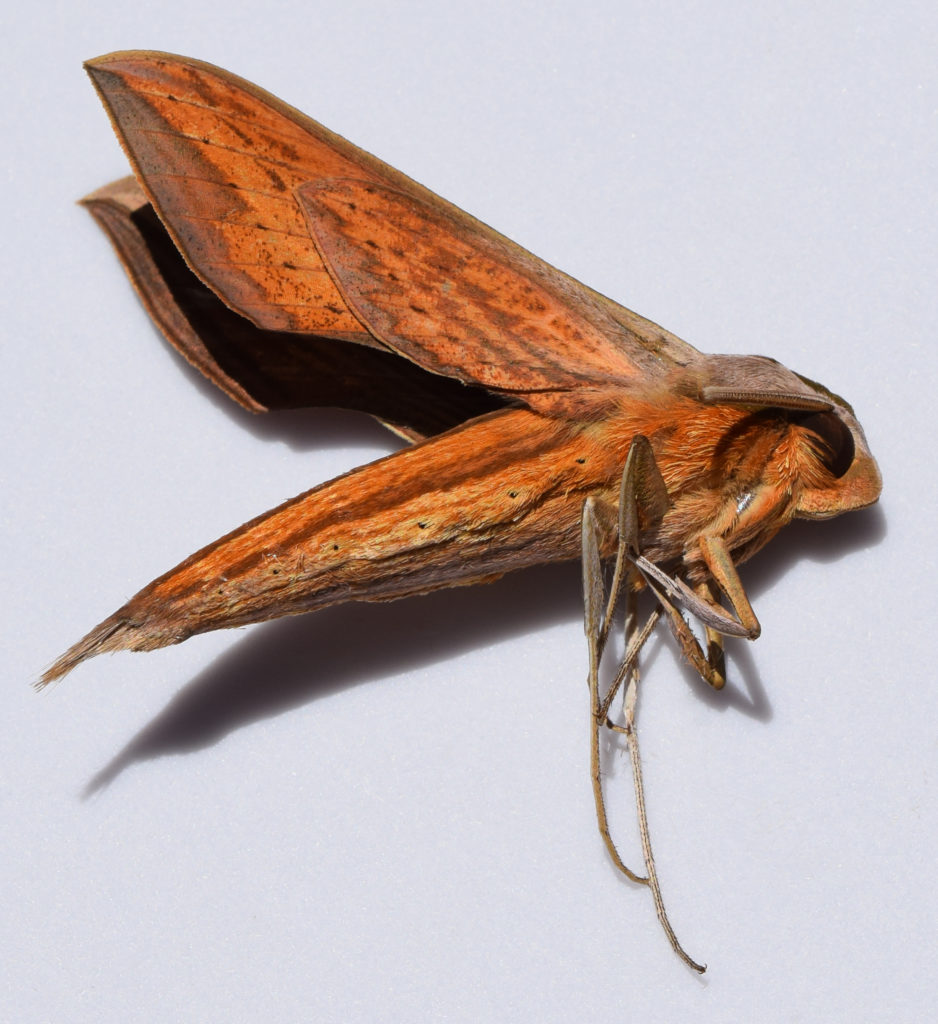
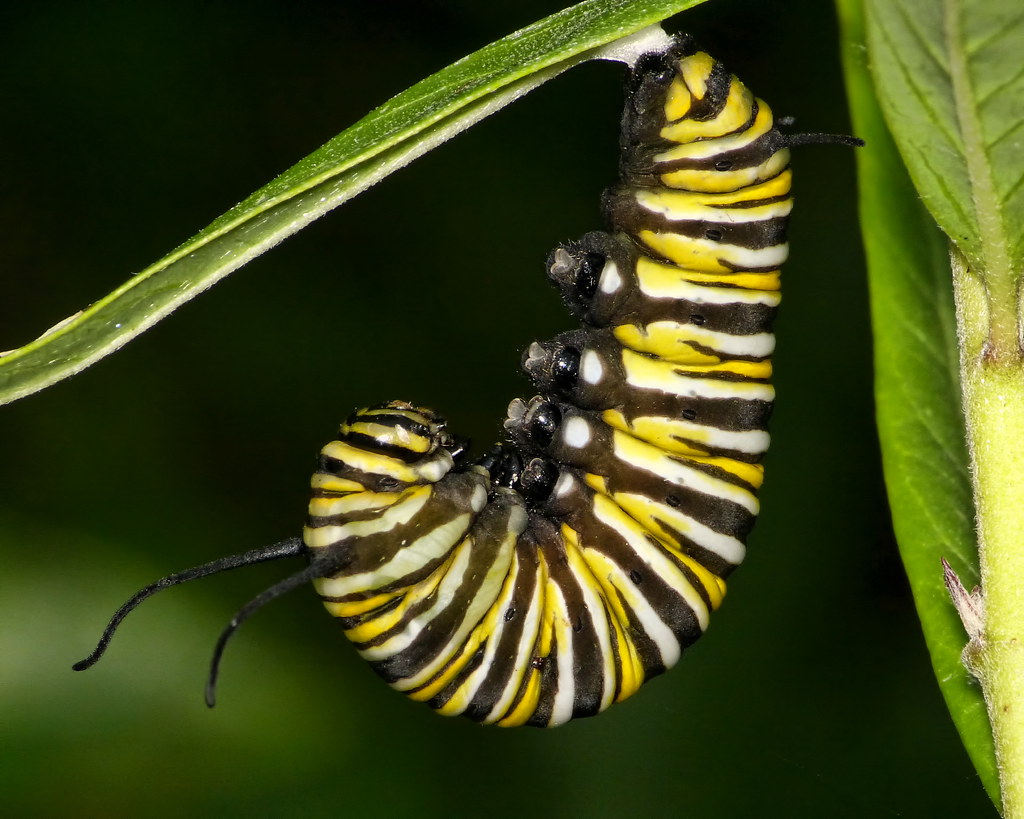
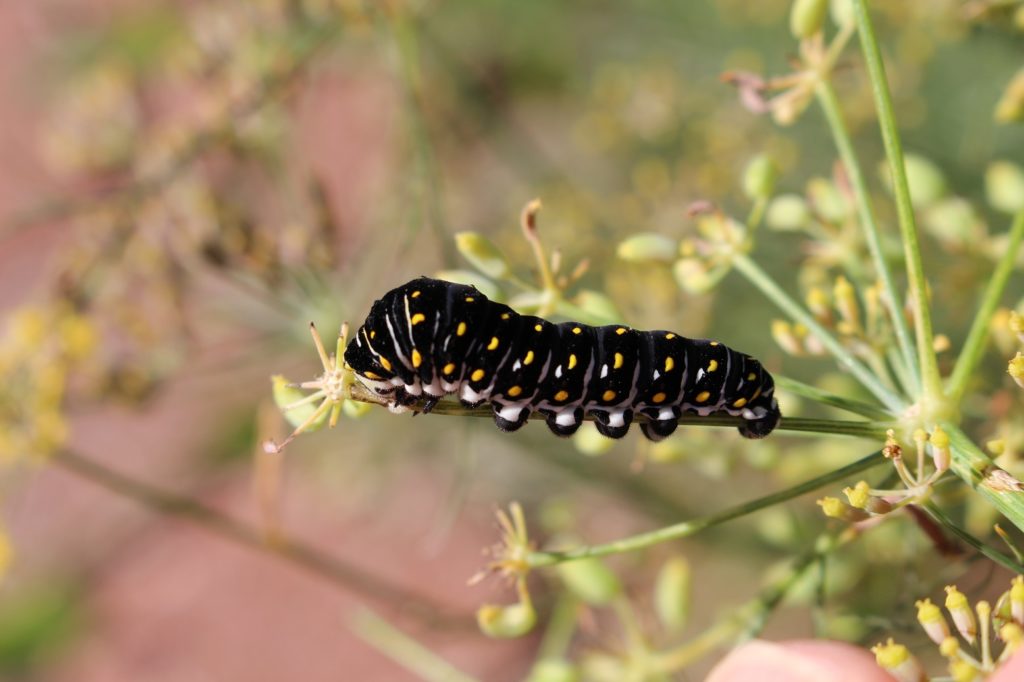
Caterpillars are also likely to be a problem after the rains. Some caterpillars will become beautiful butterflies, but others will become small nondescript moths that will then lay more eggs and eat until your lawn is gone! So, ask us about any potential problem you may have. We can tell you whether treatment is warranted or not, and if so, what is the safest and most sensible method of control.

–James Gill


 -DeAnna
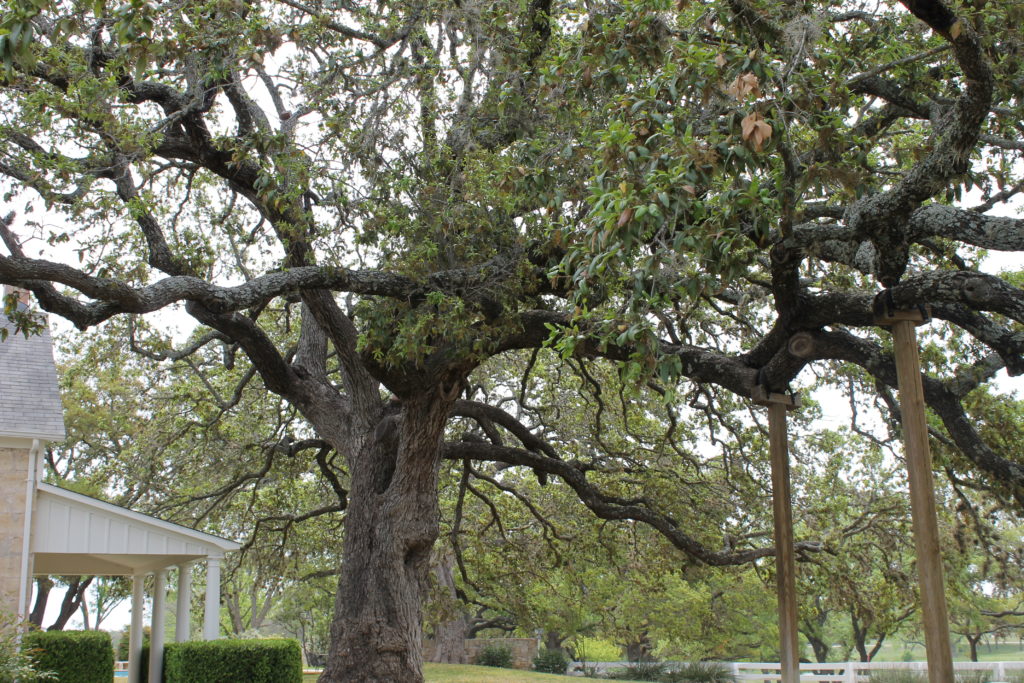
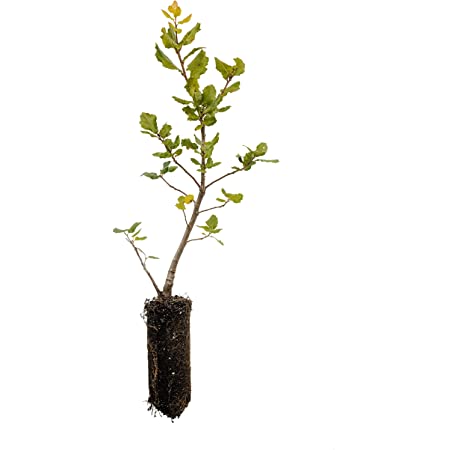
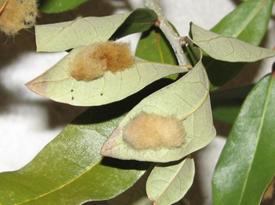 All from a shiny reddish ball. Or a fuzzy white ball. Or a corky brown ball. I’m talking oak galls, which commonly strike terror into the hearts of live oak tree owners this time of year. They are all caused by various species of small, stingless, solitary wasps. These wasps insert an egg (or several) into the tissue of small oak branches or young leaves, and are thought to modify the DNA of the plant, forcing the plant to produce a growth (the gall) that supplies both housing and food to the wasp larvae living inside. The saliva of the wasp applied at the time of the egg laying is thought to contain a virus that produces the genetic changes, so wasp larvae have been eating GMO’s for millions of years.
 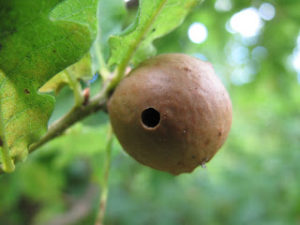 So wasps are defacing and eating your oak tree this fall, what you gonna do about it? As one writer says, “I recommend a cold drink, a good book and a comfortable chair.” ‘Cuz there’s nothing you can do or should do about it. Oak galls come in periodic waves, a few one year, more the next, and none the year after. Or close thereabouts. This is thought to be due variously to the tree buildup up of tannins to discourage the gall formers, and to a buildup of parasitic wasps (also stingless) that drill into the galls and lay their eggs on the gall inhabitant. Wild Mother Nature, there are even wasps that lay their eggs on wasp larvae that are consuming the original gall wasp larvae (did I put one too many eaters of larvae in there, I must proofread). The galls do not do substantial damage to your trees, and there’s really no way to get involved in the crazy gladiator’s pit of nature without screwing things up, SO DON’T SPRAY, just sit back in awe (or take a nap). And empty oak galls actually take in desirable boarders such as lacewing larvae and small spiders, scavenger ants and more beneficial wasps, all feeding on caterpillars and aphids.
 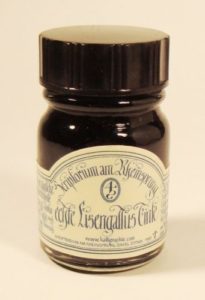 Oak galls were an important source of dark and permanent ink used for writing