
Don’t Worry About Leafcutter Bees!
Leaf cutters always cut extremely neat semi-circles and ovals, unlike caterpillars which leave irregular holes in leaves. They prefer soft tissue plants such as roses, plumbago, hibiscus and crape myrtles. There is no chemical control since they do not eat the leaves they cut. Nesting season is very short, so after a week or two, they go away… thank goodness!
Feed Your Veggies
Vegetables are heavy feeders. Use Espoma Plant Tone once a month to keep your vegetables producing through the season.
Watch Out For Cabbage Loopers
It’s time for tiny green looper worms to be eating the leaves of your broccoli, cabbage and cauliflower. Use
Hi-Yield Thuricude or Fertilome Dipel Dust to control these pesky worms. It is completely organic and safe up to the day of harvest. Just rinse and eat!
New For Your Garden: Watercolor Rose
It’s a color extravaganza! The flowers may be simple in style, but they’re captivating to watch as they change colors completely with each day. Hues of yellow, pink, cerise & ruby are carried atop loads of clean deep green leaves on a very bushy full plant. Dark red new shoots add to the show. This beauty is delicate to look at and tough as nails when it comes to garden performance. Complimented with a moderate apple fragrance; we think you’ll enjoy this one in your rose garden!
 Be on the look-out for oak tree caterpillars in your oak trees. They cluster together in large groups feeding on the leaves of your trees or you may notice poop under your tree (on your patio or walk.) They can be killed with Thuricide sprayed onto the leaves or with Fertilome Borer, Bagworm, Tent Caterpillar Spray containing Spinosad. If your trees are too large to spray or you just don’t want to, they will not kill your trees. The tree will leaf back out in the spring. I have had customers say that early in the mornings they could hear them chewing the hard oak leaves. Crunch, Crunch, Crunch!
 Pansies love the cool days of fall and winter. Plant them in full sun. Use Hi-Yield Blood Meal at the time of planting for larger and more profuse blooms. Once they become established use Maestro Rose Glo to keep them blooming throughout the season. You can also plant their dwarf counterpart violas. They have smaller leaves and blooms, but tolerate heat and moisture better.
 With the cooler temperatures, shorter days and heavy rains in the past few weeks, powdery mildew fungus has attacked mesquite trees. Since the trees are getting ready to drop their leaves for the winter, it is not necessary to spray them. They will leaf out and be fine next Spring.
 Plumeria are suffering from rust fungus caused by the same weather conditions. The undersides of the leaves have yellow- orange or reddish brown pustules. Since you should be withholding water from the plumeria so they can go dormant for the winter, be sure to gather up the leaves as they drop and discard in the trash. It is not necessary to spray unless the condition re-occurs in the spring.
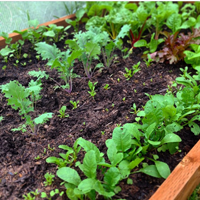 Now’s the time to prepare the soil with fresh compost and plan your garden layout. Sow seeds of root crops, ex. beets, carrots, radish and turnips. Don’t forget your leafy vegetables such as chard, collards, kale, lettuce, mustard and spinach. Transplants of broccoli, cabbage and cauliflower can also be planted now. If you are limited on space, you may want to take this time to let the garden rest. In just a few weeks it will be time to think about tomatoes, beans, corn, cucumbers, squash and more of the warm season veggies. We will begin bringing in tomatoes the middle of the month, but suggest you transplant them into 1 gal pots so you can take them in on the cold nights. If you prefer to wait till after fear of frost, we will have 1 gallon plants already established for you to plant at a later date. The longer you wait, the bigger you need to buy.
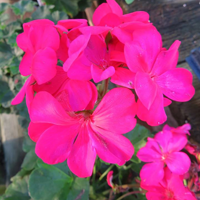 Planning For Spring Flowers
  TIME TO PRUNE ROSES! Valentine’s Day is a time to remember our loved ones with candy and flowers. It also is the perfect time to prune roses. Late January to mid February is the best time. Prune established hybrid teas, removing dead and small twiggy growth, leaving strong healthy canes to a plant height of 18-24 inches. Try to prune to an outward facing bud to maintain spreading, open growth. Prune shrub roses like Knockouts 1/3 to 1/2 the plant height. Do not prune climbers until after the Spring bloom, then removing only the oldest canes and cutting back healthy, vigorous canes no more than 1/3. Remove spent blooms throughout the season on all rose varieties, cutting back to the first 5 leaflet cluster. You can also begin fertilizing your roses in late February with Bayer Systemic Rose and Flower Care, or organically with Maestro Rose Glo. Gill Landscape Nursery stocks disease resistant roses (ask for them), but if you have hybrid teas, as soon as new growth appears you should begin a spray program to control insects and diseases. Bayer 3 in 1 Insect, Disease and Mite Control, takes care of all rose problems. For organic controls, use Neem Oil for insects and disease or Serenade to control diseases. A regular spray program keeps your roses healthy and happy. Remember fungal diseases are always easier to prevent than to cure.



 Companion Plants For Your Veggie Garden