
Remember to rotate your crops from last season if possible. Also do not crowd your plants. Insects and disease love places that are overcrowded with no air circulation. Spacing your plants will limit the areas for the bugs to hide.
There are many organic options to keep insects and disease under control. For insects, use Insecticidal Soap for soft-bodied bugs, Spinosad for beetles, caterpillars, and leafminer. To prevent powdery mildew on curcurbits and cole crops, use Serenade or Neem Oil, when it comes to disease, it is always easier to prevent than to cure. Also, mulching the garden with Hardwood Mulch or Pine Straw will keep fungal spores from splashing up onto the plants.
Fall can be the best season for growing vegetables due to the cooler weather and more rainfall, unlike the spring garden where we are heading into the hottest season. So plant now, space things out, keep the garden weed free, fertilize regularly and be a good bug scout. And remember, only spray insecticides if necessary. We do not want to kill the bees or other pollinators in the garden.
 -DeAnna
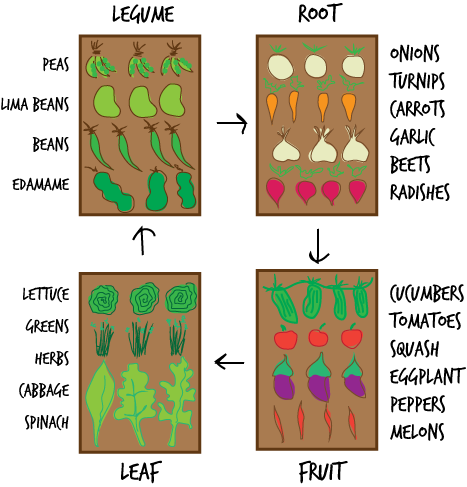 Simply put, crop rotation is a systematic method of deciding what to plant where in your garden from one season to the next, based on plant groups. Moving plants to a new location each season improves your garden in two ways. First, it helps keep your soil healthy and fertile. Planting the same thing in the same place season after season drains the nutrients from the soil that the plant needs in order to thrive and produce big harvests. Second, rotating plant families helps manage soil-borne diseases like verticillium wilt, and soil-dwelling insects like corn rootworms or root knot nematodes. These types of diseases and pests prefer certain kinds of plants, and the longer the plants stay in the same soil, the better the chance that these enemies will show up and cause trouble.