
Did you know grubworms come from June bugs? Many folks are reporting seeing June bugs all over the porch since the first of March. They are making their mating flight to lay eggs, hatch grubs and feed off the roots of your grass. Once you begin seeing them you wait 5-6 weeks before you treat. If you have ever lost your lawn to grubs, you know the devastation they can cause. There are several ways to control grubs.
First, is the watch and monitor. If you notice sections of the lawn are prematurely wilting, or turning brown you can dig down and look for grubs. If you find more than 4 in one square foot area, then it is recommended to treat the affected areas with a granular or liquid insecticide drench.
Second, you can spray out Beneficial Nematodes. These microscopic worms attack white grubs and other soil inhabiting insects. Nematodes must be supplied with adequate moisture to help them move down into the soils where grubs are feeding. At least ¼ inch of water must be applied before and ¼ inch just after, nematodes are sprayed into the lawn. Repeat applications may be necessary to maintain a good colony of them. One container covers 2000 sq. ft.
Third, you can apply Bayer Season Long Grubworm killer which lasts for 3 months to give a chemical kill of the grubs. This product attaches to the roots of your grass and kills them as they feed. This year peak time to treat is the first two weeks of April.
 -DeAnna
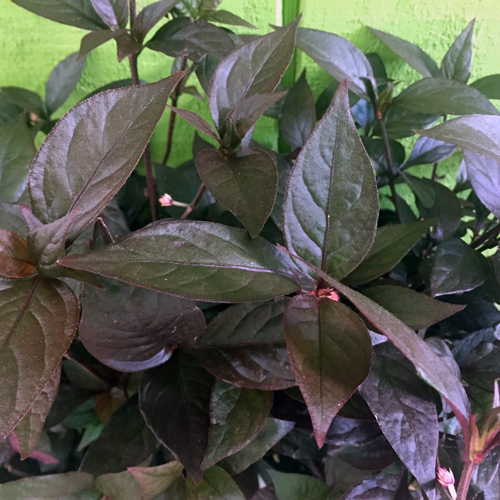 We planted the Purple Knight Alternanthera, in the Joseph Coat family, under our Texas Sabal Palms out front of our home on Catalina Street. It has proven its worth to me! It takes wind and sun, gives a pretty contrast to green lawn with it’s burgundy foliage, doesn’t have any major insect or fungus challenges, and if planted in the right spot, can grow to it’s maximum height of 24″ or can be pruned shorter! It has been named by the Texas Department Of Agriculture as a Texas Superstar and definitely a superstar in my book!
 -James
 -Debbie