How is it almost JULY already?! We hope you’re having lots of fun this Summer – holidays, BBQs, weekend trips, and garden projects! Here are our top must-do’s to keep your plants healthy and happy this month, including tips for water conservation and speaking to local officials about your water.
1. Speak Up About Your Water
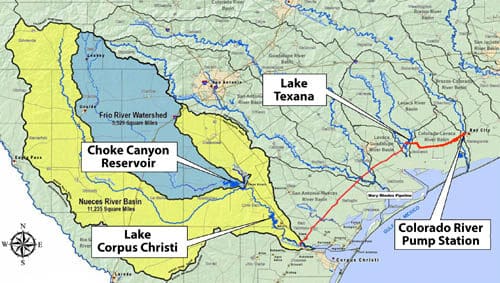
As you may have heard, the City of Corpus Christi anticipates moving to Stage 3 watering restrictions in August unless we get more rain in the watershed. We have asked the Mayor, City Manager, City Council members, and the City Water Department to postpone this decision until after hurricane season at the least. One tropical rain system that moves north and sits over the watershed could fill up Lake Corpus Christi and Choke Canyon to 50% or beyond – this is what’s happened in the past.
We have also asked the City to revise the Drought Contingency Plan to include water from Lake Texana, our 3rd source of water. This water, which we are already paying for, is not included in the calculation which triggers the different stages of watering restrictions.
We have also expressed our concern that the Stage 3 ban on outdoor watering for residential water users is excessive. Since we know that residences account for less than half of city water use, and we know that only some of those users water their landscapes, Stage 3 restrictions on watering plants would impact only a small portion of overall water use.
We encourage you to speak up about your water, too! There are 3 City Council meetings in July: 7/16, 7/23, and 7/30. The meetings are held at City Hall at 1201 Leopard St. at 11:30 a.m. You can sign up to speak at the meeting or submit your comments in writing – here’s how. You can also follow these links to contact City leaders directly: Mayor, Water Department, City Manager, and City Council.
2. Watering: Think Depth, Not Frequency
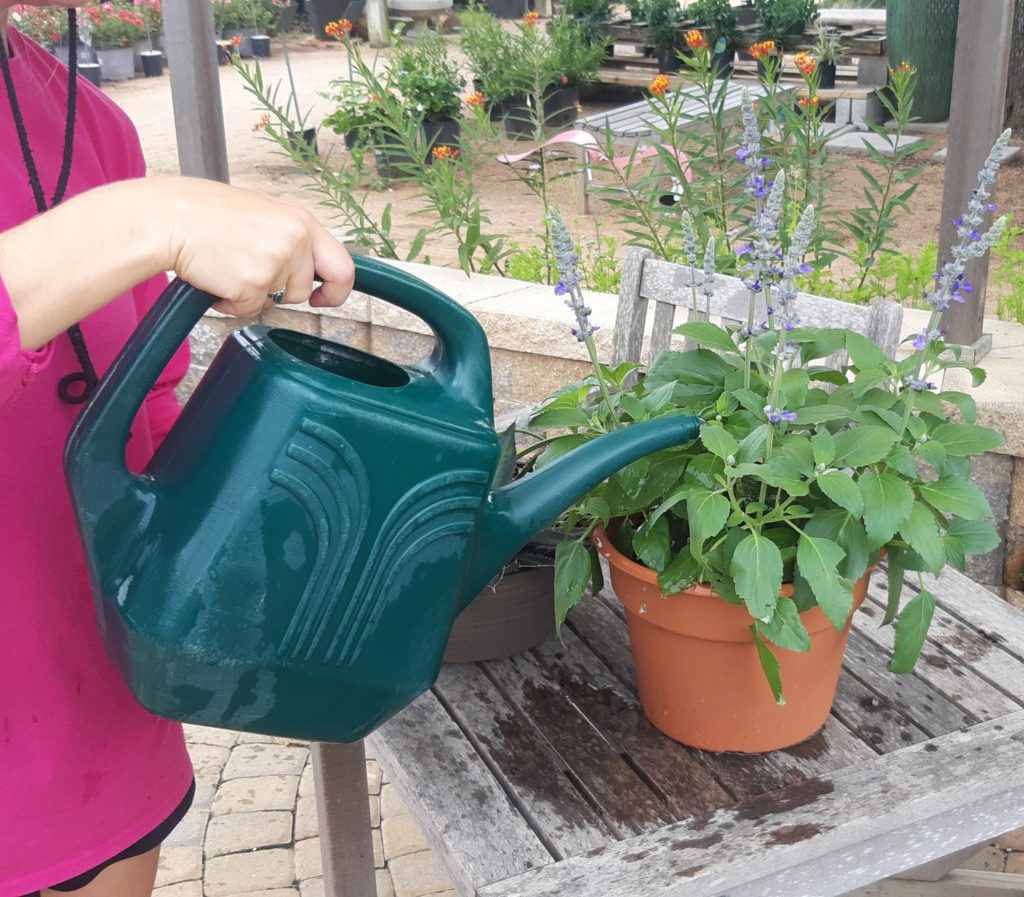
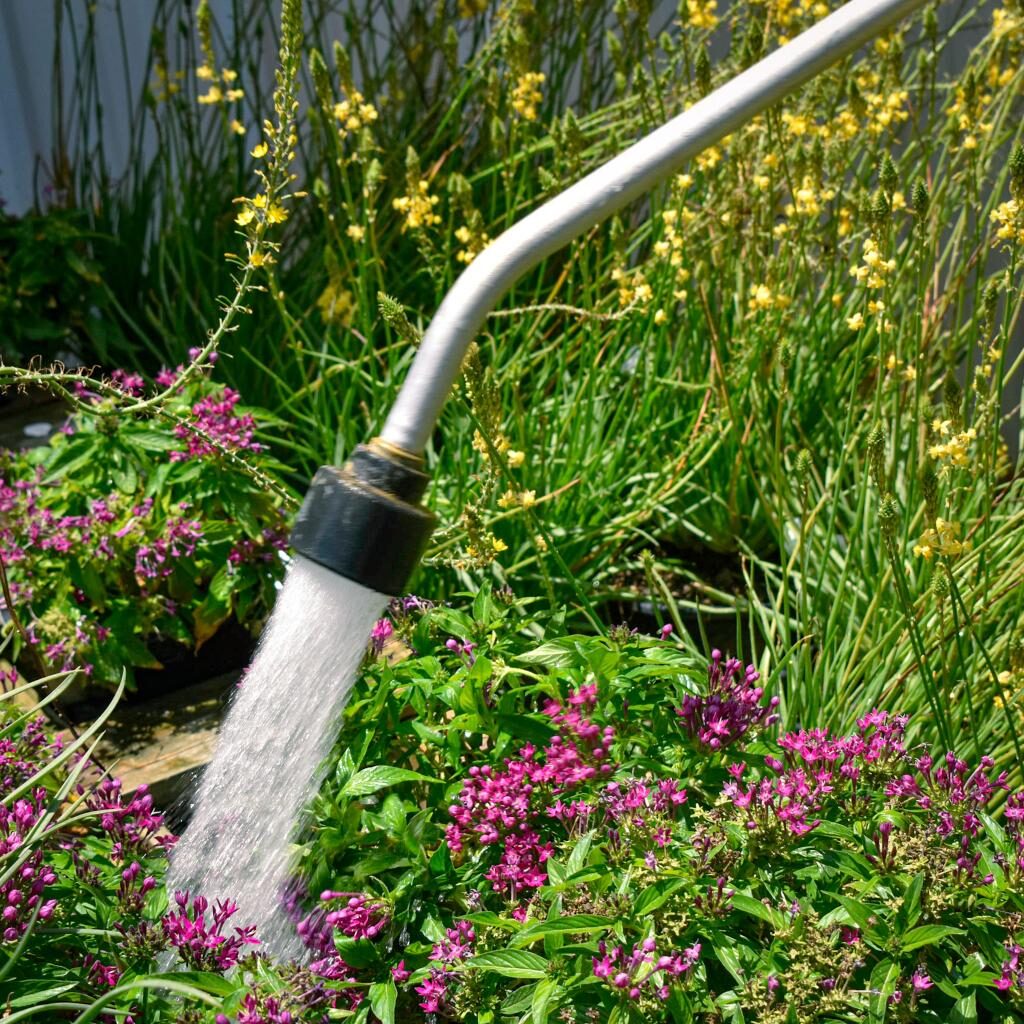
Proper hydration happens when you get water down to the roots of the plant. This means watering deeply, not more frequently. Run irrigation systems or sprinklers every other week before 10am or after 6pm per current city watering rules – if there were no restrictions, we’d recommend once a week, but once every other week will keep lawns, most plants, and trees alive through the summer. The key is long, slow, deep drinks! Encourage those roots to dive deeper for water. Even when we get a summer rain, continue to watch your watering and maintain that depth moisture.
3. Mulch to Keep Cool
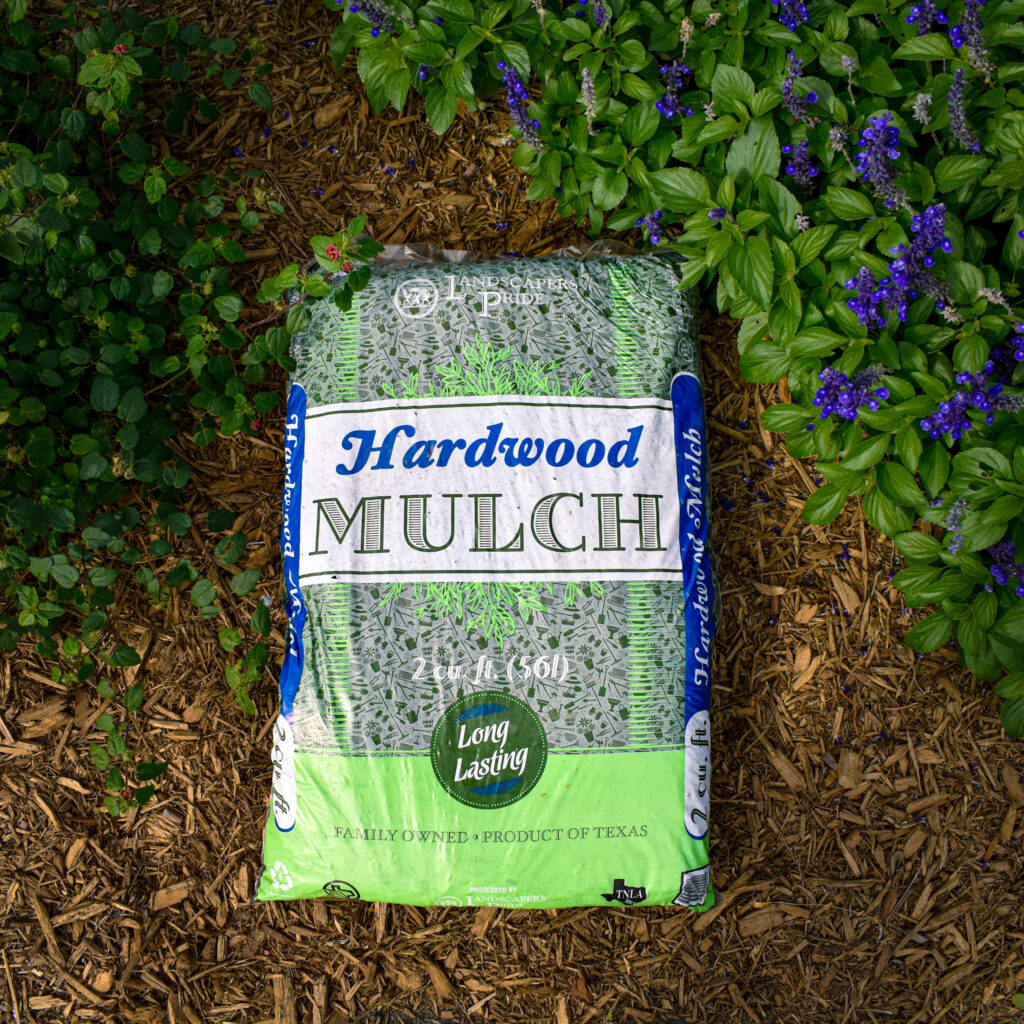
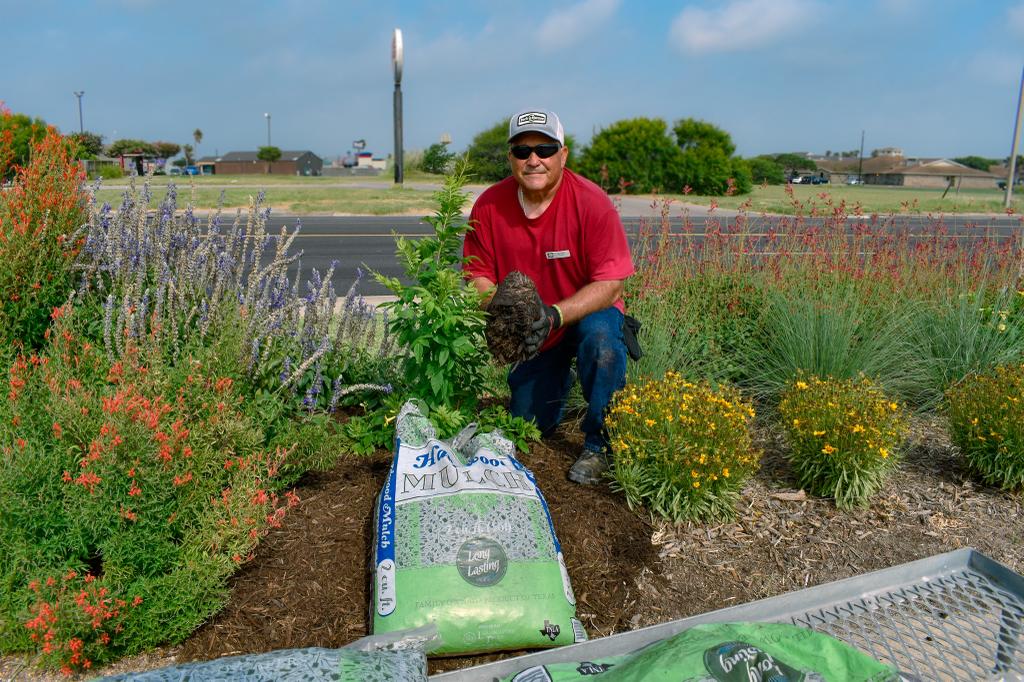
Studies show that a good 3″ layer of mulch will keep your plant roots more than 20 degrees cooler in summer! Not only that, a good mulch layer also helps retain moisture AND keeps weeds at bay. Healthy plants, less watering, and fewer weeds – that’s a win/win/win! It’s important to use natural wood or pine straw mulch that breaks down over time. As it breaks down, it adds nutrients and makes your soil more workable.
4. Watch for More Bugs in Summer
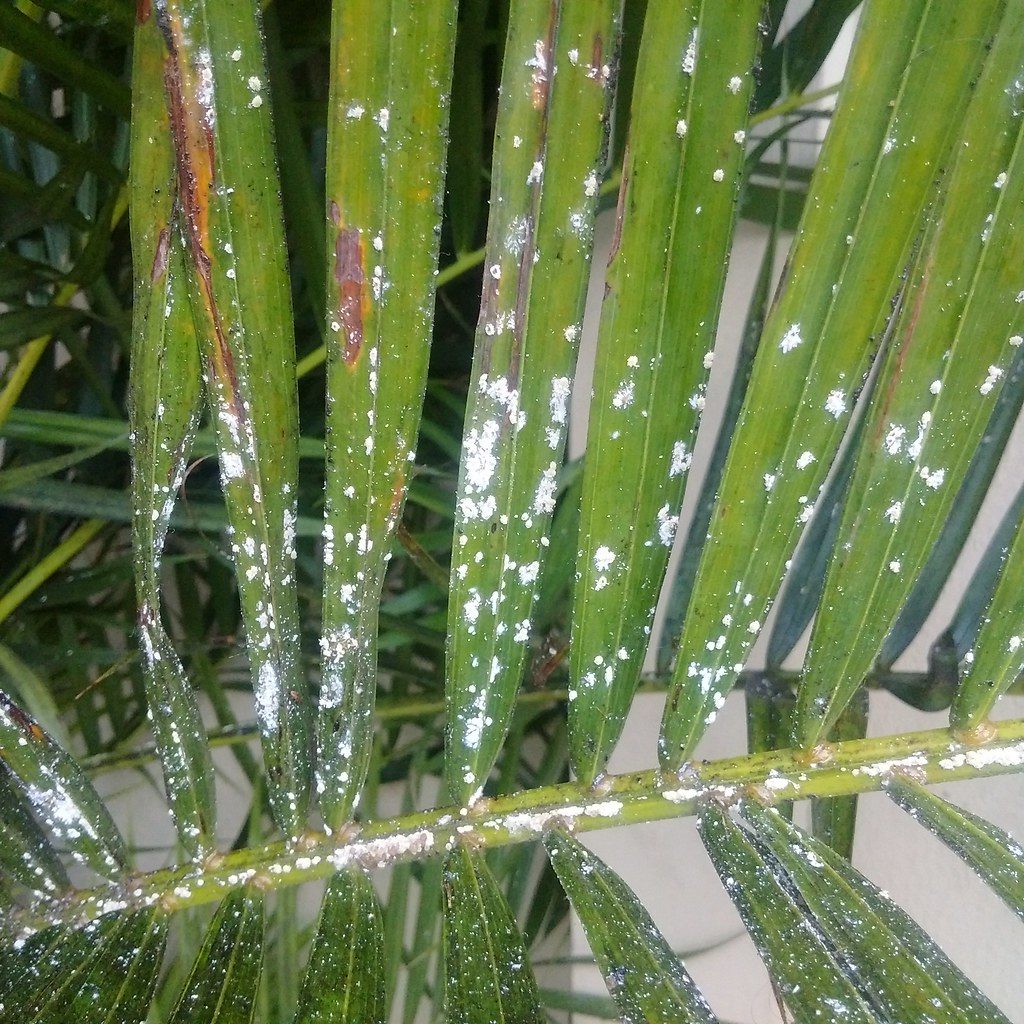
This is what a mealybug infestation looks like!
Not all bugs are bad, so it’s important to know your bugs before you spray anything, even organics. A few bugs here and there is most likely not cause for alarm. If you do get an infestation, cut the plant back first, give it some fertilizer, then treat for bugs. By pruning first, you won’t have to treat every leaf on the whole plant. We see plants come back better than ever using this method. If you’re not sure about bugs or pruning, we’re here to help.
5. Train Your Plant Sitter
Be sure to have a trusted plant-sitter come water your plants while you’re away on summer excursions! It’s a good idea to spend a little time showing them how you water. Make them a list, draw them a map, and walk them through it. You know your plants and which ones get tired and thirsty the fastest.
6. Collect Cool New Houseplants
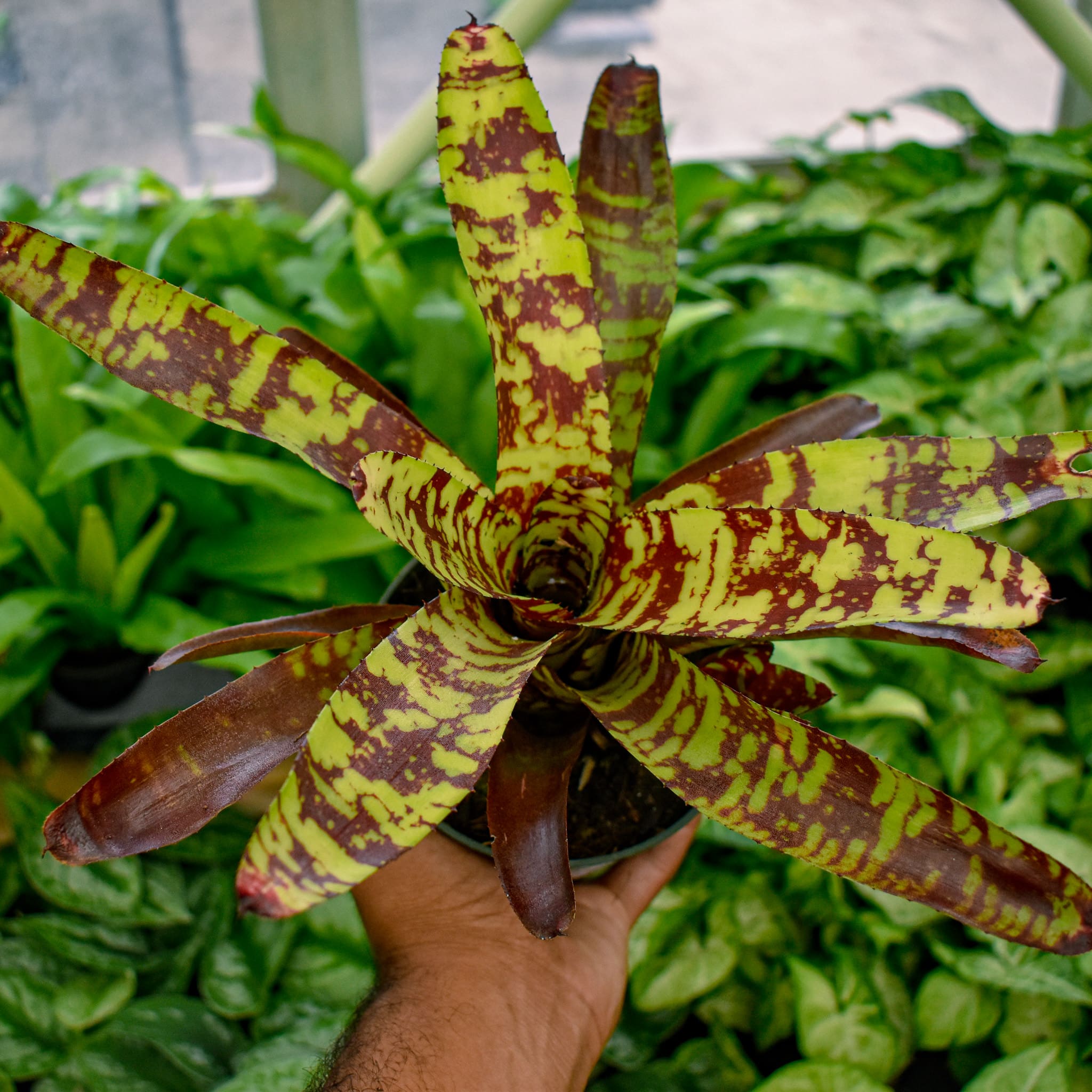
Now’s a great time of year to work on your houseplant jungle. The greenhouse is restocked with all kinds of interesting houseplant choices, including lots of new Bromeliad varieties! Keep in mind that constant A/C indoors will dry out plants. Keep an eye on watering (use a moisture meter) and don’t place houseplants near an A/C vent. You might also try experimenting with a humidifier near your plants to help regulate moisture.
Summer is here and we need to be on high alert for 3 of our most common summer pests: spider mites, mealy bugs, and lace bugs! Here’s where to look, how to identify, and how to treat effectively with 1 simple solution.
Spider Mites!
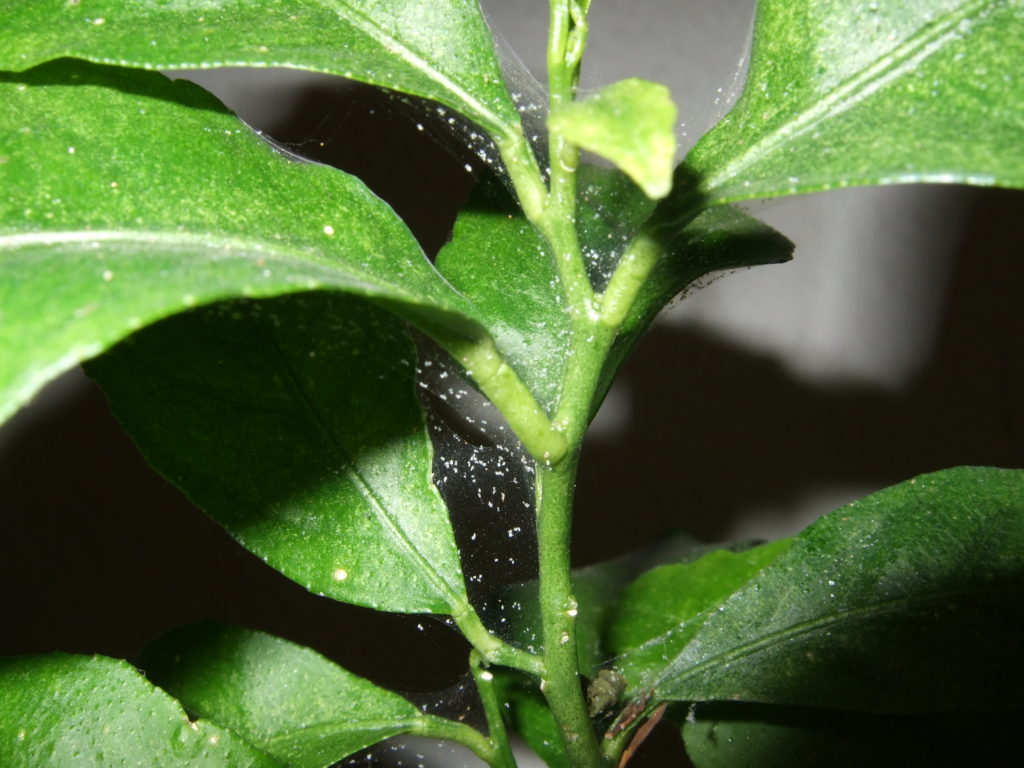
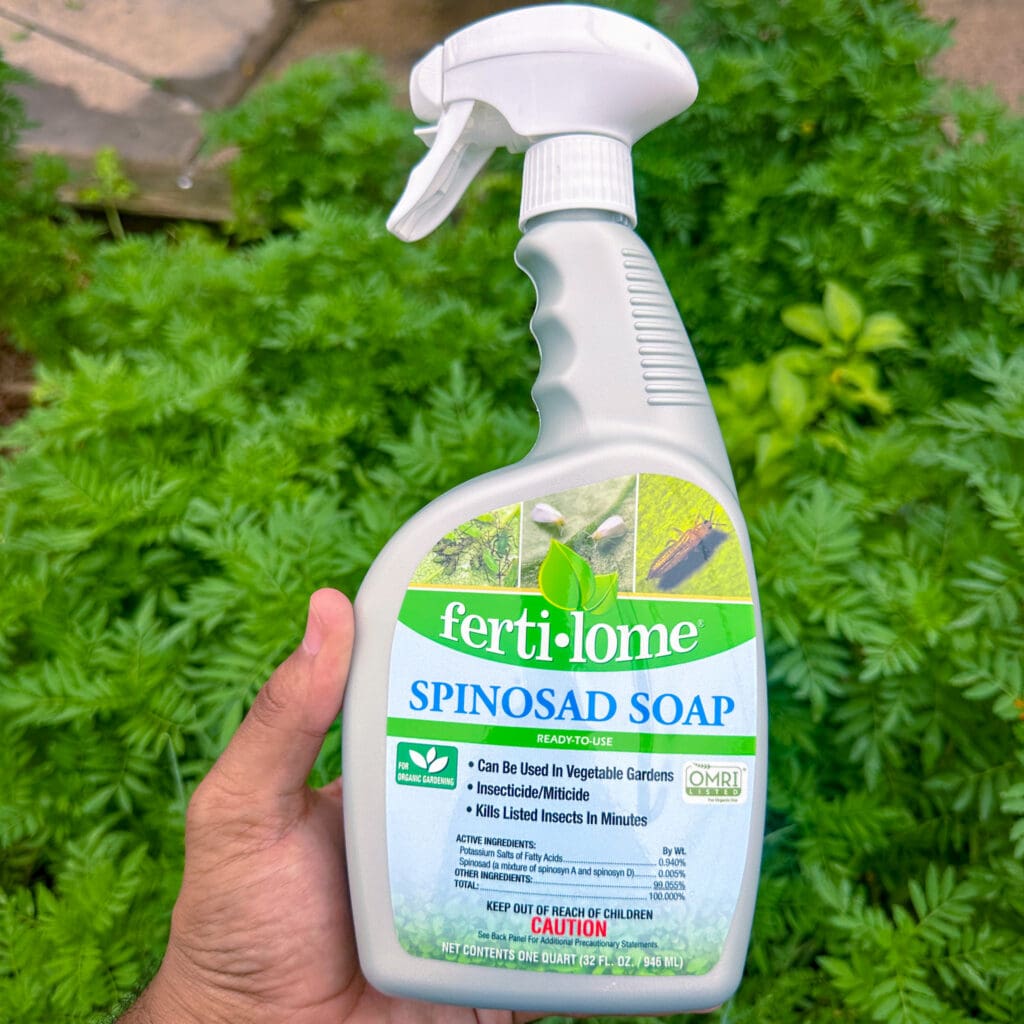
Look out for these little white specks and fine webbing…hence the name spider mites! They like plumeria, junipers, all kinds of houseplants, and they’re common in the veggie garden. The mites themselves are usually on the underside of leaves. Use organic Spinosad Soap to spray the affected plants all over, making sure to get underneath the leaves.
Mealy Bugs!
Mealy bugs especially love Hibiscus, Jatropha and some Salvias. Look on the tips, stems, and undersides of the leaves for these white insects clustered together. If they go unnoticed for a short period of time, they will produce a protective cottony barrier over their bodies to protect themselves. Many times we hear “I have a white fungus on my plants”, but it’s usually mealybugs. Once again, organic Spinosad Soap is effective for killing these pests. Multiple applications may be needed. Thorough coverage is a must, and we recommend spraying once a week for 2-3 weeks to make sure you have killed them all. If you only have a few clusters of them at the tips of your plants you could smash them with your fingers and rinse, or cut off the affected tips and throw away the bugs in a sealed bag.
Lace Bugs!
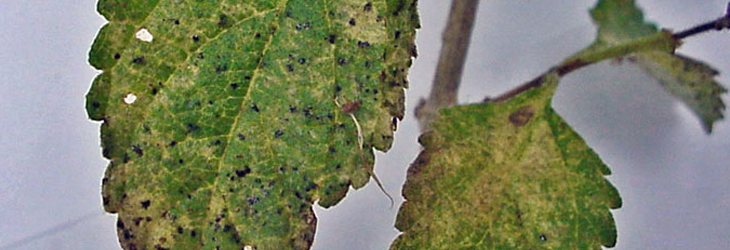
Are your lantana looking rusty brown like a fungus has attacked them? Well it’s not a fungus it’s lace bugs. Lace bugs are common this time of year, and they attack lantanas leaving them looking ugly and half dead. This problem is easily fixed by pruning back the ugly plant either one third to half way depending on the damage. Rake up the bad leaves which will eliminate the majority of the bugs, fertilize with your favorite plant food and water in, then spray with Spinosad Soap. The plant will quickly recover like nothing ever happened, putting on a flush of new growth and blooms.
Your Best Solution + Other Considerations
As we keep repeating, our first recommendation for all 3 of these bad bugs is Spinosad Soap. It’s easy to use, all natural, and very effective. If you have a really bad infestation, you can use Cyonara, which contains the chemical lambda-cyhalothrin. Keep in mind, while oil sprays (Neem oil or horticultural oil spray) are effective for controlling these insects, you do not want to use them in the summer time or you risk burning your plants!
We’ve passed the halfway point for 2026…that was fast! We hope you’re having lots of fun this summer – holidays, BBQs, weekend trips, and garden projects! Here are our top must-do’s to keep your plants healthy and happy in July, including tips for planting, watering, and summer pests to watch out for.
1. Yes, You Can Plant in the Summer!
Myth: I’ve heard that you can’t plant in the summer because its too hot… FACT: Of course you can!! You can plant just about anything in our summers, including trees, as long as you have a good plan for watering. In fact, summer is a great time to plant crape myrtles because they’re blooming and you get to choose the color IRL! While we’re past the season for spring veggies like tomatoes, there are still plenty of summer veggies like okra, peppers, eggplant, and melons to plant now. If you want your own fresh pumpkins for Halloween, start ’em in July. Plus, now’s a great time to set table for the fall hummingbird migration with their fav blooming perennials like Firebush, Firecracker plant (pictured), native flame Acanthus, and Dicliptera aka Hummingbird Bush. Don’t let any myths discourage your summer gardening!
2. Watering: Think Depth, Not Frequency
Proper hydration happens when you get water down to the roots of the plant. This means watering deeply, not more frequently. Plants need long, slow, deep drinks! Encourage those roots to dive deeper for water. Even with recent summer rains (yay!!), continue to watch your watering and maintain that depth moisture. If you notice this summer that you’re having to water your potted plants a lot more often, it could be time to re-pot. As the pot fills up with roots, you end up with less soil and therefore less moisture retention.
3. Mulch to Keep Roots Cool
Another way to save water is to keep landscape beds and gardens mulched through the summer. Studies show that a good 3″ layer of mulch will keep your plant roots more than 20 degrees cooler! Not only that, a good mulch layer also helps retain moisture AND keeps weeds at bay. Healthy plants, less watering, and fewer weeds – that’s a win/win/win! It’s important to use natural wood or pine straw mulch that breaks down over time, NOT the red dyed stuff! As natural mulch breaks down, it adds nutrients and makes your soil more workable. Keep in mind, mulch is also a great placeholder. If you have areas that you plan to plant later, keep them mulched to keep weeds out and keep your soil healthy and ready to plant when you are.
4. Watch for More Bugs in Summer
This is what a mealybug infestation looks like!
Not all bugs are bad, so it’s important to know your bugs before you spray anything, even organics. A few bugs here and there is most likely not cause for alarm. If you do get an infestation, cut the plant back first, give it some fertilizer, then treat for bugs. By pruning first, you won’t have to treat every leaf on the whole plant. We see plants come back better than ever using this method. If you’re not sure about bugs or pruning, we’re here to help. During summer, watch out for mealybugs on plants like Hibiscus and Turk’s Cap, lacebugs on Lantana, and chinch bugs in the lawn – especially near sidewalks and driveways! We’ve got solutions for all of the above.
5. Yes, You Should Fertilize in the Summer!
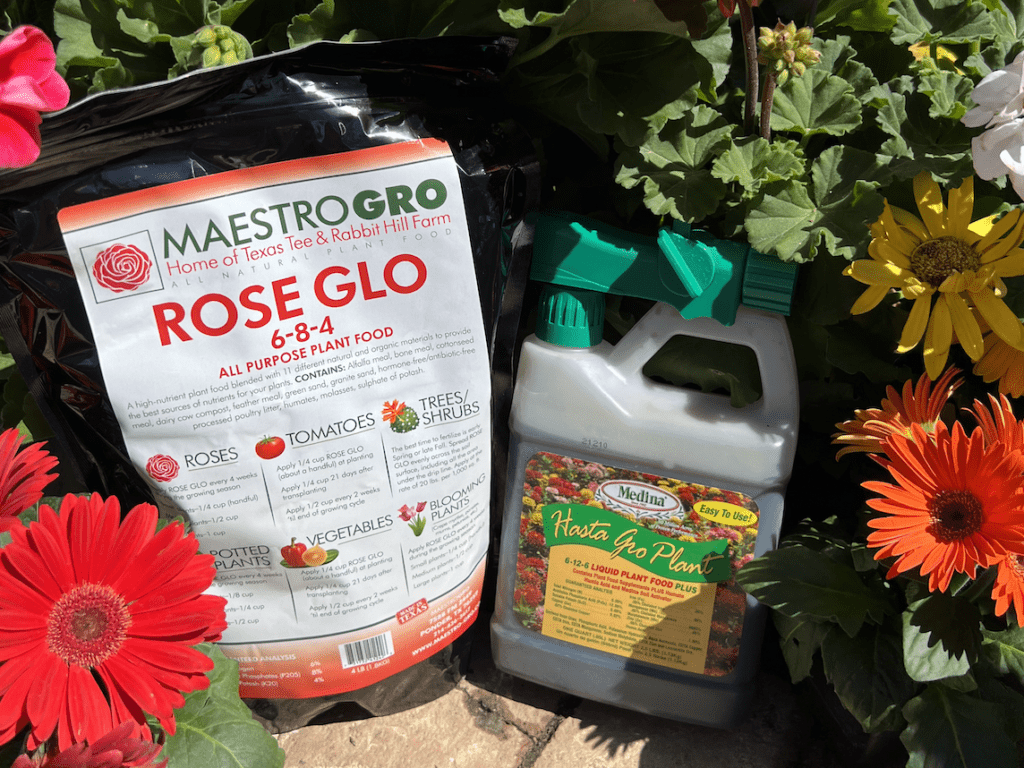
Continue to feed plants, especially heavy bloomers and veggies through the summer. Keep in mind that strong, healthy plants are less susceptible to pests and disease. Speaking of strong, try a good liquid foliar food like Medina Hasta Gro about every other week in addition to your granular feedings about once a month. The foliar food sprayed directly on the leaves really makes those leaves stronger and more robust. Lots of gardeners like to use liquid seaweed in the summer for a similar purpose, to help fortify and summer-proof your plants. What about lawns? If you haven’t fed your lawn yet, you can still do that too. If you have, you don’t need to feed it again until the fall.
How is it almost June already?! It doesn’t feel like it! Mild temperatures and wonderful rainfall are making our transition into summer a breeze. Here are our top priorities in the garden this month, including what to plant, how to adjust watering, pests to watch out for, and how to keep plant roots cool and happy. Plus, we’re hosting lots of fun events throughout the month!
1. Water Low & Slow to Maintain Depth Moisture
Our goal this month is to maintain the depth moisture that recent rains have created. It’s much easier and takes far less water to maintain that depth moisture than it does to build it back up again if we let the soil get too dry. The key is watering low, as in as in low to the ground to avoid evaporation, and slow as in not with your hose open full-blast. This helps decrease runoff and get more water down to the roots. Consider setting up your own automatic drip irrigation system – they’re easy to DIY and they operate on the low & slow principle. Also, be sure to use the cycle & soak method, which simply means water once, let it soak in for several minutes, then come back and water again. This makes sure you’re pushing water down deep.
Pro tip: Use a moisture meter in your landscape beds and pots! We carry them for around $10 and can show you how easy they are to use. They have a long soil probe that tells you whether you actually have good moisture (or too much) down deep where it’s needed. They’ve saved many plants!
2. Keep Soil Moist & Roots Cool with Mulch
A good mulch layer (2-3″ deep) has so many benefits. It looks amazing, keeps weeds down, helps retain moisture, adds organic matter to the soil, AND keeps plant roots nice and cool in the summer. Bartlett Tree Research Laboratories shared amazing results with us from a mulch study they conducted in San Antonio a few years back. Soil temperatures were measured at 6″ deep (where plant roots live) on a 105 F summer day. Bare soil, 6″ down was 102 F. Soil under grass was 92 F. Soil beneath a 3″ layer of mulch was only 76 F!! Mulch your beds! Mulch also makes a great placeholder while you’re still deciding what to plant.
3. Plant Blooming Perennials for Summer!
So many of our favorite plants for South Texas don’t just tolerate warm weather, they only begin to thrive and look their best in the summer. Think of blooming perennials like Firebush, Esperanza, and Pride of Barbados for awesome summer impact. Think of big purslane hanging baskets, Gomphrena, and Periwinkles for bursts of bright color. And browse our Texas native plant section for plants and trees that have thrived through hundreds and even thousands of Texas summers. If you’re still wanting to plant food, you can do that too – okra, basil, eggplant, thyme, watermelon, peppers, black-eyed peas and more are great planted in June.
4. Watch for Summer Bugs, Critters, and Plant Disease
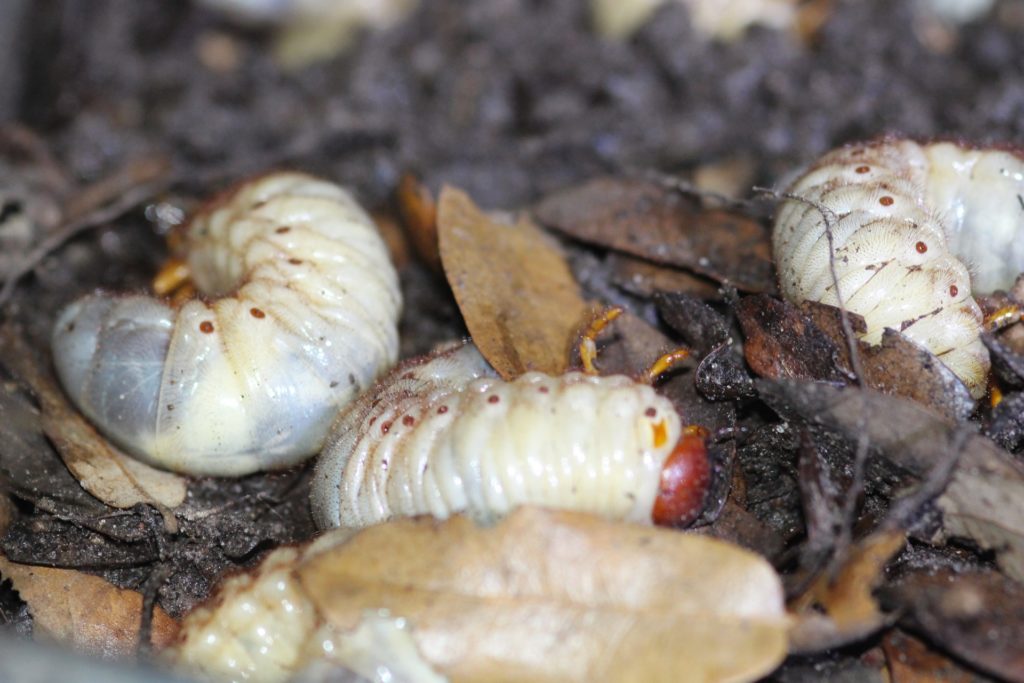
Yes, bad bugs will be around more during the Summer, but don’t treat unless there’s significant damage. We can help identify the pest and if/how to treat. You don’t want to kill too many good bugs while trying to take care of the bad bugs! If you see brown areas in the lawn that are easily pulled up, it’s usually a sign of grubs eating the roots of your grass. You can control grubs with Bonide Insect and Grub Control. Chinch bugs love hot dry areas in lawns. They make the lawn look dried out along sidewalks and pavement. Spot-treat those areas with Cyonara in easy ready-to-spray bottles. For organic control, use Spinosad or Diatomaceous Earth. We’ve also seen a lot more caterpillars than usual this spring munching on veggie gardens. Just a few caterpillars can be relocated, but if you have a lot destroying your plants, you can treat with organic Bt in liquid spray or powder form.
5. Stay Tuned for Fun June Events at Gill’s!
We’ve been overwhelmed with the response to all our events this spring and we’re not stopping! We absolutely love hosting you all, not just for plant shopping, but for learning and building our wonderful local gardening community. We’ve got a big June planned starting with a Gulf Coast Humane Society pet adoption day on June 6th, then flower bingo, plant trivia night, our 2nd annual Father’s Day cookout, and another Nightbloom Market on June 25th! Stay tuned here for updates.
Yay for May! Everything’s growing and blooming and supercharged by recent rains! We hope you are too. May is Mental Health Awareness Month, which is a good time to think about the peace of mind that gardening brings us. Gardeners know all the research is true – gardening is one of the healthiest, most satisfying, and most fulfilling things humans can do! Here are our Top 7 Must Do’s this May to keep you and your garden feelin’ good.
1. Join Us for Workshops & Events!
We’ve got a big May planned here at Gill’s with another round of fun workshops and events. Next weekend, on Saturday, May 9th, we’re inviting kids to come pot up a free flower for Mom for Mother’s Day. The following week, we’re hosting our first ever Ikebana workshop led by our fav local floral designer, Julia Prohorova aka Wild Veggie Bouquet! We’ve got Bigfoot’s Rockeaters coming for a cactus growing talk later this month, plus round 2 of our Nightbloom Market after-hours shopping event – this time with more vendors! Click here for more info, RSVPs, and tickets!
2. Plant Blooming Perennials and Trees
It’s time to plant lots of different blooming perennials and blooming trees. Get them established in May so they are rooted and acclimated to withstand warmer temps this summer. Staples like Esperanza, many varieties of Salvia, Lantana, and tons more are all blooming beautifully right now. And blooming native trees like Retama and Wild Olive are looking great right now. Added bonus: blooming perennials and trees attract lots of butterflies and hummingbirds!
3. Plant and Harvest Veggies
Warm weather veggie time! Plant all kinds of peppers, zucchini, squash, melons, and okra this month for continued harvesting into the summer months. If you planted tomatoes, cucumbers, and other early spring veggies, you’ll be harvesting now or very soon. Be sure to harvest often! It keeps birds & insects from finding them first, and helps redirect energy to produce more fruit. If you do have insect issues in your veggie garden, our go-to organic control is Spinosadsoap – safe for food but takes care of a lot of common bad bugs.
4. Mulch for Many Reasons!
We all know that fresh mulch is the quickest garden makeover! But did you know that applying a proper 3” layer of natural mulch keeps underlying soil temps more than 20 degrees cooler?! A good mulch layer keeps weeds at bay, and as it breaks down over time, it add nutrients to your soil. And perhaps most importantly right now, a good mulch layer retains moisture, which means big water savings.
5. What About Watering?
Speaking of watering, despite long-term drought conditions and potential water emergencies in the news, we need to continue to water smartly. Watering consistently now (just enough) will help maintain depth moisture, make the most of rainfall, and help plant roots grow deeper – all of which will reduce water needs and save water in the long run. Does all of our plant water need to come from the tap? Nope! You can conserve a lot of city water by collecting rainwater, A/C condensate, water from dehumidifiers, and re-using gray water from washing machines and dishwashers. If you’re interested in collecting a lot of rainwater, the Gill’s landscape team installs custom rainwater collection systems using stainless steel cisterns that are very attractive in the landscape and last a lifetime. Just 1″ of rain on 1,000 square feet of roof space can catch 600 gallons of rainwater. Get in touch!
6. Set Your Mosquito Traps!
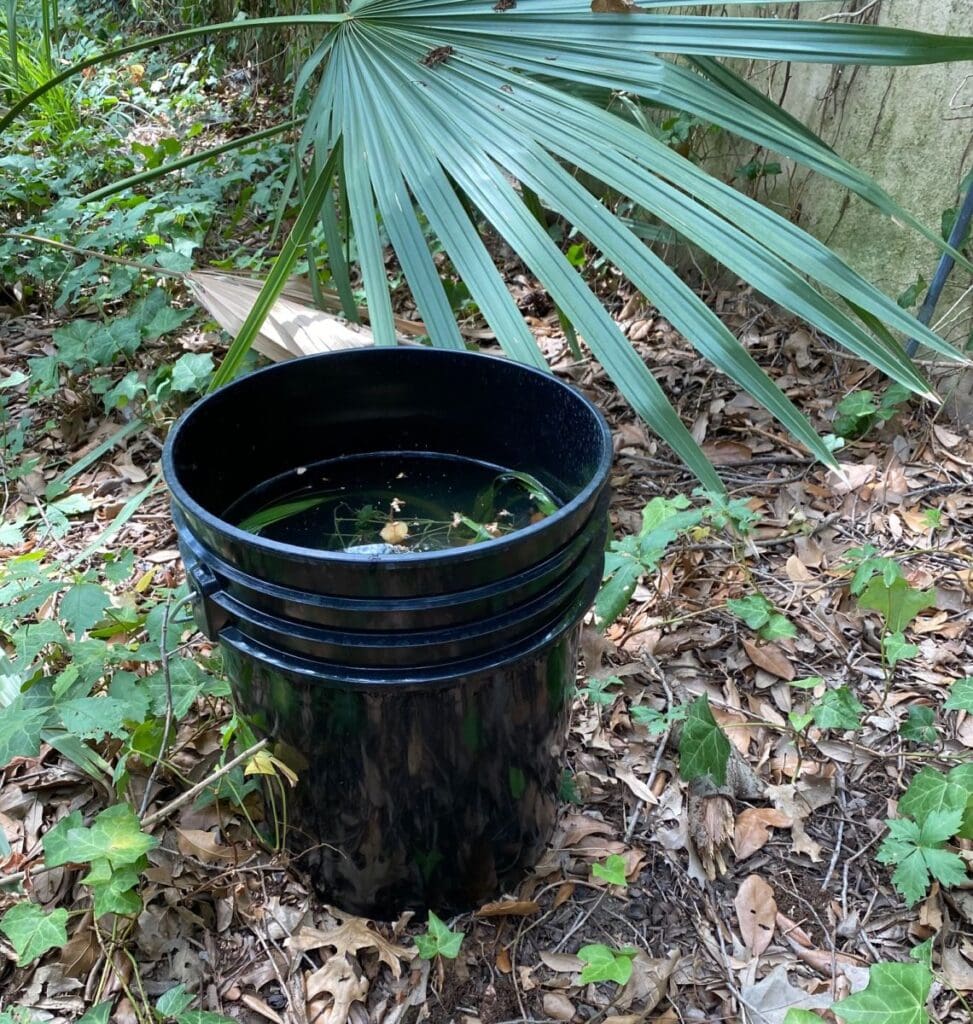
We are big fans of the simple bucket mosquito trap. Just fill a bucket 3/4 with water, add a good handful of lawn or plant clippings, and toss in a Mosquito Dunk or Mosquito Bits. These dissolve in the water and release bacteria that target mosquito larvae and kill them before they hatch. And they’re organic and not harmful to birds, bees, pets or humans! Set a few of these traps, sprinkle some organic Mosquito Beater granules around walkways and patios, and use Skeeter Screen incense sticks near where you’re working or hanging out outside. Remember that using chemical mosquito foggers kills all the good bugs too, some of which help control mosquitos and other bad bugs.
7. Gifts for Mother’s Day and Graduations
Let us help you find something pretty, useful, or both for the gardening moms and grads in your life. Pottery, birdbaths, wind chimes, quality garden tools, hats, gloves, garden decor, plantable greeting cards, gardening books – lots of options. You can purchase Gill gift cards online here. Or come find the gift that gardeners love most – plants 🙂
Spring has SPRUNG!! Gorgeous weather, rain in the forecast, and the nursery is bursting at the seams with all kinds of blooms! Here are our top must-do’s in the garden this March – time to get planting!
1. Get Your Veggies Going Right Now
We must say…our veggie and herb section is looking mighty good right now! We’ve got tons of different tomatoes, jalapenos, super hot Carolina Reapers, cucumbers, squash, eggplant, asparagus, lemongrass, basil, and lots more ready for your garden. Be sure to get your tomatoes going early this month so they have time to produce before it gets too warm – don’t miss your window. The rest of these can be planted any time this month, but you don’t want to wait much longer. Take advantage of the perfect weather!
2. Fertilize Regularly Starting Now (except for lawns!)
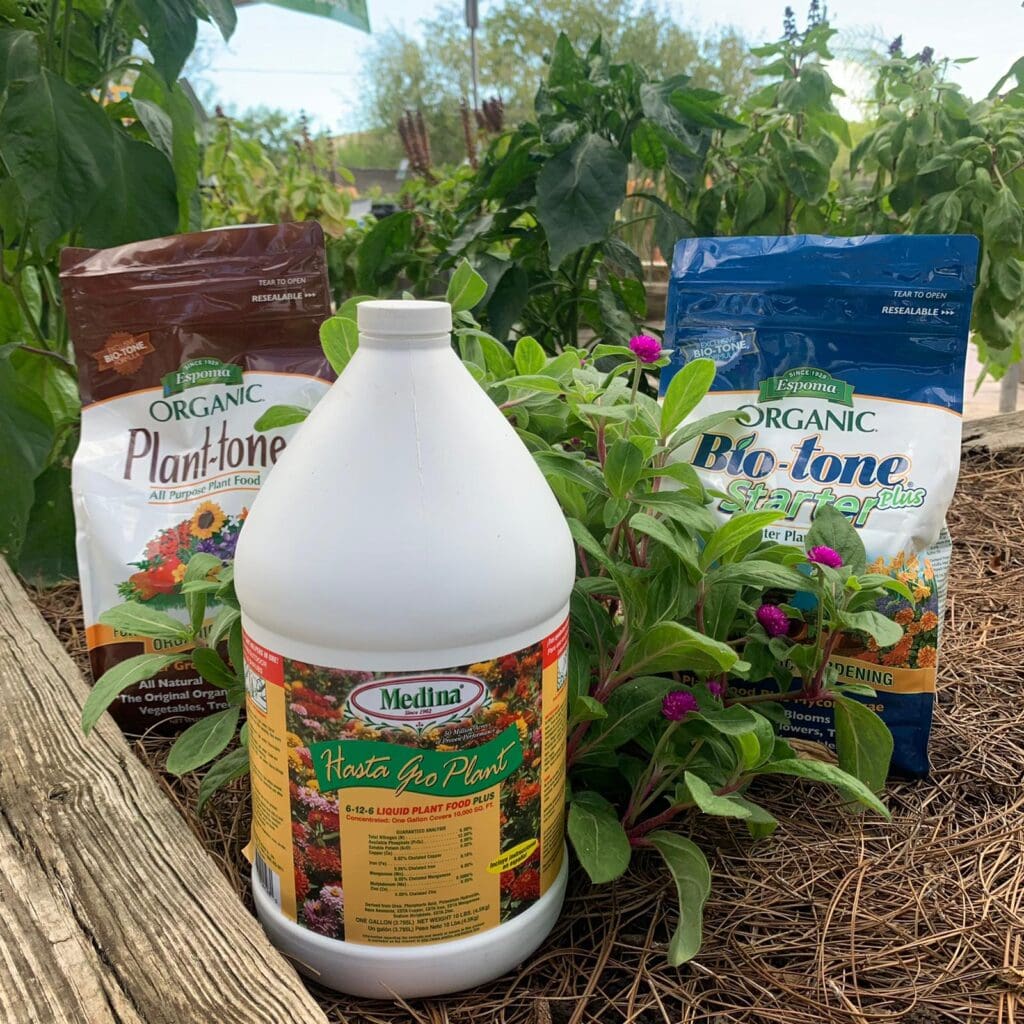
The time to fertilize is when plants are actively growing. That’s when they take up nutrients and get the most benefit from a good feeding. Flowers and veggies are especially heavy feeders because they’re working to produce a bloom and fruit. And you will certainly notice a difference with your landscape plants as well. Apply a good all-purpose organic food like Plant Tone, Medina Growin Green, or Rose Glo once a month for great results. Don’t sprinkle your granular fertilizer right up against the trunk of the plant. Instead, sprinkle at the drip line, aka where rainwater would drip off the outermost leaves. That’s the zone where plants take up the most nutrients. After you’ve applied your granular food, circle back every 2 weeks to supplement with liquid Hasta Gro. Almost everything should be fed starting now, except lawns! Wait to fertilize lawns until late March/early April.
Added bonus: When planting, add a little Bio Tone starter fertilizer to the soil when you backfill. It contains all sorts of beneficial organic matter, including mycorrhizal fungi which help stimulate better root growth. Amazing stuff!
3. Whatever You’re Planting – Add Compost!
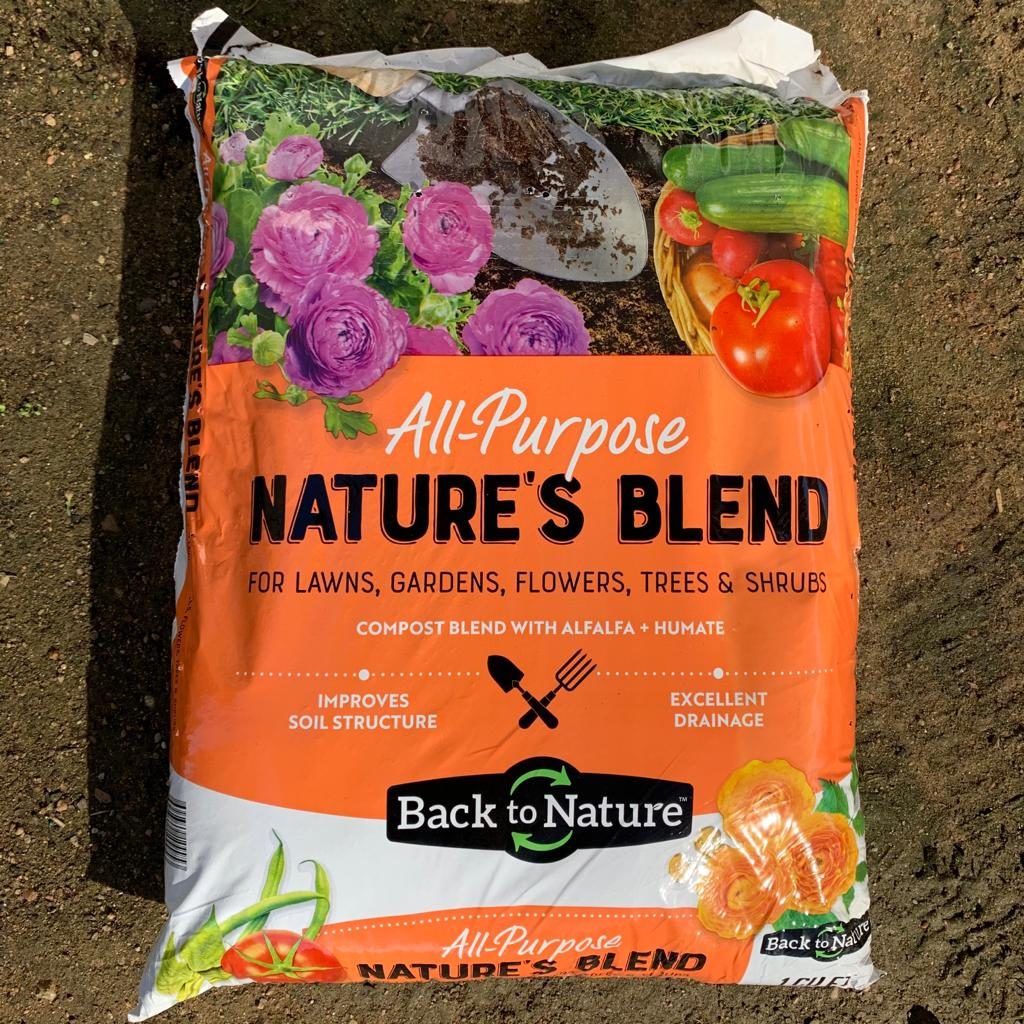
Whether you’re starting a veggie garden, planting trees or shrubs, annual flowers, or blooming perennials, add some compost to improve the quality of your native soil. We love our Nature’s Blend or Cotton Burr Compost. Whichever you choose, 1 bag improves about 12 sq ft of clay or sandy soil and gets it ready for planting. That’s a good approximate ratio if you make your own compost too. Adding compost not only improves the consistency of your soil, it adds LIFE! All those beneficial microorganisms help turn your soil into the perfect environment for plant roots.
4. Plant Level – Not Too Deep!
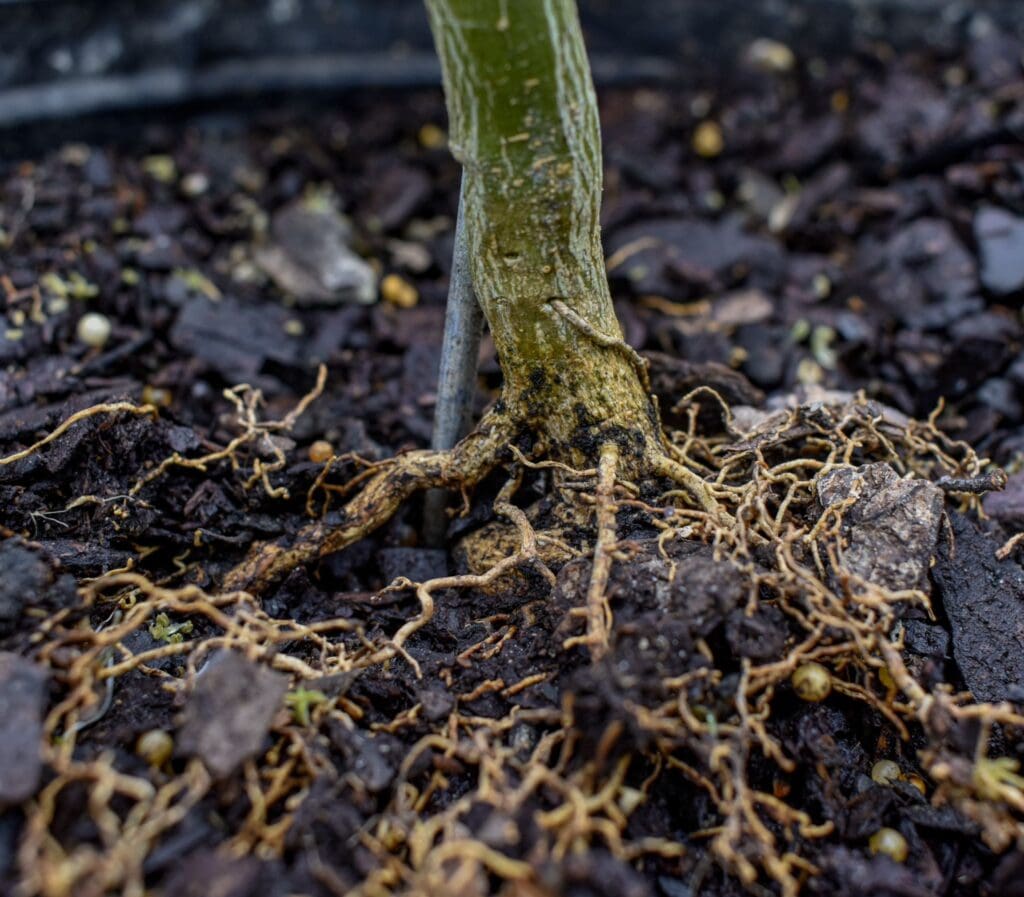
When planting this Spring, DON’T PLANT TOO DEEP! Plant level with the surrounding soil (or even slightly higher) and don’t cover the top of the root ball with soil. Plants have tiny feeder roots on the surface of the root ball that are critical for taking up nutrients and for oxygen exchange. If you bury these surface feeder roots, the plant will suffocate and decline. After you plant, use a moisture meter to be sure you’re getting moisture down into the ground when you water.
5. Invite Pollinator Helpers to Your Garden
Now is an important time to incorporate plants into your garden that attract & feed the birds, bees, butterflies, moths, and other pollinators. They need your help finding food and shelter, and you need their help pollinating your blooming plants, increasing your veggie production, and eating bad bugs. Bees are drawn to most anything with a bloom but some fav’s are native Gregg’s Mist Flower, Esperanza, & Lantana. Butterflies love Salvias and Mexican Flame Vine too. Native plants like Turks Cap and Yaupon Holly produce berries for birds, and Hummingbirds love Duranta, Mexican Honeysuckle, & lots more! Keep in mind that pollinators need help locating these food sources. Think about planting several of the same plant together to help make them more visible to our pollinator friends.
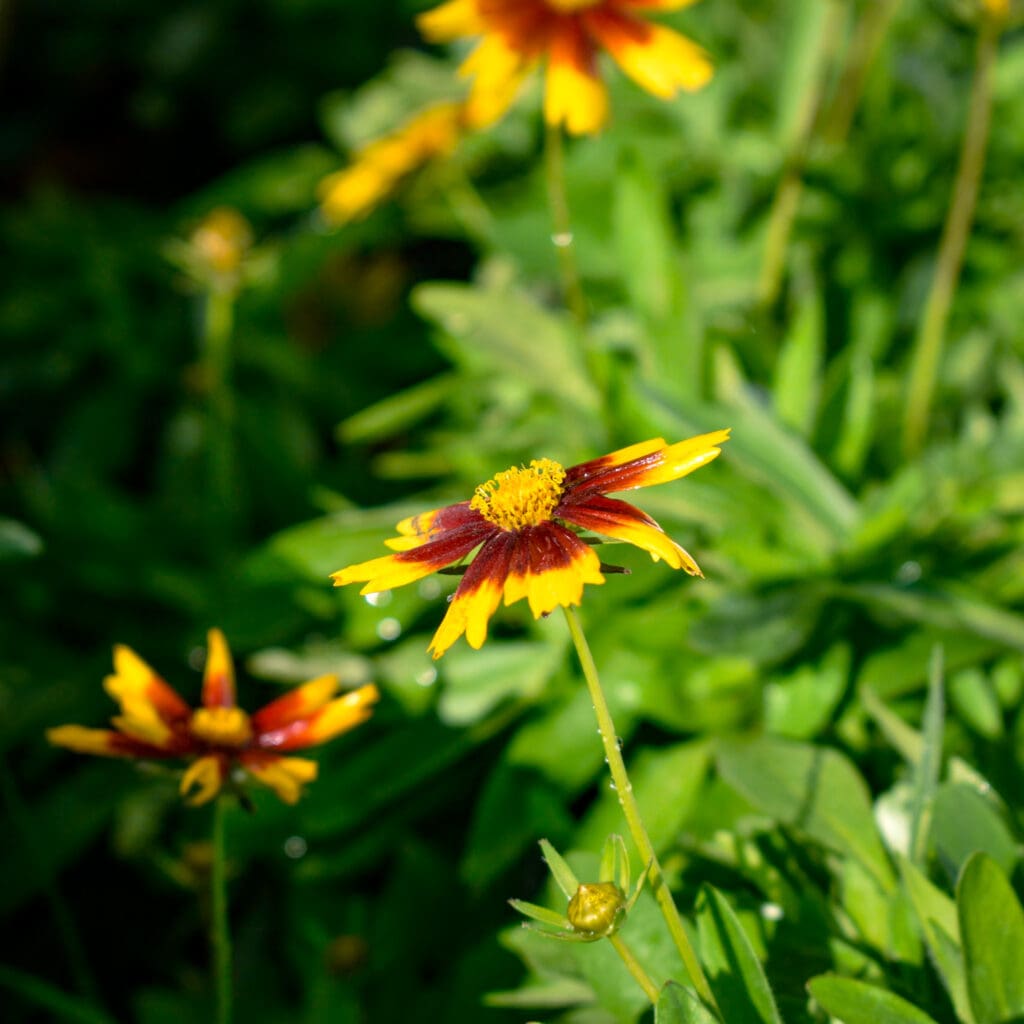
Q: Can I use far less water and still have a gorgeous landscape bursting with color? A: Absolutely, you can! Given our drought situation, we’re sourcing even more of the tried and true, top-performing plants that don’t require much water once established. Think about a rainbow of Coreopsis (pictured), native Blackfoot Daisy, Mexican Heather, Bulbine, and all the different color Salvias and Lantanas – all very tough and water wise perennials that will carry you through the seasons. Think about creating some areas of interest in the ground or in pots with Gomphrena, Bluebonnets, and Pentas, all of which thrive with little water. Speaking of pots, even bright sweet potato vine is a low-water winner.
Keep in mind – turfgrass lawns are by far the thirstiest part of our landscapes. Now’s a great time to reduce lawn space by creating or expanding planting beds, converting to native groundcover like Frogfruit, or adding pathways and other features. How much of your lawn space are you actually using?
7. Come to Our Nightbloom Event Next Thursday!
Did you know we’re hosting our first-ever night time shopping event at Gill’s next Thursday evening, March 12th?! Stop by and see the nursery lit up at night – it’s magical! Stay tuned to all of our upcoming talks and events here, and follow us on Instagram and Facebook for updates.
p.s. Now you can sip and stroll at Gill’s any time – we’re stocked with cold drinks including beer & wine 🙂
How is 2025 halfway over already?! We hope you’re having lots of fun this summer – holidays, BBQs, weekend trips, and garden projects! Here are our top must-do’s to keep your plants healthy and happy in July, including tips for planting, watering, and summer pests to watch out for.
1. Yes, You Can Plant in the Summer!
Myth: I’ve heard that you can’t plant in the summer because its too hot… FACT: Of course you can!! You can plant just about anything in our summers, including trees, as long as you have a good plan for watering. In fact, summer is a great time to plant crape myrtles because they’re blooming and you get choose the color IRL! While we’re past the season for spring veggies like tomatoes, there are still plenty of summer veggies like okra, peppers, eggplant, and melons to plant now. If you want your own fresh pumpkins for Halloween, start ’em in July. Plus, now’s a great time to set table for the fall hummingbird migration with their fav blooming perennials like Firebush, Firecracker plant (pictured), native flame Acanthus, and Dicliptera aka Hummingbird Bush. Don’t let any myths discourage your summer gardening!
2. Watering: Think Depth, Not Frequency
Proper hydration happens when you get water down to the roots of the plant. This means watering deeply, not more frequently. The key for watering plants, lawns, and trees is long, slow, deep drinks! Encourage those roots to dive deeper for water. Even with recent summer rains (yay!!), continue to watch your watering and maintain that depth moisture. If you notice this summer that you’re having to water your potted plants a lot more often, it could be time to re-pot. As the pot fills up with roots, you end up with less soil and therefore less moisture retention. Obviously we have a lot of potted plants here at Gill’s. We just added several more large rainwater collection tanks to help reduce our dependence on City water. And boy do the plants love rainwater! If you’re interested in a rainwater collection system, Gill’s landscape team can design and install at your home.
3. Mulch to Keep Roots Cool
Another way to save water is to keep landscape beds and gardens mulched through the summer. Studies show that a good 3″ layer of mulch will keep your plant roots more than 20 degrees cooler! Not only that, a good mulch layer also helps retain moisture AND keeps weeds at bay. Healthy plants, less watering, and fewer weeds – that’s a win/win/win! It’s important to use natural wood or pine straw mulch that breaks down over time. As it breaks down, it adds nutrients and makes your soil more workable. Keep in mind, mulch is also a great placeholder. If you have areas that you plan to plant later, keep them mulched to keep weeds out and keep your soil healthy and ready to plant when you are.
4. Watch for More Bugs in Summer
This is what a mealybug infestation looks like!
Not all bugs are bad, so it’s important to know your bugs before you spray anything, even organics. A few bugs here and there is most likely not cause for alarm. If you do get an infestation, cut the plant back first, give it some fertilizer, then treat for bugs. By pruning first, you won’t have to treat every leaf on the whole plant. We see plants come back better than ever using this method. If you’re not sure about bugs or pruning, we’re here to help. During summer, watch out for mealybugs on plants like Hibiscus and Turk’s Cap, lacebugs on Lantana, and chinch bugs in the lawn – especially near sidewalks and driveways! We’ve got solutions for all of the above.
5. Summer Vacays? Train Your Plant Sitter!
Be sure to have a trusted plant-sitter come water your plants while you’re away on summer excursions! It’s a good idea to spend a little time showing them how you water. Make them a list, draw them a map, and walk them through it. You know your plants and which ones get tired and thirsty the fastest. We might even be able to help connect you with a trusted plant sitter…
6. Collect Cool New Houseplants
Now’s a great time of year to work on your houseplant jungle. The greenhouse is restocked with all kinds of interesting houseplant choices, including lots of new Bromeliad and Philodendron varieties, like this fernleaf philodendron aka Philodendron tortum which looks like a small palm! Keep in mind that constant A/C indoors will dry out plants. Keep an eye on watering (use a moisture meter) and don’t place houseplants near an A/C vent. You might also try experimenting with a humidifier near your plants to help regulate moisture.
Here’s to summer garden fun! We’re making the transition to warmer weather with some intermittent rainfall and lots of good energy in the garden. Here are our top priorities this month, including what to plant, how to adjust watering, what to watch out for, and how to keep plant roots cool and happy.
1. Plant Summer-Loving Plants!
So many of our favorite plants for South Texas don’t just tolerate warm weather, they only begin to thrive and look their best in the summer. Think of blooming perennials like Firebush, Esperanza, and Pride of Barbados for awesome summer impact. Think of big purslane hanging baskets, Gomphrena, and Periwinkles for bursts of bright color. And browse our Texas native plant section for plants and trees that have thrived through hundreds and even thousands of Texas summers. If you’re still wanting to plant food, you can do that too – okra, basil, thyme, watermelon, peppers, black-eyed peas and more should be planted in June.
2. Keep Roots Cool with Mulch
A good mulch layer (2-3″ deep) has so many benefits. It looks amazing, keeps weeds down, helps retain moisture, adds organic matter to the soil, AND keeps plant roots nice and cool in the summer. Bartlett Tree Research Laboratories shared amazing results with us from a mulch study they conducted in San Antonio. Soil temperatures were measured at 6″ deep (where plant roots live) on a 105 F summer day. Bare soil, 6″ down was 102 F. Soil under grass was 92 F. Soil beneath a 3″ layer of mulch was only 76 F!! Mulch for the win!
3. Water Low & Slow
We’re not talking about BBQ, although that sounds good too… We’re talking about watering low, as in as in low to the ground to avoid evaporation, and slow as in not with your hose open full-blast. This helps decrease runoff and get more water down to the roots. Consider setting up your own automatic drip irrigation system – they’re easy to DIY and they operate on the low & slow principle. Also, be sure to use the cycle & soak method, which simply means water once, let it soak in for several minutes, then come back and water again. This makes sure you’re pushing water down deep.
Pro tip: Use a moisture meter in your landscape beds and pots! We carry them for around $10 and can show you how easy they are to use. They have a long soil probe that tells you whether you actually have good moisture (or too much) down deep where it’s needed. They’ve saved many plants!
4. Watch for Summer Bugs, Critters, and Plant Disease
Yes, bad bugs will be around more during the Summer, but don’t treat unless there’s significant damage. We can help identify the pest and if/how to treat. You don’t want to kill too many good bugs while trying to take care of the bad bugs! If you see brown areas in the lawn that are easily pulled up, it’s usually a sign of grubs eating the roots of your grass. You can control grubs with Bonide Insect and Grub Control. Chinch bugs love hot dry areas in lawns. They make the lawn look dried out along sidewalks and pavement. Spot-treat those areas with Cyonara in easy ready-to-spray bottles. For organic control, use Spinosad or Diatomaceous Earth. We’ve also seen a lot more caterpillars than usual this spring. They’re commonly found munching on veggie gardens, but this year we’ve seen them on Gomphrena and Dichondra! Check out these big Sweet Potato Hornworms that Jesse found eating his Dichondra at night! Not too common to see, but it makes sense since dichondra is in the sweet potato family. Just a few caterpillars can be relocated, but if you have a lot destroying your plants, treat with organic Bt in liquid spray or powder form.
5. Garden In Style Indoors with New Houseplants
We just restocked the greenhouse with all kinds of unique and classic houseplants looking for their forever homes! Time to work on your collection! We can help you determine the best houseplants for different areas and different lighting in your home. Once again – invest in a moisture meter for your houseplants, too. In our experience, the main cause of houseplant death is too much love aka too much water. Keep in mind that houseplants can also be sensitive to chemicals in treated tap water. We use as much A/C condensate, rainwater, and water from our dehumidifier as we can to water houseplants and keep them looking their best here at Gill’s.

 This is what a mealybug infestation looks like!