
May 25th
Its Memorial Day weekend and summer’s around the corner. Our spring garden is wrapping up its abundance. The beans have been harvested, the peppers are producing, and the eggplant does love all the rain but our squash not so much so. The cantaloupe is running over the garden with lots of blooms. We’re picking tomatoes every few days to keep the birds, and other critters from getting them and ripening them on the window sill. All in all it’s been a great spring garden. So now I’m letting my passion for food gardening take a rest.
Now…There’s still plenty to do in your garden. If you love okra, you should try “Baby Bubba Okra.” Sally Gill is growing it and having great success. We have the seed from Burpee Seed Co. Peppers will produce all summer and worthy of a new planting. The climbing Malabar spinach is a great warm weather green and as beautiful as it is delicious. Eggplant will also provide food all summer. If you want to change things up, seed out some zinnias, cosmos, or sunflowers and watch your garden turn into a flower extravaganza you can cut and share. Flowers and food always make people smile!
I hope you have enjoyed following our garden as much as I’ve enjoyed sharing it with you. I’m already thinking about what to plant in fall!
 Blessings,
Debbie
[content_band inner_container=”false” no_margin=”true” border=”none”]
May 12th
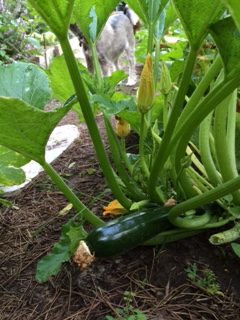
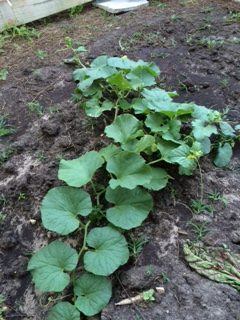
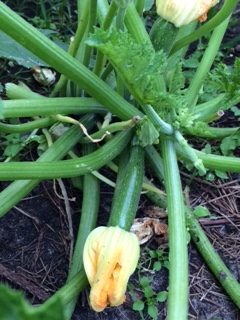
Our garden is growing with lots of produce heading our way. We spent some time last Saturday pulling and hoeing weeds. It was not long that the mosquitoes found me. So I grabbed the Mosquito Beater Repellent Granules and sprinkled in and around the garden, waited 10 minutes, went back out, and presto…no mosquitoes! I love these granules, they smell good and work! We are starting to see some powdery mildew on the squash foliage. I trimmed most of the bad off and then sprayed with Serenade. It’s an organic fungicide made from Bacillus subtilis. It suppresses and inhibits bad fungi like powdery mildew, fire blight, black spot, rust and a host of other nasty fungi that give our plants grief. Our cantaloupe is growing, blooming but no fruit set so far. I may have to become a bee to help with pollination. The rain showers that came through Monday were a great blessing!
[content_band inner_container=”false” no_margin=”true” border=”none”]
May 5th
I love our spring garden; everyday is full of delicious surprises. I sprayed my squash for blossom end rot last week and IT WORKED!!! I have already harvested 2 scallop squash since I treated, it was that fast. The zucchini plants are loaded with blooms and….surprise…I found a beautiful ready to pick zucchini hiding among the growth. Our pinto bean plants are loaded with beans. The wood bees are taking up residency in the bamboo poles. I reassure them every day we mean them no harm. The celery that was hanging on has finally surrendered to the season’s temps. I’ll do some more cleaning, weeding and another dose of Hasta Gro this week.
Life is good…in our garden!
[/content_band]
[content_band inner_container=”false” no_margin=”true” border=”none”]
April 28th
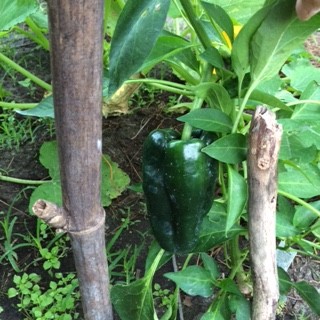
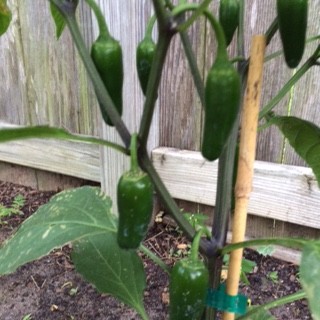
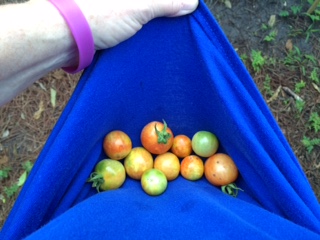
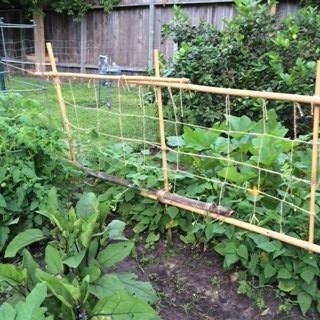
The rain has been a huge boost to our garden! Beans are climbing everywhere, peppers are sizing up and the Roma tomatoes are starting to have a little color. We have been picking handfuls of cherry tomatoes, roasting them with onion, garlic, olive oil and a little seasoning…OMG is it good. The secret to roasting tomatoes is you have to squeeze their guts out. Otherwise you end up with mush. We have developed a real issue with blossom end rot on the 1st scallop squash plant. Every time I think they’re good, I flip them over and there’s a rotten spot. Now I knew about blossom end on tomatoes, but on squash? GRRRR…! It’s caused from a calcium deficiency. Easy to correct with crushed egg shells sprinkled around the base of the plants or use Fertilome Tomato & Pepper Set. Since we do not eat a lot of eggs, I’m going for the spray!
[/content_band]
[content_band inner_container=”false” no_margin=”true” border=”none”]
April 14th
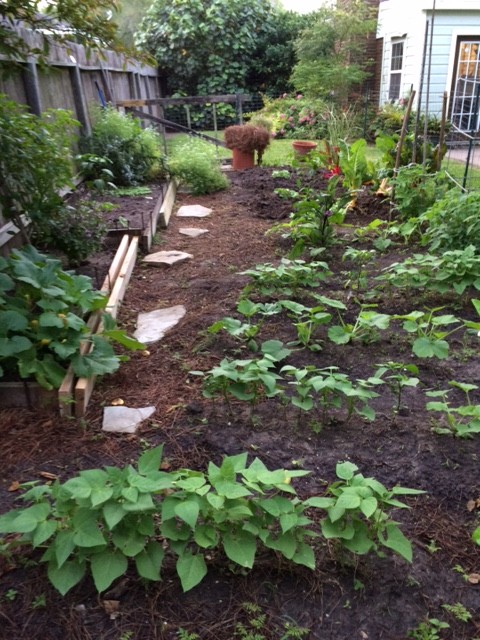
Well I took a break last week from working in our garden much. I had a few skin spots frozen and removed last week. Oh the price for spending too much time in the sun. All is well and healing…very grateful! I finally removed the last of our kale. It was getting a little stinky. You cannot imagine the strong root system they had formed. No pulling them, I had to get a shovel! I credit this to using Bio-Tone With Mycorrhizal Fungi. I forked the soil, re-made 3 mounds and have planted cantaloupe. After seeing how good the Scallop squash is doing, decided to add another one. Added one more pepper…another Grande jalapeno. This time I purchased a 1 gallon even though the other wimpy ones are looking better. I may be peddling peppers this summer or at least making lots of salsa…lol. Of course everything got a handful of the Bio-Tone and a foliar feed of Hastagro. All is looking good!
[/content_band]
[content_band inner_container=”false” no_margin=”true” border=”none”]
March 31st
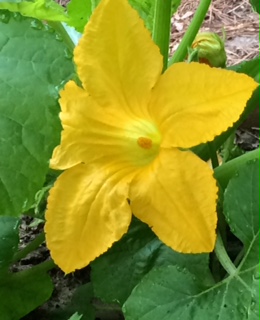
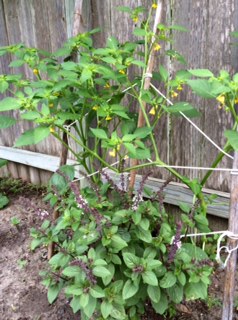
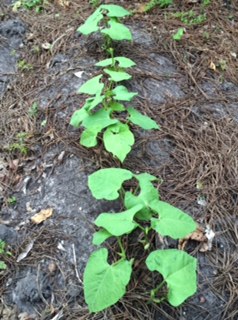
Well our garden is really growing! The beans and zucchini have already sprouted. The scallop blend squash is loaded with blooms and little baby squashes…they are so cute! I rigged some tie supports for the tomatillos just in time…they have tripled in size. The Japanese eggplant is starting to bloom. My only concern is for the last couple of peppers I planted. They are not looking so happy so might just start with new ones now. Here’s hoping April brings more delightful weather…a little rain, a little cool, and sunshine!
[/content_band]
[content_band inner_container=”false” no_margin=”true” border=”none”]
March 24th
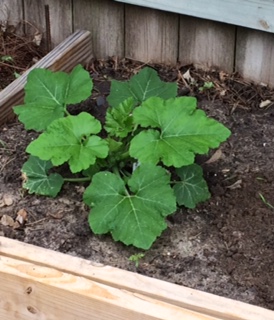

I have managed to have a decent crop of carrots in spite of the critter trampling that happened earlier this season and plan to share them with our family Easter Sunday…
The tomatillos and magic mountain basil have turned out to be a nice combination. The lavender blue basil blooms are highlighted by the lemon yellow flowers already appearing on the tomatillos. I wish I would have got a few more but alas even a buyer can’t make growers have what she’s looking for….I did get the pinto beans, zucchini, sweet basil seeded in the garden. A friend wondered why I would plant pinto beans, they are so reasonable to buy. Well like many things we grow, they just taste better. Plus I have never grown them, so why not.
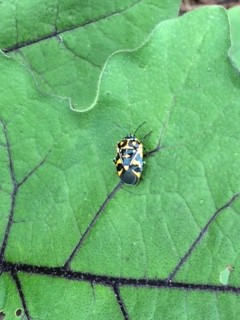
I have had to spray for the harlequin bugs I found while purging the rest of the broccoli. I am using Natural Guard Spinosad. Need a couple more Pine Straw Bales to help with weeds.
All this rain has made everything grow! Happy Easter!
[/content_band]
[content_band inner_container=”false” no_margin=”true” border=”none”]
March 17th
Planting has been a breeze since we got some much needed rain last week with more in the forecast! With the rain I do not have to add much compost to help with soil compaction.
I pulled a bunch of carrots and now have a place to seed some sweet basil. I have finally surrendered to pulling most of the broccoli, parting is such sweet sorrow. It will be the space for a hot jalapeno & grande jalapeno. I love using those grande’s for stuffing. Yummy! Our nasturtiums are spectacular even though they’re in the middle of my rows to plant. Our Meyer lemon tree is blooming and the fragrance is pure sweetness. Life is good!
[/content_band]
[content_band inner_container=”false” no_margin=”true” border=”none”]
March 10th
 I purchased our first plants for our spring garden and got them planted finally on Sunday afternoon. I started working outside Saturday morning with the best intention to get the garden planted. But the trimming, weeding, and fixing broken things in other areas around the yard postponed my goal. I planted 2 tomatillos near the fence so I can train them up. I added 2 more tomatoes to our volunteer Cherry tomato, a Roma tomato and a Valley Girl. Roma is a paste type and Valley Girl is an early slicing type. I also planted an Ichiban Eggplant, a Poblano Pepper, & Magic Mountain Basil to attract bees. Everything got a handful of Espoma Bio-tone in the hole. It is the fertilizer with the Mycorrhizal Fungi that boost root development, very important going into spring and summer. I will be adding a hot jalapeno plant this week. The zucchini squash, sweet basil, and pinto beans I am starting from seed. Let the growing begin!
[/content_band]
[content_band inner_container=”false” no_margin=”true” border=”none”]
March 3rd
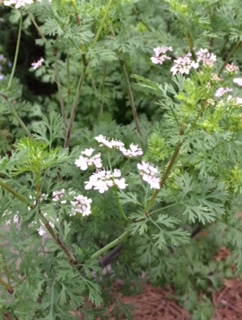
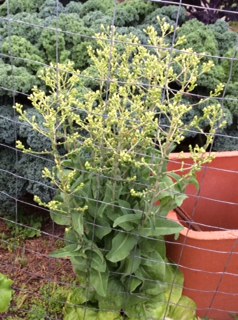 I have cleaned out the turnip/radish/lettuce bed and pulled the remaining green cabbage. I am leaving the kale, chard, carrots, celery, broccoli, and herbs until I deem we want to plant there. Part of the beauty of leaving end of season veggies is watching them mature to their flowering stage. Our cilantro is bolting and begins to flower tiny white stars. The volunteer lettuces are setting their flower stalks as well. The culinary sage is showing off with periwinkle blue flowers. All of these help provide food for butterflies and bees, both of which we desperately need to pollinate other food we plant during spring.
Broccoli is one plant that has beautiful yellow flowers and a pungent smell. Bees love them! But leave them outside. I made the mistake of cutting older broccoli heads and putting them in the fridge. The next day our fridge smelled of stinky broccoli past their prime….puuuwee. Best to let nature enjoy their beauty…outside.
[/content_band]
[content_band inner_container=”false” no_margin=”true” border=”none”]
February 25th
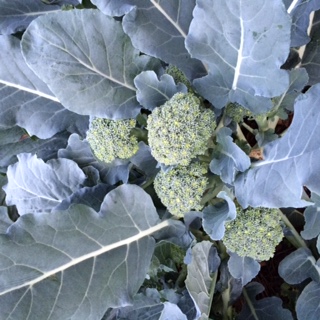
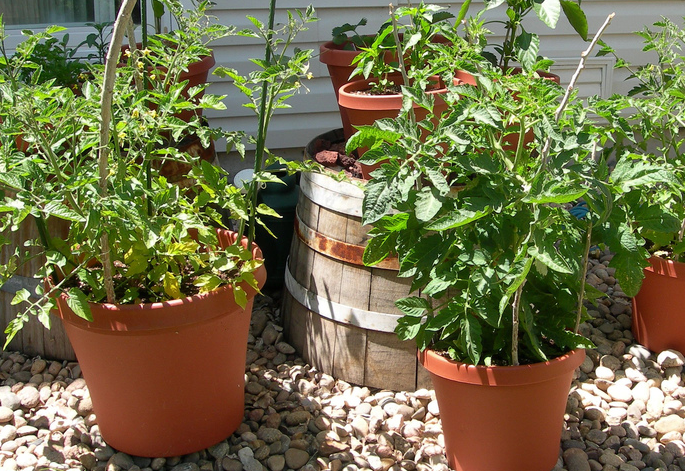
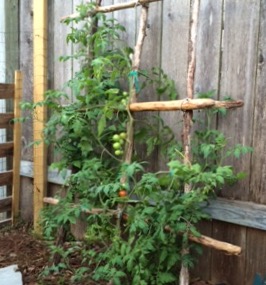 In our garden, sticks and stones are always helpful! Here’s a rustic trellis I built for our volunteer tomato plant. I used some old cedar sticks collected from a hill country trip years ago. Our broccoli just keeps on giving…here’s one of our 8 plants full of florets ready to harvest!
[/content_band]
[content_band inner_container=”false” no_margin=”true” border=”none”]
February 18th
Just came in from cutting more celery, thyme, and broccoli to make a little chicken soup. I did not plant anything new just yet. I plan to turn the rows, add Medina Growin Green Fertilizer, Dried Molasses and water. The ground is quite dry so a good soaking will help before we plant again. As we are coming to the end of winter, I always assess what we did and how it’s done. Here are a few notes worth remembering; writing them in my garden book so I will… remember!
- When planting carrots, always cover with wire to keep 4 legged critters out. Fertilize a little more with Hasta-Gro For Plants.
- Plant in early October in order to have food ready sooner. Start in mid-September with cleanup/soil prep.
- The benefits of using Espoma Bio-tone With Mycorrhizal Fungi are visible more now as our garden has matured. Super strong stems and dense white root systems show how valuable it is.
- Growing turnips, lettuces, radishes from seed was somewhat successful but would have been better with more sun. Not bad for our first try at growing them.
- Soil prep and fertilizing was good; we will do the same this fall.
[/content_band]
February 11th – To Keep or Not to Keep?
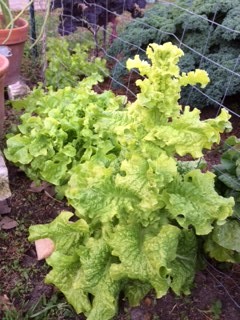
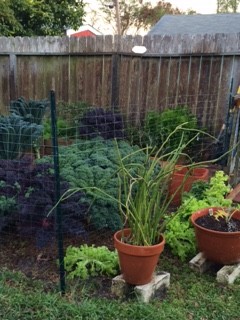
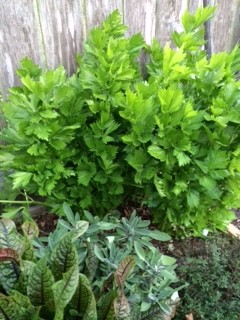
As we enter the transition season from winter to spring, I am always in a quandary. Do I keep this winter plant or pull it in order to start my spring garden. For me, a spring veggie garden is limited to my time or lack of to spend caring for it. New plants take more time and a watchful eye during spring when insects and disease are more active. Still it’s hard to pull a plant that is still growing and producing food. I spent Saturday pulling up the cauliflower plants; they were done. My red cabbage plants were looking wimpy and some of our carrots are ready to harvest, as well as a few turnips and radishes. It’s the kale, Swiss chard, and broccoli that can hang on for a while longer so those are the ones I pull when we’re tired of eating them. For now we’ll keep harvesting and sharing. And with the removal of those few plants, I have some room to start a couple of tomato plants, maybe a squash or two. Peppers and other hot weather veggies will come later in the month.
[/content_band]
January 28th
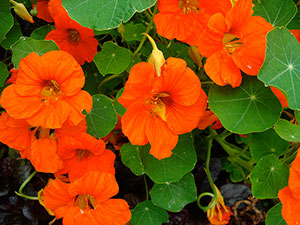 In just a couple of weeks, we’ve harvested most of our Cauliflower and will begin pulling plants up soon. I had someone ask about the plant mixed in with our broccoli. It looks like giant dollar weed but is actually nasturtiums I seeded as a cover crop a few years ago to control weeds. Now they return every year and have at times overrun the garden, acting more like a weed…although an edible, blooming one! Lots of other weeds are showing up and I will be spending some time this weekend pulling & hoeing. Warm temps and sunshine are the forecast….looks like spring is starting early!
January 21st
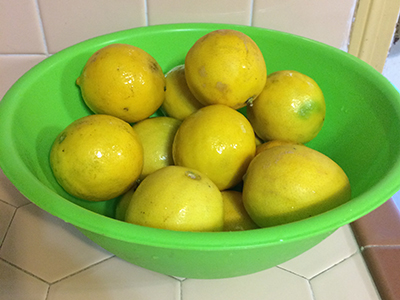
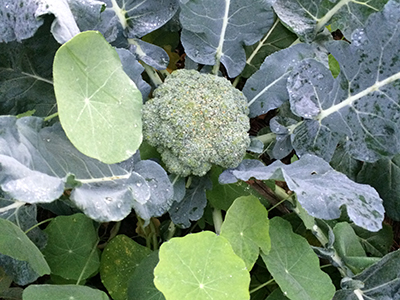 It’s been a couple weeks since we did an update on our garden. Holidays and weddings have kept us busy but we are still enjoying the fruits of our labor, as you can see! Our celery has gone nuts, broccoli and cauliflower getting bigger every day and we’re finally seeing a few radishes and tons of chard and kale. There are still no shoulders showing on our carrots. I found several of our carrot tops smashed down by some critter. Note to self…PUT THE WIRE OVER THE CARROT PATCH NEXT YEAR. The best part of growing food is eating it, sharing it, & using it in some culinary creation! One of my favorite recipes is from Cooking Light magazine. It is a recipe makeover of lemon squares…delicious!!! WARNING -you may want to make 2…they can mysteriously disappear! Bon Appétit!
Lemon Squares – August 2012 Cooking Light
Serves 16: 124 Cal; 5g fat
- ¾ cup all-purpose flour (3.4 oz.)
- ¼ cup powdered sugar
- 3 Tbsp. pine nuts, toasted and coarsely chopped
- 1/8 tsp. salt
- 2 Tbsp. chilled unsalted butter, cut into small pieces
- 2 Tbsp. canola oil
- Cooking spray
- ¾ cup granulated sugar
- 2 Tbsp. all-purpose flour
- 1 tsp. grated lemon rind
- ½ cup fresh lemon juice
- 2 large eggs
- 1 large egg white
- 2 Tbsp. powdered sugar
- Preheat oven to 350°.
Weigh or lightly spoon flour into dry measuring cups; level with a knife. Place flour, ¼ cup powdered sugar, pine nuts, and salt in a food processor; pulse 2 times to combine. Add butter and canola oil. Pulse 3 to 5 times or until mixture resembles coarse meal. Place mixture into the bottom of an 8-inch square glass or ceramic baking dish coated with cooking spray; press into bottom of pan. Bake at 350° for 20 minutes or until lightly browned. Reduce oven temperature to 325°. Combine granulated sugar and next 5 ingredients (thru egg white) in a medium bowl, stirring with a whisk until smooth. Pour mixture over crust. Bake at 325° for 20 minutes or until set. Remove from oven, and cool completely in pan on a wire rack. Cover and chill for at least 2 hours. Sprinkle squares evenly with 2 tablespoons powdered sugar.
January 7th
Our garden is growing and looking great. We harvested our 1st broccoli head this week with many more to follow…quickly! It’s important that once you see those heads sizing up that you check them daily. If it’s cool/cold they are slower but when we have several warm days, they will get soft or even limp. Remember to leave the plant and only cut the broccoli head so you can have lots of broccoli sideshoots.
We are also picking bowls of lemons! These are Meyer lemons, large, juicy and very tasty. Most citrus ripens in the late fall & winter months. You can have tons of citrus all at once making storage a challenge. If space is limited, leave them on the tree. Most citrus including lemons will only get sweeter if left hanging during cold weather and they will last through January. Pick them off the ground if they fall, give them a good scrubbing. If it’s going to freeze, then pick all you can.
December 17th
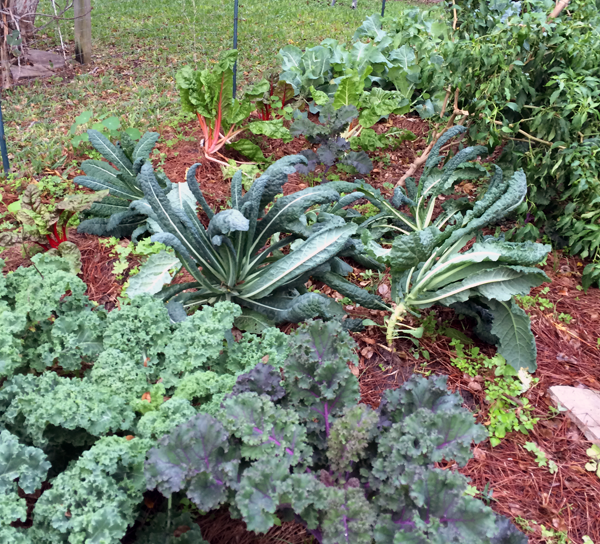 I always start and end my days spending time in our fall winter garden…well almost. My holiday schedule last weekend was packed to the brim. I did not have time to take a look at the garden immediately after last weekend’s storm. I was horrified the next day when I saw most of our kale, cauliflower and broccoli laid over on their side. So I promptly grabbed my old bamboo stakes and began propping everybody back up. The ground is so soft from the beneficial rains but once it dries a little they will be fine and able to hold themselves sturdy again. Just in case will keep a few fingers crossed for good luck.
December 10th
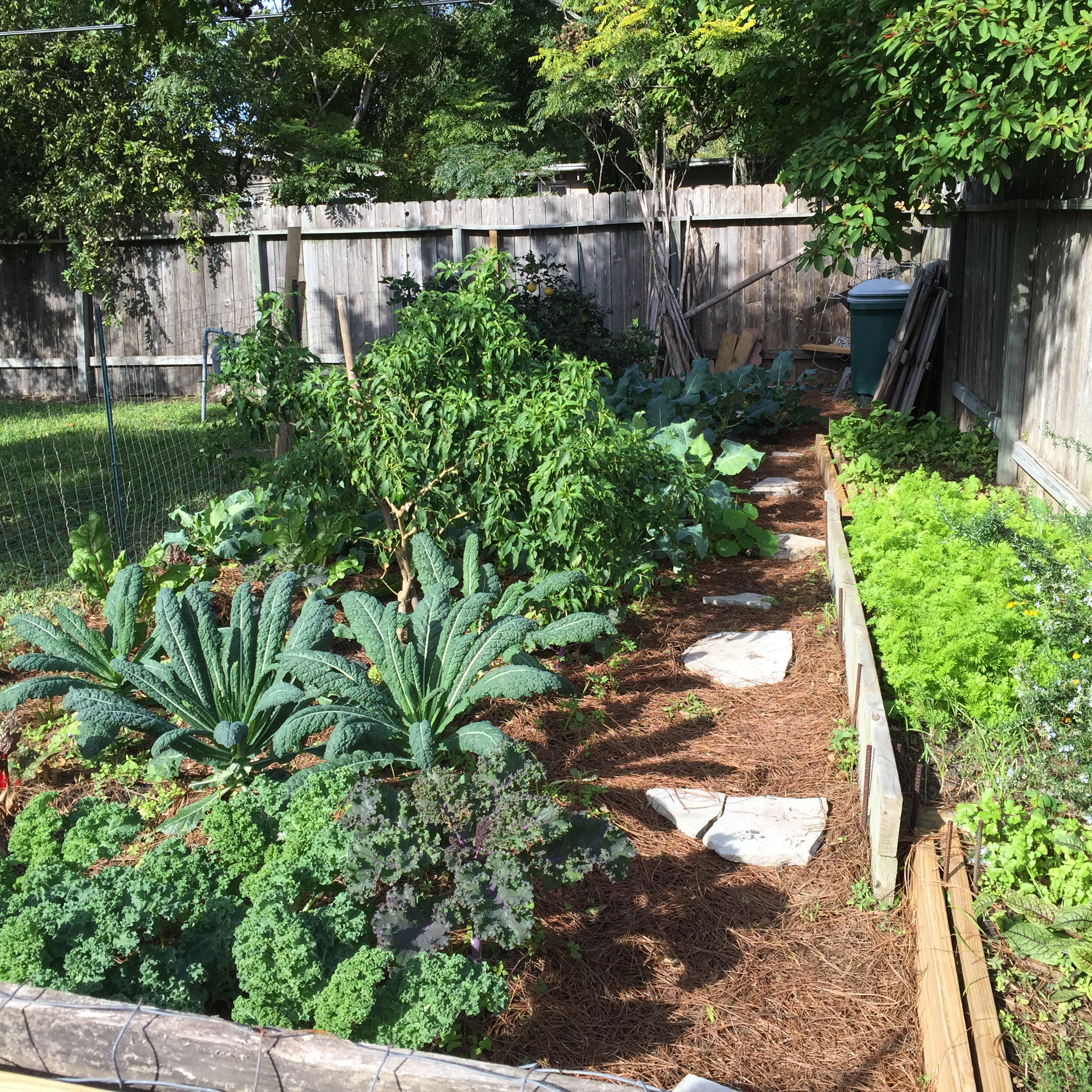
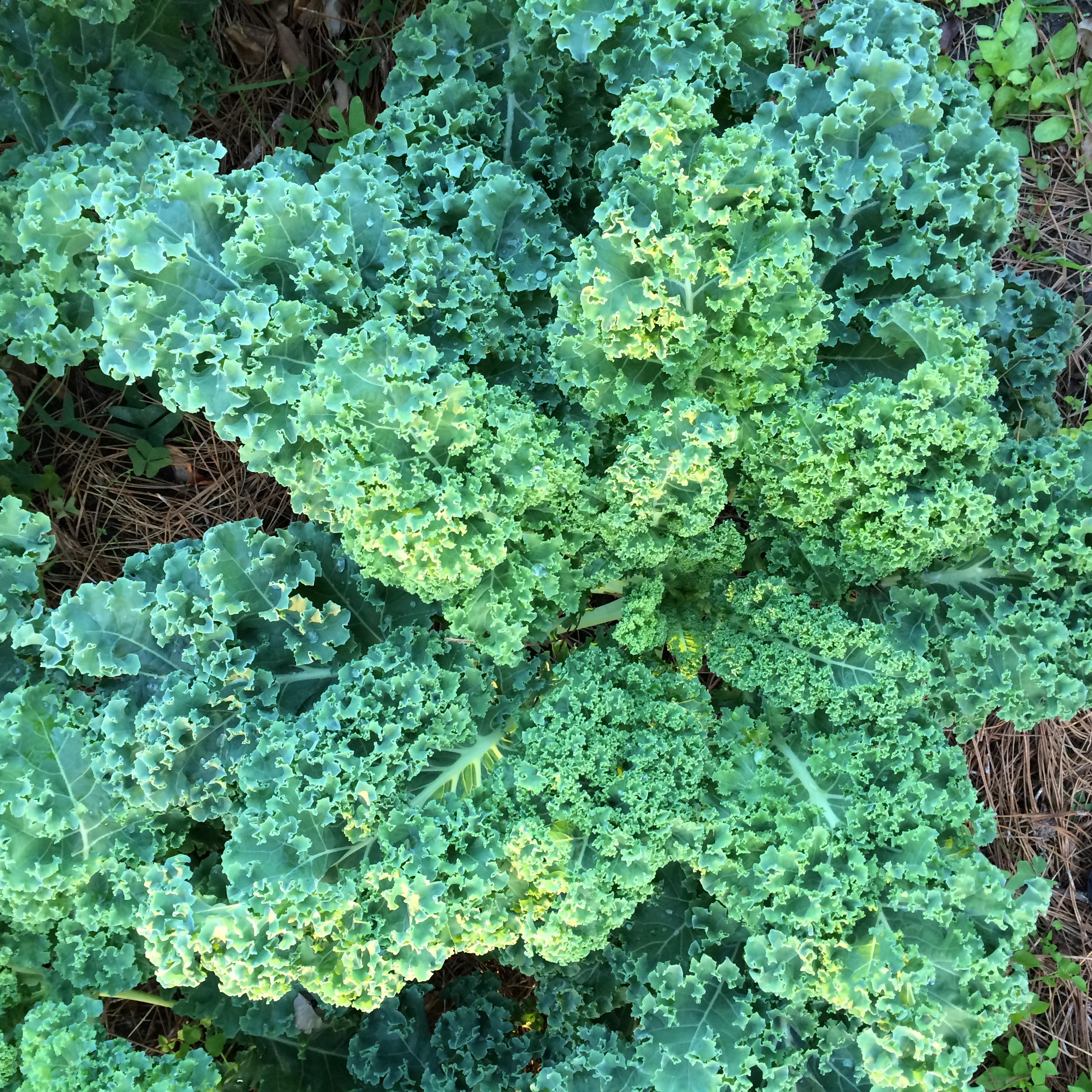
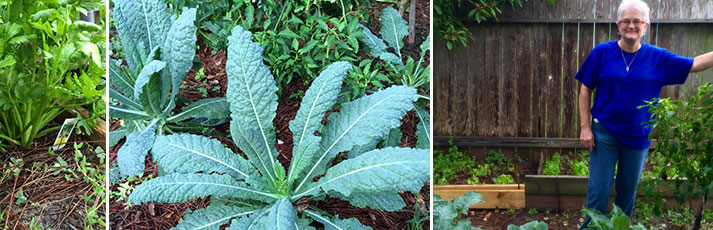
Beautiful weather is helping our garden be healthy and growing. We’re harvesting lots of kale to sauté, use in smoothies, and make kale chips…very yummy! The redbor and seabor kale are the curly leaf varieties. Seabor reminds me of a ruffled petty coat, it is as spectacular to look at as it is to eat. The sage and cilantro are ready for more picking. We’re watering more with all this sunshine. All is well as we prepare for Christmas cooking!
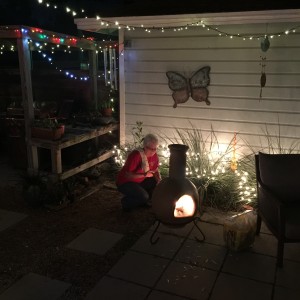
After working in the yard all Saturday, what better way to relax than with friends around a grill and a fire in our chimenea!
December 3rd
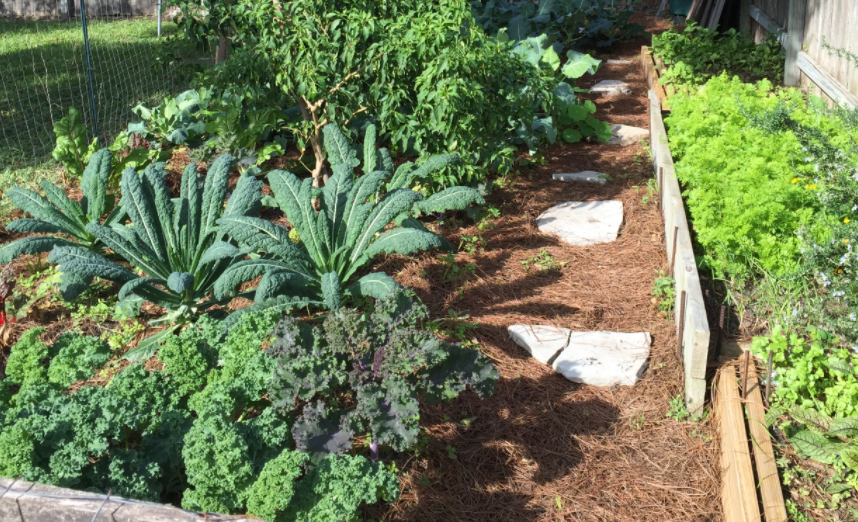
Our garden is in love with this weather! One would think all this chilly, cloudy, drizzly, weather would have ill effects on our plants but it is just the opposite. Everything is looking great, even the lettuces I had all but given up are showing promise again. The only thing I had to do was add some more pine straw and some stepping stones to reduce the mud I keep tracking in.
Last week I talked about our harvest contribution to Thanksgiving and thought we should talk about harvesting a little more. Our broccoli and cauliflower have the center leaves to protect the heads as they form. They both develop center heads which should be cut once they reach size (like you see in the grocery store). Broccoli will continue to develop side shoots called raab the rest of the season, cauliflower will not. Cabbage too will begin folding their leaves inward as they form their head. They need time and cold to really grow to size. Carrots will have beautiful tops long before they are ready to harvest. Watch for carrots to shoulder in the soil. It’s when you see/feel the top part of the carrot just under the soil. No shoulders no pulling. Even when they are ready, don’t feel the need to start pulling all at once, carrots store great in the ground as long as it is cool/cold. Greens like kale, chard, and collards should be picked regularly by trimming leaves from the bottom or outside of the plant. Always keep some leaves on the plants so they can keep growing and you get to keep enjoying. Greens also taste better when you harvest during cool/cold weather.
November 25th
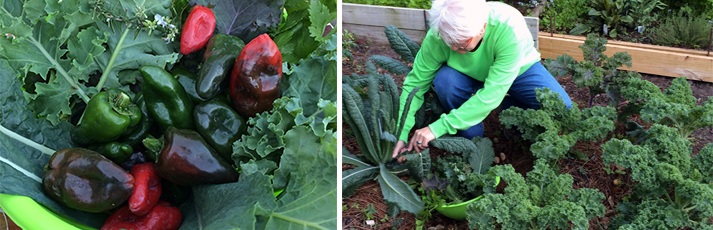 One the many reasons I love a fall winter garden is that when the north wind blows and the cold air finds the way to South Texas, I don’t have to worry about covering, moving, protecting! The cole crops we have planted like broccoli, cabbage, cauliflower, kale, and most greens love the cold and more so, need the cold to produce their best harvest. The best thing is to water well before temps drop. I did pick a bunch of the peppers off our leftover pepper plant from spring. Now they do not like cold temperatures. I think this may be its last hooray. As I was weeding and tiding up the garden Saturday (before the cold front) I found a freebee…a volunteer tomato plant has sprouted and growing well along the fence. So maybe I will give it a little extra TLC…
Our garden is providing celery, kale, thyme, sage, and peppers for our Thanksgiving. By Christmas there will be much more. Now that is just one more thing we are truly grateful for! Happy Thanksgiving Ya’ll!
 November 19th
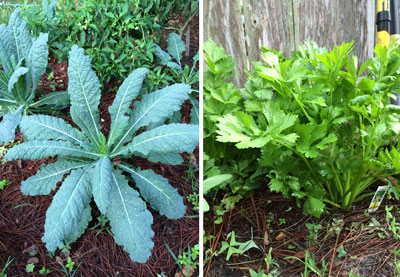
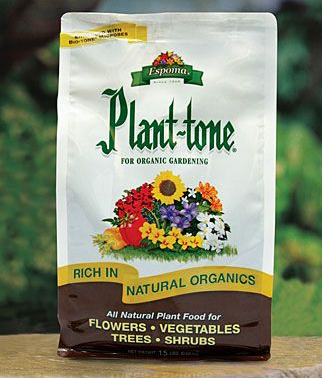
In our garden this week, I took advantage of the cool nice sunny days and fertilized with a round of Plant Tone by Espoma. Our celery has started forming larger stalks and there’s enough to cook up a batch of chicken stock. I take the celery I cut and put it in a glass of water in the fridge. It keeps it fresh and crisp. Just be sure to change the water daily. Another nice surprise is our Mexican mint marigold aka Texas tarragon that I whacked way back, has not only rebounded but is blooming again! Our lemons are turning color. We always squeeze our lemons and pour the juice in ice cube trays, freeze, bag cubes, and repeat. This way we can enjoy for months!
November 12th
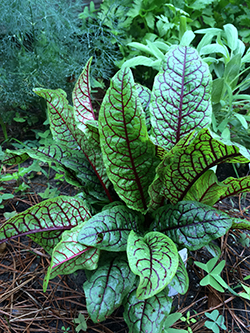 I do love the time change. It gives me time to enjoy the sunrise, breathe in the freshness only found early in the day. It also gives me time to peruse our garden for any surprises. This morning I found our red veined sorrel particularly beautiful. It is tasty and beautiful in garden salads. I have used it to decorate gifts adding it to the ribbons and bows. It also adds elegance to a vase on a Thanksgiving table…just around the corner.
November 5th
With the recent rains and cooler temps, everything is growing! The carrots have developed more of their strong true leaves, the Spinosad has stopped the critters chewing, the broccoli, cabbage, and cauliflower are getting bigger. More weeds are popping up but I am still just pulling. Cut a few sprigs of celery, sage, and thyme on Sunday to make a marinade for some pork ribs I cooked for dinner….delicious! Some kale leaves will turn to kale chips this week….yummy!
[content_band inner_container=”false” no_margin=”true” border=”none”]
October 29th
After last weekend’s rain, our garden is growing nicely, pulling just a few weeds, and sprayed Spinosad to help with critter control. The beer was not doing the trick. I think our plants have at least tripled in size, outgrowing the weeds, so far. With all the good rain and cool temps, I am excited to see what this week brings!
[content_band inner_container=”false” no_margin=”true” border=”none”]
October 22nd
The weather was warm & dry last week and I have been watering a little each morning and evening. It is keeping our plants perky. I did our first Hastagro feeding on October 17th, after fixing my cutoff hose with a new end and invested in a new hand sprinkler. My old one was used as a chew toy. Even though we hoed and pulled weeds before prepping our garden….guess what’s already coming back? The war is coming and I am hoping to have a new secret weapon to use…its organic, smells great and it works….more on that soon. Our seeds are sprouting nicely; all the transplants doing well, the mystery chewers have found the swiss chard already. Think I’ll start with a pan of beer for snails and slugs. If that does not fix it, I will try Dipel Dust or Spinosad. Both are natural and very effective for most chewing critters!
Maybe then I’ll drink the beer☺
[content_band inner_container=”false” no_margin=”true” border=”none”]
October 15th
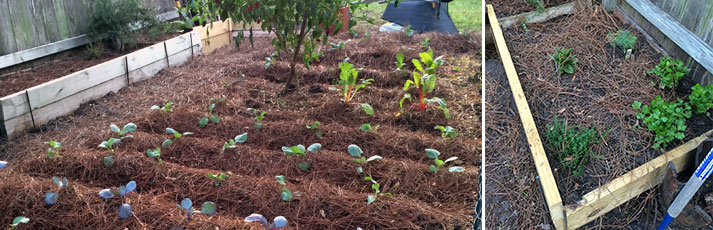
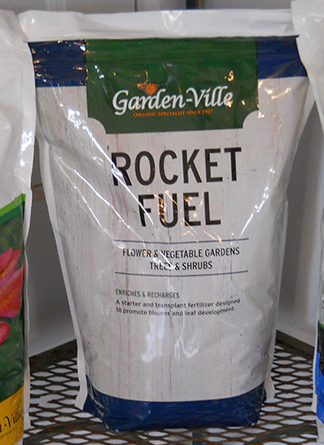
Last week, I shared my before & after soil prep of our veggie garden at home. I tried to plant before last Friday’s rain but did not make it. Good thing, as I realized I had a few areas holding too much water. So after some shoveling to correct the problem, we planted our hearts out Saturday evening and Sunday afternoon. We planted by transplants, tuscano kale, seabor kale, redbor kale, broccoli, cauliflower, green cabbage, red cabbage, bright lights chard, rubarb chard, tango celery, thyme, dill, and an artichoke for fun. Then we sowed Botanical Interest seeds of cherry belle radish, purple top white globe turnip, cilantro, kuroda carrots, carnival blend carrots, gourmet blend beets, and red sails lettuce. Before seeding in our root beds, I mixed Bio-tone and Rocket Fuel in the soil. Both of these are very beneficial in root development. As we planted transplants, we added just Bio-tone into the hole, mixed it with the soil, and then planted. This is because we foliar feed with Hasta Gro which helps with both root and plant development. Our last step was a few bales of pine straw to help with water, weeds and looks. Now we say a blessing and a prayer that our garden will be bountiful with plenty to share!
[content_band inner_container=”false” no_margin=”true” border=”none”]
October 8th
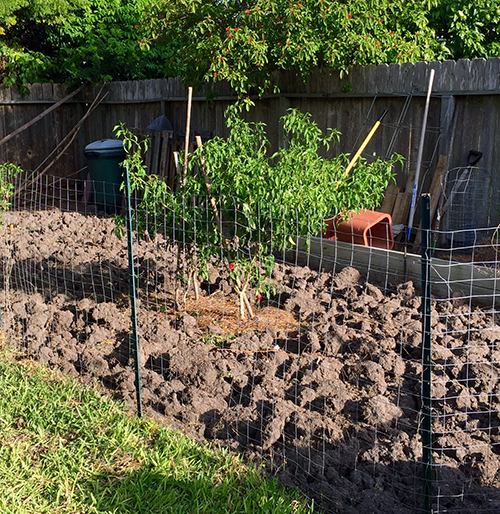
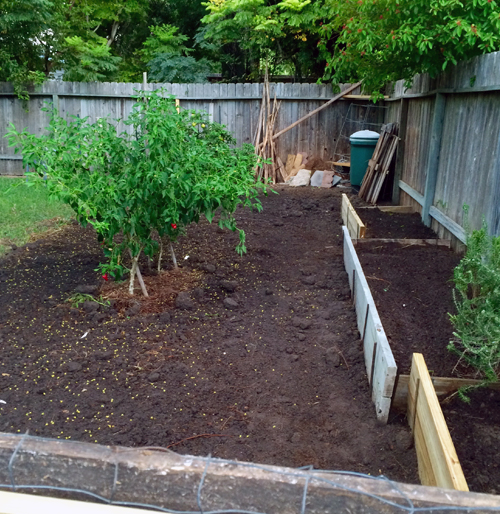
A couple weeks ago, I gave a talk on fall veggie gardening. I have been working on mending my fence to keep the 4 legged kids out, and finally have the soil tilled, ready to plant. This process was a backbreaker this year as I did not water enough prior to breaking and tilling, so what should have been a 1 day job turned into a 3 day job and some sore muscles! My garden was born 6 years ago. Every year since, I add a little more Cotton Burr Compost, some Nature’s Blend, a little sandy loam to the root veggie area, Dried Molasses, & Medina Growin Green. I mix it up, add water and let it rest a week. I’ll share my progress as it goes along. By this weekend, I hope to have all my veggies and seeds planted…just in time for a little rain…I hope!
[/content_band]
[content_band inner_container=”false” no_margin=”true” border=”none”]
[/content_band]

 –DeAnna
 -DeAnna