
Time for hummingbirds in South Texas! We’re lucky to see a few pretty much year-round, but mid-late April and September are when we typically see big migration surges. If you want to attract and enjoy hummingbirds, feeders can help, but plants are key. Did you know that most plants which are pollinated by hummingbirds have evolved over time to replenish nectar at night while hummingbirds are least active? That means hummingbirds can feed on the same flower over and over again without depleting the nectar! Here are 10 of our favorite plants for attracting and feeding hummingbirds – plant these now!
1. Firebush (Hamelia)
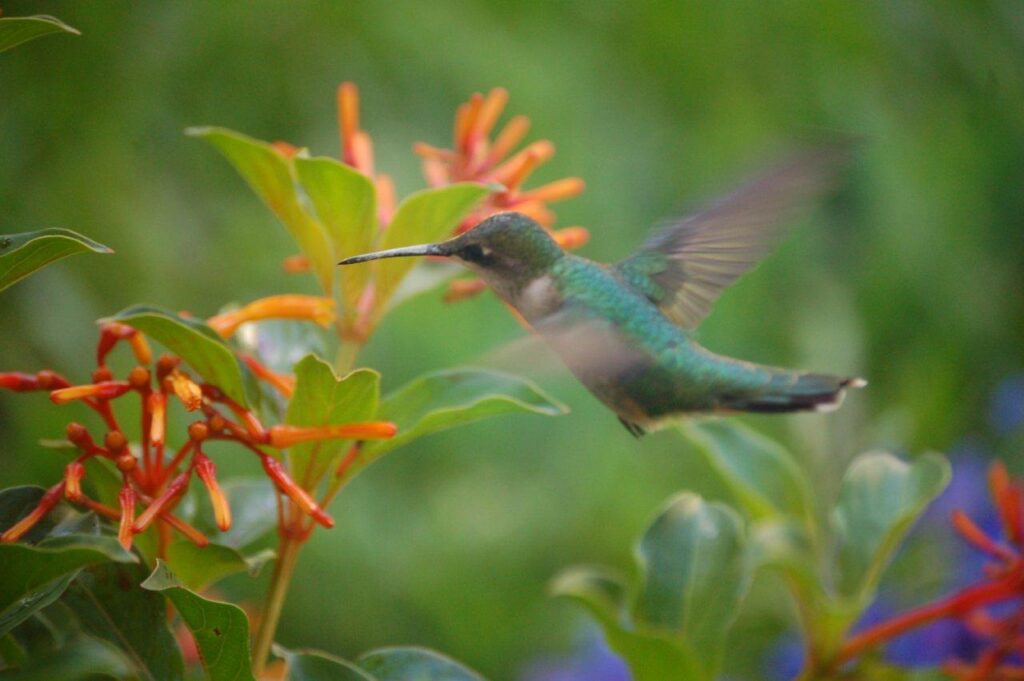
Firebush’s long tubular blooms are made for hummingbird beaks. And with so many blooms, hummingbirds will hang around and browse for a good while. Give it some space! Firebush grows 6-8 feet tall and wide and it grows fast. It loves sun, thrives with little water, and comes back quickly after a freeze. Give it a hard pruning in February and it’ll be back at full size by summer.
2. Native Turk’s Cap
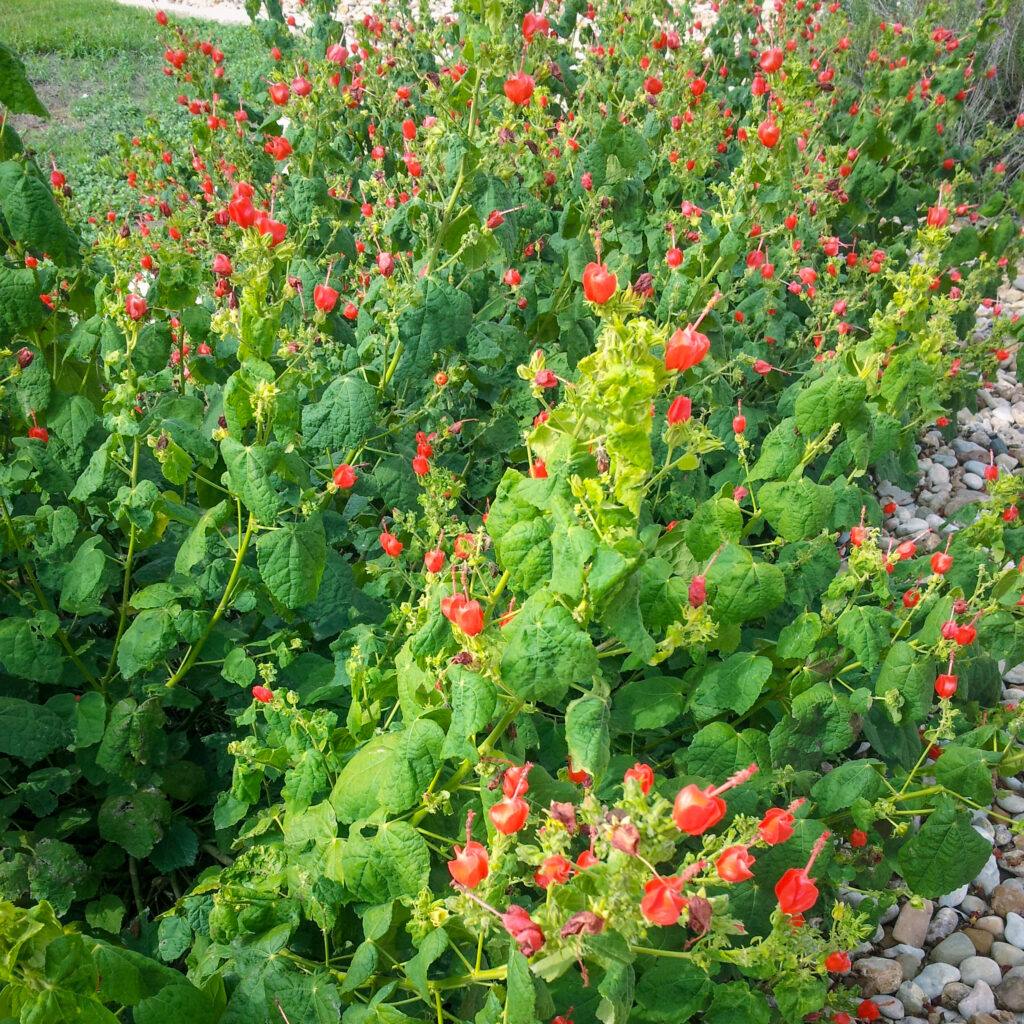
Hummingbirds have been stopping to visit native Turk’s Cap in Texas for a loooooong time. Not only is it a hummingbird favorite, but its one of the most versatile landscape plants there is. Drought tolerant, grows in sun or shade, grows in clay or sand, withstands hot summers, withstands freezes, attracts and supports pollinators…Turk’s Cap can do it all.
3. Native Flame Acanthus

Here’s another top performer for hummingbirds and for South Texas landscapes. Native Flame Acanthus (Anisacanthus quadrifidus var. wrightii) is excellent for full sun, clay or sandy soil, grows 3-5 feet tall and wide, is very drought tolerant, and produces tons of blooms for hummingbirds.
4. Native Wild Olive
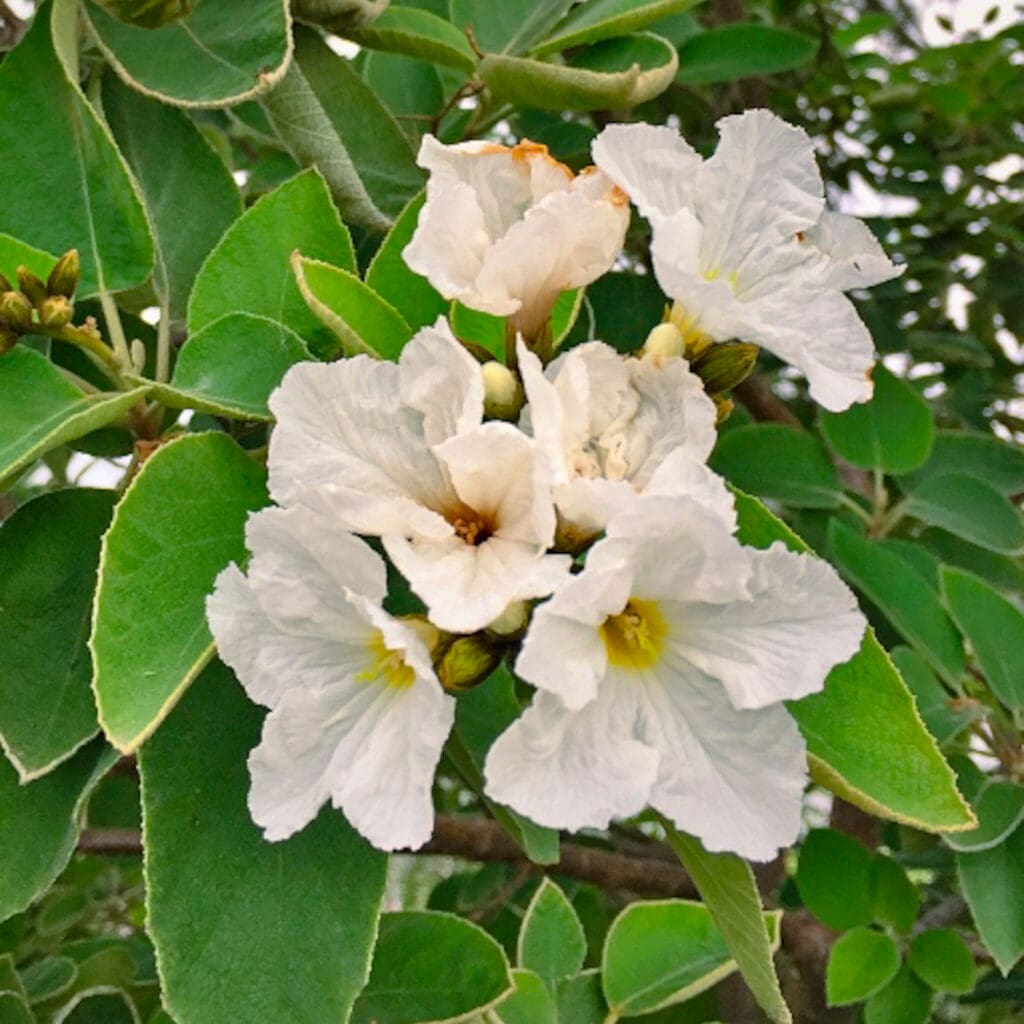
It’s not uncommon to see an established wild olive tree absolutely covered in hummingbirds. Again, these are not red, tubular blooms, but hummingbirds find them anyway.
5. Native Tangerine Beauty Crossvine
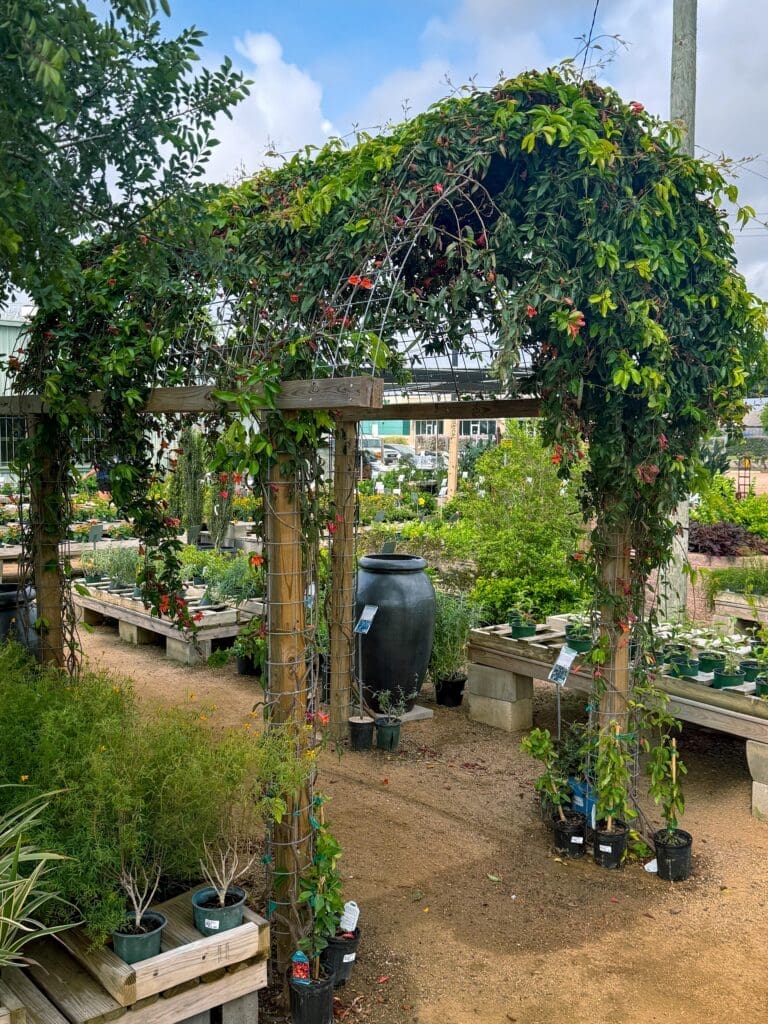
We saw our first Ruby-Throated Hummingbird of the season here at Gill’s just the other day on our native Bignonia aka Tangerine Beauty crossvine trellis. If you haven’t seen it in person, you need to stop by! Plant crossvine in full sun to partial shade and expect fast growth! If the hummingbirds don’t find it this spring, they certainly will this fall.
6. Duranta erecta
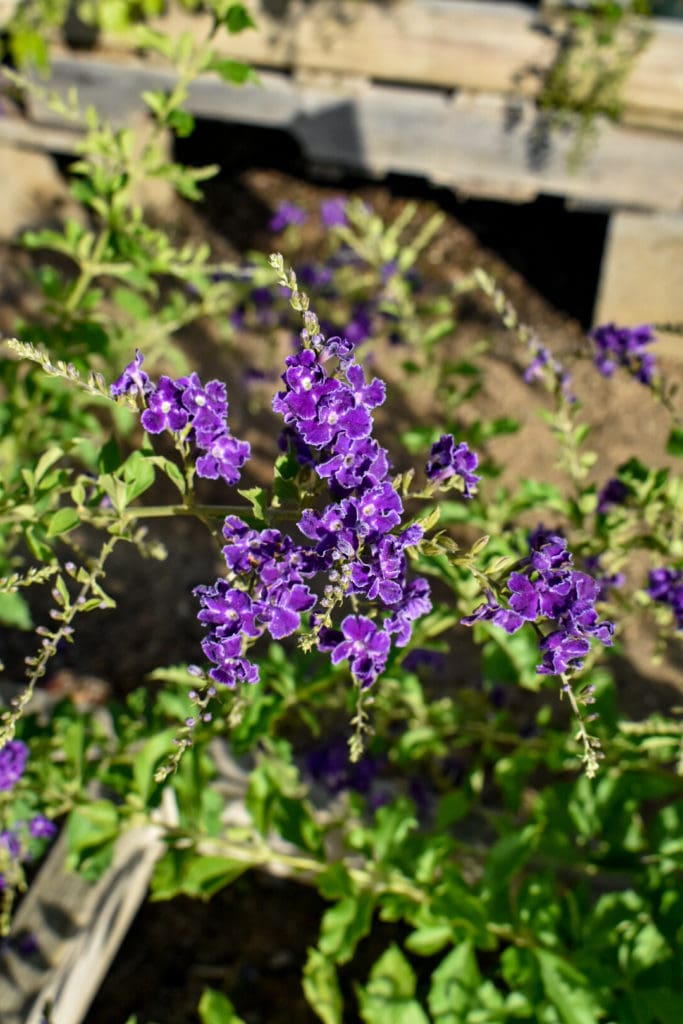
These blooms are not like the others – they’re purple and white and they’re not tubular. Nonetheless, hummingbirds make frequent stops for Duranta. These small trees typically grow to 12-15′ tall with a spread of about 10′ here in South Texas. Lots of room for lots of blooms!
7. Native Salvia greggii

If you plant Texas native Salvia greggii, you might have hummingbirds on it before you finish filling up the hole. This is true for so many of the different red salvias like Roman Red, native Salvia coccinea, Hot Lips, and more. They even love the blue salvias like native Henry Duelberg and Mystic Spires.
8. Pentas
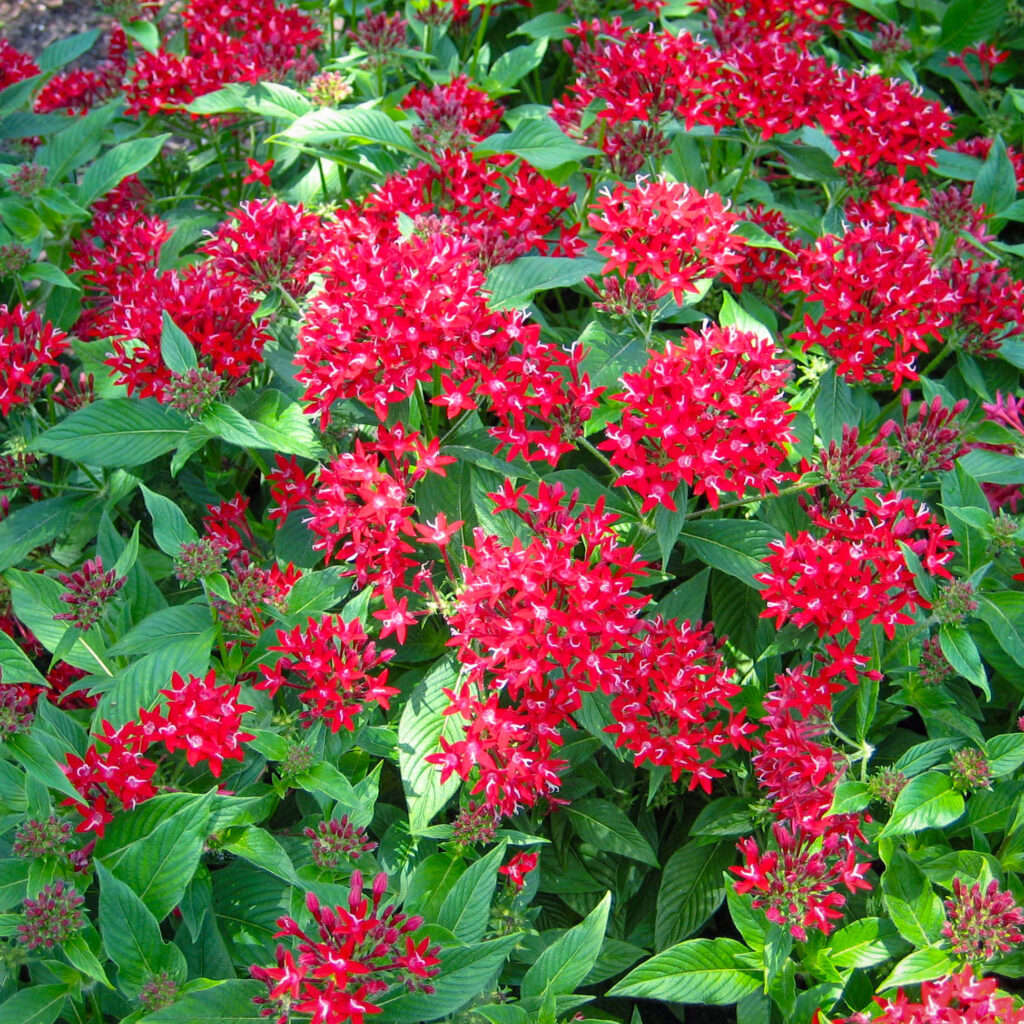
We grow pentas as annual flowers here in South Texas, and the timing for planting them aligns perfectly with the April and September hummingbird migration. They come in many colors, but hummingbirds prefer the red variety.
9. Native Red Yucca

If you’re looking for low-maintenance, Red Yucca wins. Once established, you can pretty much leave them alone and they’ll thrive and bloom and look beautiful through the heat of summer and through freezes. And they’ll be frequented by hummingbirds!
10. Firecracker Plant (Russelia)
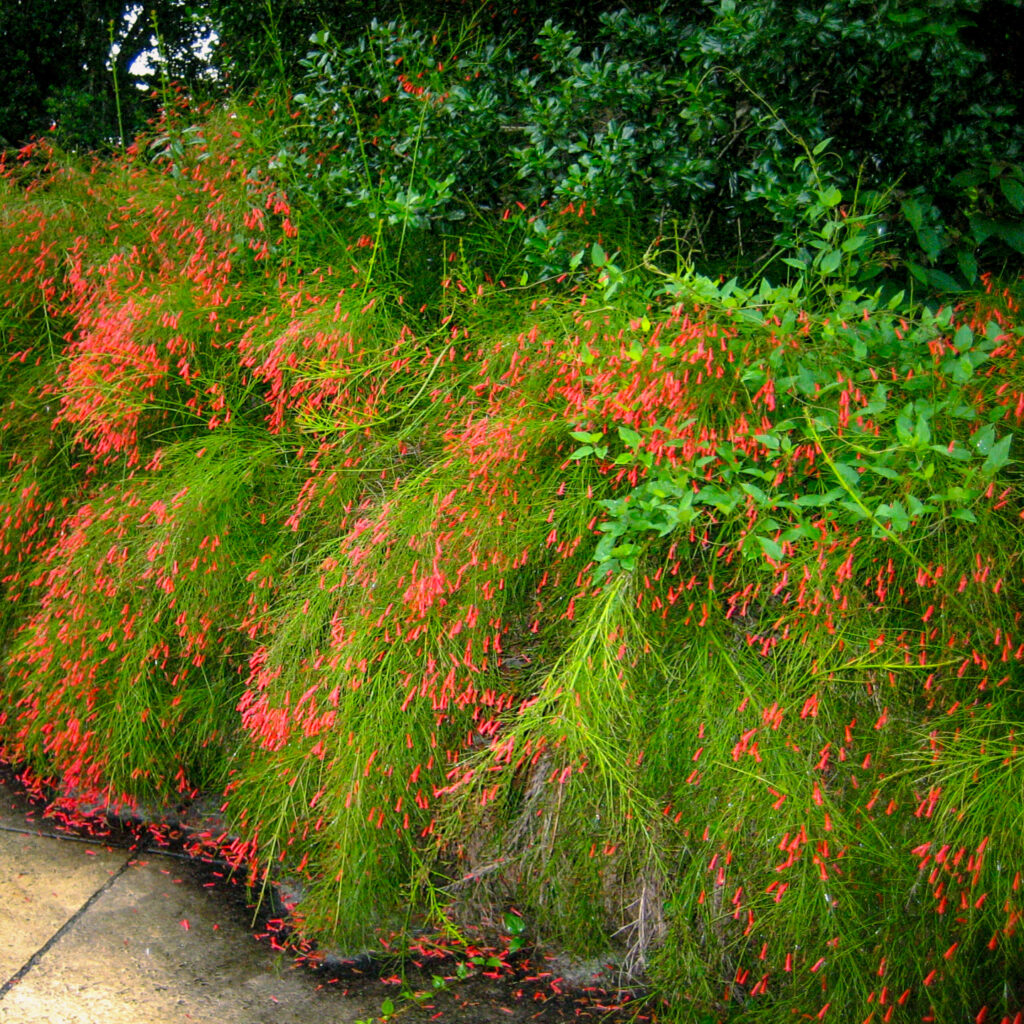
If you’re looking for a summer-tough, fast-growing, shaggy, wild-looking plant that attracts tons of hummingbirds…you found it! Firecracker Plant gets 3-5′ tall and wide and is a tried and true favorite here in South Texas – reliable and drought-tolerant.
These are just 10 of our favs, but we have a whole universe of other plants for hummingbirds, as well as feeders and nectar. Come see us or get in touch if you have any hummingbirds questions.






 -DeAnna
 TIME TO PRUNE ROSES! Valentine’s Day is a time to remember our loved ones with candy and flowers. It also is the perfect time to prune roses. Late January to mid February is the best time. Prune established hybrid teas, removing dead and small twiggy growth, leaving strong healthy canes to a plant height of 18-24 inches. Try to prune to an outward facing bud to maintain spreading, open growth. Prune shrub roses like Knockouts 1/3 to 1/2 the plant height. Do not prune climbers until after the Spring bloom, then removing only the oldest canes and cutting back healthy, vigorous canes no more than 1/3. Remove spent blooms throughout the season on all rose varieties, cutting back to the first 5 leaflet cluster. You can also begin fertilizing your roses in late February with Bayer Systemic Rose and Flower Care, or organically with Maestro Rose Glo. Gill Landscape Nursery stocks disease resistant roses (ask for them), but if you have hybrid teas, as soon as new growth appears you should begin a spray program to control insects and diseases. Bayer 3 in 1 Insect, Disease and Mite Control, takes care of all rose problems. For organic controls, use Neem Oil for insects and disease or Serenade to control diseases. A regular spray program keeps your roses healthy and happy. Remember fungal diseases are always easier to prevent than to cure.



 inch wide. They are browninsh-gray to black with distinctive red markings. Boxelder babies have dull red bodies with black legs. You will find them by the hundreds, if not thousands gathered on the fence, in the bark of trees or hiding in your mulch. Adults deposit their eggs in cracks and crevices of tree bark in the spring, about the time buds begin to open. There are two or more generations per year in Texas. Boxelder Bugs are not considered to be damaging to host plants. Although they feed by sucking plant juices, they seldom cause harm to plants. They are considered more of a nuisance pest. You can choose to ignore them, or if need, they can be sprayed with any insecticide i.e. Cyonara or Triazicide. An organic alternative is Spinosad. –DeAnna