Garden Center Hours: Mon-Sat 9am - 5:30pm • Sun 10am - 5:30pm

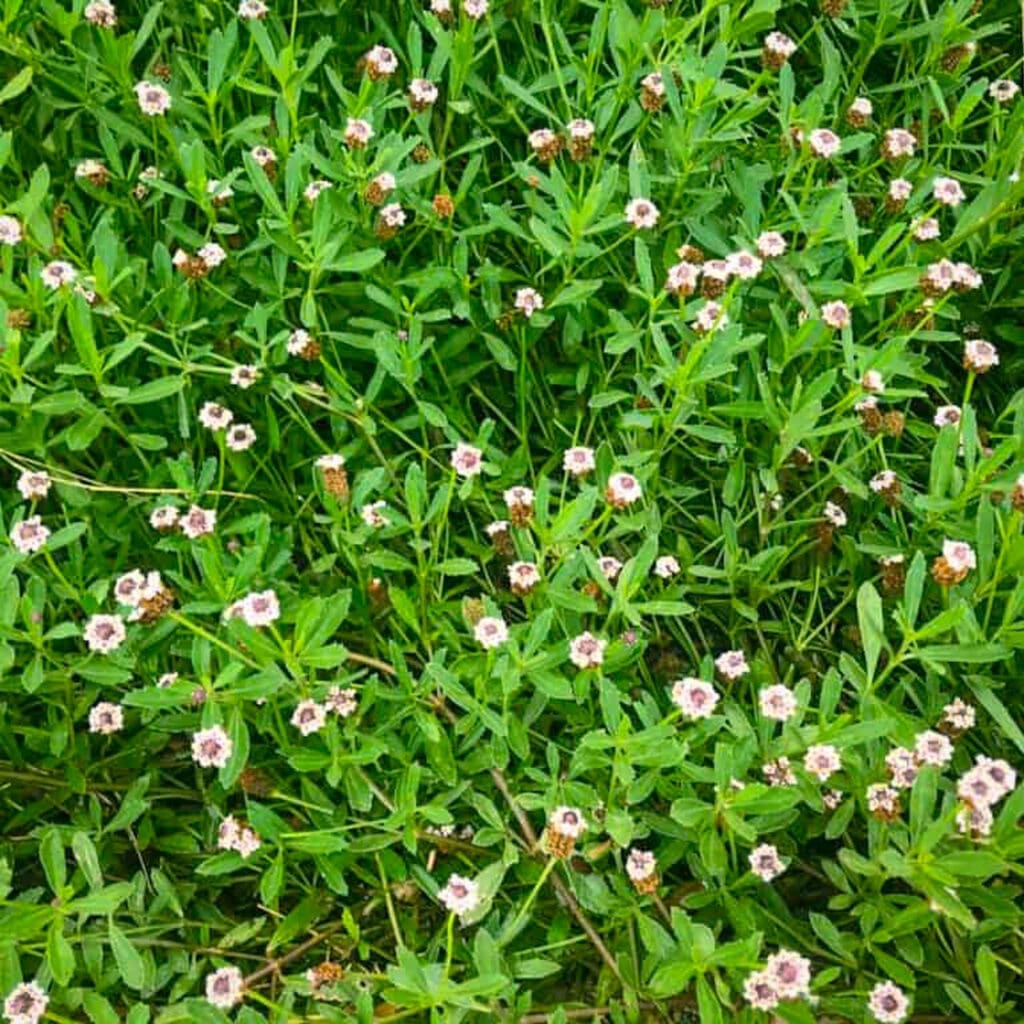
Traditional St. Augustine or Bermuda turfgrass lawns can be nice if you use them a lot for sports and rolling around on. But the truth is, much of the time, lawns are mostly for show. Plus, they take a lot of time, effort, and water to maintain. Many folks are rethinking their lawn space for these practical reasons as well as the desire to attract and support pollinators. If you’re ready to un-lawn, we can certainly help with that! Take a look at these recent lawn replacement projects designed and installed by Gill’s Landscape Designer, Harry Villarreal using a wonderfully tough and ecologically beneficial Texas native plant…Frog Fruit!

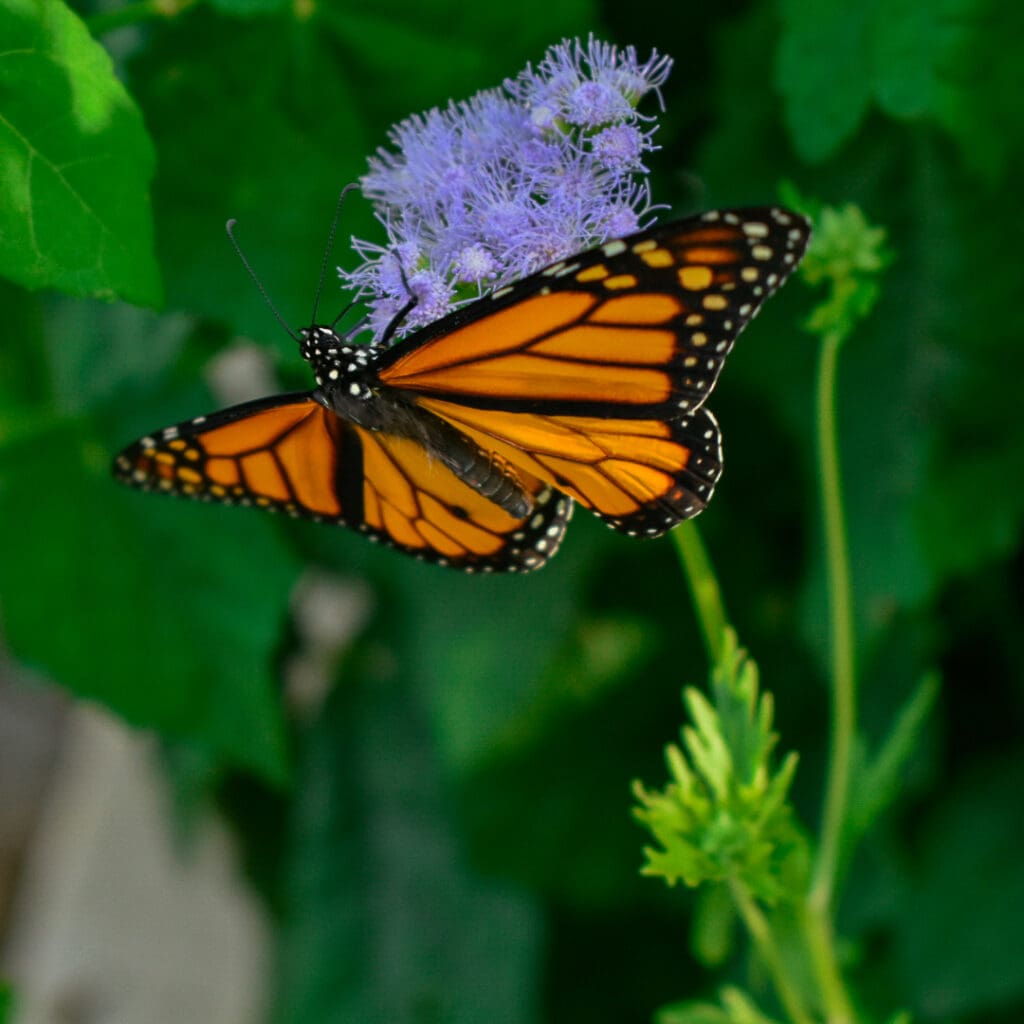
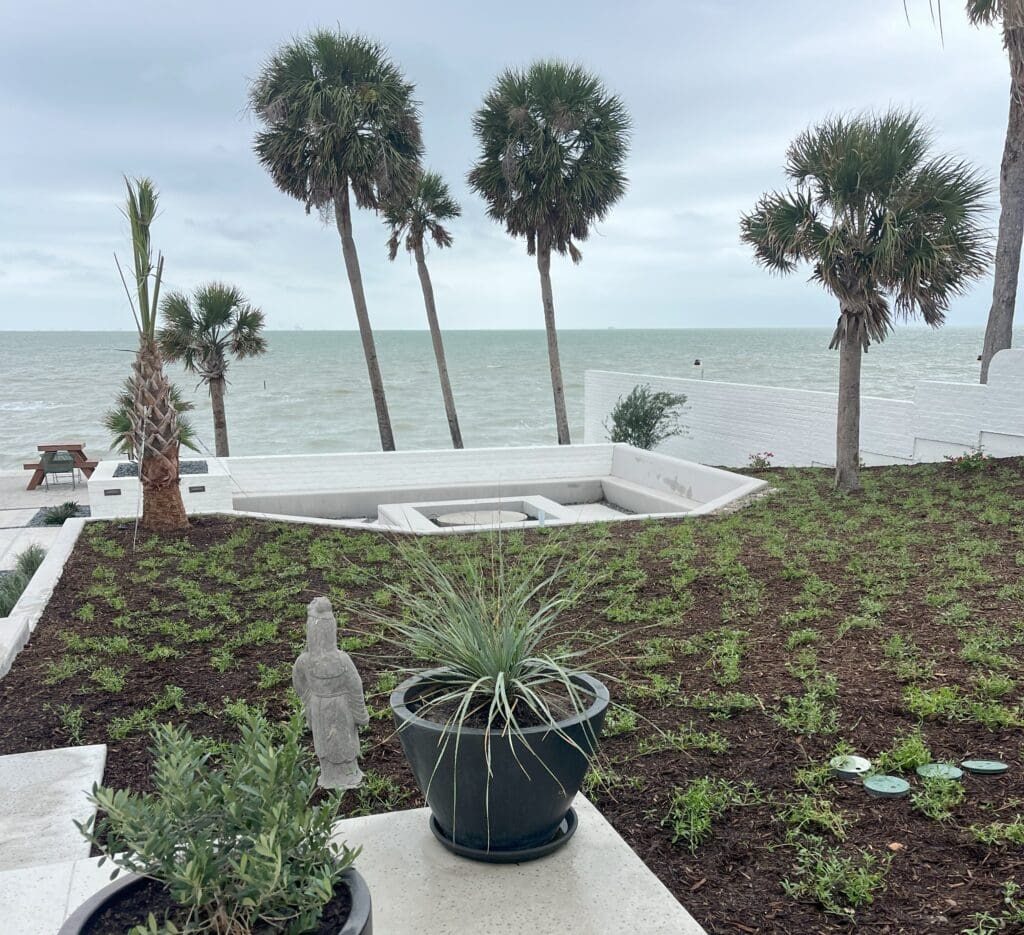
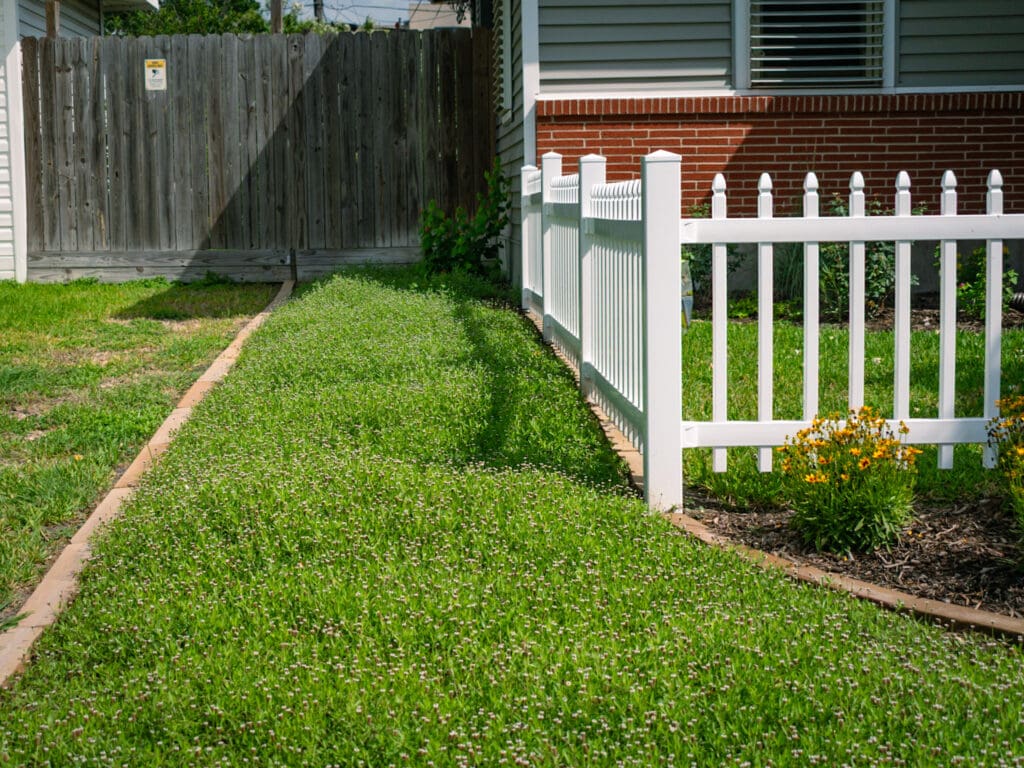
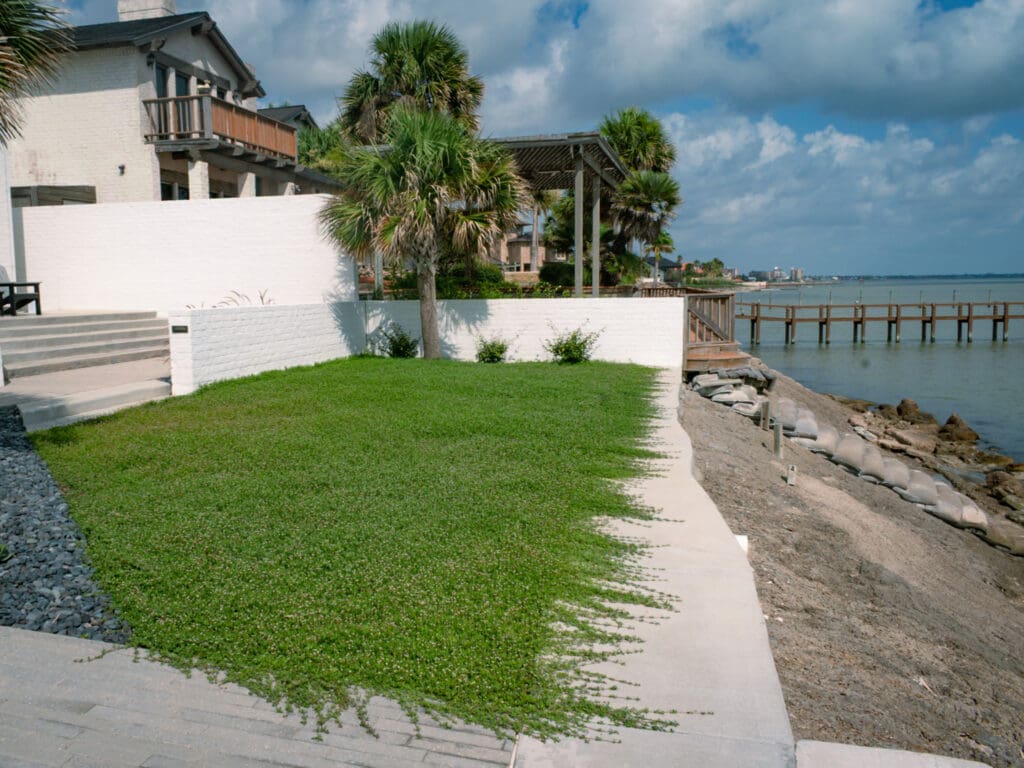
On May 1, Harry and the Gill’s landscape crew stripped out what remained of a patchy turf lawn and planted a total of 1,332 small 4″ Frog Fruit plants across several large areas in this Ocean Dr. landscape. This is what it looks like just 8 weeks later! The clients were interested in bringing in bees and butterflies to their property, and they had these mostly unused areas that they wanted to put to work. They wanted something tough, cold hardy, salt-tolerant, low-water, and very low-maintenance for these ex-lawn areas that don’t get a lot of traffic. Perfect job for Frog Fruit!

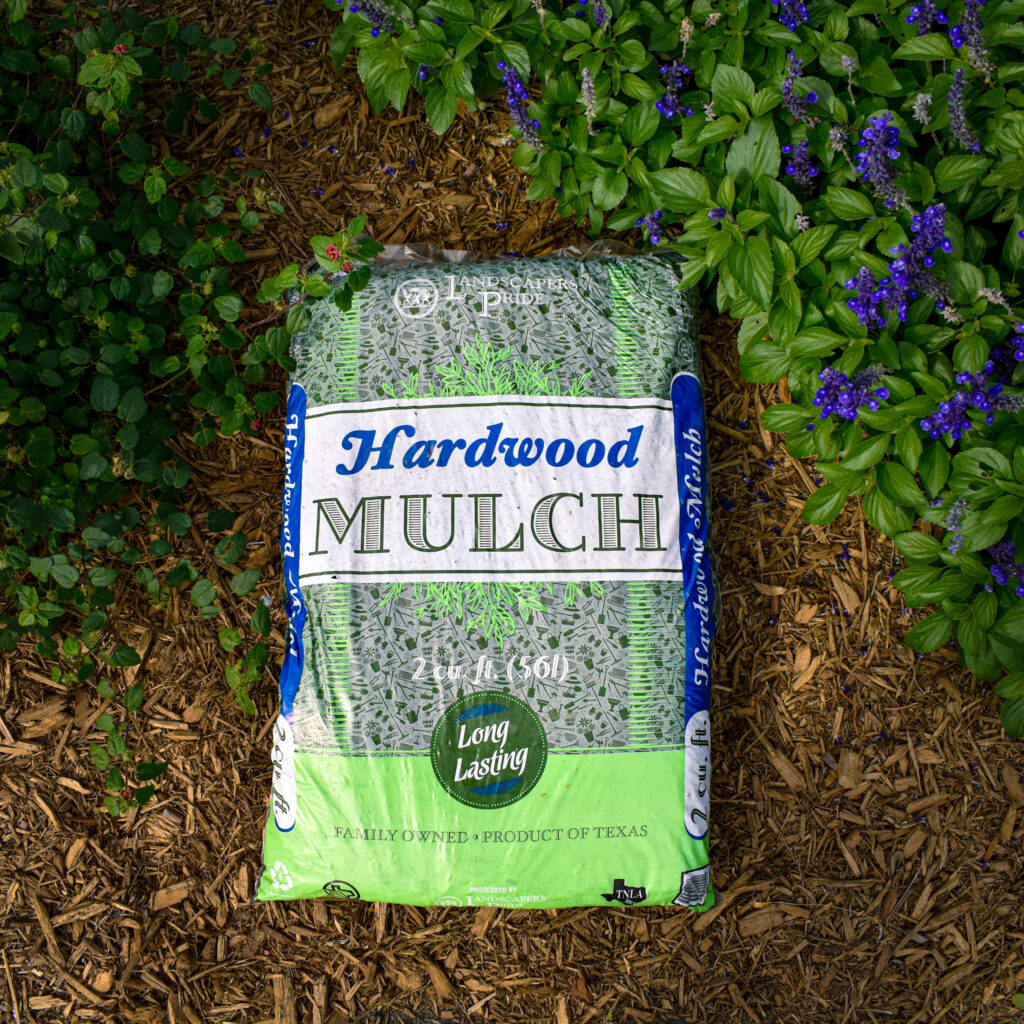
Here are a couple of pics from planting day. We prepped the soil by doing a shallow 3″ till, then graded the areas to remove any dirt clods and achieve a smooth finish. We then top-dressed the areas with a thin layer of Nature’s Blend compost and a light sprinkling of Medina Growin’ Green fertilizer. Before planting, we applied a 2″ deep layer of natural hardwood mulch to the entire area. This makes planting very fast – just pull back mulch, dig a small hole, plant, and gently push the mulch back into place. The Frog Fruit runners have no problem rooting into the mulch, and the mulch helps prevent weeds from popping up while the Frog Fruit is getting established and helps with moisture retention. A good trick for getting even spacing on mass plantings like this is to use an 18″ piece of dowel rod or pvc to measure the space between plants as you go. Much easier than a tape measure!  

At another property in the Corpus Christi bay area, Harry used 469 small 4″ Frog Fruit in dense shade under trees where turf grass struggles to perform. As you can see, the small Frog Fruit lawn is filling in nicely! Neither of these Frog Fruit lawn projects require any irrigation. Even if we hadn’t been getting any rain, it would be happy with the occasional gentle blessing of water from the hose. Compared to a turfgrass lawn, a Frog Fruit lawn uses almost no water. 

Before!

These projects are proof that what some consider a weed can look elegant and beautiful in the right context! The bees, butterflies, and clients couldn’t be happier. Us too! 


Turns out there is a cure for the summertime blues…blue flowers! In the heat of summer, blue-blooming plants bring a cool, calming vibe to any garden. Whether you’re designing a soft cottage garden, a pollinator paradise, or a bold tropical nook, adding blue-blooming plants will make your landscape hum with beauty—and beneficial bees! Here are 5 of our favorite true blue bloomers for summer and beyond. 

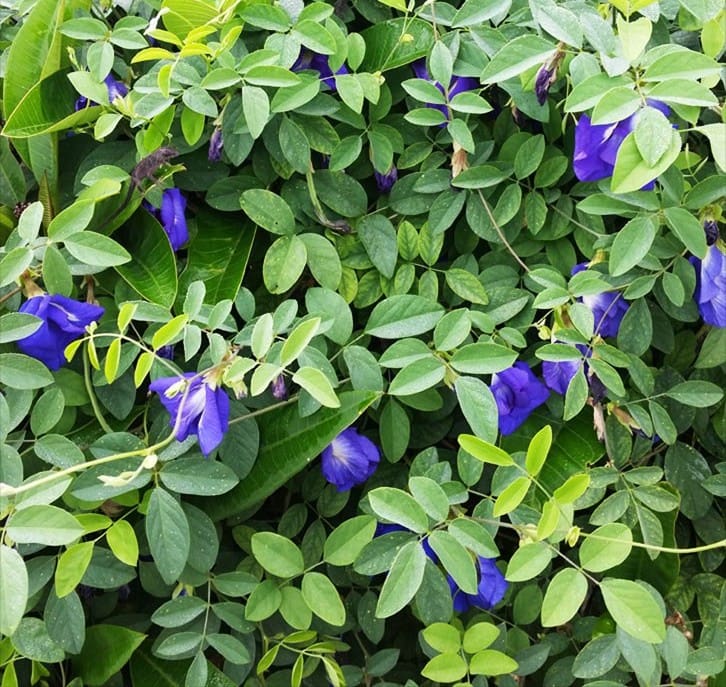
1. Blue Pea Vine (Clitoria ternatea)

Also called Butterfly Pea vine, this twining vine is a tropical beauty that flaunts vivid indigo blooms shaped like — you guessed, butterflies! Fast-growing and great for trellises or fences, it’s a showstopper that also happens to be edible (hello, blue tea!).

Growing Tips:

  • Loves heat, sun, and well-drained soil. If planting in heavy clay soil, be sure to amend the soil with compost and plant high for better drainage. 

  • Water regularly but don’t overdo it — this vine is drought-tolerant once established.

  • Dies back in frost but returns in spring. 

Design Tip: Let it scramble over a white trellis or arbor for a bold blue-and-white contrast. Add it near seating areas — it’s a conversation starter.

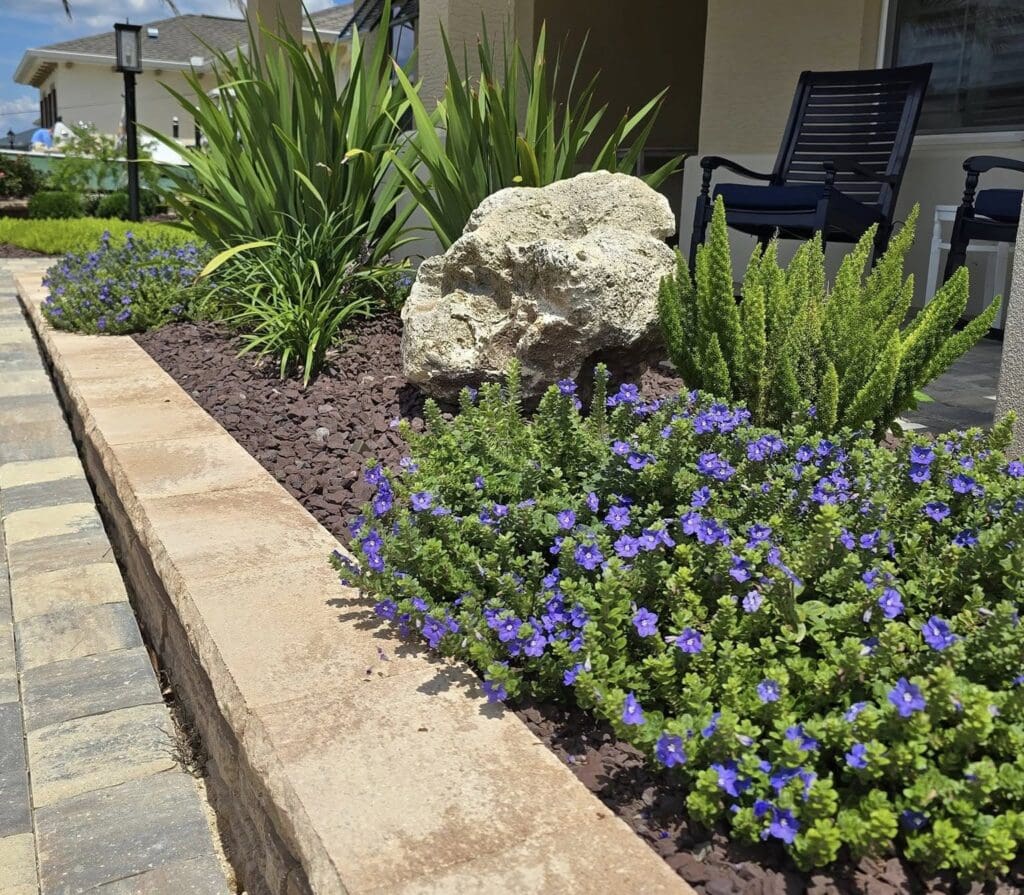
2. Blue Daze (Evolvulus glomeratus)

This low-growing groundcover shines in the sun with blue blooms that practically glow against its silvery-green leaves. It’s perfect for spilling over borders, hanging baskets, or softening rock edges.

Growing Tips:

  • Full sun is best — partial shade means fewer flowers.

  • Tolerates heat and poor soil, but hates wet feet. Avoid over-watering. 

  • Trim lightly to encourage denser growth.

Design Tip: Plant at the edge of garden beds or containers for a “blue waterfall” effect. Pairs beautifully with golden foliage or terra cotta pots.

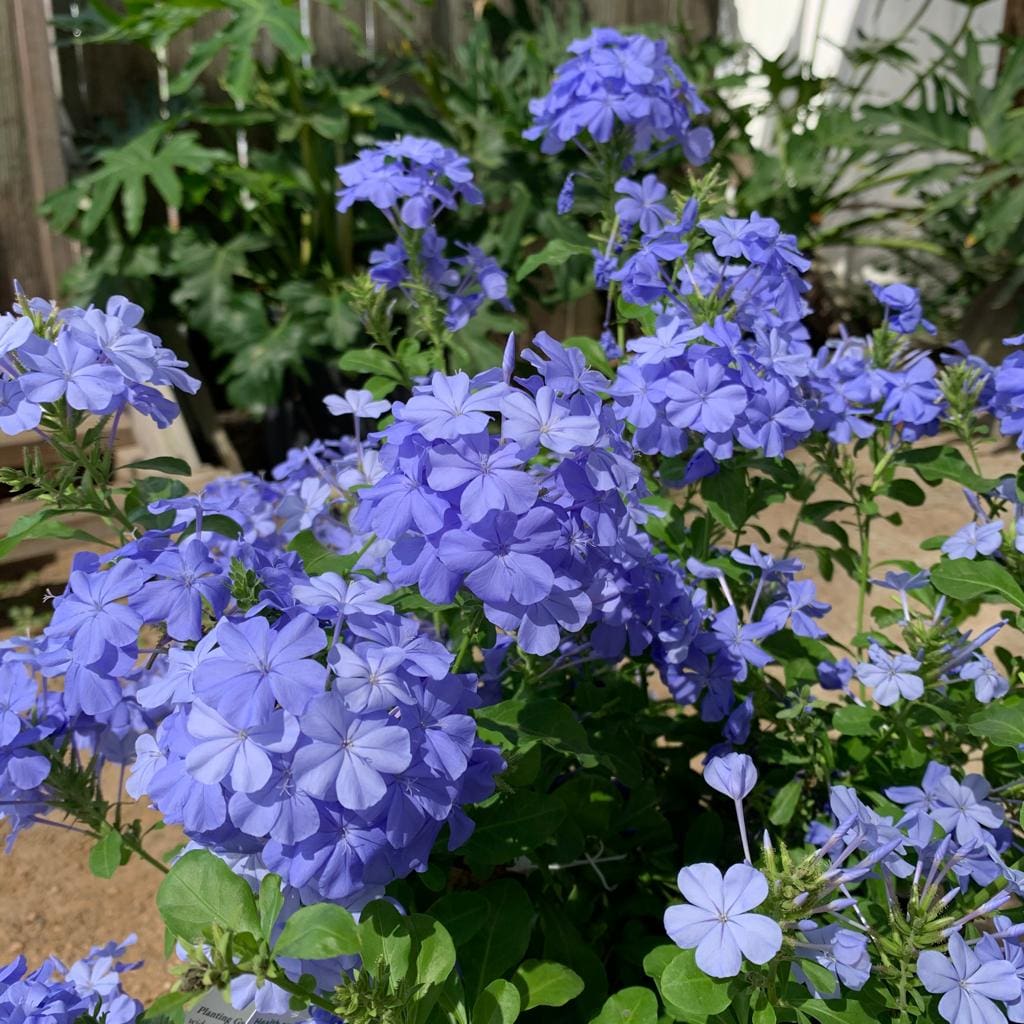
3. Blue Plumbago (Plumbago auriculata)

An old Southern favorite, plumbago is a sprawling shrub with clusters of pale blue, almost periwinkle flowers. It’s a butterfly magnet and a long-bloomer from spring through fall. Hydrangeas don’t do well in our area, but Plumbago is a lovely substitute. 

Growing Tips:

  • Likes full sun but can tolerate part shade.

  • Regular watering keeps it lush, but it’s tough enough to survive drought.

  • Can get leggy — prune occasionally for neatness while allowing a natural form. 

Design Tip: Use as a loose hedge or backdrop plant. Its softness balances spikier plants like salvia. Bonus: It can double as a trailing spiller in large containers!

4. Henry Duelberg Salvia (Salvia farinacea ‘Henry Duelberg’)

This Texas native brings bold dusty-blue spires and unbeatable drought resistance. It’s also a pollinator buffet, attracting bees, butterflies, and hummingbirds.

Growing Tips:

  • Full sun is best, though it tolerates light shade.

  • Deadhead for more blooms, and cut back mid-summer to refresh.

  • Deer-resistant and super hardy.

Design Tip: Plant in groups for an intense pop of vertical color. Pairs well with yellows, oranges, or soft grasses for contrast.

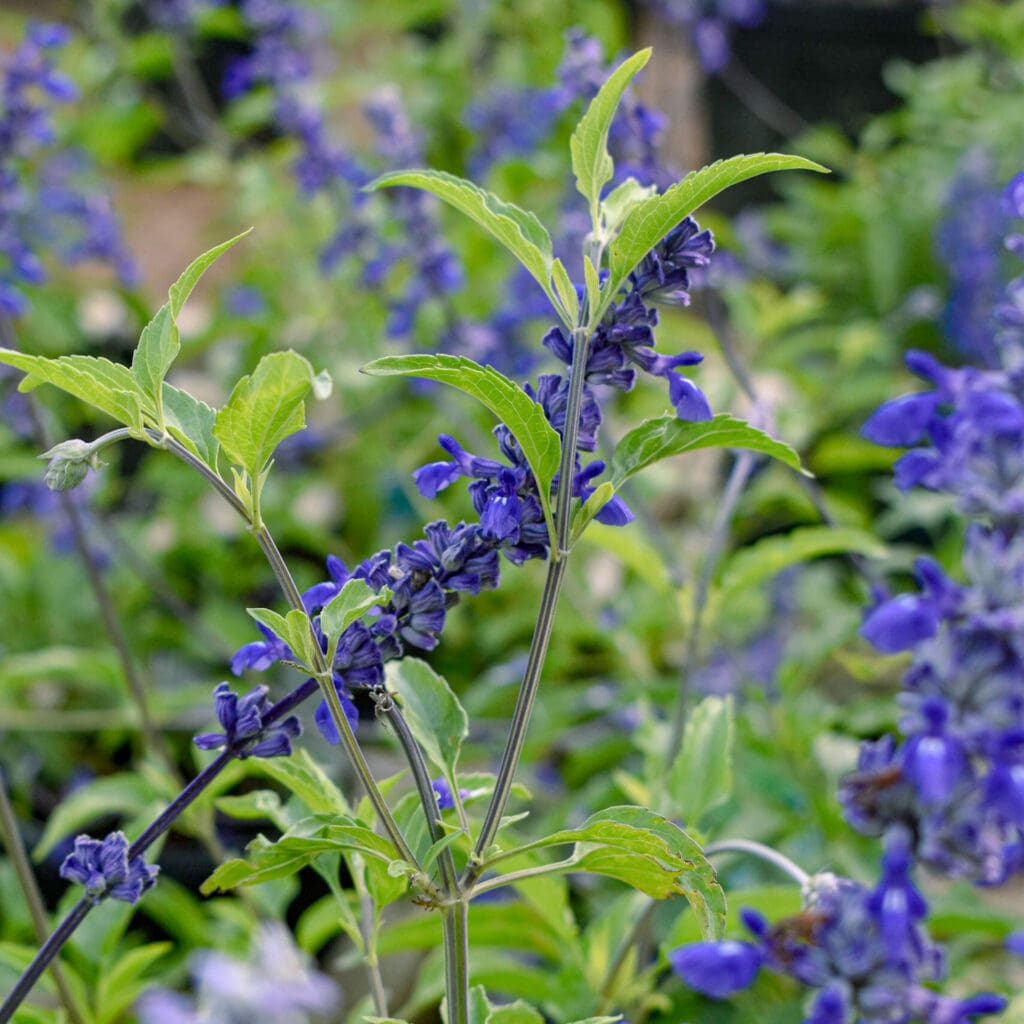
5. Mystic Spires Salvia (Salvia ‘Mystic Spires Blue’)

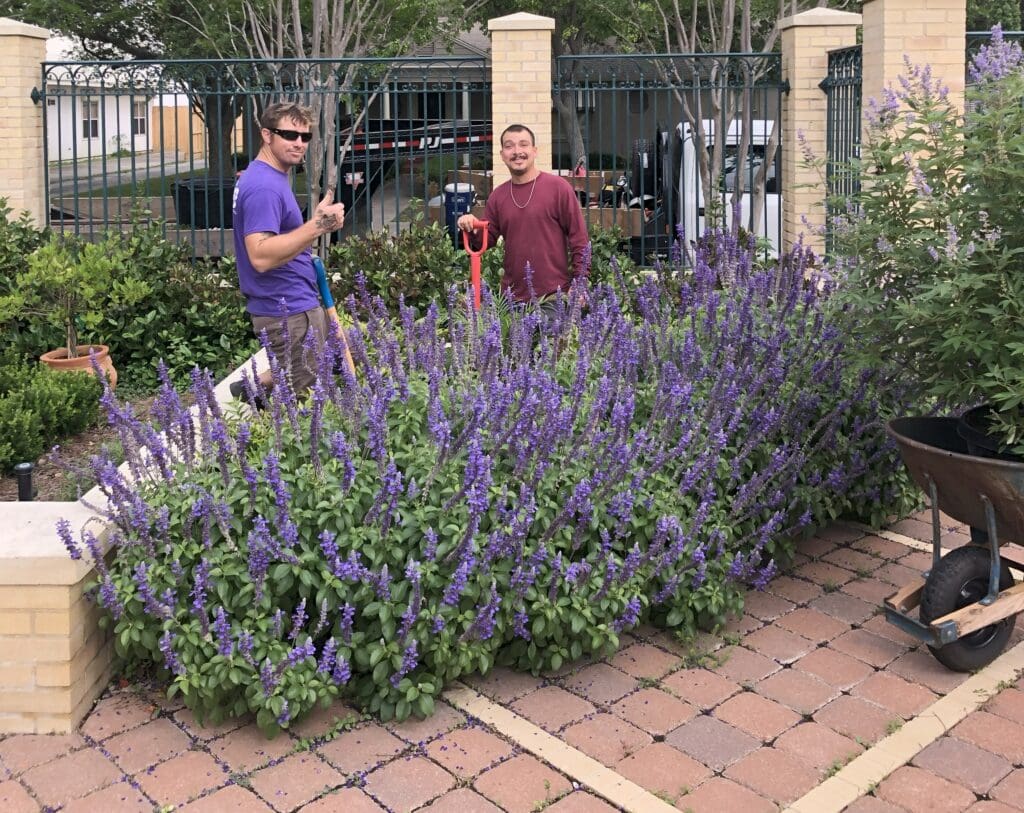
The more compact and bushier cousin of Henry Duelberg salvia, this hybrid salvia blooms in rich, deep blue-purple all summer long. Great for borders, containers, and butterfly gardens. This might be the best-performing salvia variety for South Texas. We’ve planted thousands over the years!

Growing Tips:

  • Prefers full sun and moderate watering.

  • Trim back after the first flush of blooms to keep it tidy and reblooming.

  • Fertilize lightly with granular Medina Growin Green once a month, followed by Hasta Gro liquid every 2 weeks for incredible results. 

Design Tip: This salvia adds rich color without towering over neighbors. Try it in pots flanking your porch or mixed in sunny perennial beds.

More Design Tips: Making the Blues Sing

  • Think in layers: Use taller salvias or climbing pea vine in the back, medium-height plumbago in the middle, and low-growing blue daze in the front. 

  • Play with color combos: Pair your blues with silver foliage (like dusty miller or artemisia) and warm hues (like coral or yellow) for a dynamic palette.

  • Use repetition: Repeat blue plants throughout your space to create rhythm and cohesion.

  • Night garden magic: Blue flowers glow at dusk—perfect for gardens you enjoy in the evening.


If your houseplants are looking more “meh” than marvelous this summer, you’re not alone. Even indoor plants can suffer during the dog days of summer—despite being pampered with filtered sunlight and sweet Spotify playlists. So what gives? Let’s dig into a few sneaky summertime stressors that could be behind houseplant decline—and how to help them bounce back!

1. Heat Stress: It’s Getting Hot in Here

Just because your plants are indoors doesn’t mean they’re immune to the heat. Summer sun streaming through windows can turn your cozy home into a makeshift greenhouse. Even indirect light can become too intense.

What to do:

  • Keep an eye on plants near south- or west-facing windows.

  • Use sheer curtains or move light-sensitive plants like ZZ plants and Ferns a few feet back.

  • Water early in the day and check more often—plants dry out faster in the heat, even though they’re indoors. 

2. City Water Blues: Chlorine Is Not Plant Food

Some houseplants are a little… picky. Corpus Christi tap water is treated with chlorine and fluoride—both of which can stress sensitive roots over time. Many houseplants are fine with City water, but others like Calatheas and Peace Lilies can’t handle it very well. Yellowing tips or brown leaf edges could be a clue.

What to do:

  • Let tap water sit out overnight before watering, so chemicals can dissipate.

  • Use filtered, distilled, or rainwater for sensitive plants when possible. An excellent and plentiful source of filtered water in the summer is A/C condensate – find a way to catch it! Here at Gill’s, we use a lot of A/C condensate as well as water collected from dehumidifiers. 

3. Too Much A/C = Arctic Tundra Vibes

Speaking of A/C, your plants might not be vibing with your love for cool comfy temps. Sudden drafts, drastic temperature drops, and bone-dry air from constant cooling can seriously mess with their tropical disposition.

What to do:

  • Avoid placing plants directly in the path of vents.

  • Group plants together to boost humidity, or use a small humidifier. 

  • Watch for wilting or leaf curl—these could be signs your plant is cold and dry, not necessarily thirsty.

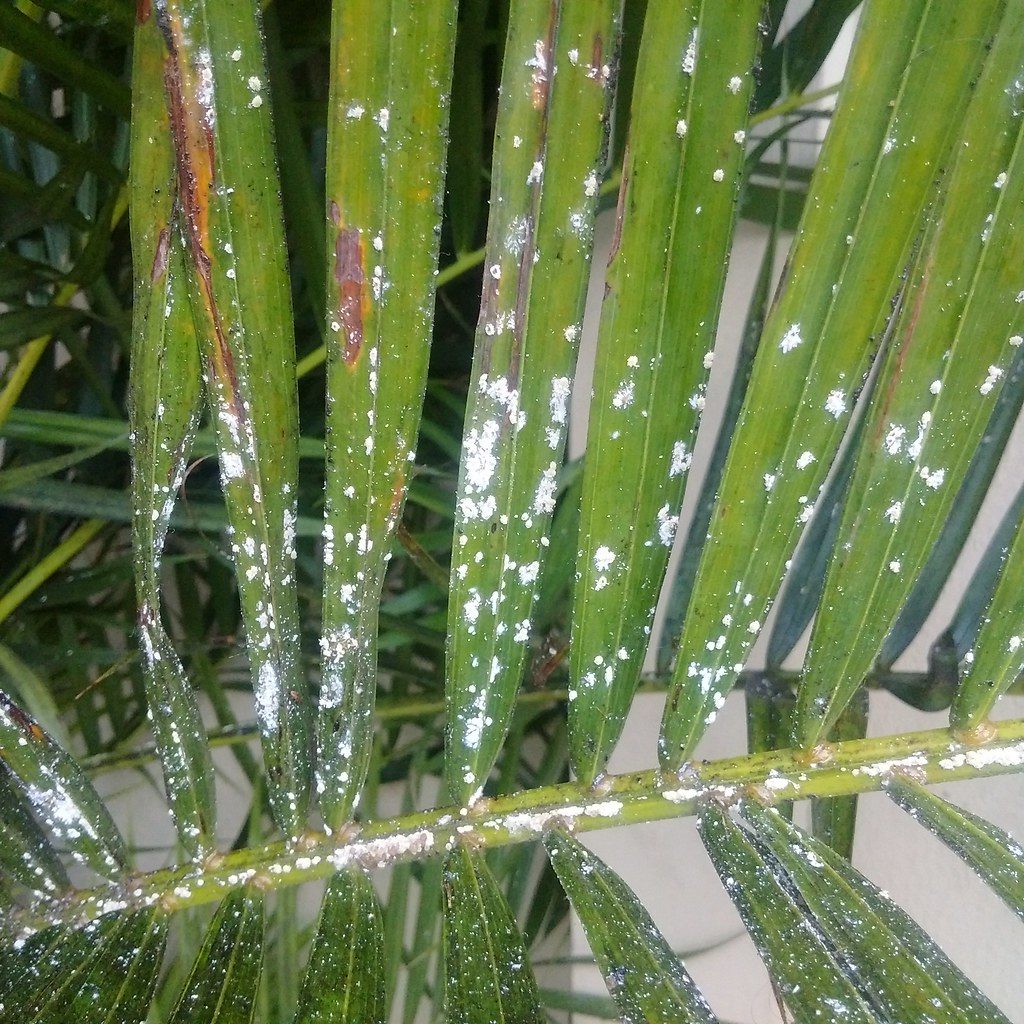
4. Mealybugs: The Cottony Party Crashers

These tiny white fluffballs are a nightmare. Mealybugs hide in leaf joints and suck the sap out of your plants, leaving sticky residue and sad, droopy leaves in their wake.

What to do:

  • Check leaf undersides and stems often. Look for a nasty, cottony mess. 

  • Isolate affected plants – don’t let mealybugs spread through your whole collection!
  • Spinosad Soap or Neem Oil can be used to kill these pests. Multiple applications may be needed. Thorough coverage is a must, and we recommend spraying once a week for 2-3 weeks to make sure you have killed them all.

5. Spider Mites: The Nearly Invisible Invaders

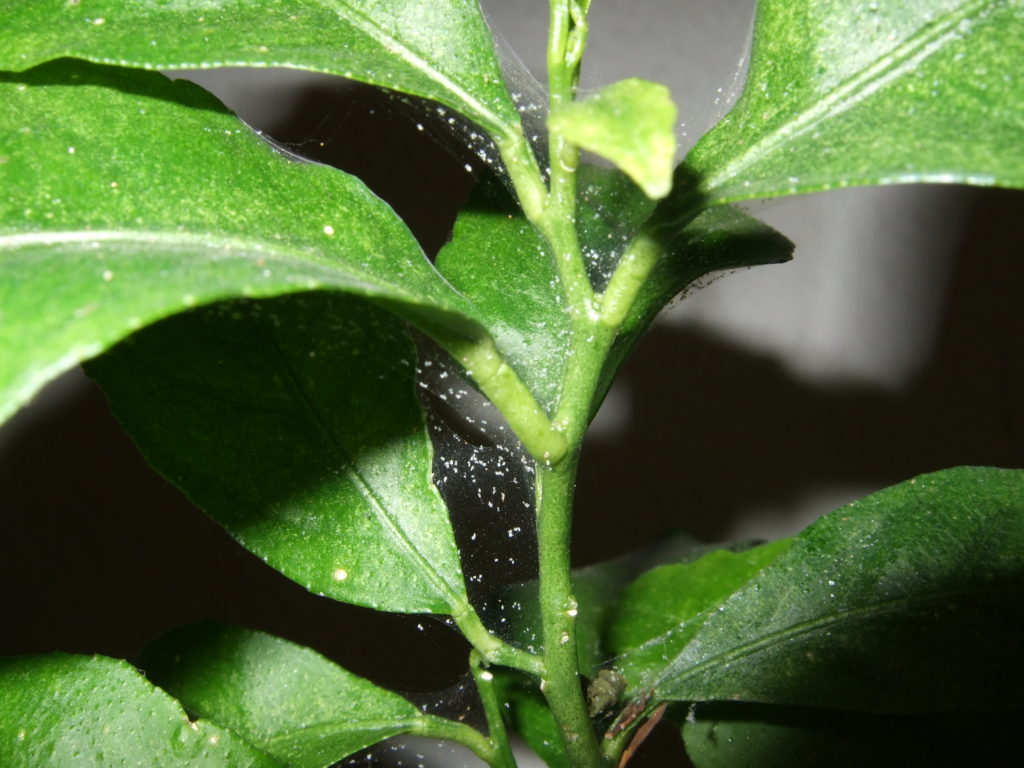
If your plant leaves are speckled, dusty, or webby, spider mites may have moved in. These tiny arachnids thrive in dry indoor air—yep, another A/C side effect.

What to do:

  • Increase humidity around your plants.

  • Spray leaves (top and bottom) with Spinosad Soap. 

  • Wipe down leaves gently and keep monitoring—mites multiply fast. Repeat applications until spider mites are gone. 

Give Your Houseplants a Summer Spa Day

Mid-summer is a great time to give your houseplants a little TLC:

  • Dust their leaves so they can breathe (and photosynthesize!) better.

  • Trim off dead or yellowing foliage.

  • Repot if roots are circling or soil is old and compacted. If you notice you’re having to water a lot, it could be a sign that there are more roots in the pot than potting soil – time to repot!

  • Use a moisture meter! Overwatering has killed more houseplants than underwatering. Use a moisture meter to take away the guesswork. 

  • Fertilize your houseplants with liquid Hasta Gro. It works great and it doesn’t stink…great for indoors!
  • Show some love and speak kind words—the plants swear they can hear you.