
Impatiens have been a favorite fall, winter, early spring blooming plant, but the Impatiens walleriana variety we have most commonly sold has developed a problem. Downy mildew has affected walleriana in other areas of the country for a few years now, and last year showed up in Texas gardens. At this time, no treatments are effective to prevent downy mildew in wallerianas.
A different species, Impatiens hawker, also known as New Guinnea impatiens, does not get powdery mildew. So we will be stocking New Guinea impatiens this fall and spring, and will no longer carry walleriana. New Guinneas will be available in 4.5″ pots and hanging baskets, and come in a range of bright colors, plus white. New Guinneas get a little larger, so they are planted a little farther apart, 12-14″. They do best in mild temperatures, so cover to protect if temperatures go below 40 degrees, and expect them to poop out when temperatures start going above 85 degrees.
As temperatures start down this fall, think of New Guinneas, as well as Dragon Wing and Whopper begonias, dianthus, violas, and torenia for your part-sun areas, and a host of other color for full sun areas.
 -James
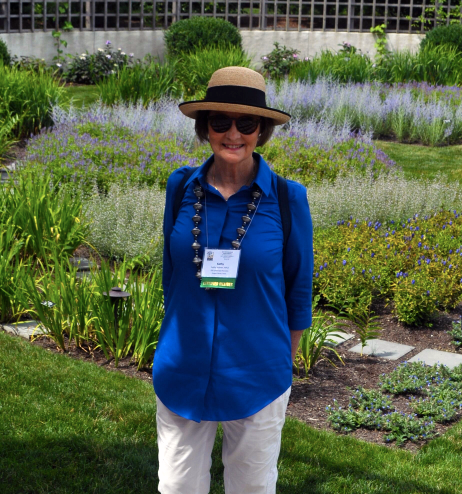 For years I’ve requested an APLD (Assoc. of Professional Landscape Designers) Conference in Boston. I’d heard it was a beautiful city with lovely architecture and I knew there had to be fabulous gardens. This year my dream came true and I traveled to Boston to view gardens in peak July bloom. Fellow designers living in the area were show casing their work at client’s properties and their own homes. On the first day, in the first garden, I knew I’d come to the right place at the right time.
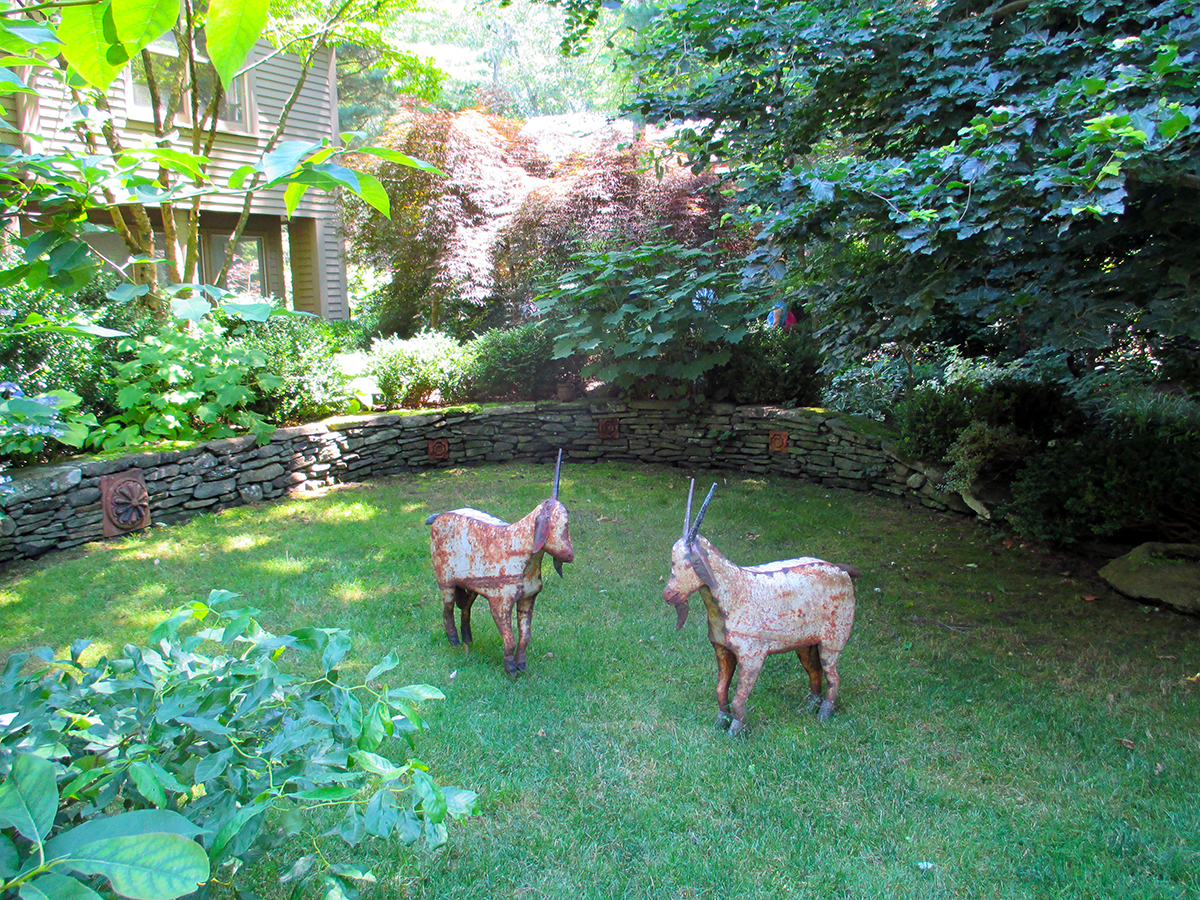
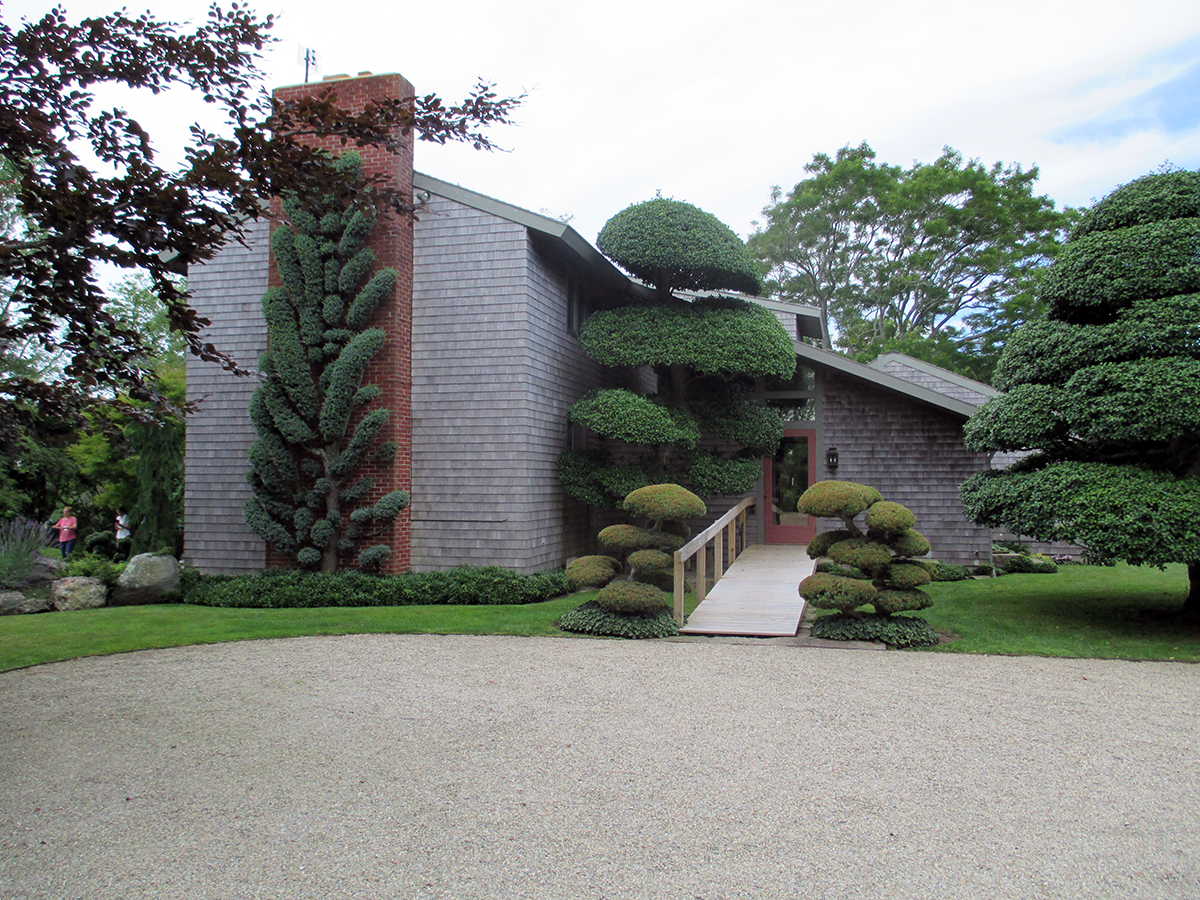

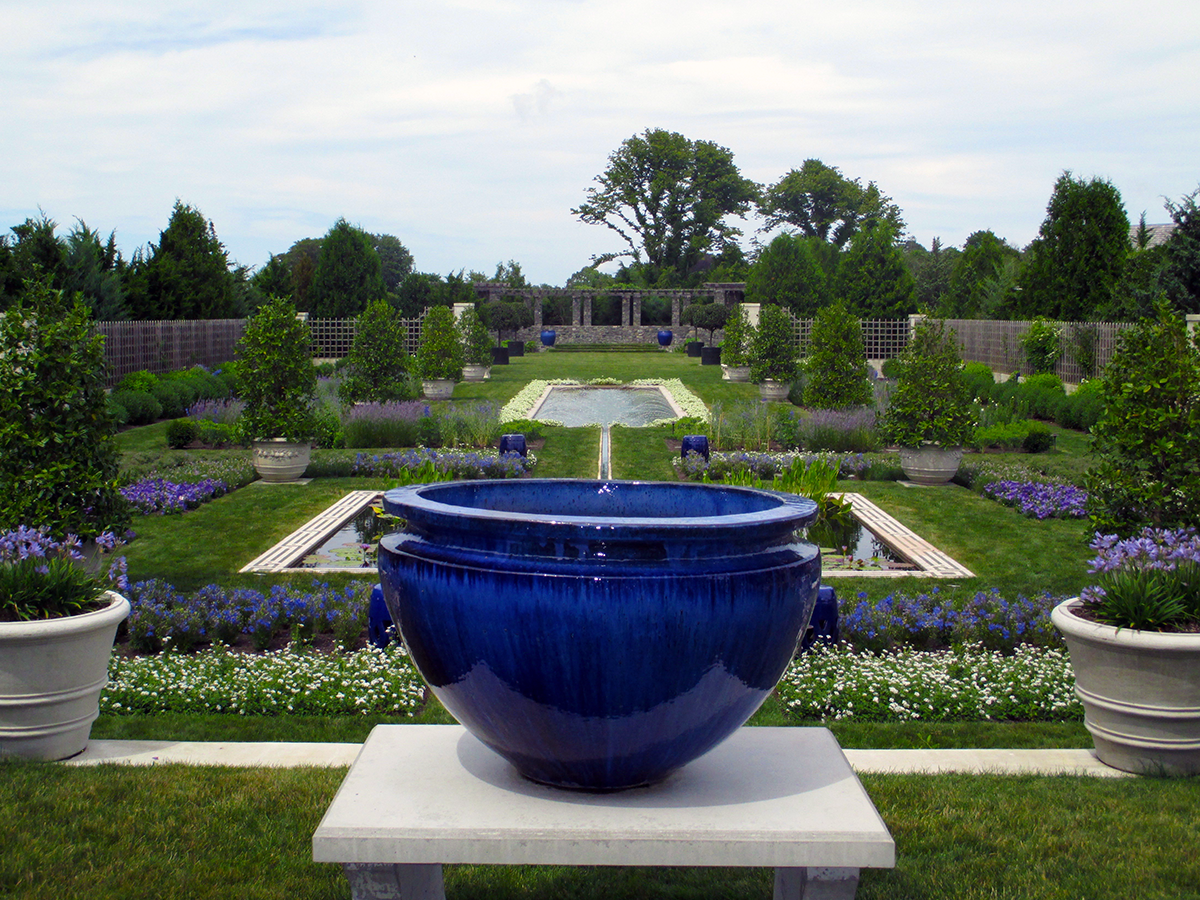
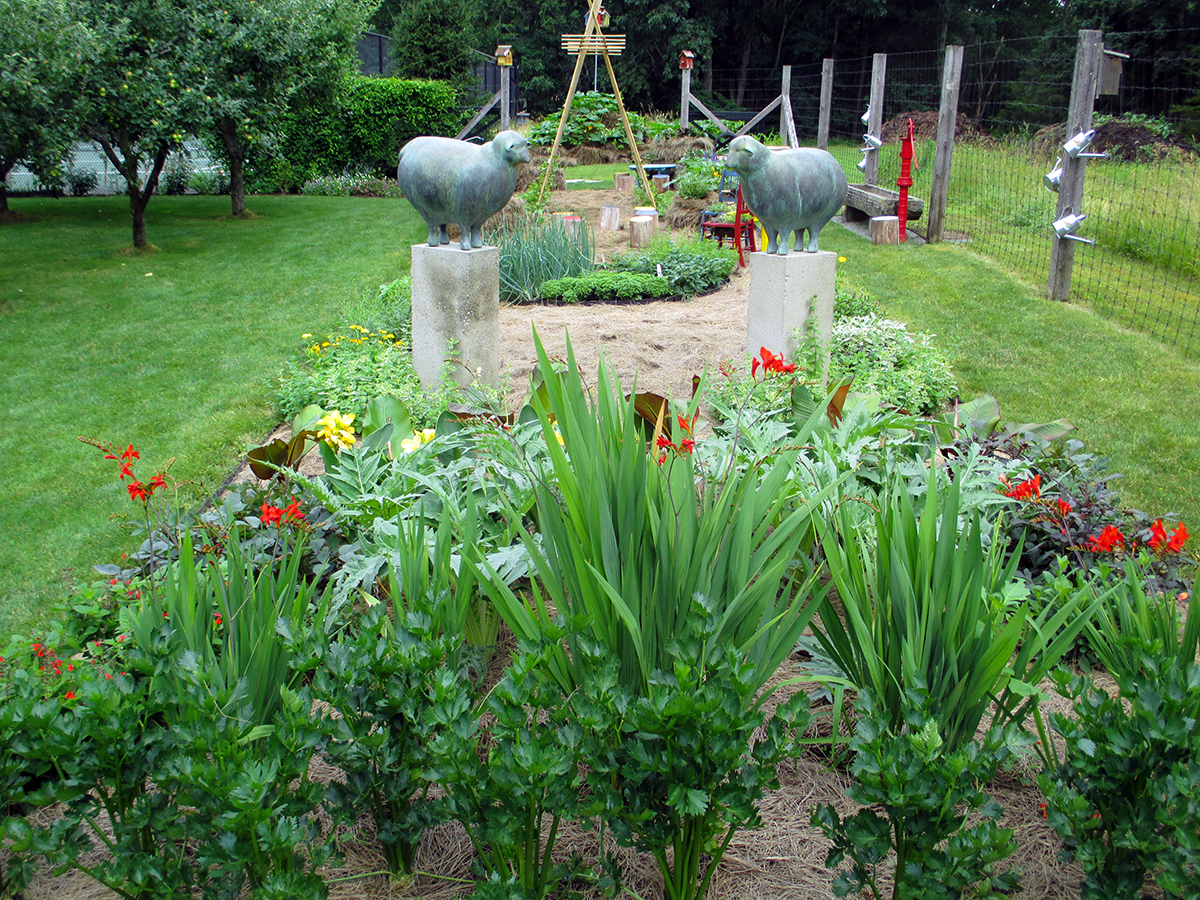
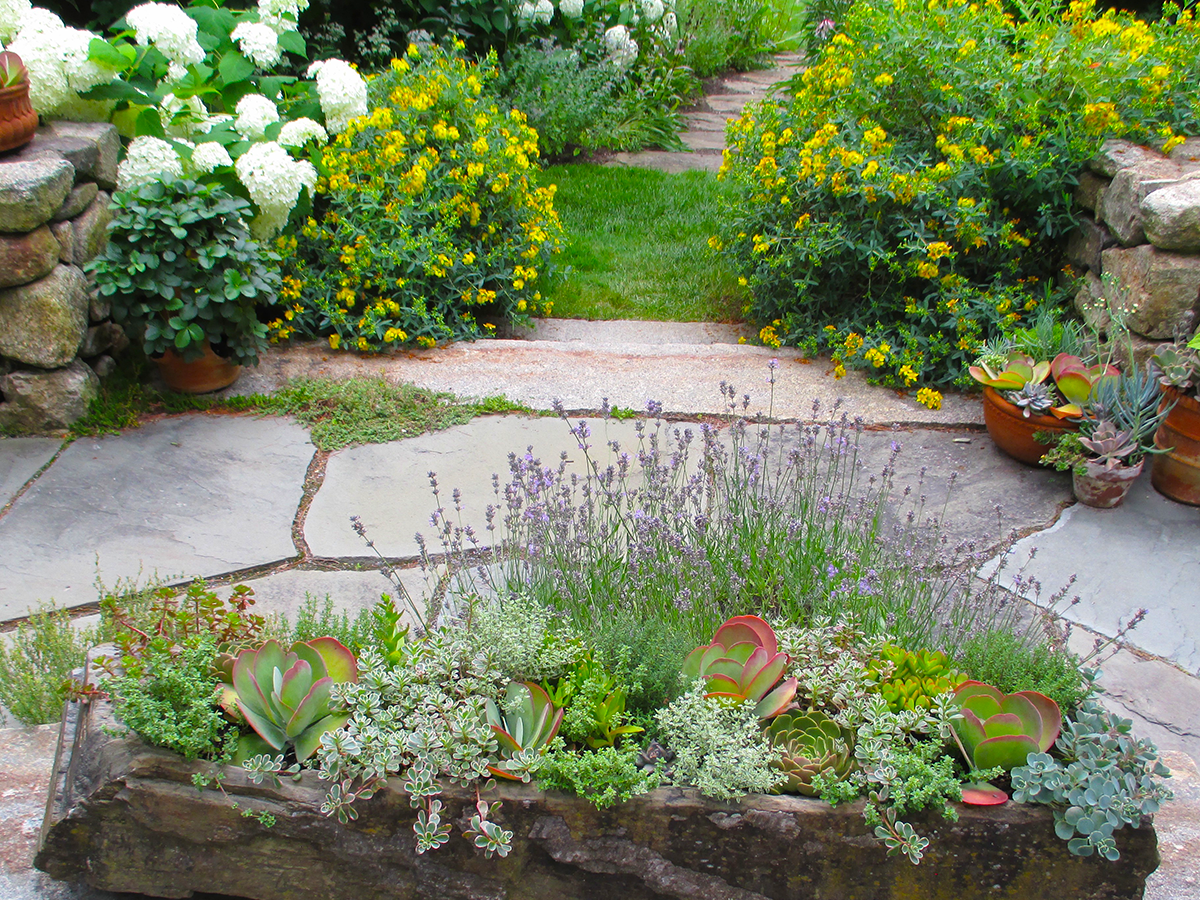
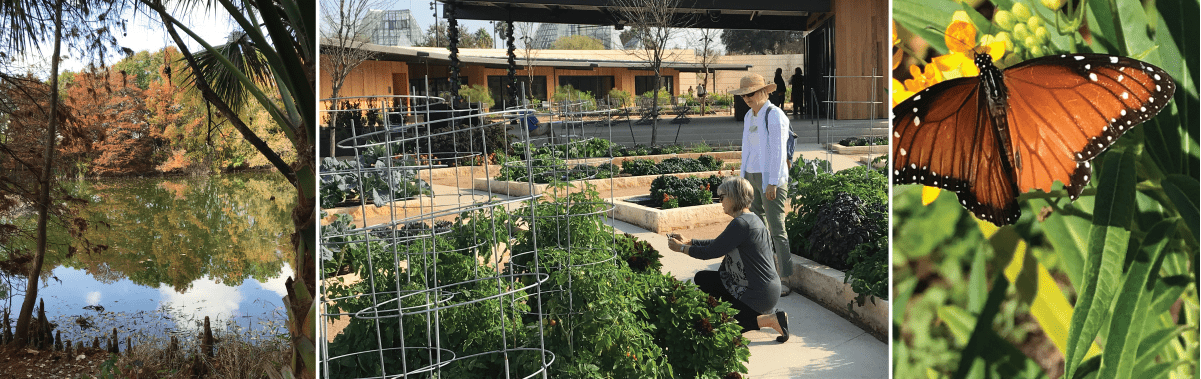
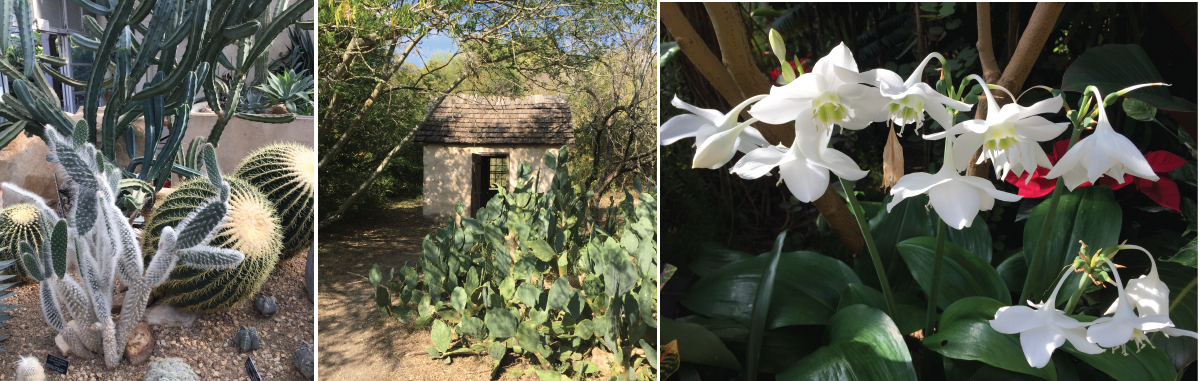



 -Sally


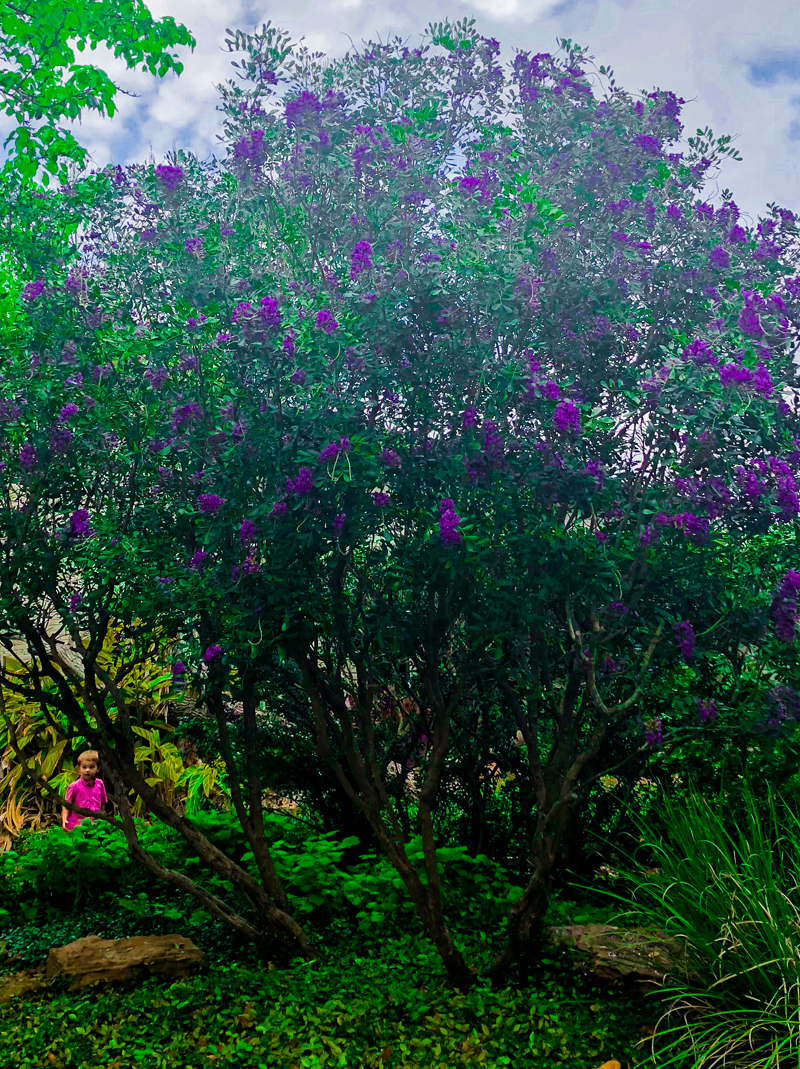 Driving around town, one surely has noticed the purple blooming trees and if you were within nose shot, their fragrance would make you think of grape soda pop hanging from their branches.
 -Debbie
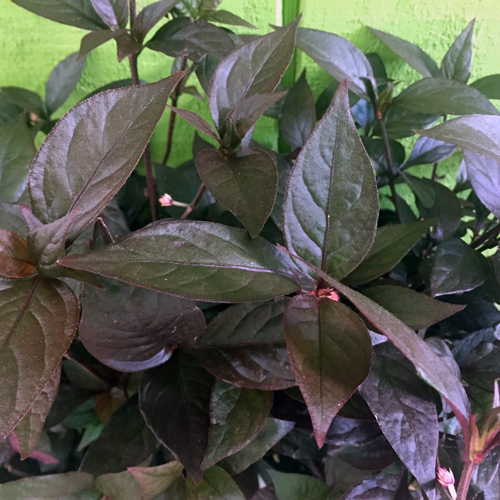 We planted the Purple Knight Alternanthera, in the Joseph Coat family, under our Texas Sabal Palms out front of our home on Catalina Street. It has proven its worth to me! It takes wind and sun, gives a pretty contrast to green lawn with it’s burgundy foliage, doesn’t have any major insect or fungus challenges, and if planted in the right spot, can grow to it’s maximum height of 24″ or can be pruned shorter! It has been named by the Texas Department Of Agriculture as a Texas Superstar and definitely a superstar in my book!