
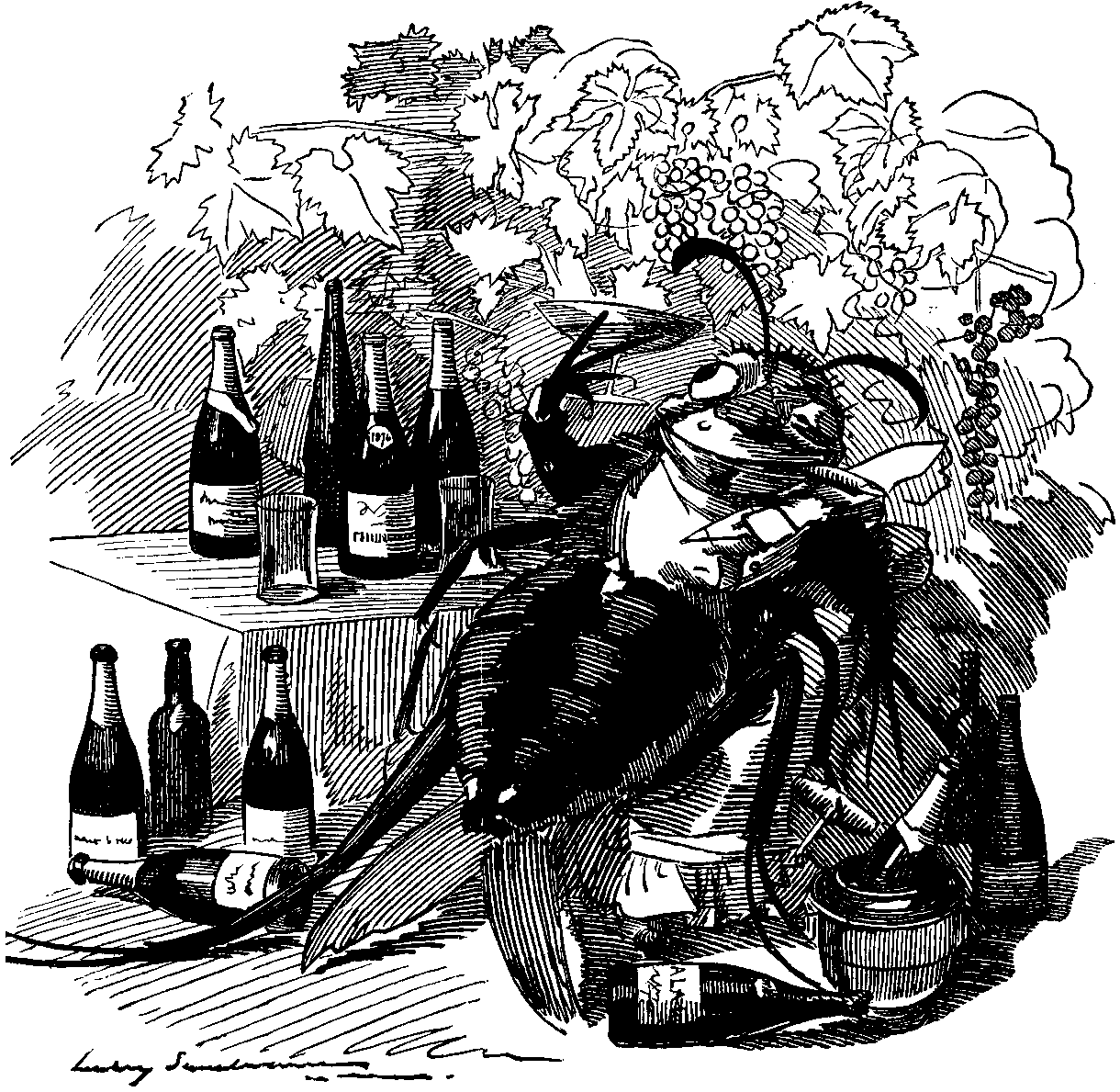
Wine production seems to have started in the upper regions of the Middle East, i.e. Armenia, Iran, Turkey, and as the ages went by, continued on to Greece and then Rome, in a big way. The major importance of wine to the Romans caused wine production to spread, around the second and first centuries B.C., through their conquered territories of the remainder of Italy, Spain, Portugal, and France, who we now think of as the prime producers of wine. So vineyards and grape production flourished in the region for 2000 years, until the mid to late 1800’s. At that time, a devastating new insect pest showed up, the phylloxera aphid. This dastardly aphid killed an estimated 65% to 90% of grapevines in Europe, and was, and still is, seemingly impossible to control, as it feeds on the roots of Vitis vinifera, the most highly regarded wine grape.
And where did this villainous vine killer come from? America! European botanists had collected American grapevines and brought them back home to their plant collections, not knowing that American vines brought with them the phylloxera aphid. As vineyard after vineyard was wiped out, attempts were made to hybridize the Vitis vinifera with other grape species to produce resistance to the aphid. The American varieties had evolved to tolerate the aphid, but when bred with the vinifera variety, produced a much inferior wine. Enter Thomas Volney Munson.

T. V. Munson was born in Illinois, and after taking a degree in Kentucky, moved to Nebraska, where he started exploring improvements of grape varieties by hybridization. He soon found that grape growing conditions in Nebraska were less than ideal, and so moved to Denison, Texas, north of Dallas. He theorized that the native grape varieties of Texas might be a good match with the Vitis vinifera preferred in France, as the limey alkaline soils were similar between the two regions. He selected and shipped to France several grape species from Texas, including a Mustang grape collected from Ingleside Texas. Our Texas grapes did not produce a good wine hybrid when crossed with vinifera, but had a vigorous, phylloxera-resistant root stock, which was further hybridized to make it easier to graft on to the vinifera vines. This combination of Texas hybrid root stock grafted to vinifera top proved to be the savior of European wine production, and is still the standard for European vineyards. Accordingly the French government awarded Munson the National Order of the Legion of Honor, for his part in saving the wine industry of France. So the next time you sip an exquisite European vintage, make it a toast to Transplant Texan, T. V. Munson.
 -James



 Last week James and I were visiting some friends of ours, Anita & Rolf Nelson, also in the garden center business. They own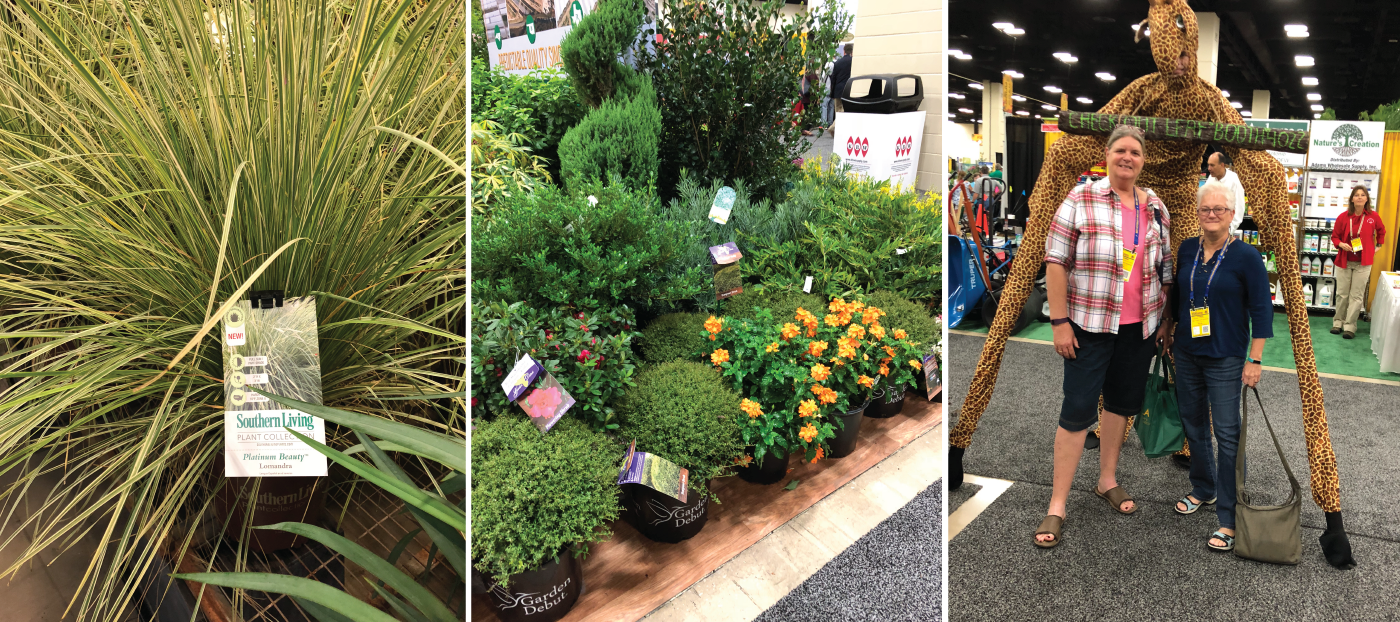
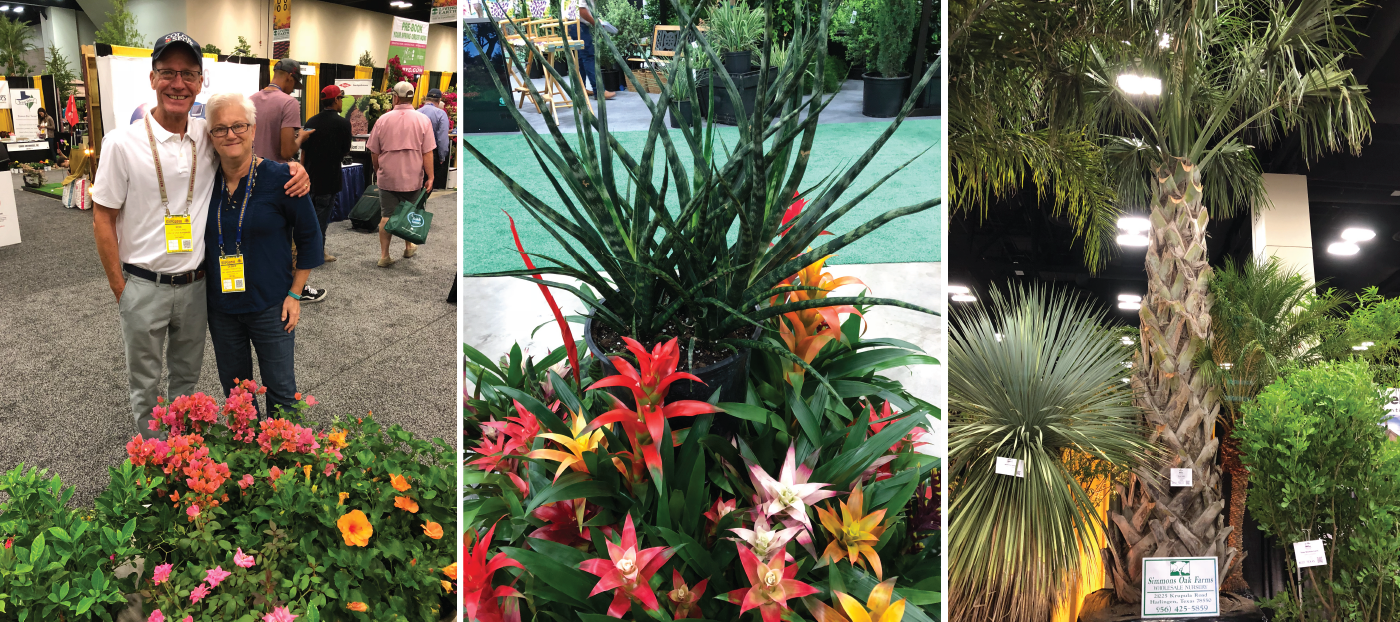
 -Debbie Pinkerton
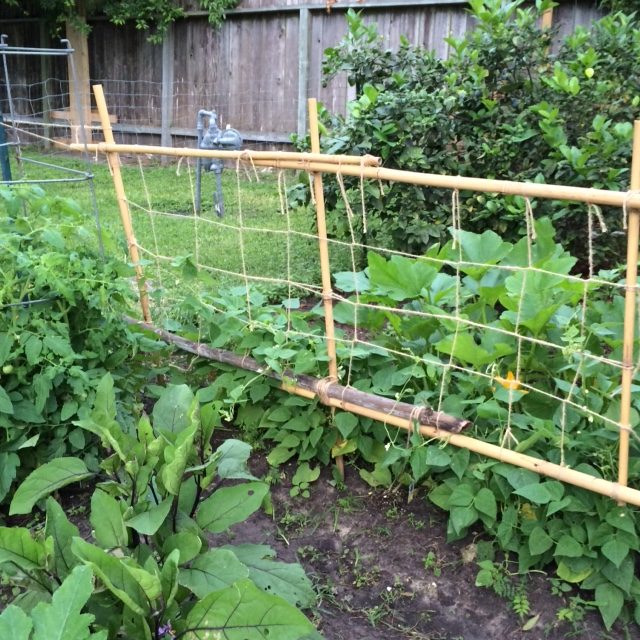
 Growing food is all the trend as farmers markets, farm to table restaurants, and the phrase “locally grown” gives credit that the food will be the freshest available! But to grow your own? Even better!
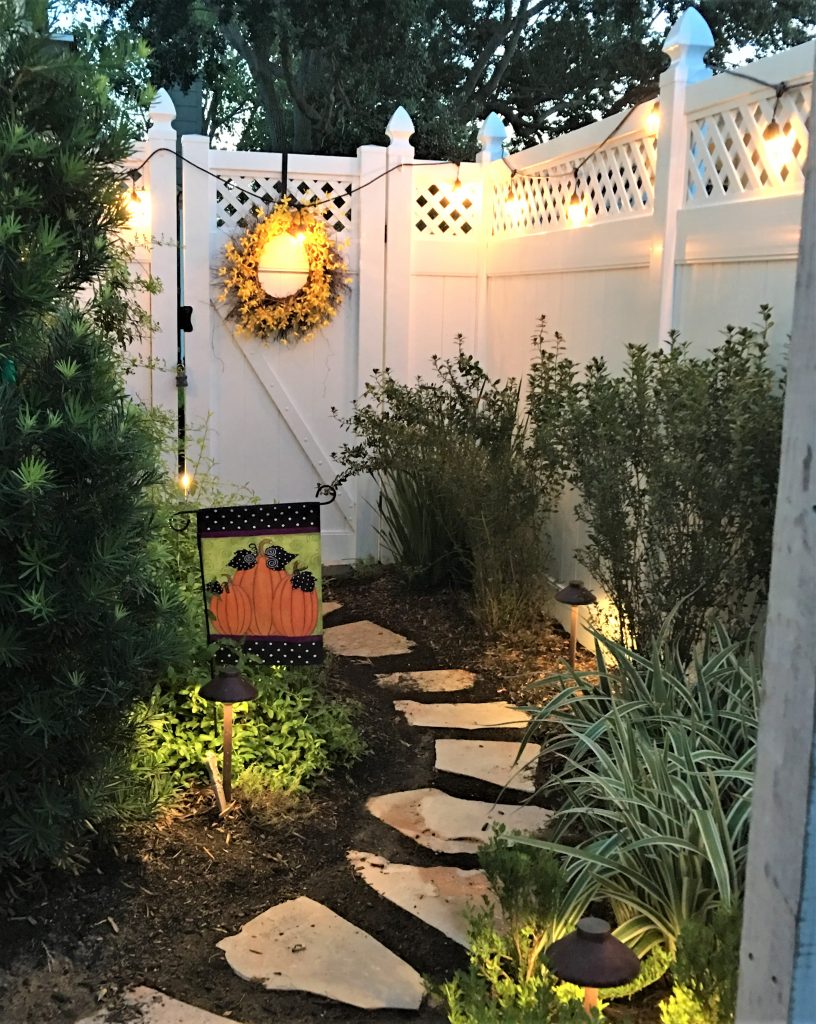 What does Xeriscape mean to you? Cactus and rocks? Yes, it could be that, but it can be much more! Texas native plants? Yes, many Texas natives fit a xeriscape, but also plants from Italy (rosemary), Mexico (firecracker plant), Madagascar (periwinkles), and more! Even a lily pond could have a place in a xeriscape.
  Xeriscape is planning and constructing an attractive landscape that requires little or no irrigation. So thirstier elements, such as Raleigh St. Augustine lawns, petunias or rosebushes, or that lily pond, can be limited in size, grouped together, used only in high-impact areas of the landscape, and hopefully, watered with “salvaged” water collected from rooftops, patios, air-conditioner condensate, or grey water.
 Growing human populations and consequently shrinking water supply mandate reduced water use for our future. We might as well start thinking about Xeriscape and how to design the right landscape that suits us and still uses less water.
  -James Gill