Garden Center Hours: Mon-Sat 9am - 5:30pm • Sun 10am - 5:30pm

Yay for May! Everything’s growing and blooming and we hope you are too! May is Mental Health Awareness Month, which is a good time to think about the peace of mind that gardening brings us. Gardeners know that all the research is true – gardening is good for you! Here are our Top 7 Must Do’s this May to keep you and your garden feelin’ good.

1. Join Us for Garden Talks and Events!

We’ve got a big May planned here at Gill’s, and we’re kicking it off this Saturday, May 3rd with a fun cyanotype printing event with the TAMUCC Student Art Association. Stop by and create your own cyanotype prints using leaves and flowers! Then next weekend we’re inviting kids to come pot up a flower for Mom for Mother’s Day. Sure to be lots of fun and lots to learn and discuss! Click here for more info and tickets!

2. Plant Blooming Perennials and Trees

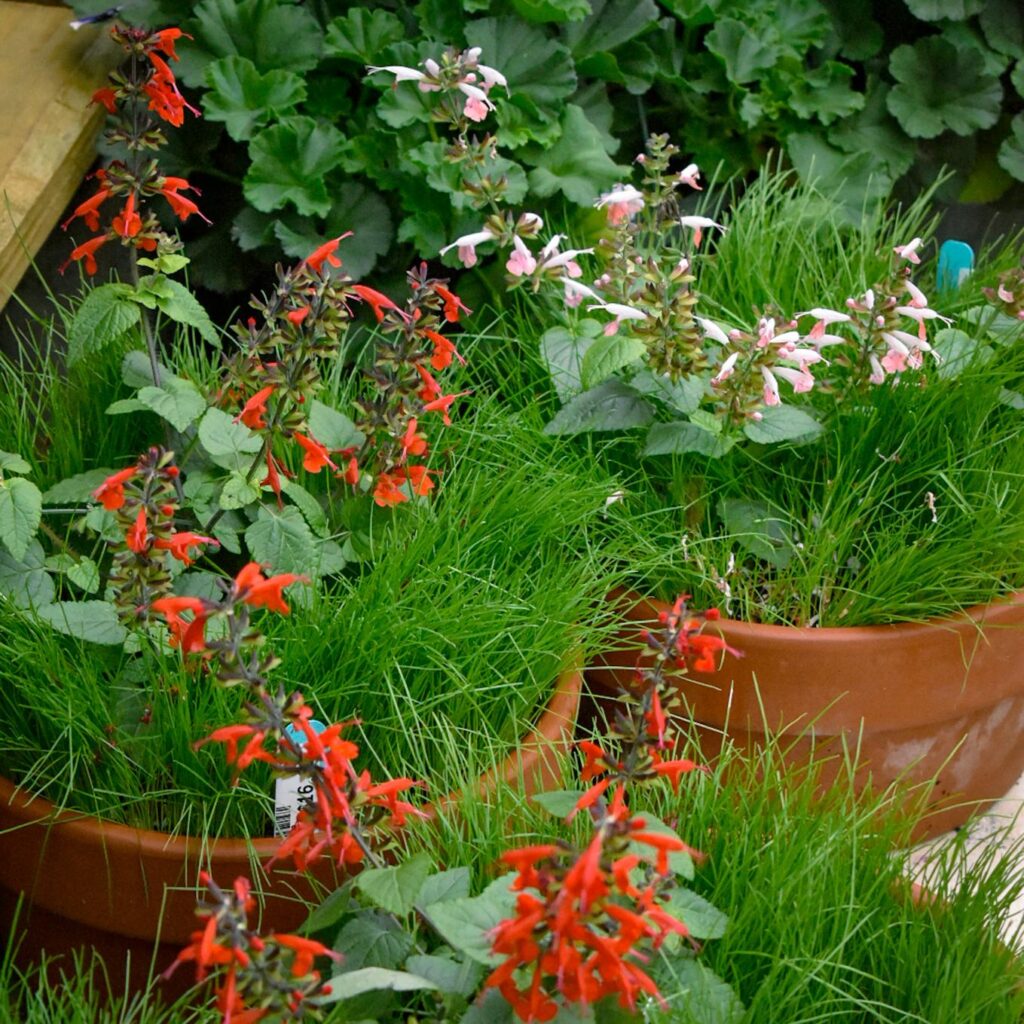
It’s time to plant lots of different blooming perennials and blooming trees. Get them established in May so they are rooted and acclimated to withstand warmer temps this Summer. Staples like Esperanza, many varieties of Salvia, Lantana, and tons more are all blooming beautifully right now. And blooming trees like Vitex, Retama, and Wild Olive are looking great right now. Crape Myrtles will start blooming soon too. Added bonus:  blooming perennials and trees attract lots of butterflies and hummingbirds!

3. Plant and Harvest Veggies

Warm weather veggie time! Plant all kinds of peppers, zucchini, squash, melons, and okra this month for continued harvesting into the Summer months. If you planted tomatoes, cucumbers, and other early Spring veggies, you’ll be harvesting now or very soon. Be sure to harvest often! It keeps birds & insects from finding them first. If you do have insect issues in your veggie garden, our go-to organic control is Spinosad – safe for food but takes care of bugs. Remember to keep watering your veggies as the weather warms up to maintain depth moisture. 

4. Mulch for Many Reasons!

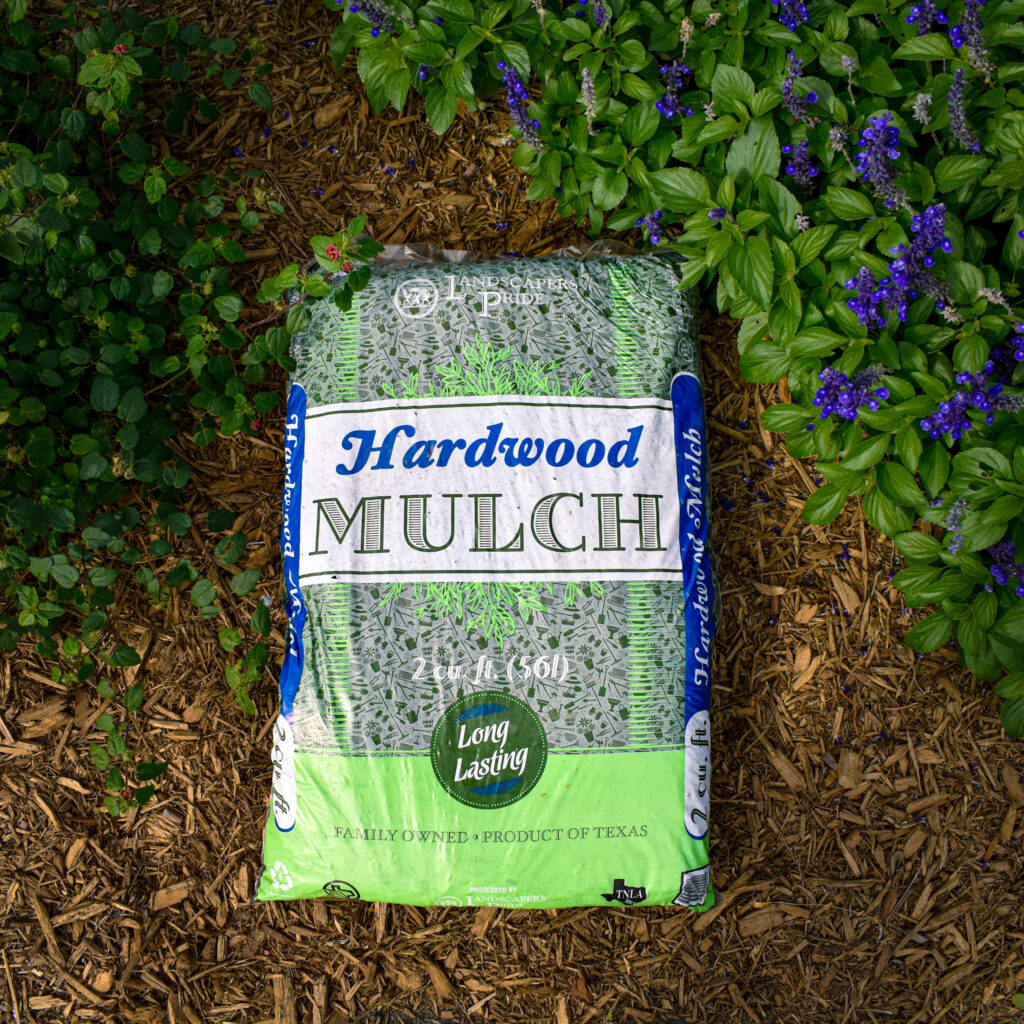
We all know that fresh mulch is like a fresh coat of paint for your garden – instant makeover! But did you know that applying a proper 3” layer of natural mulch keeps underlying soil temps more than 20 degrees cooler?! A good mulch layer keeps weeds at bay, and as it breaks down over time, it add nutrients to your soil. And perhaps most importantly right now, a good mulch layer retains moisture, which means big water savings. 

5. Transition Your Lawn to Summer

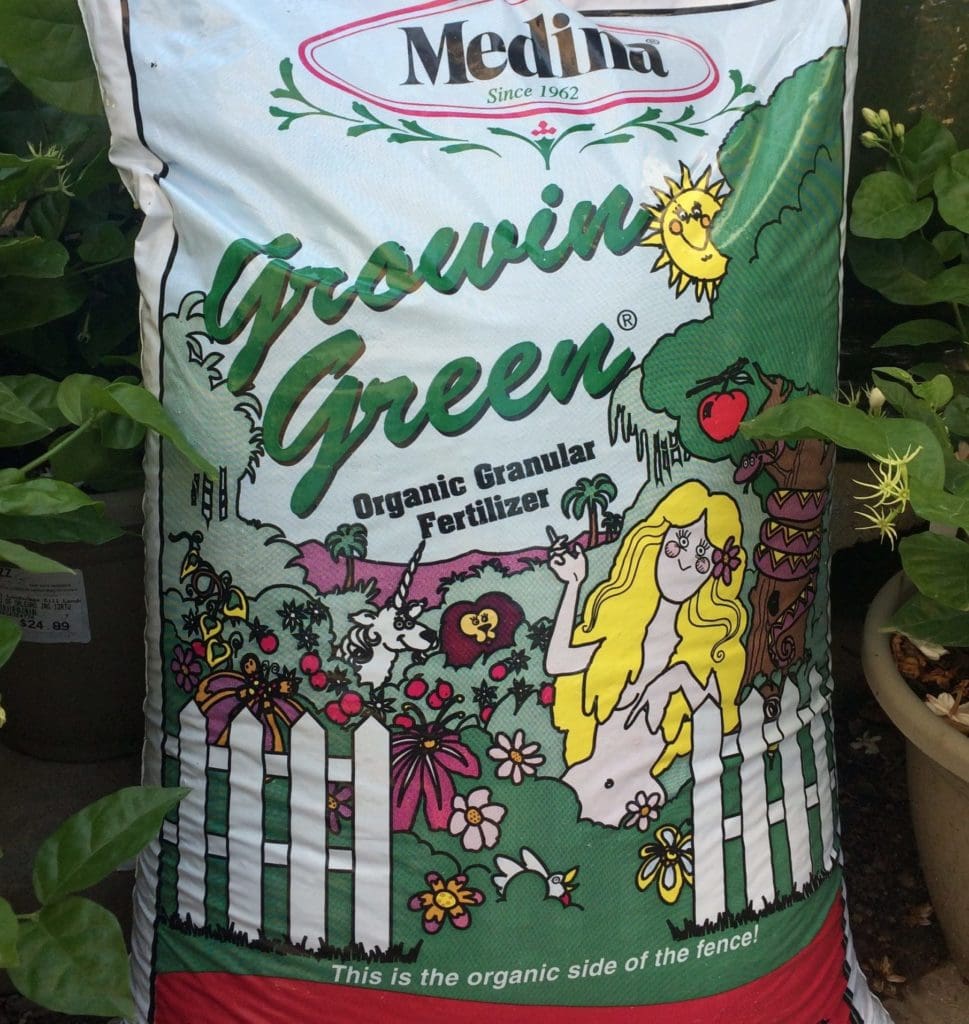
Feed with Natural Fertilizers:  Medina Growin Green or Milorganite. Yes, you can still fertilize your lawn, even though our lawn watering is limited. Using a good organic lawn food, like our go-to Medina Growin Green, promotes root growth and long-term health, which makes lawns more tolerant of less water. Ideally you’d want to water the fertilizer in, but you don’t have to. Medina Growin Green is gentle and won’t burn your lawn. You can apply it now and water it in slowly over a few weeks. If you have trees in your yard, keep in mind that fertilizer and water need to be applied at the drip line, aka where rainwater naturally drips off the outer edge of the canopy. Therefore, if you apply fertilizer to your lawn and water it in for the trees, your lawn will get the benefit too. You can also try to time your lawn fertilizing with a light rain. We typically don’t recommend waiting for rain to fertilize since a heavy rain would wash most of the fertilizer granules away. But, given the watering limitations, taking advantage of a light rain is a good solution. 

Watering:  Homeowners can collect free effluent water at the Oso Wastewater Treatment Plant to use to water lawns, which is a great option. Apply for a quick and easy residential permit from the City of Corpus Christi here.  If you do so, keep in mind that 1,000 gallons can water 1,621 sq ft of lawn at a nice 1” depth or 3,225 sq ft of lawn at ½” depth. 

When mowing, the proper height for St. Augustine lawns is around 3 inches. For Bermuda lawns, keep mowed to around 2-2.5 inches. Buzzing lawns shorter than that will cause lawn stress, and stressed lawns are more susceptible to pests, weeds, and disease.

Watch for lawn insects & treat when needed. Grub worms & chinch bugs are easy to control when caught early but there’s no need to treat unless you have them. BioAdvanced 24-Hour Grub Killer or Season-Long Bonide Insect and Grub Control will do the trick for grubs. Diatomaceous Earth, Spinosad, or Cyonara takes care of chinch bugs. Reminder, you can bring us a grass sample any time you suspect a lawn disease or pest. We’ll diagnose (using our microscope if needed) and get you what you need to knock it out.

Consider reducing your lawn space! Does all this lawn stuff sound like a lot of work? It can be! Many of us are reconsidering whether we really even want all that green lawn space. Why not start converting small portions of lawn to planting beds filled with blooming perennials that benefit the environment and use far less water? One way to start would simply be to deepen existing landscape beds to reduce some lawn. 

6. Set Your Mosquito Traps!

We are big fans of the simple bucket mosquito trap. Just fill a bucket 3/4 with water, add a good handful of lawn or plant clippings, and toss in a Mosquito Dunk or Mosquito Bits. These dissolve in the water and release bacteria that target mosquito larvae and kill them before they hatch. And they’re organic and not harmful to birds, bees, pets or humans! Set a few of these traps, sprinkle some organic Mosquito Beater granules around walkways and patios, spray organic Cedar Repel on your lawn, and use Skeeter Screen incense sticks near where you’re working or hanging out outside. Remember that using chemical mosquito foggers kills all the good bugs too, some of which also help control mosquitos and other bad bugs.

7. Gifts for Mother’s Day and Graduations

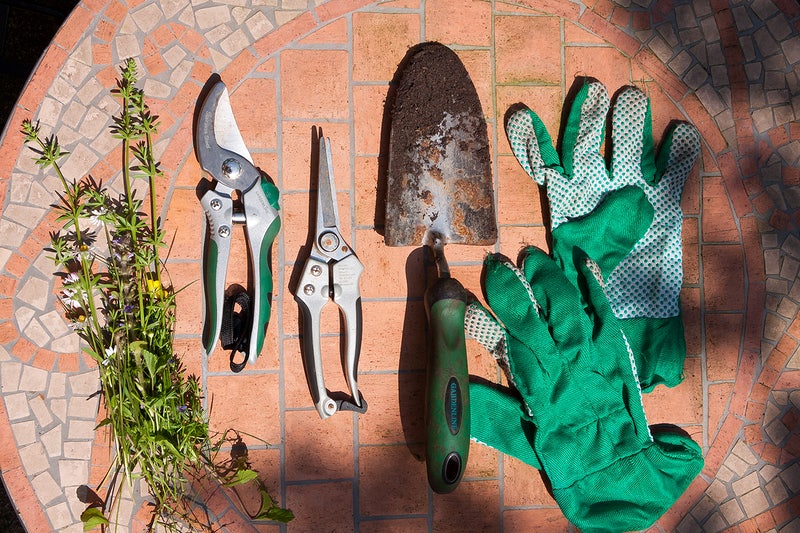
Let us help you find something pretty, useful, or both for the gardening moms and grads in your life. Pottery, birdbaths, wind chimes, quality garden tools, hats, gloves, garden decor, plantable greeting cards, gardening books – lots of options. You can purchase Gill gift cards online here and we’ll gift wrap and mail them to your loved one. Or come find the gift that gardeners love most – plants 🙂

Turns out there is a cure for the summertime blues…blue flowers! In the heat of summer, blue-blooming plants bring a cool, calming vibe to any garden. Whether you’re designing a soft cottage garden, a pollinator paradise, or a bold tropical nook, adding blue-blooming plants will make your landscape hum with beauty—and beneficial bees! Here are 5 of our favorite true blue bloomers for summer and beyond. 

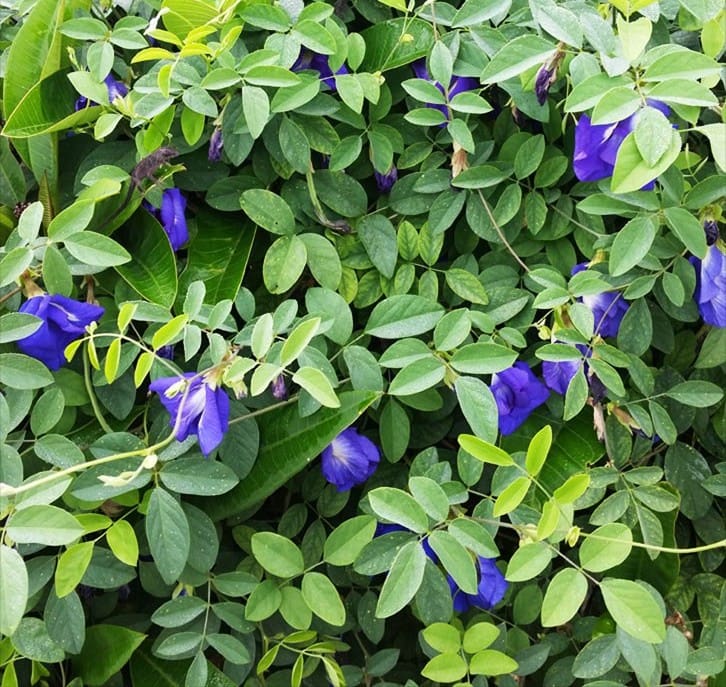
1. Blue Pea Vine (Clitoria ternatea)

Also called Butterfly Pea vine, this twining vine is a tropical beauty that flaunts vivid indigo blooms shaped like — you guessed, butterflies! Fast-growing and great for trellises or fences, it’s a showstopper that also happens to be edible (hello, blue tea!).

Growing Tips:

  • Loves heat, sun, and well-drained soil. If planting in heavy clay soil, be sure to amend the soil with compost and plant high for better drainage. 

  • Water regularly but don’t overdo it — this vine is drought-tolerant once established.

  • Dies back in frost but returns in spring. 

Design Tip: Let it scramble over a white trellis or arbor for a bold blue-and-white contrast. Add it near seating areas — it’s a conversation starter.

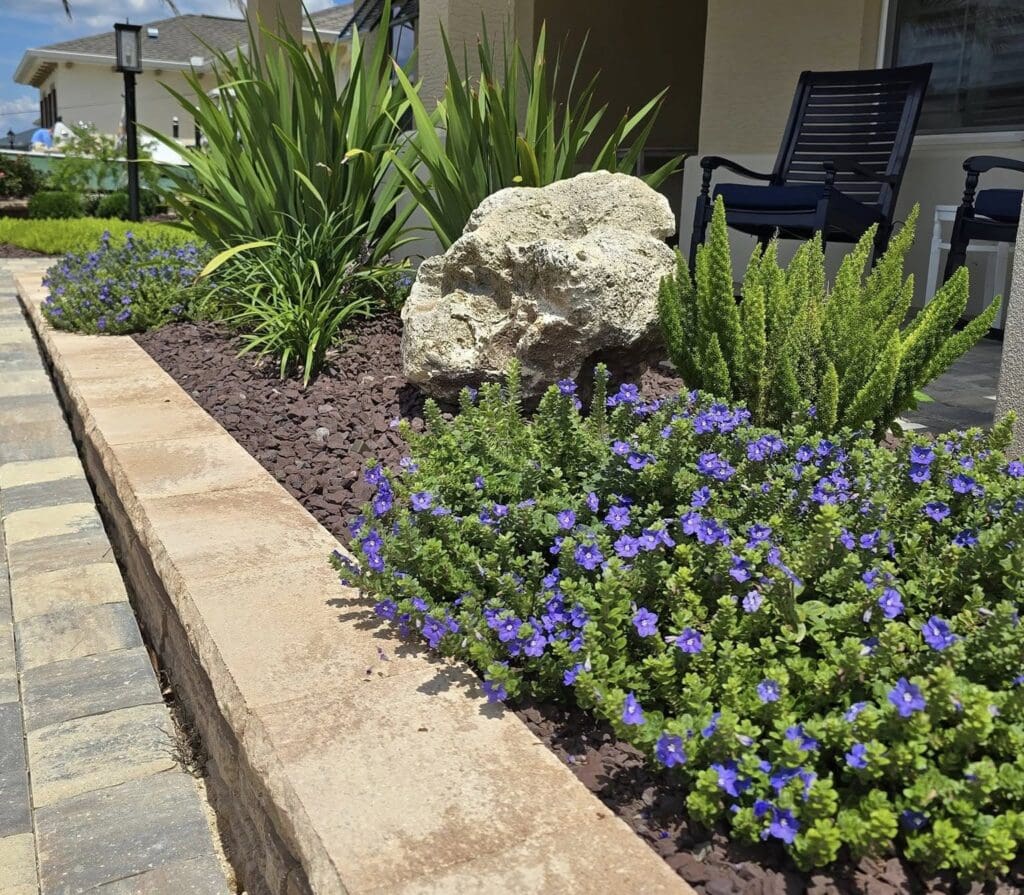
2. Blue Daze (Evolvulus glomeratus)

This low-growing groundcover shines in the sun with blue blooms that practically glow against its silvery-green leaves. It’s perfect for spilling over borders, hanging baskets, or softening rock edges.

Growing Tips:

  • Full sun is best — partial shade means fewer flowers.

  • Tolerates heat and poor soil, but hates wet feet. Avoid over-watering. 

  • Trim lightly to encourage denser growth.

Design Tip: Plant at the edge of garden beds or containers for a “blue waterfall” effect. Pairs beautifully with golden foliage or terra cotta pots.

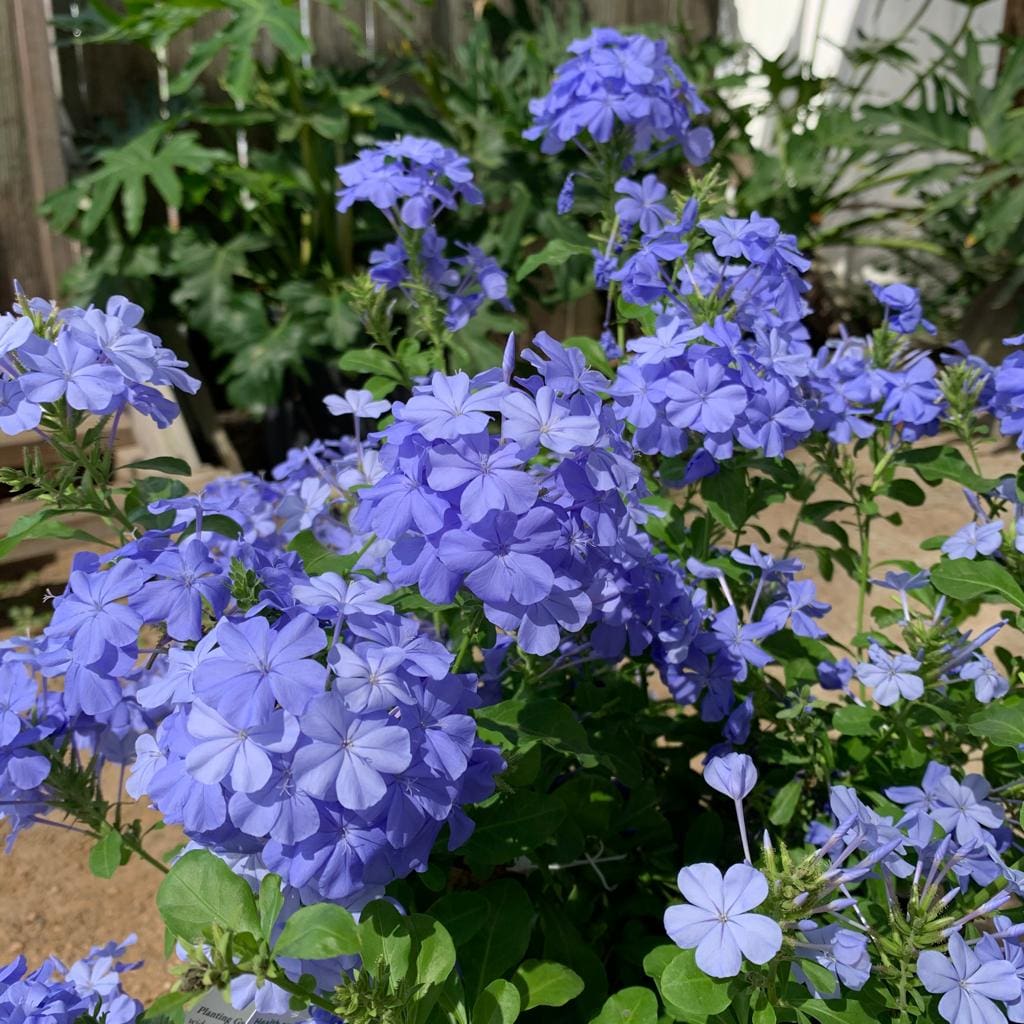
3. Blue Plumbago (Plumbago auriculata)

An old Southern favorite, plumbago is a sprawling shrub with clusters of pale blue, almost periwinkle flowers. It’s a butterfly magnet and a long-bloomer from spring through fall. Hydrangeas don’t do well in our area, but Plumbago is a lovely substitute. 

Growing Tips:

  • Likes full sun but can tolerate part shade.

  • Regular watering keeps it lush, but it’s tough enough to survive drought.

  • Can get leggy — prune occasionally for neatness while allowing a natural form. 

Design Tip: Use as a loose hedge or backdrop plant. Its softness balances spikier plants like salvia. Bonus: It can double as a trailing spiller in large containers!

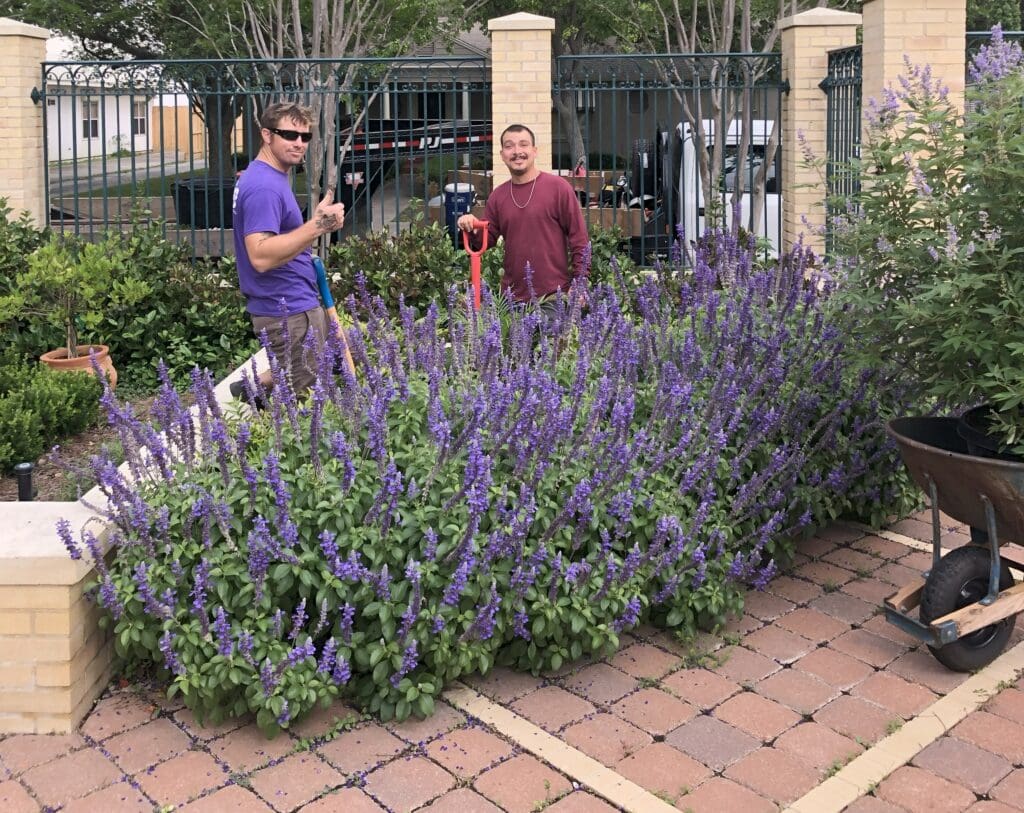
4. Henry Duelberg Salvia (Salvia farinacea ‘Henry Duelberg’)

This Texas native brings bold dusty-blue spires and unbeatable drought resistance. It’s also a pollinator buffet, attracting bees, butterflies, and hummingbirds.

Growing Tips:

  • Full sun is best, though it tolerates light shade.

  • Deadhead for more blooms, and cut back mid-summer to refresh.

  • Deer-resistant and super hardy.

Design Tip: Plant in groups for an intense pop of vertical color. Pairs well with yellows, oranges, or soft grasses for contrast.

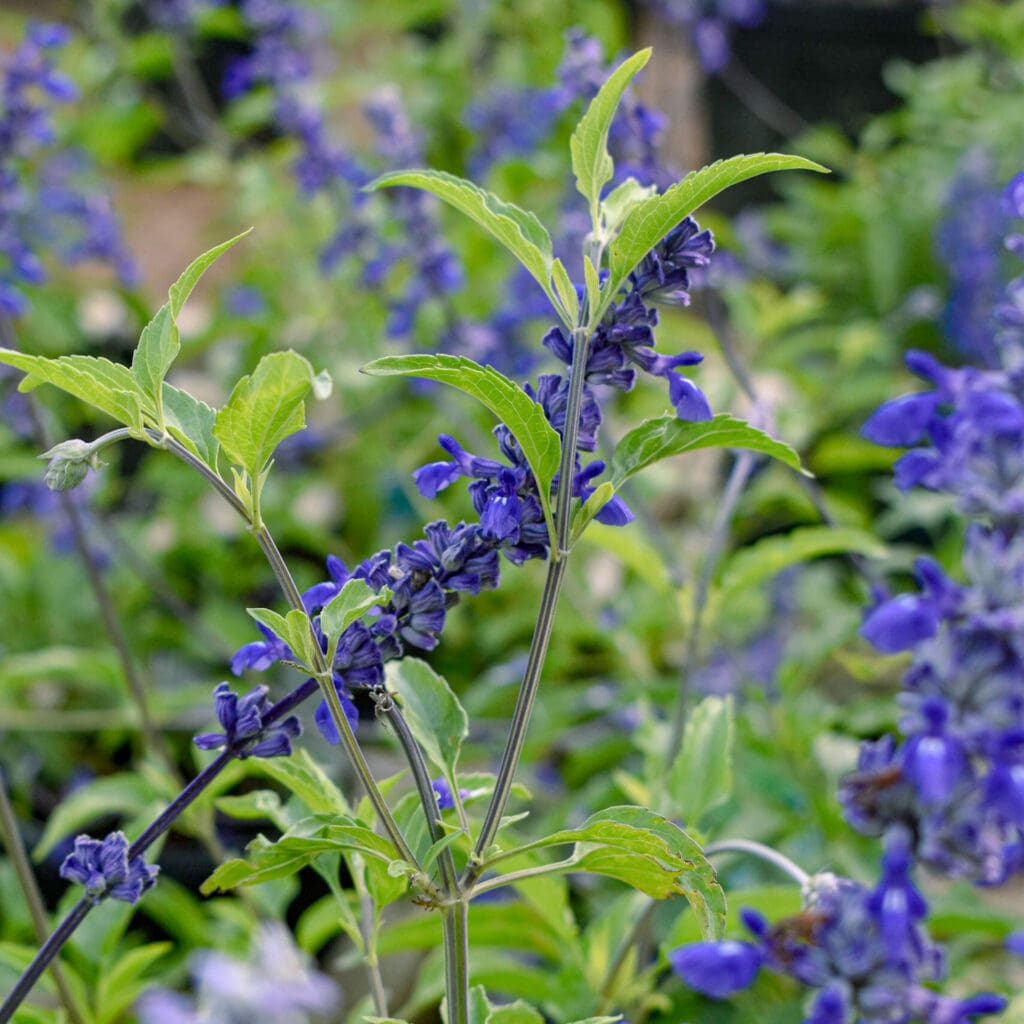
5. Mystic Spires Salvia (Salvia ‘Mystic Spires Blue’)

The more compact and bushier cousin of Henry Duelberg salvia, this hybrid salvia blooms in rich, deep blue-purple all summer long. Great for borders, containers, and butterfly gardens. This might be the best-performing salvia variety for South Texas. We’ve planted thousands over the years!

Growing Tips:

  • Prefers full sun and moderate watering.

  • Trim back after the first flush of blooms to keep it tidy and reblooming.

  • Fertilize lightly with granular Medina Growin Green once a month, followed by Hasta Gro liquid every 2 weeks for incredible results. 

Design Tip: This salvia adds rich color without towering over neighbors. Try it in pots flanking your porch or mixed in sunny perennial beds.

More Design Tips: Making the Blues Sing

  • Think in layers: Use taller salvias or climbing pea vine in the back, medium-height plumbago in the middle, and low-growing blue daze in the front. 

  • Play with color combos: Pair your blues with silver foliage (like dusty miller or artemisia) and warm hues (like coral or yellow) for a dynamic palette.

  • Use repetition: Repeat blue plants throughout your space to create rhythm and cohesion.

  • Night garden magic: Blue flowers glow at dusk—perfect for gardens you enjoy in the evening.


Temperatures don’t feel like it yet, but it’s time to start making the transition into an exciting new fall planting season! There’s a lot to do in August to set yourself up for big garden success this fall and beyond. Here are our top must-do’s!

Check out our August Garden Guide for more tips and remember that trees, shrubs, and perennials can be planted 12 months out of the year! 

1. Pick Out Your Fall Veggie and Flower Seeds!

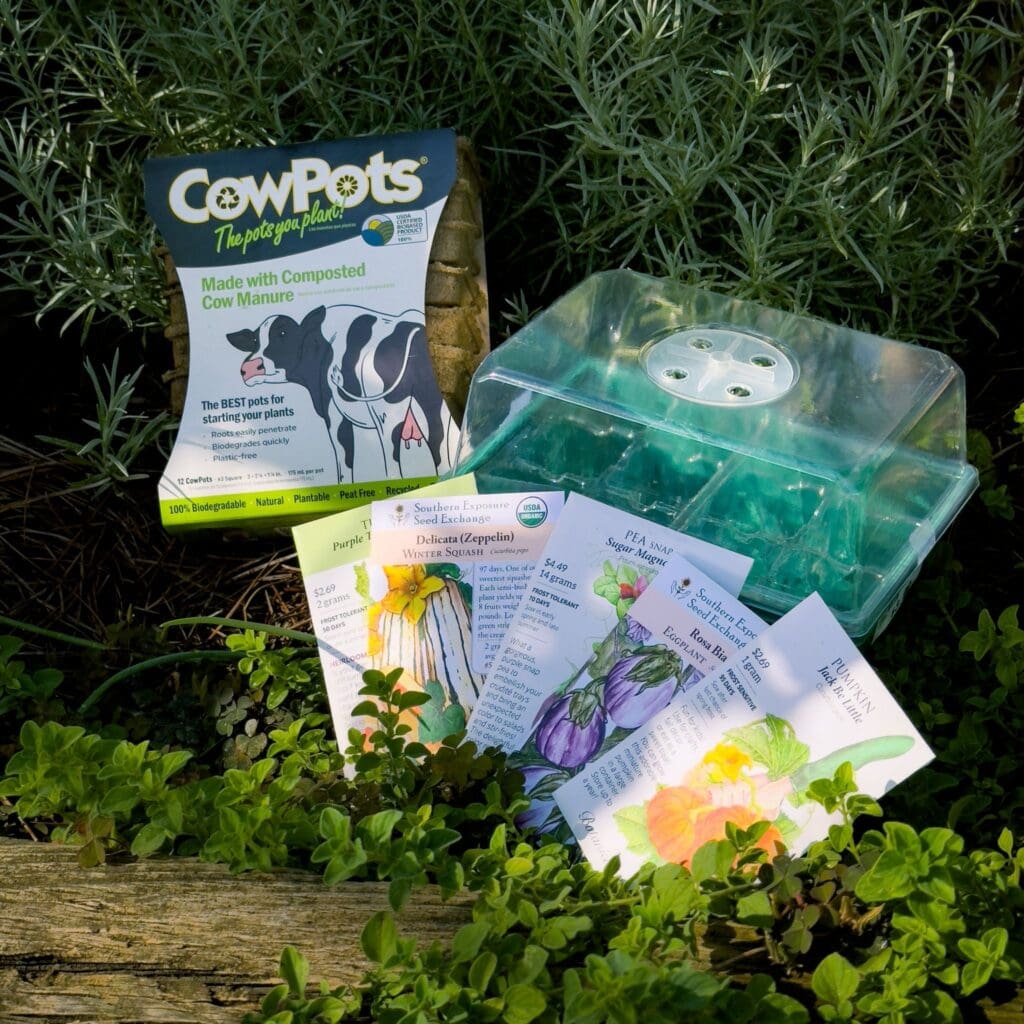
August is the time to start your fall veggie seeds! Next week, we’ll receive the new 2025-2026 seeds from our favorite seed suppliers, including heirloom vegetables, brand new releases, and wildflower seeds. Try our new Cow Pots or seed starting trays to start seeds indoors this month, move to a covered patio once they sprout, then into your garden beds once they’re robust enough to live outside. This will protect the seedlings and slowly acclimate them to outdoor temps. Our Fall Vegetable Planting Guide provides the specific seed-planting dates to help plan your fall garden. Remember – if you want bountiful fall veggies, you need to get an early start! 

2. Start Planting Now for Fall Pollinators!

Don’t wait until fall arrives to start planting for fall pollinators – start cooking now so their meal will be ready when they arrive! Important fact: birds, bats, bees, butterflies, beetles, and small mammals that pollinate plants are responsible for bringing us one out of every three bites of food worldwide. Plants attract and provide food for them to keep the cycle going. For example – plant Zinnia and sunflower seeds now, and they’ll be ready to feed migrating birds this fall. Plant salvias now, get roots established, and they’ll be gorgeous this fall and covered in hummingbirds, butterflies, and bees. If you want to provide the best benefits for the most pollinators, plant Texas natives

3. Prep Your Garden Beds

August is the time to start prepping fall veggie beds! Finish your Summer harvesting, clean out your beds, and pull weeds. To get your soil ready, we recommend mixing Nature’s Blend Compost or Cotton Burr Compost into your soil to replenish nutrients and loosen the soil before planting. About 1 bag per 12 sq. ft. is good. Once prepped, add a thick layer of pine straw or hardwood mulch, which will help retain moisture, keep weeds from sprouting, and keep the soil cooler until you’re ready to plant. As you plan your space, think crop rotation – don’t plant the same veggies in the exact same place you planted them last season, or you encourage pests and diseases. 

4. Water to Maintain Depth Moisture!

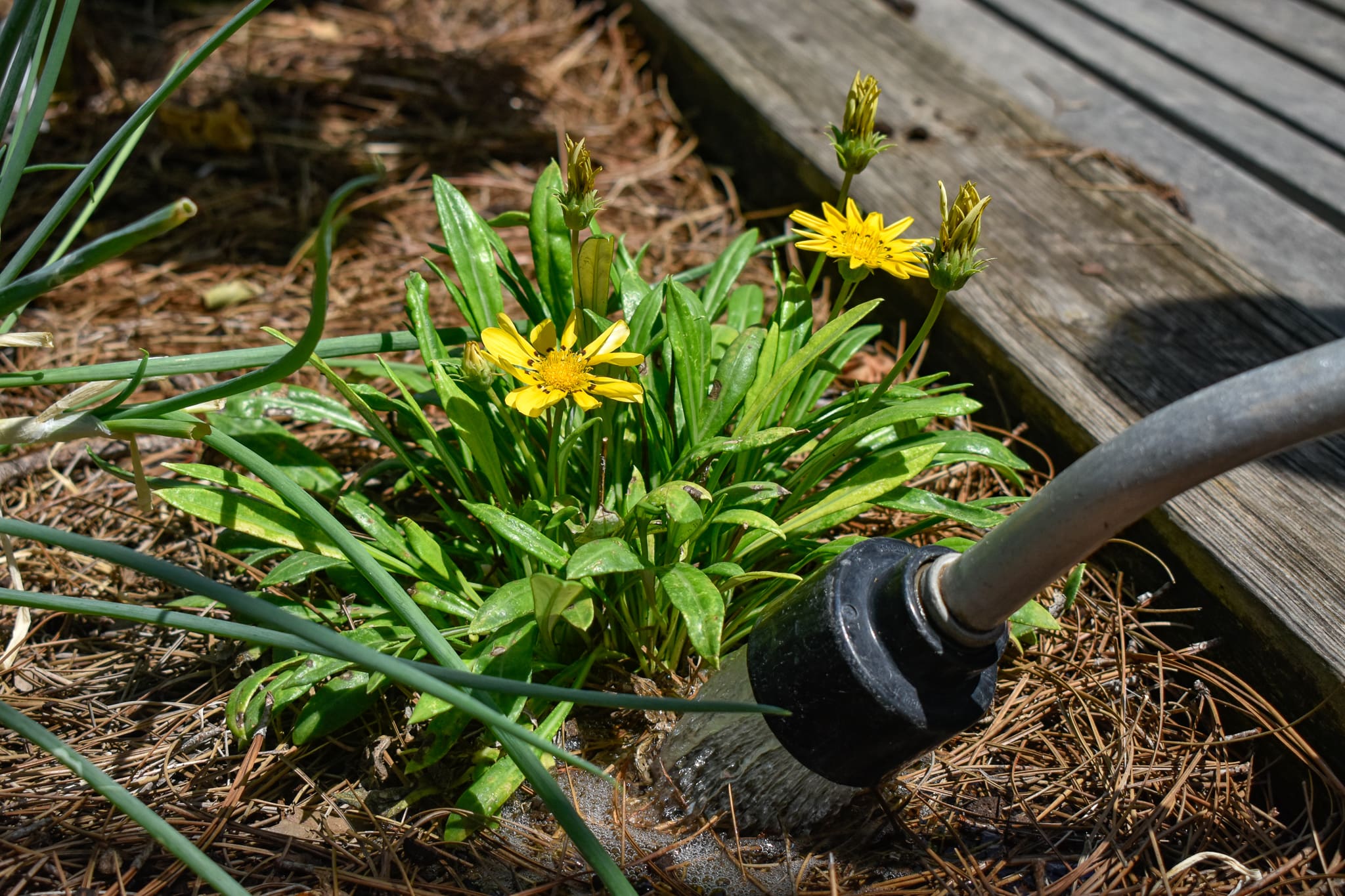
We’ve been lucky to have some well-timed rain showers this summer, which has created some depth moisture in the soil. Our goal with watering this month should be to maintain it. For lawns and established plants and trees, this means watering less frequently, but watering deeply when you water. New plantings will require water every day for the first couple weeks to get the roots established, but again, think deep drinks so the roots dive deeper. Use a water wand with a cut-off valve to make it easy on you and conserve water. Pro tip: Conserve water by watering at ground level, not spraying from above. This way, water soaks down to the roots rather than evaporating off the leaves. 

5. Mulch = Cool Roots, Dude!

Proper mulching using natural Hardwood or Pine Straw mulch has big benefits, especially during hot weather. A good 3” deep layer of mulch will keep your plants and the soil moist and cool for longer after you water or after it rains. Not just a little cooler – we’re talking more than 25 degrees cooler!! Cooler soil temps allow plant roots and beneficial microorganisms in the soil to flourish. When mulching, give the main trunks or stems of your plants a little space – mulch 3” deep throughout the bed, but no more than 1” deep right up against the main trunks/stems of plants.

6. Set Your Late Summer Lawn Expectations

In late summer in South Texas, even if you were watering quite a lot, it would be difficult to keep your lawn perfectly green. If we don’t get much rain this month, and with current watering restrictions in place, our goal shouldn’t be perfect green – our goal should be alive! If you can haul or find someone to haul recycled effluent water to apply to your lawn, you’re in good shape. Applying water once every 2 weeks at a half inch depth is sufficient. Again, don’t expect lush and green, but it will keep your lawn alive. Our lawn watering schedule is currently full, but we may be able to help connect you with others who are providing the service. Also, keep in mind that current watering rules allow you to hand-water your trees. Since trees should be watered at the drip line, watering trees properly can be a way to get some water on the lawn too. 

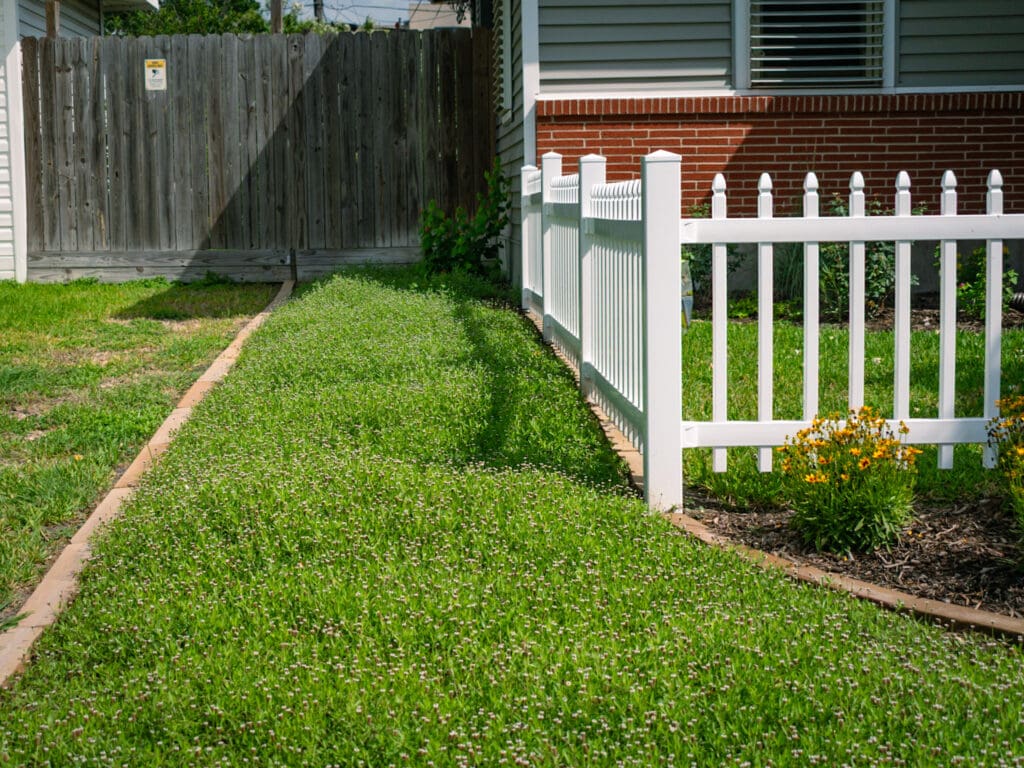
This is also a great time to think about whether you need or want all of your lawn space. Consider reducing lawn space by increasing your planting bed space, adding new planting areas, using native groundcover like frog fruit to replace lawn areas (pictured), or creating space for wildflower seeding – lots of other options that are more beautiful and more beneficial than a traditional lawn. 

August in South Texas is when some plants get summer-tired, which is normal and understandable! It’s likely nothing you’re doing wrong as a gardener, and the majority of tired plants will bounce back just fine as we move into fall. On the other hand, August also makes you notice which plants are thriving and don’t seem fazed at all. Here’s our list of 10 late summer low water warriors – some of these may surprise you!

Snow White Indian Hawthorn (Rhaphiolepis indica)

This evergreen beauty offers tidy mounds of glossy foliage and crisp white blooms in spring. It’s like the little black dress of the shrub world—classic, stylish, and never fussy. Once established, it needs very little supplemental water. It’s often used for foundation planting in the landscape for a reason—it’s tough, tidy, reliable, and handles heat and full sun like a champ.

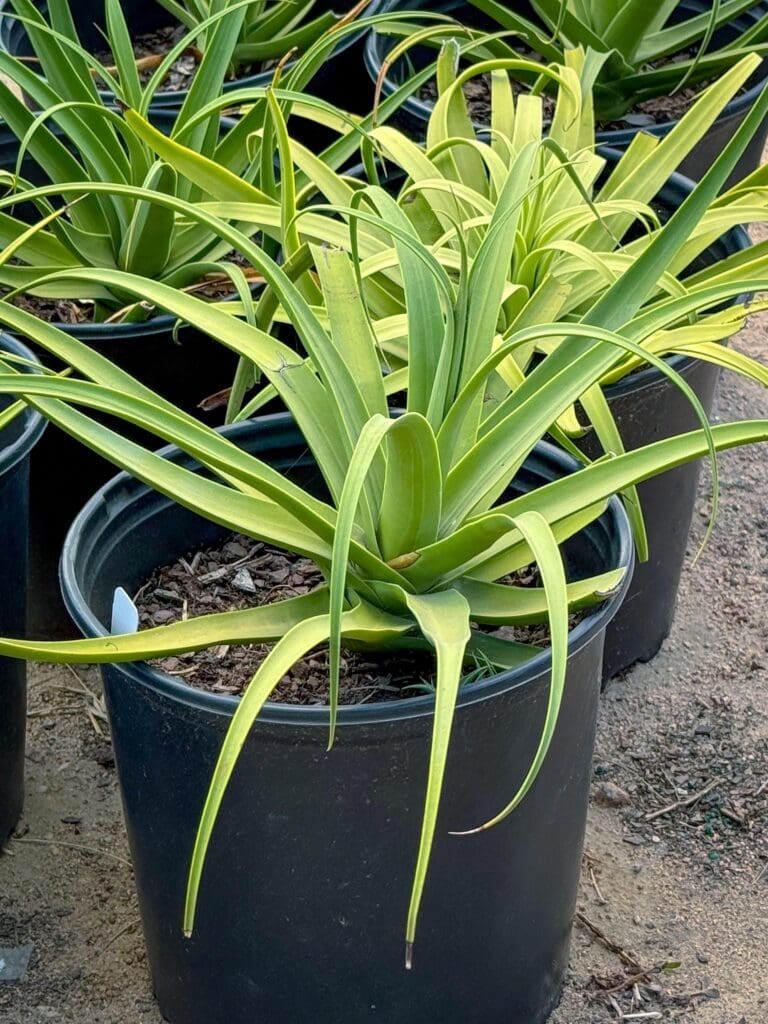
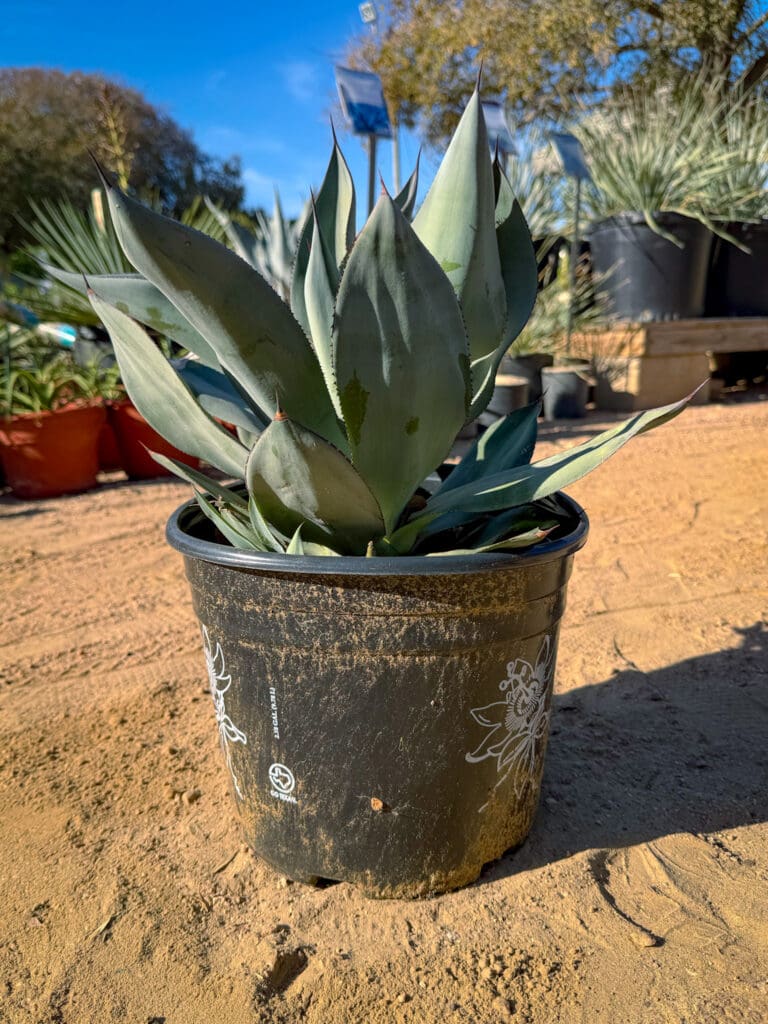
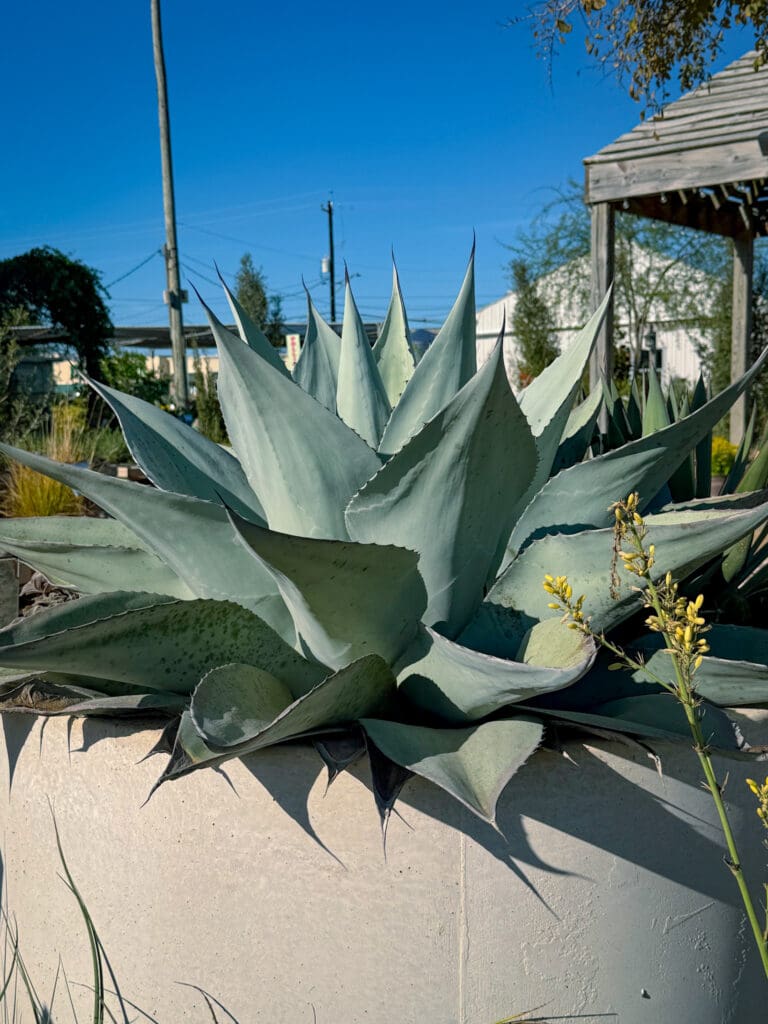
Squid Agave (Agave bracteosa)

With twisty, tentacle-like leaves, this agave adds a splash of whimsy to rock gardens or containers. No spines, no drama—just architectural flair. Water sparingly! This agave thrives on neglect. It’s also one of the few agaves that works very well in the shade – a great option to plant in mass under oak trees. 

Pomegranate Tree (Punica granatum)

This small tree or large shrub offers stunning orange-red blooms and juicy fruits that are as nutritious as they are beautiful. Deep, infrequent watering encourages better fruit production and root development. Fun fact:  you’ll often see lone pomegranate trees out in the middle of an open field in South Texas, which typically indicates where a homestead once stood, and is a testament to the pomegranate’s resilience and longevity! 

Red Yucca (Hesperaloe parviflora)

Despite the name, it’s not a true yucca—but it sure acts like one! Spiky blue-green leaves and tall spikes of coral-red flowers make this Texas native a showstopper. As DeAnna says, “everyone should have red yucca in their landscape!” Plant it in full sun and ignore it—really! It thrives with almost no care. Plus, its tubular flowers are irresistible to hummingbirds. 

Texas Sage (Leucophyllum frutescens)

When rain is on the way, this shrub puts on a bloom explosion of purple-pink flowers. Hence one of it’s common names:  Barometer Bush. Texas Sage needs almost zero watering once established. Overwatering = leggy growth and fewer blooms. Texas Sage is often seen as a wild desert scape plant, but it also has a home in a refined and manicured setting, like the photo above from a Gill’s landscape project.  

Wild Olive Tree (Cordia boissieri)

This South Texas and northern Mexico native is also known as Mexican Olive, and offers ruffled white flowers year-round and a gentle tropical vibe without the water demand. It tolerates extreme drought and our heavy clay alkaline soils. Prune lightly to maintain shape. Its flowers are a favorite of native bees, butterflies, and hummingbirds—and it’s the official flower of Nuevo León, Mexico.

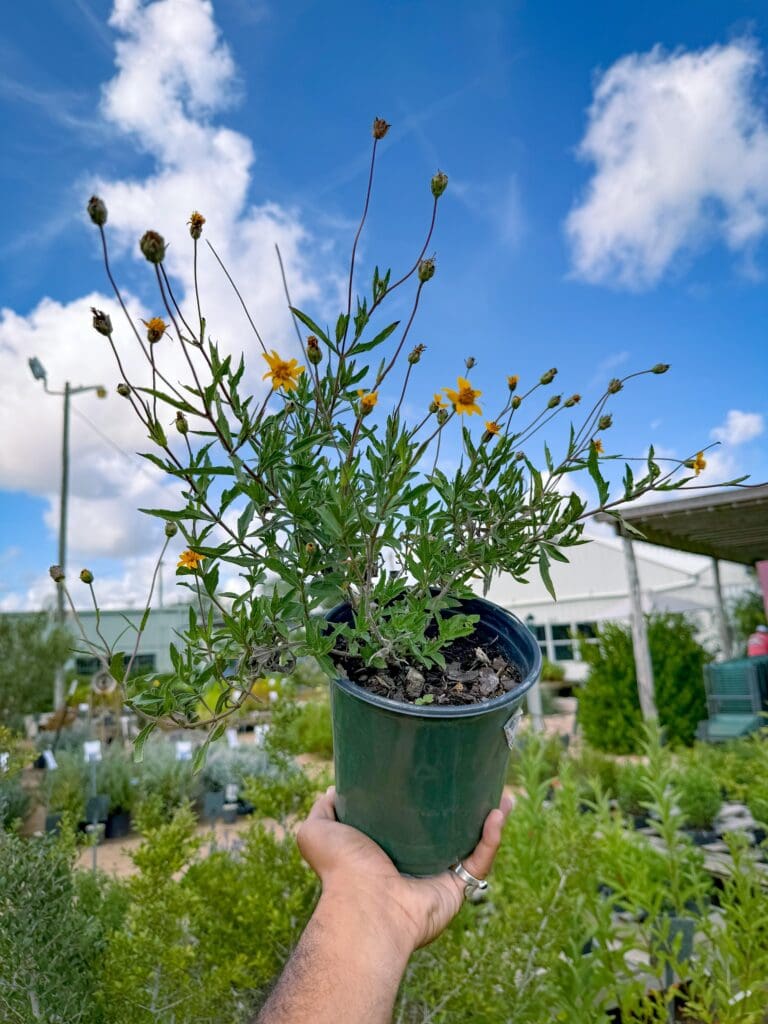
Zexmenia (Wedelia acapulcensis var. hispida)

This tough Texas native is a pollinator favorite with its golden daisy-like flowers and mounding growth habit. Zexmenia is excellent for erosion control on slopes or in dry beds. It loves sun, tolerates a variety of soil conditions, and requires very little water once established. Zexmenia blooms from spring through fall and is a nectar powerhouse for bees and butterflies.

Oleander (Nerium oleander)

This Corpus Christi classic with vibrant flowers in white, pink, or red and leathery evergreen leaves, adds a lush Mediterranean or tropical feel to local landscapes while being very drought tolerant. Avoid overhead watering to reduce fungal issues. Yes, Oleander is poisonous if ingested! 

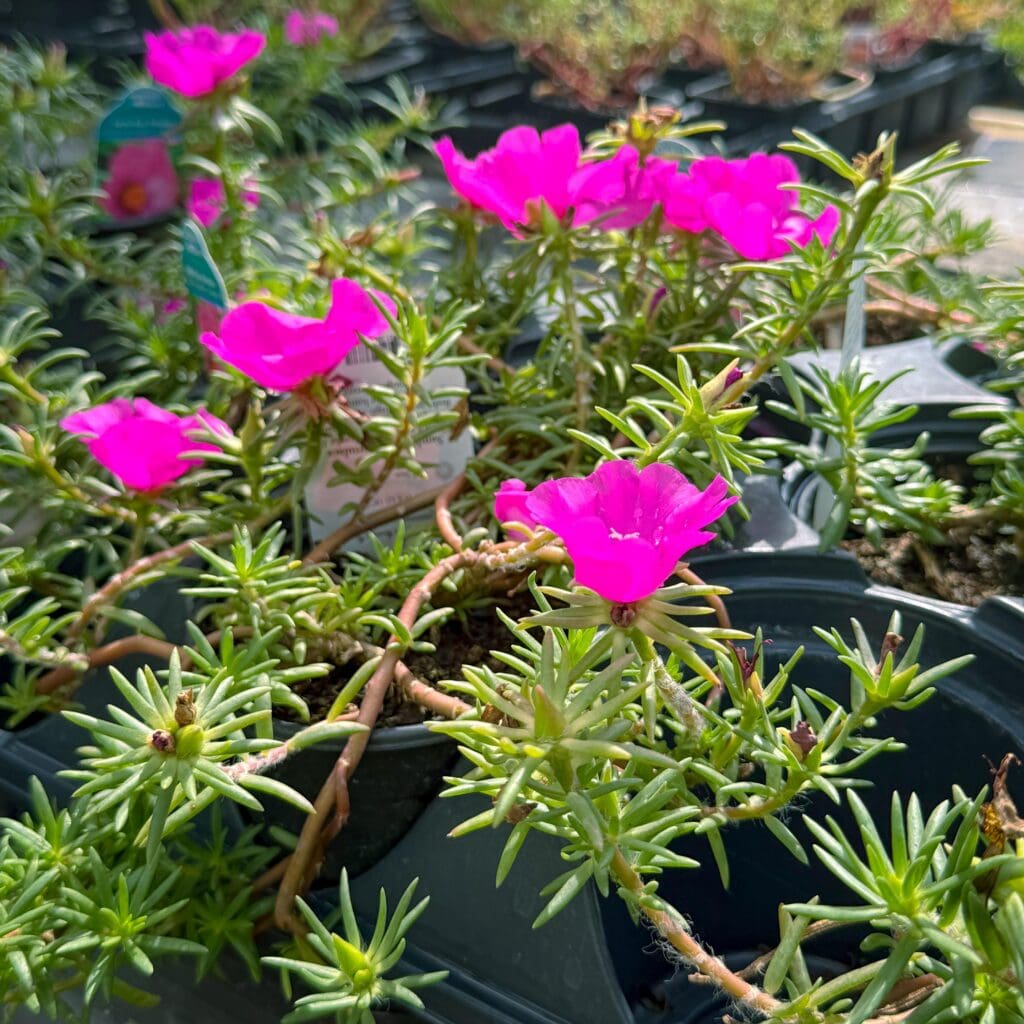
Samba Portulaca (Portulaca grandiflora)

Bright, bold, and born for the heat, Samba Portulaca twirls out colorful blooms even in scorching temps. Perfect for hanging baskets, containers, or hot border edges. Loves it dry and sunny. Flowers close at night and open again with the sun. It’s like your garden is waking up with you!

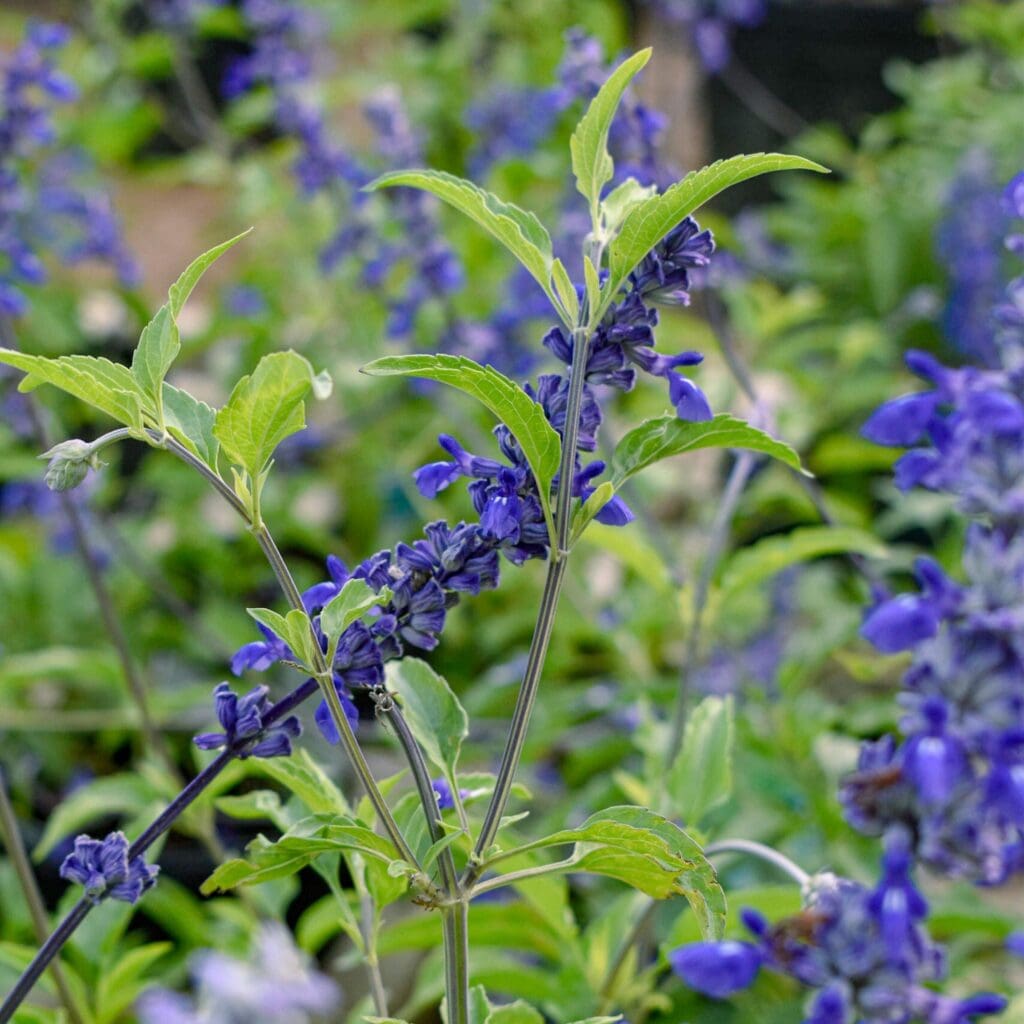
Henry Duelberg Salvia (Salvia farinacea ‘Henry Duelberg’)

A Texas superstar, this salvia produces deep blue spikes all season long and shrugs off heat and drought. Thrives in full sun with minimal watering. Deadhead to keep the blooms coming. Henry Duelberg salvia is one of the absolute best natives for attracting a variety of pollinators. Fun fact:  Henry Duelberg salvia was discovered growing wild in a Texas cemetery and named after the man buried there along with a white blooming variety named after his wife Augusta Duelberg. 


Start your engines…fall planting season is here!! September is the best time to plant almost everything – veggies, trees, shrubs, natives, hummingbird plants, and more. Here are our top 7 must-do’s in September as we head into fall, our favorite South Texas gardening season!

1. Ready, Set, PLANT Veggies, Herbs, Citrus, and Fruits!

It’s time! Tomatoes, peppers, & warm weather edibles should be planted early in September at the latest. Plant cool weather veggies & herbs anytime in September and remember to shelter them from still-intense sun and keep watered. When planting, you can’t go wrong with organic BioTone starter fertilizer + a good handful of Earthworm Castings. Neither of these require precise measurement, and they make an incredible combo for building stronger, deeper roots, preventing pests, and creating an active soil environment for plants to thrive.

Here’s our Fall veggie planting schedule. And save space for citrus trees, figs, and other fruit trees to round off your garden grocery store! They’ll all be arriving before or right around mid-September. 

2. Make Way for New Growth with Light Pruning and Clean-up

Chances are you have established plants that could benefit from a clean-up after working so hard all summer. Wait until about September 15th and give them a light pruning to make way for new growth this fall. A good rule of thumb for most plants is to prune up to 1/3 (not more) in the fall, then wait until January to do a heavy pruning/cutback. If you have questions about how to prune specific plants, you know who to call! 

3. Plant Trees and Shrubs for the BEST Start

Plants that are cold hardy (trees and woody shrubs) will benefit greatly by planting during our fall season. They’re under less heat stress, and they grow more roots through the fall and winter, making them stronger and ready to take off next spring. More roots, stronger plants, and less watering! Oak trees, Crape Myrtles, Hawthorns, Yaupon Holly, Plumbago, Boxwoods and a host of other trees and shrubs should be planted starting this month for the best possible start.

4. Plant to Support Pollinators!

We’re bringing in lots of new plants this month with our pollinator friends in mind! While you’re choosing what to plant, consider adding Texas Natives like Turk’s Cap and Lantana that birds and bees love. If you want to attract and support butterflies, try native butterfly weed (Asclepias tuberosa), Gregg’s mist flower, and lots of different blooming salvias. So many gorgeous options! Bring in some pictures of your outdoor space and we can help you plan the perfect pollinator garden – big or small. You can DIY or we can plant it for you!

5. YES You Can Hand-Water and Use Drip Irrigation Systems!

Keep in mind that you can hand water all landscape plants, gardens, and trees on any day under current city watering rules. The good news is, hand watering is the best way to water as long as you’re doing it effectively. That means making sure you water at ground level, not over the top of your plants. This gets more water down to the roots, prevents water loss due to evaporation, and prevents fungal issues that can arise from too much moisture on leaves and stems. When hand watering, be sure you’re giving your plant roots a deep soaking. Water once, give it some time to soak in, then water again. Keep in mind, under current rules, you can also use drip irrigation systems for landscaped beds every other week on your watering day. The same principal applies – deep soaking!

6. Set the Table for the Fall Hummingbird Migration!

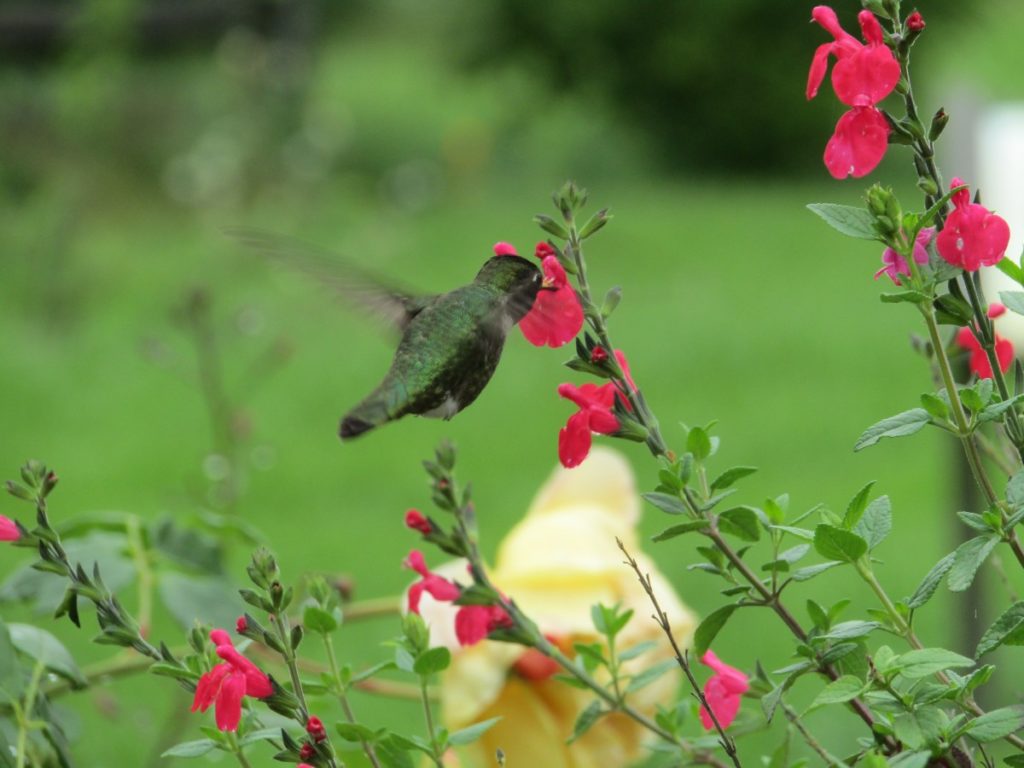
Ruby-throated hummingbirds will soon make their way through for the fall migration! These tiny birds are BIG eaters. They stop here in the Coastal Bend to fuel up before their non-stop flight across the Gulf of Mexico. Host them in your yard by planting some of their favorite foods! Hummingbirds find plants using their excellent vision and are attracted to bright colored blooms, which indicate a high-sugar food source. Some of our favs for South Texas are Flame Acanthus (aka hummingbird bush), Salvias (like native Salvia greggii and Salvia leucantha), Cape Honeysuckle, Firebush, Firecracker plant, Coral bean – the list goes on! Plant a few of these and hummingbirds will find them. And don’t forget to visit the Rockport-Fulton HummerBird Celebration September 18-21!

7. You’re Invited! Fall Garden Talks and Events at Gill’s!

Gill Garden Talks and Events are back this Fall! We’re kicking it off with DeAnna and Wyatt’s Fall Veggie Gardening Talk on Saturday, September 13th!  Based on your suggestions, we decided to do 2 veggie talks this year. Part 1 will focus on early fall veggies like tomatoes, peppers, and squash, and part 2 will focus on cooler season crops like broccoli, greens, and cabbage. Stay tuned on our events page and on Instagram and Facebook for details of each event. We can’t wait!

Fall is OUR ABSOLUTE BEST TIME for planting veggies, trees, flowers, and just about everything else! We’ve got lots of fun events planned at Gill’s this month, plus everything you need to bring the fall magic to your outdoors. Here are our top must-do’s this October to set your garden and landscape up for success for seasons to come.

1. Join Us for October Events – Including Fall Plant Fest This Saturday!

We are so excited about our fall event lineup! Join us this Saturday, October 4th from 10am-2pm for our first ever Fall Plant Fest. We’ll have our friends Mimi’s Mini Farm with their farm animal petting zoo, pumpkin painting for kids, balloon animals, fall photo ops, tons of fall plant specials, lovely fall-themed drinks from The Brewery Coffee Cart, and the Smokeville Turkey Legs food truck will be here too! Check out our full event schedule for the rest of October and beyond. 

2. Plant & Feed Your Fall Veggies

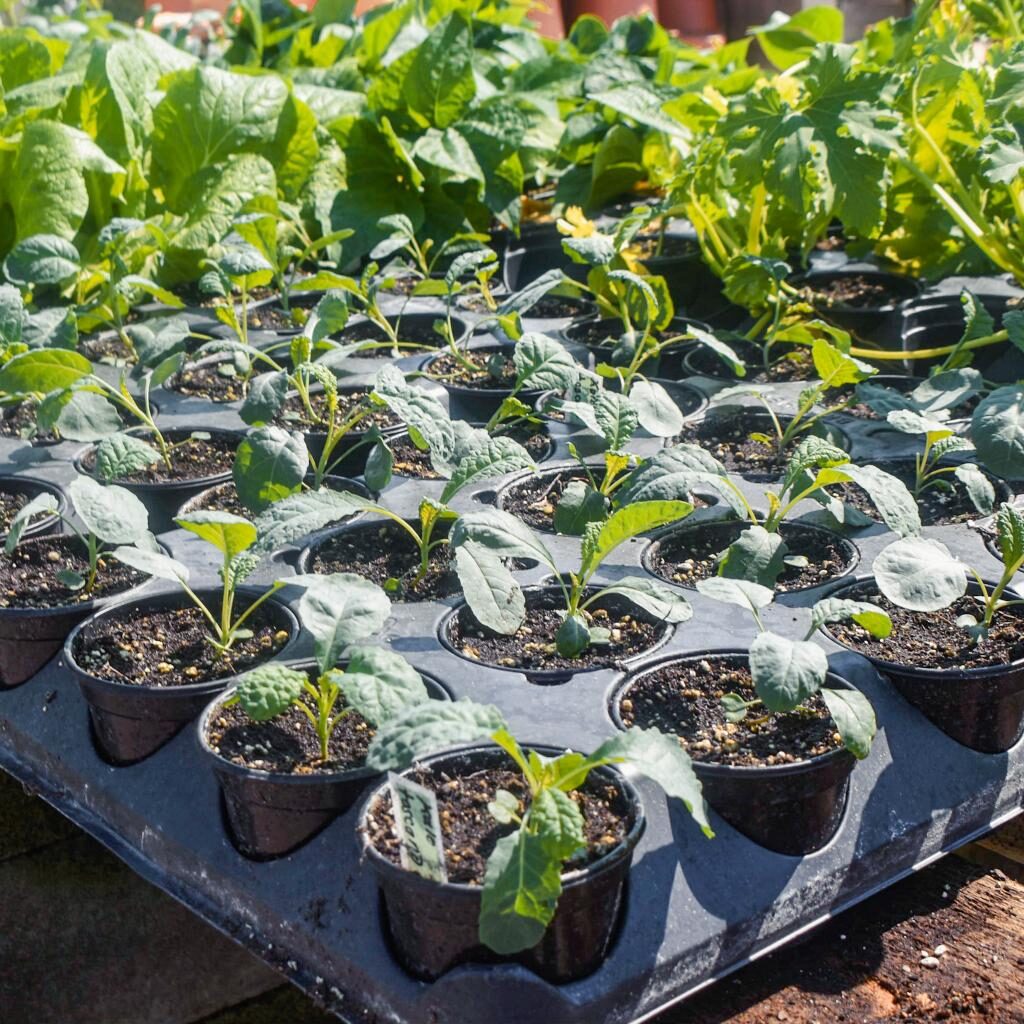
Some of the best… Broccoli, Cauliflower, Lettuces, Cabbage, Carrots, Beets, Radishes, Cilantro, Arugula, Thyme, Chives, Sage, and the list goes on! October is our window for planting! Remember – veggies are heavy feeders, so it’s important to keep fertilizing throughout the season. We recommend using BioTone Starter when you plant, followed by a good organic granular like Medina Growin Green or Plant Tone on the 1st of each month, then supplement with liquid Hasta Gro on the 15th of each month. Set these reminders on your phone/calendar and you’ll have BIG harvests with plenty to cook and share. 

Watch:  Coastal Bend Veggie Gardening Guide

3. Plant Trees Now for the Best Start – Citrus Too!

Successful tree planting is all about growing roots. Trees planted in fall grow more next spring & summer because they spend time all fall and winter working on their root system. Having a well-established root system also helps prepare them for hot temps next summer. Live Oak, Burr Oak, Magnolia, Anacua, Cedar Elm, & Wild Olive are some of our South Texas fav’s and we’ve been getting some gorgeous specimens, big and small. And don’t forget about citrus trees! We have a nice fall crop of lemons, different lime varieties, mandarins, and more. 

Read: The Advantages of Fall Planting

4. Plant Fall Flowers Galore

Take advantage of the weather while the days are still long. It’s the perfect time to start cool weather Marigolds, Alyssum, Snapdragons, Violas, Petunias, Supertunias, Calendula, Begonias, Stocks – the flowers and colors that say, “FALL!”. Warm days help flowers develop roots so they can look their best during the cooler months ahead. Since we don’t experience dramatic changing of the seasons here in South Texas, we create that fall feeling with gorgeous fall colors!

5. Prevent Weeds + Fertilize Your Lawn 

Fertilizing lawns this month is essential for developing strong roots and healthy growth next spring and summer. We emphatically recommend organic Medina Growin Green! Amazing stuff! A 40lb bag covers 3000 sq ft of lawn, and for a small fee, we can rent you a spreader which makes it very easy to apply. Not only does Medina Growin Green work wonders on lawns, you can use it in all areas of your landscape, including your veggie garden. If you want to prevent lawn weeds, now’s the time to apply preemergent Weed Beater Complete or Hi-Yield Turf & Ornamental Weed & Grass Stopper. Remember this:  treat for weeds, wait 2-3 weeks, then fertilize. Do not use “weed & feed” products! 

Read: Fall Lawn Care

6. Plant for Hummingbirds and Migratory Birds

Right now is a great time to plant all kinds of blooming plants that hummingbirds and other migratory birds need. Some of our favs for South Texas are native Flame Acanthus (aka hummingbird bush), Salvias (like native Salvia greggii and Salvia leucantha), Cape Honeysuckle, native Turk’s Cap, native Beautyberry, Loquat, Firecracker plant, Coral bean – the list goes on and on. We have been covered in hummingbirds here at Gill’s!

7. Mulch Beds for Moisture Retention & Other Key Benefits

Proper mulching using natural Hardwood, Pine Straw, or our new natural GardenStraw mulch has big benefits throughout the landscape, including in veggie gardens. A good 3” deep layer of mulch will keep your plants and the soil moist for longer after you water or after it rains. When mulching, give the main trunks or stems of your plants a little space – mulch 3” deep throughout the bed, but no more than 1” deep right up against the main trunks/stems of plants. Using mulch in veggie beds also helps keep wet soil from splashing up onto your plants when you water, which prevents common fungal diseases. Not to mention…a good mulch layer will help keep weed seeds from sprouting.